 By Ghulam Mustafa Khan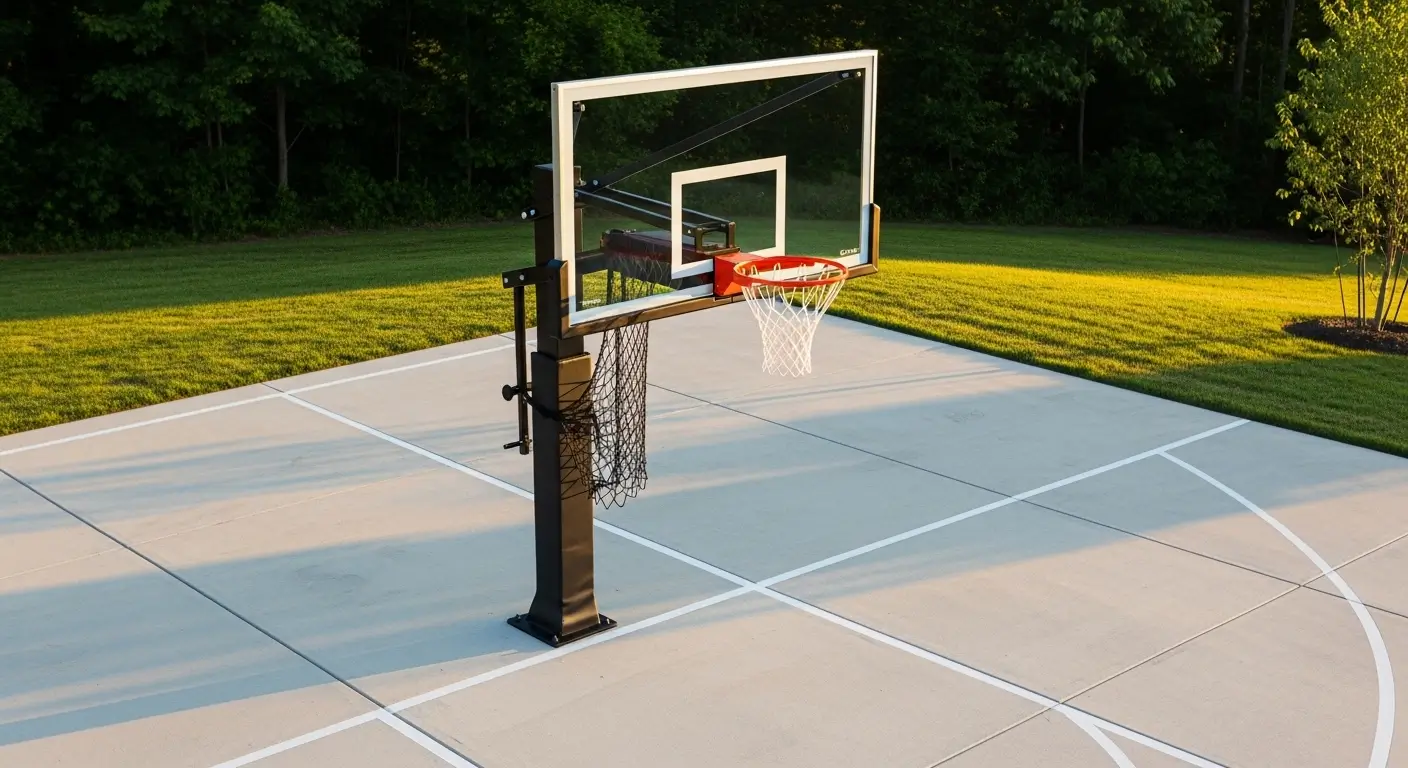
To select the premier basketball hoop for driveway performance in 2026, prioritize a tempered glass backboard and a 7-gauge square steel pole. This combination ensures a pro-level “energy return” and maximum stability, preventing the vibration that ruins shooting rhythm.
Choosing a basketball hoop for your driveway impacts both your property value and training quality; a professional-grade in-ground system prevents structural sway while maximizing home ROI. For optimal accuracy, always install the hoop at the highest point of the driveway slope to maintain a true, 10-foot regulation rim height.
The Engineering Core: Why These Specs Matter
- Backboard: Tempered glass offers the most consistent, gym-quality rebound.
- Pole Geometry: Square steel poles reduce “sway” significantly better than round alternatives.
- Height Integrity: Strategic placement on slopes prevents a “short rim” effect.
- Property ROI: Professional anchors turn the system into a permanent home asset.
Choosing Your Base: Performance or Portability?
Before you purchase equipment, you must decide between a permanent anchor and a mobile base. Each has a different impact on your home.
In-Ground Systems
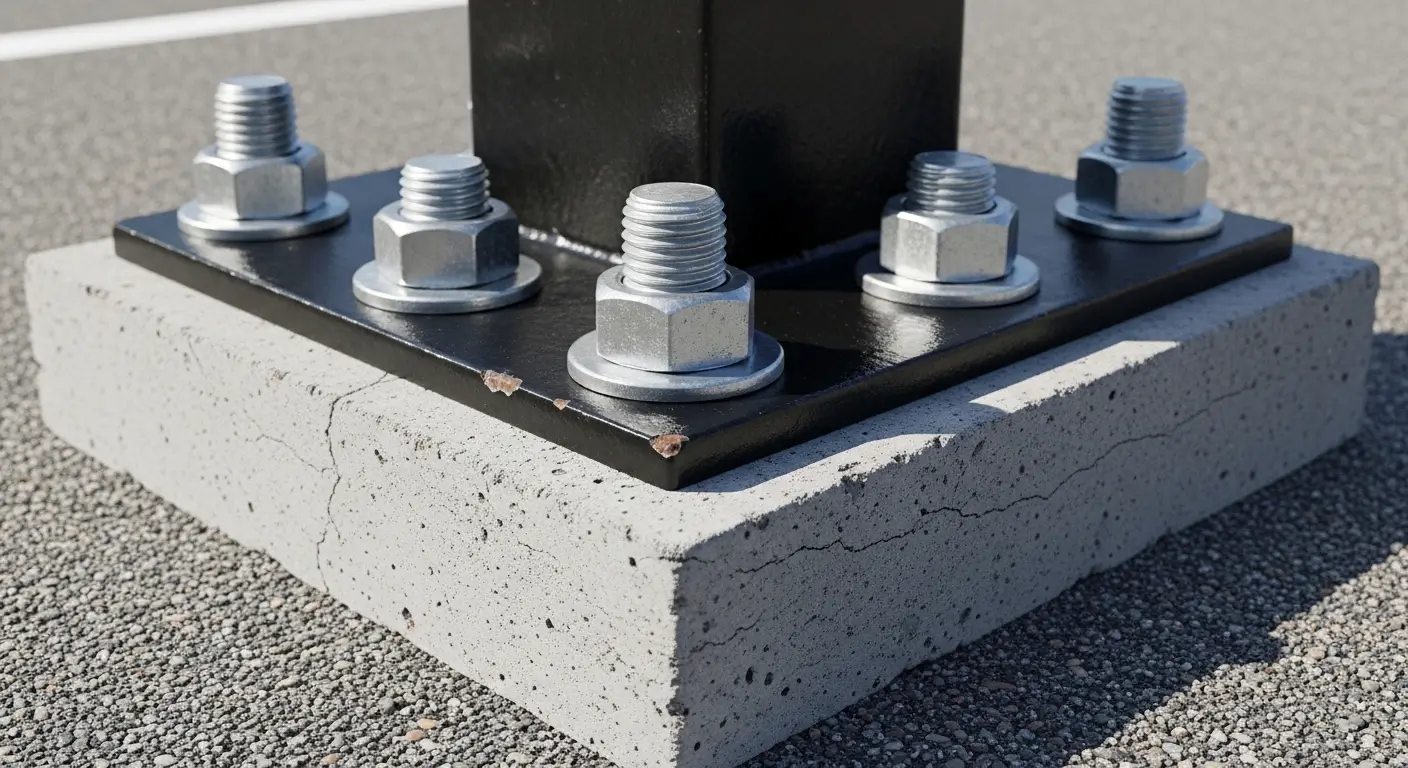
In-ground hoops are anchored into a concrete pier, typically 48 inches deep. They are the most stable option because the earth acts as the ballast. These systems use a bolt down anchor plate, which allows you to unbolt the hoop and take it with you if you move. This setup is ideal for serious athletes who want a gym quality experience at home.
Portable Systems
Portable hoops use a plastic base filled with water or sand. They are the best choice for renters or homeowners who cannot dig due to underground utility lines. In 2026, high end portables have improved, but even the best mobile units have more vibration than an in-ground version. To minimize this, you must use a high capacity base of at least 55 gallons and a specialized sand gel ballast. To ensure your mobile unit stays upright during high velocity wind events monitored by the National Oceanic and Atmospheric Administration (NOAA), refer to our guide on maximizing portable basketball hoop stability.
Which adjustable basketball hoop is best for a driveway?
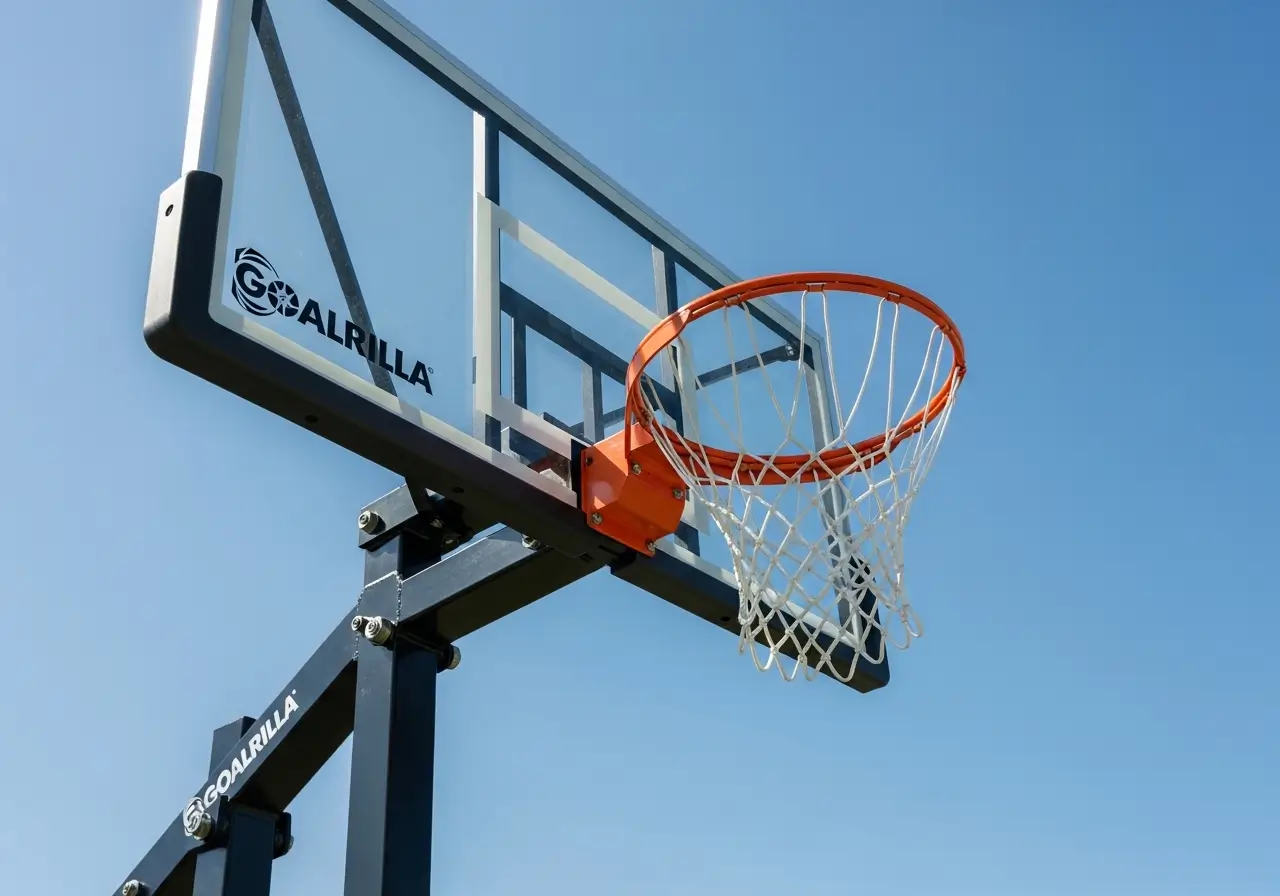
The Goalrilla CV72 is the best adjustable basketball hoop for driveways in 2026. Its 6 inch square steel pole and 1/2 inch tempered glass backboard offer the highest stability and rebound accuracy. These professional specs ensure the system remains windproof and provides the best return on investment for home property value according to American Sports Builders Association (ASBA) standards.
Hoop Location: Configure Your Court Layout
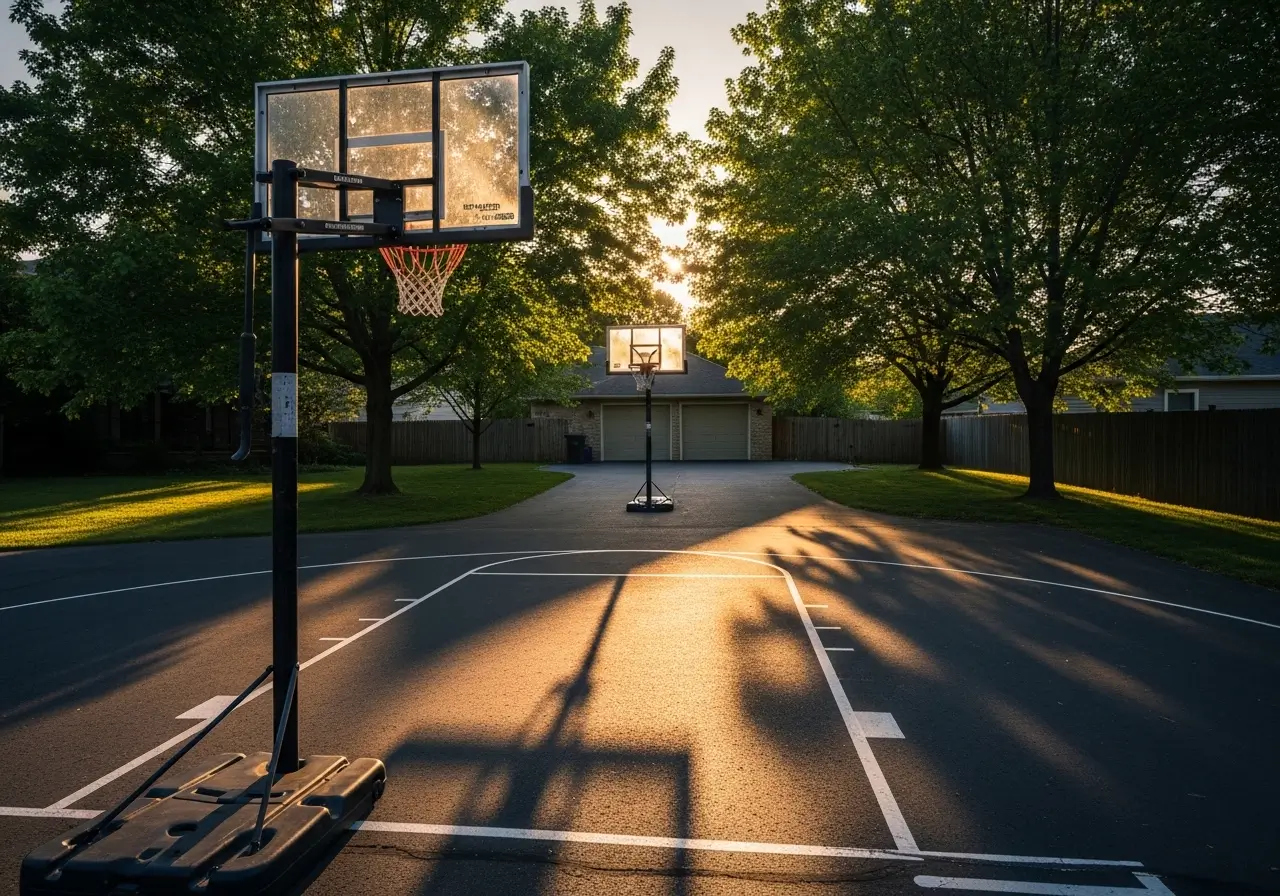
Placement is the most overlooked part of building a home court. A hoop in the wrong spot can lead to neighbor disputes or dangerous sun glare.
The North-South Orientation Rule
In the northern hemisphere, you should ideally orient your hoop so the backboard faces north. This prevents the sun from sitting directly behind the rim during afternoon sessions. If the hoop faces southwest, you will be squinting to see the rim during peak playing hours, which ruins depth perception.
The Shadow Audit
Perform a “Shadow Audit” before you pour concrete. Stand in your intended free throw spot at 4:00 PM. If your shadow is directly in front of you, the sun is behind you, which is the ideal orientation. If you are squinting, rotate the court 15 to 20 degrees.
Property Lines and Setbacks
Most local laws require a permanent structure to be at least 5 to 10 feet away from the property line. Installing a hoop too close to a neighbor’s driveway can lead to errant balls hitting their vehicles. Before you break ground, review our guide on backyard court permits and zoning laws to ensure your project complies with HOA and city regulations.
From the Coach’s Perspective
“I often see players struggle with their shooting form because they practice on a hoop that vibrates for five seconds after every miss. This vibration gap makes it impossible to learn how to read a true rebound because the ball exit velocity is inconsistent. If you want to master solo basketball drills in your driveway, you must choose a system with a square pole to reduce torsion and provide a consistent bounce.”
Technical Comparison: 2026 Leaderboard
Use this comparison table to evaluate the structural specifications of the top residential systems.
| Model | Pole Size | Backboard Material | Ballast Type | Best Use Case |
| Goalrilla CV72 | 6″ Square | 1/2″ Tempered Glass | In-Ground Anchor | Professional Training |
| Mega Slam 72 | 6″ Square | 1/2″ Tempered Glass | In-Ground Anchor | Extreme Durability |
| Spalding Beast | 5″ Square | 1/4″ Tempered Glass | 55-Gallon Portable | High-End Rental |
| Silverback NXT | 4″ Slant | Polycarbonate | 35-Gallon Portable | Family Value |
Why Pole Geometry Dictates Stability
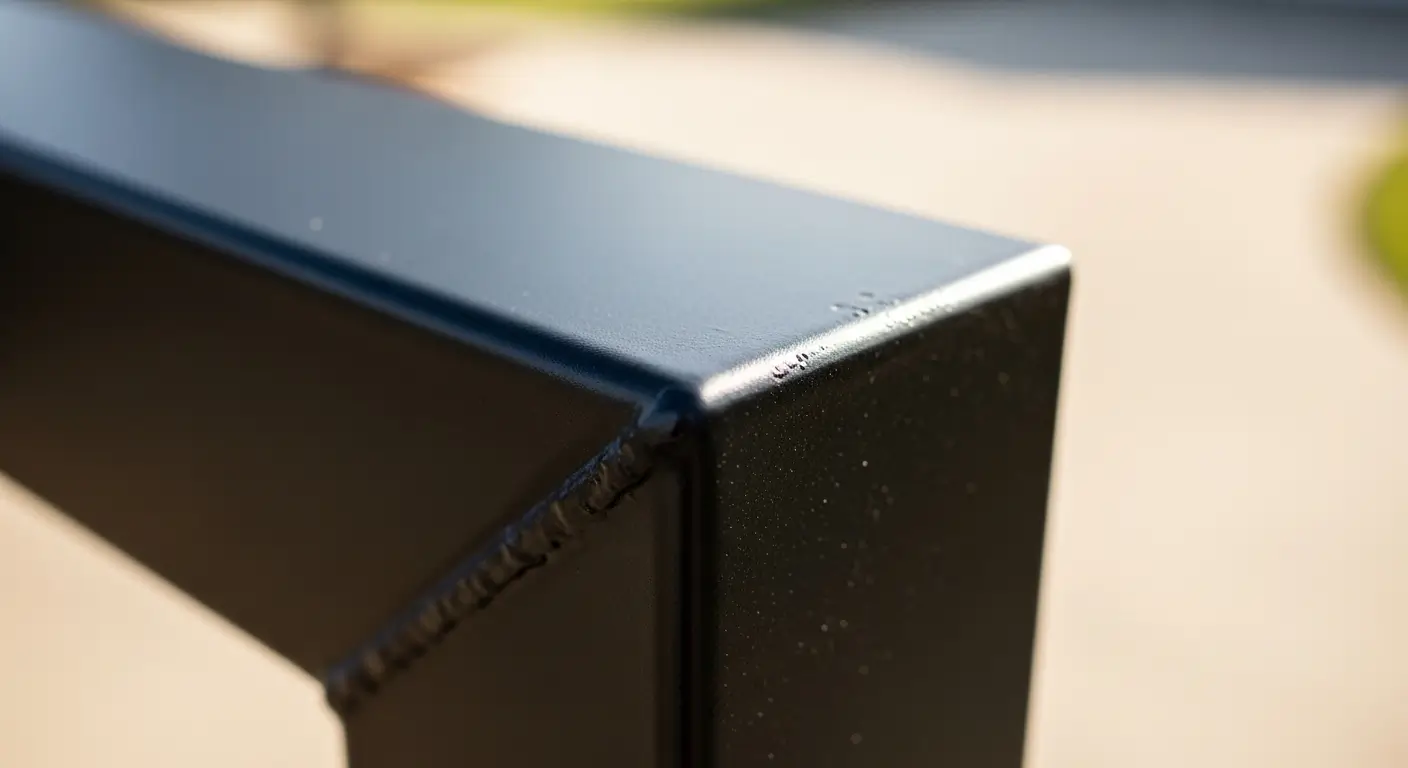
A square pole is superior to a round pole because it resists twisting. When a ball hits the side of the rim, it creates torsion in the pole. A round pole will twist and vibrate, while a square pole remains rigid. This rigidity is the primary difference between a recreational toy and a professional asset that can increase your home’s resale value and curb appeal.
Additionally, ensure your player has the right footwear for these high stability systems. Aggressive play on high grip driveway surfaces can lead to shoe failure. Refer to our guide on the best shoes for toe draggers to find outsoles that can handle the friction of a modern court.
The Physics of Rebound: Backboard Material Science
In 2026, we categorize backboards by “Energy Return.” The material you choose dictates the kinetic response of the ball, directly impacting the quality of your bank shots and muscle memory development.
1. Tempered Glass: The Pro-Level Standard
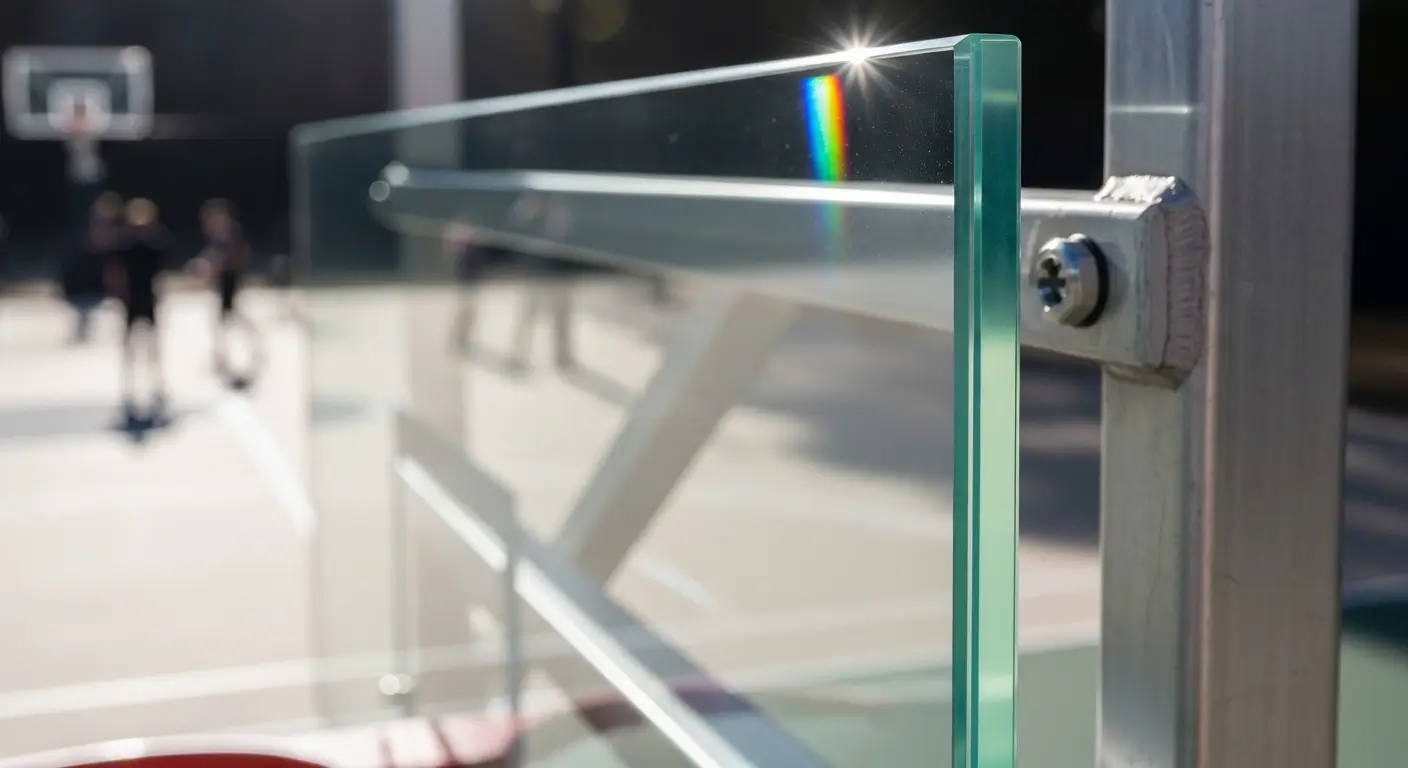
Tempered glass is the benchmark for competitive play. Unlike plastics, glass is a rigid, high-mass material that offers a “deadened,” consistent bounce.
- The Experience: Zero vibration. The ball behaves exactly as it would in a collegiate or professional arena.
- Engineering Requirement: Because of its immense weight, glass requires a 7-gauge steel pole and a concrete anchor. It is a permanent property upgrade, not a temporary fixture.
- Best For: Serious athletes and homeowners seeking maximum property ROI.
2. Acrylic: The Performance Hybrid
Acrylic offers the clear, high-end aesthetic of glass but with a significantly lower structural load.
- The Experience: While visually similar to glass, acrylic is more flexible. This flexibility results in a slight “rattle” during high-velocity play.
- The Trade-off: It is highly impact-resistant, making it safer in areas prone to vandalism or extreme weather, but it will develop fine scratches (hazing) over years of use.
3. Polycarbonate: The “Indestructible” Entry Point
Polycarbonate is essentially bulletproof plastic. It is often marketed for its durability, but for the serious player, it is the “thirstiest” material on the market.
- The Experience: Polycarbonate absorbs the ball’s energy. This leads to an inconsistent, “dull” rebound that can hinder shooting development.
- The Lifespan: While it won’t break, it is susceptible to UV degradation, often turning yellow or cloudy within 3 to 5 years of direct sun exposure.
The “Sandpaper Effect”: Selecting Driveway-Ready Gear
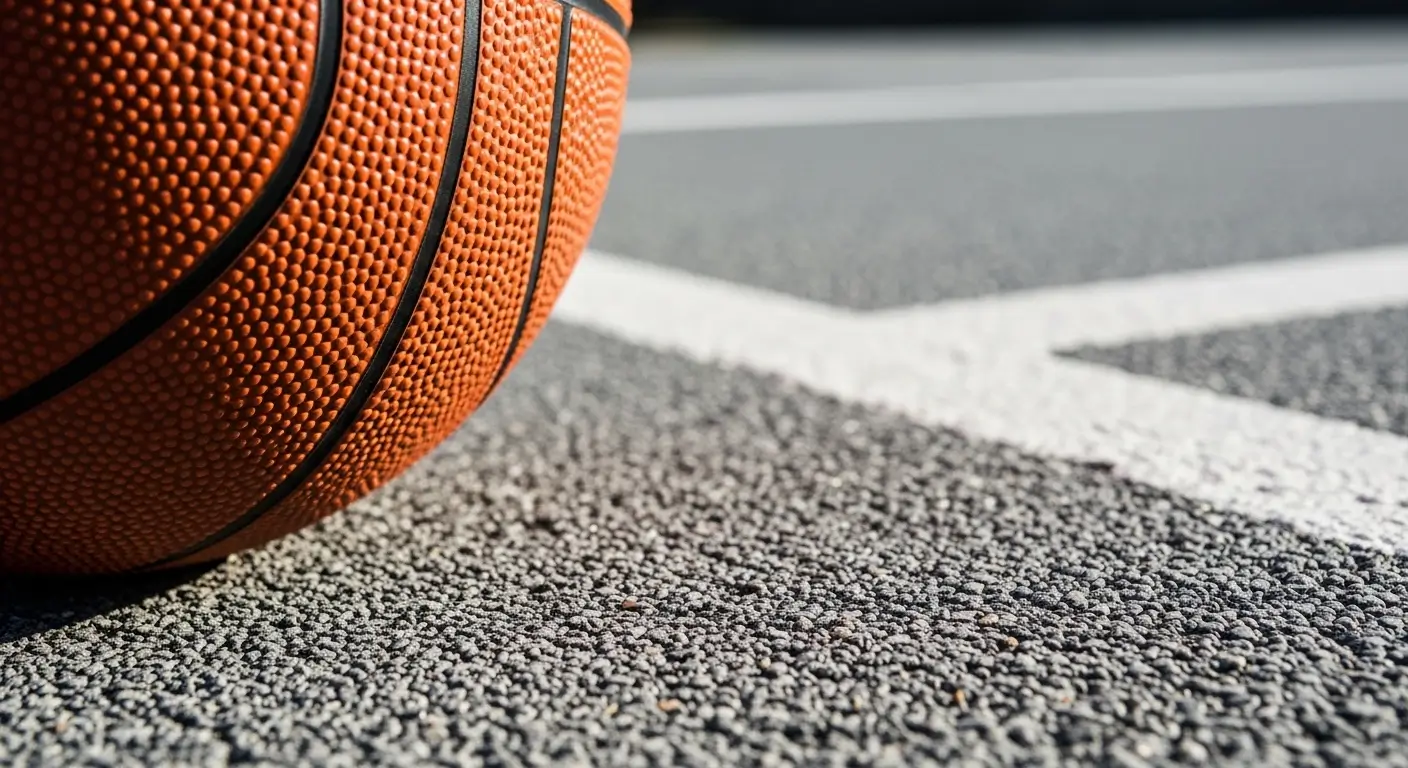
Playing on a driveway is a battle of friction. Standard indoor leather balls are designed for polished hardwood; the abrasive nature of concrete or asphalt will shred their outer casing in a single session.
Why “Indoor/Outdoor” Composites are Mandatory
For a driveway court, you must utilize a ball with a reinforced composite cover. These are engineered with deeper pebbles to maintain grip even as the surface wears down.
Expert Correlation: Just as high-performance play requires to prevent toe-drag blowouts on concrete, your ball must be rated for high-friction surfaces. If you are playing on a surface treated with acrylic coatings, the ball’s grip becomes your most important safety feature.
The “Shadow Audit” Pro Tip: “Before the concrete is poured or the hoop is bolted, perform a 24-hour shadow audit. Map the sun’s path across your driveway. If your court lighting or the afternoon sun creates a glare on your , you turn a high-end setup into a safety hazard. Visibility is the difference between a training session and an injury.”
Deep Homeowner FAQ
What is the real-world cost of a residential sport court in 2026?
Current market data suggests the ranges from $15,000 to $45,000. The variance is driven by excavation depth, sub-base reinforcement, and the selection of modular, shock-absorbing tiles that protect player joints.
What size backboard is optimal for a standard driveway?
Avoid the “bigger is better” trap. A 54-inch to 60-inch backboard is the “sweet spot” for a two-car driveway. A regulation 72-inch board can overwhelm the space, leading to cramped play and increased risk of missed shots hitting the house or landscaping.
Are there legal restrictions on driveway hoops?
Yes. Many municipalities classify in-ground systems as “permanent structures.” Before digging, you must verify to ensure you are compliant with property setbacks. HOAs generally allow portable systems but may have strict rules on “curb appeal” and maintenance.
How do I define an “Ace” on a multi-sport home court?
Whether playing volleyball or tennis on your driveway, an is a serve that results in an immediate point because the ball hits the floor untouched or the opponent fails to make a successful first contact.
The Maintenance Protocol: Protecting the Asset
A high-end driveway hoop is a 20-year financial asset. To maintain that value, follow the “Bi-Annual Checkup”:
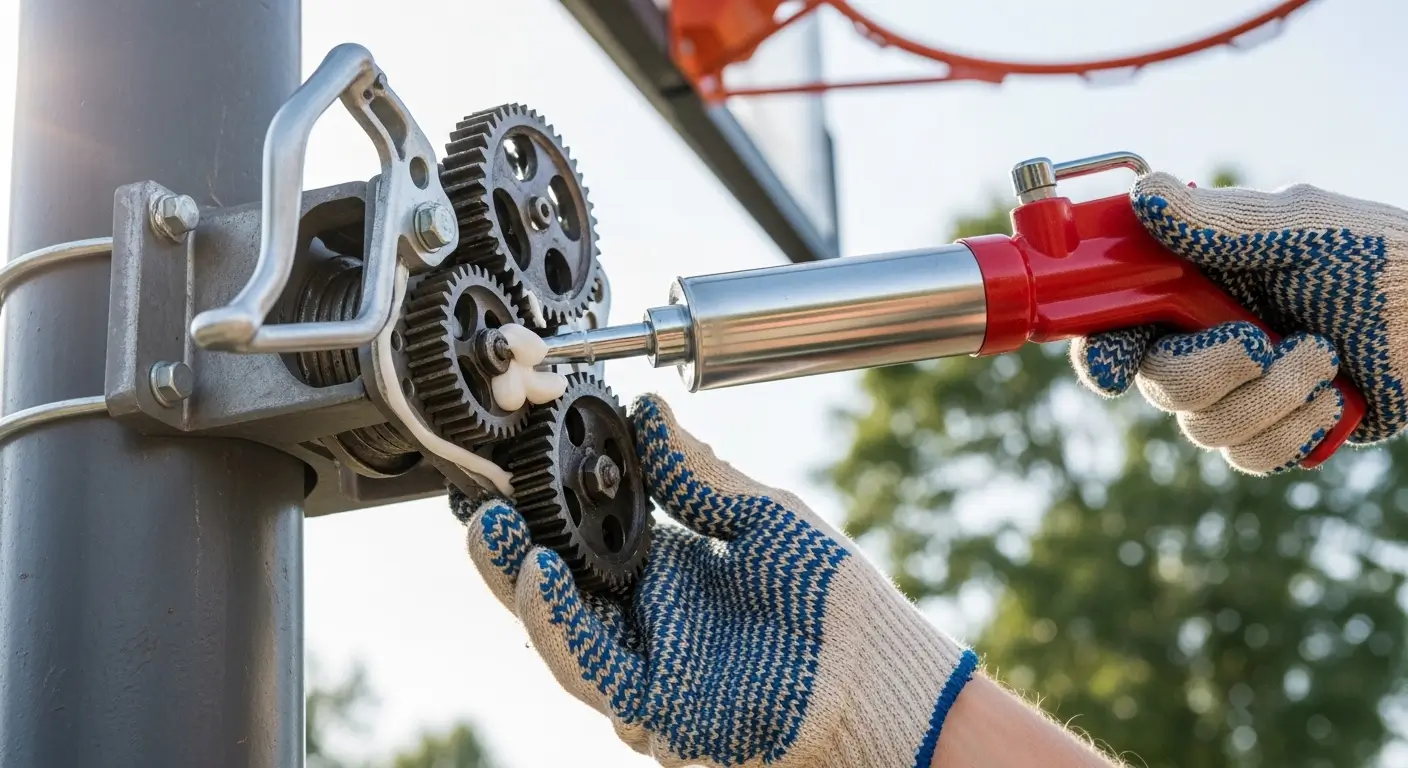
- Mechanical Lubrication: Apply lithium-based grease to the height adjustment actuator every six months to prevent the internal gears from seizing.
- Structural Hygiene: Regularly . If left alone, these acidic materials can corrode the steel base plate of your hoop.
- Vibration Dampening: If your rim begins to rattle, it likely needs a tension adjustment. Refer to our guide on how to ensure your home setup maintains a gym-quality feel.
Final Verdict: The 2026 ROI Choice
A driveway basketball hoop is more than sports equipment; it is a “lifestyle anchor.” By investing in a high-stability in-ground system with a tempered glass backboard, you are making a functional home improvement that can . Focus on engineering—a sturdy hoop creates a safer, more effective training ground for the next generation of athletes.