
 By Ghulam Mustafa Khan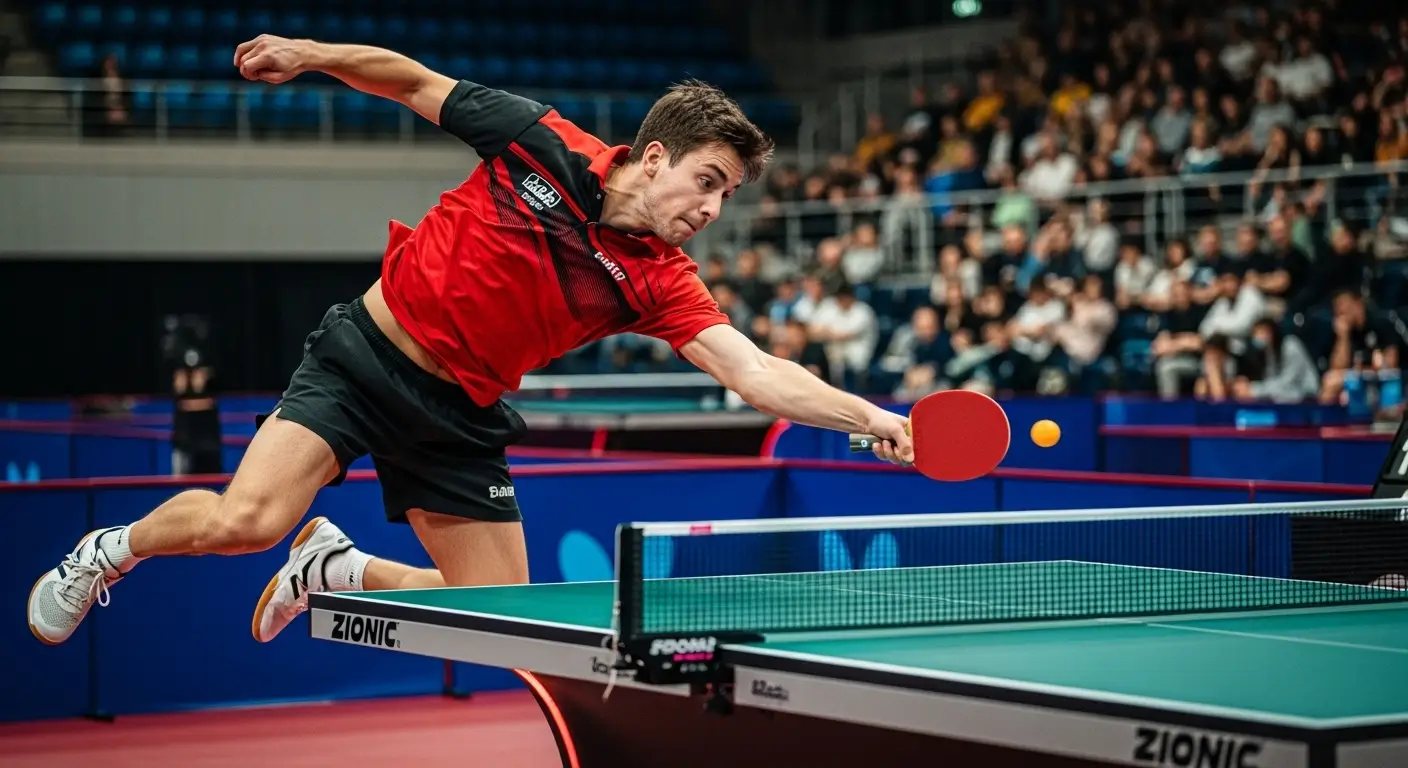
Table tennis is a sport played by two or four players using small paddles to hit a lightweight ball over a net on a rectangular table. The objective is to land the ball on the opponent’s side in a way that they cannot return it. While simple to start, the sport requires quick reflexes, precision, and strategy.
The sport is also commonly called ping pong, particularly for informal play, while table tennis is the official term used in professional competitions. According to the International Table Tennis Federation, the sport is played in over 200 countries worldwide.
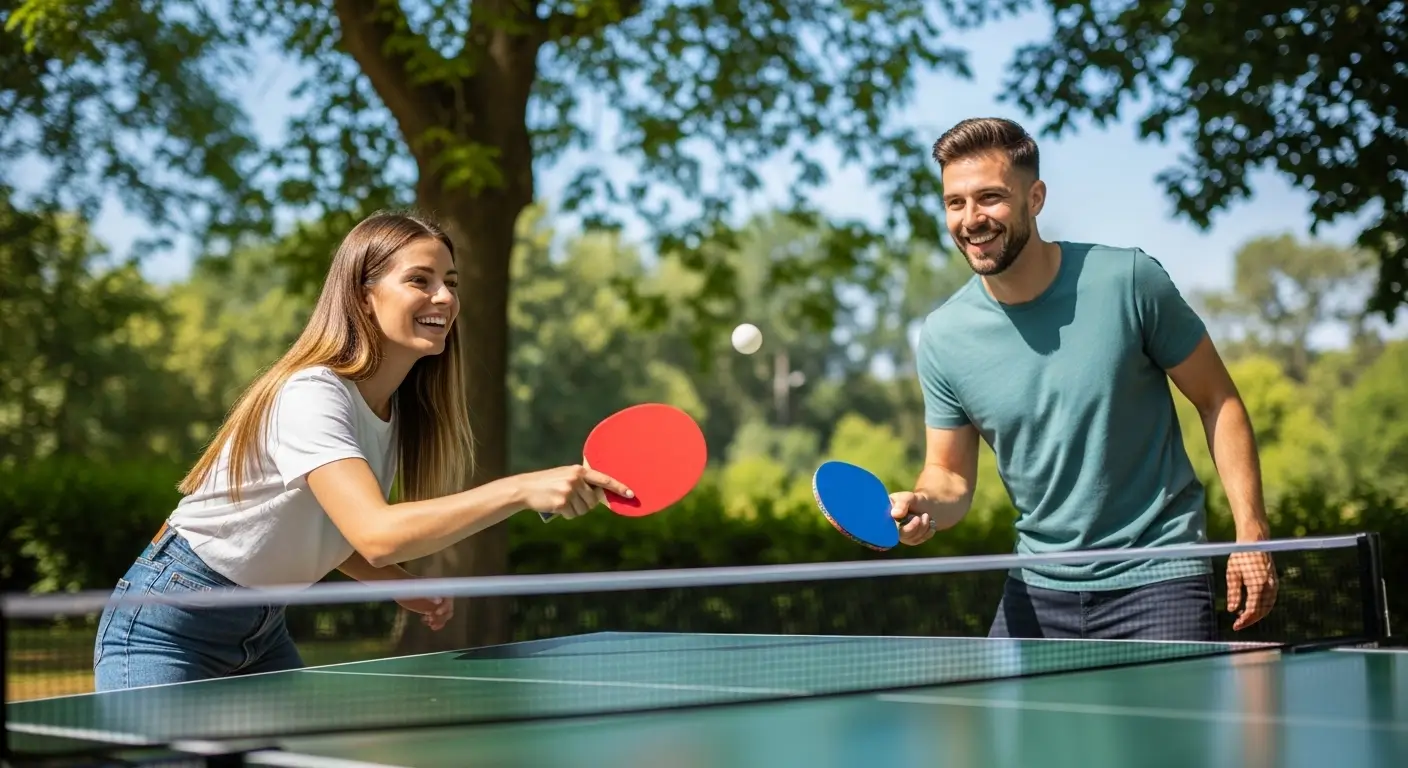
Table Tennis as the Most Practiced Sport in the World
Table tennis has over 300 million active participants globally. Its popularity comes from its accessibility. Players only need a table, paddles, and a ball, making it possible to play at home, in community centers, schools, or professional facilities.
Unlike many other sports, it does not require high physical strength, making it suitable for children, adults, and seniors. Schools often include it in physical education to improve hand-eye coordination, reflexes, and focus.
For readers interested in other court sports, see our guide Court Sports Explained: Types of Court Sports, Age-Based Health Benefits, and Cardio Impact.
Why People Enjoy Table Tennis
Table tennis appeals to both casual and competitive players. Casual players enjoy the social and recreational aspects, while competitive players value the strategy, precision, and speed of the game. It promotes physical activity, improves hand-eye coordination, and challenges mental focus.
The game can be played in homes, parks, schools, or professional arenas, making it suitable for all ages. Research shows that regular table tennis activity can improve cognitive function, reaction time, and overall coordination (NIH Study on Table Tennis Benefits).
What Makes Table Tennis Special
Table tennis combines speed, precision, and mental strategy. The ball can travel fast, sometimes over 100 miles per hour in professional play. Skilled players can control the ball’s spin, speed, and placement to gain an advantage.
The mental aspect is also crucial. Players need to anticipate their opponent’s moves and adjust their strategies during each rally. This combination of physical and mental skill makes table tennis challenging, engaging, and rewarding for players of all levels.
For readers interested in exploring similar sports with a combination of skill and strategy, see What is Squash? A Complete Guide to the Sport, History, Rules, and Health Benefits.
How Table Tennis is Played
Table tennis can be played as singles or doubles. The main objective is to hit the ball so it lands on the opponent’s side in a way that they cannot return it. Players take turns serving, and each rally continues until one player fails to return the ball properly.
Games are usually played to 11 points, and players must win by two points. Matches are typically best of three or five games. While the rules are simple, mastering the game involves learning techniques for controlling the ball, applying spin, and reading the opponent.
Equipment Needed for Table Tennis
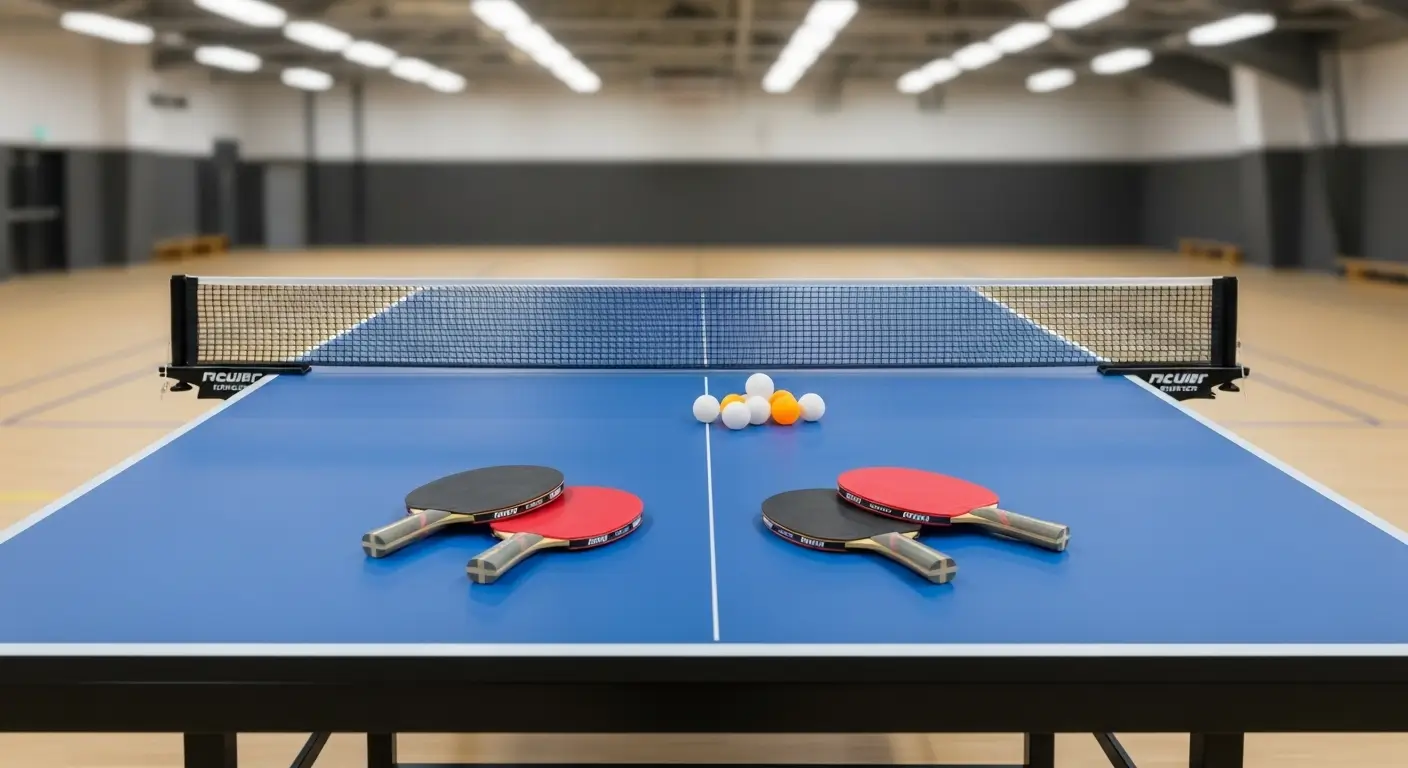
The equipment required is simple:
- Table: Standard dimensions are 9 feet long, 5 feet wide, and 2.5 feet high.
- Paddles: Made of wood with a rubber coating. The rubber affects spin, speed, and control.
- Ball: Lightweight, small, and designed for fast rallies.
- Net: Divides the table in half and is 6 inches high.
Professional players often use high-quality paddles and balls to maximize control and spin. Beginners can start with standard equipment.
For more information about equipment in similar court sports, see Ultimate Guide to Platform Tennis for Beginners and Enthusiasts.
Basic Rules of Table Tennis
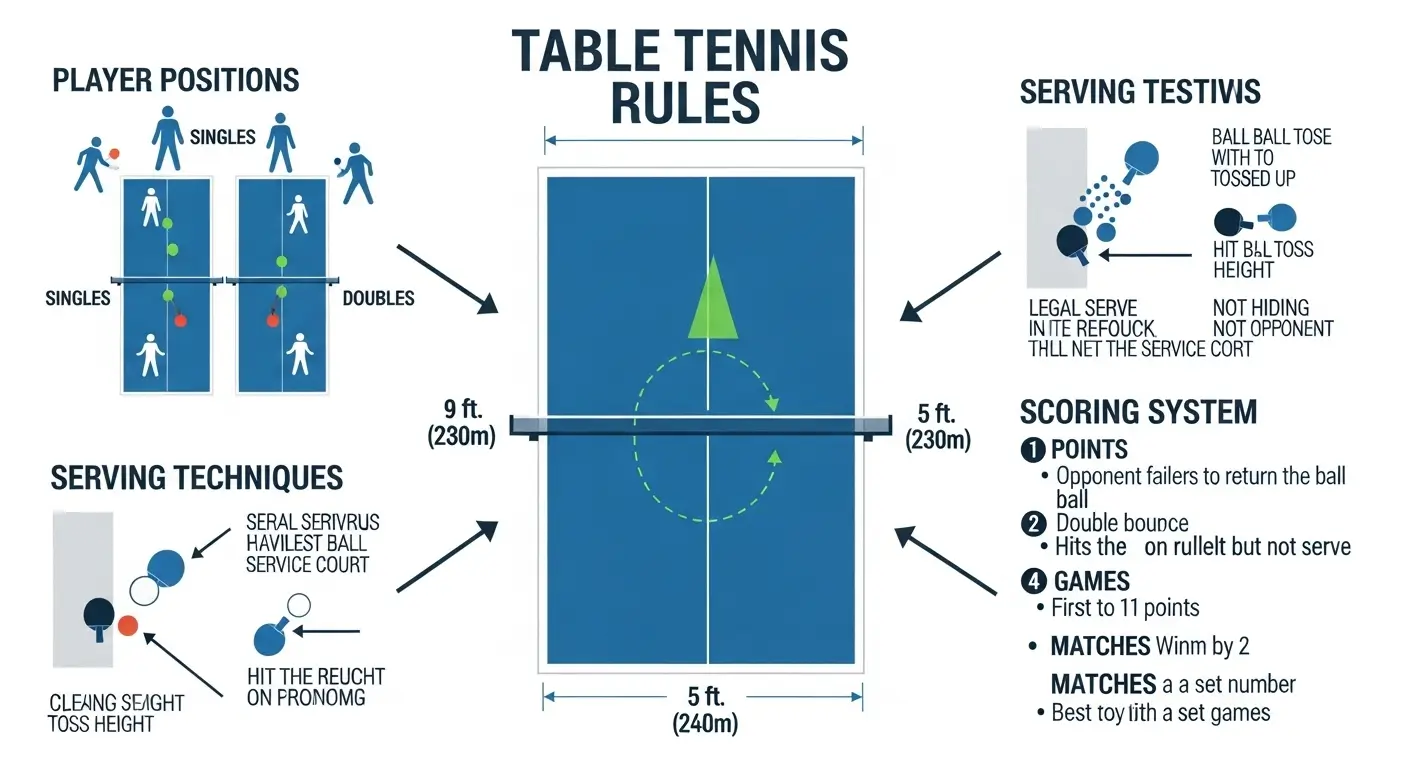
Key rules include:
- Serving: The ball must bounce once on the server’s side and then on the opponent’s side.
- Returning: Players alternate hitting the ball back. The ball must stay within the table boundaries.
- Lets: A serve touching the net but landing correctly is replayed.
- Scoring: Points are awarded if the opponent cannot return the ball or the ball lands outside the table.
- Alternating Service: Players switch serves every two points.
- Switching Ends: Players switch sides after each game to maintain fairness.
These rules are easy to learn but allow for advanced strategies and professional play.
Differences Between Table Tennis and Ping Pong
While often used interchangeably, ping pong generally refers to informal recreational play, while table tennis refers to competitive or professional play with standardized rules and equipment. For more detailed comparison, see What is the Difference Between Table Tennis and Ping Pong.
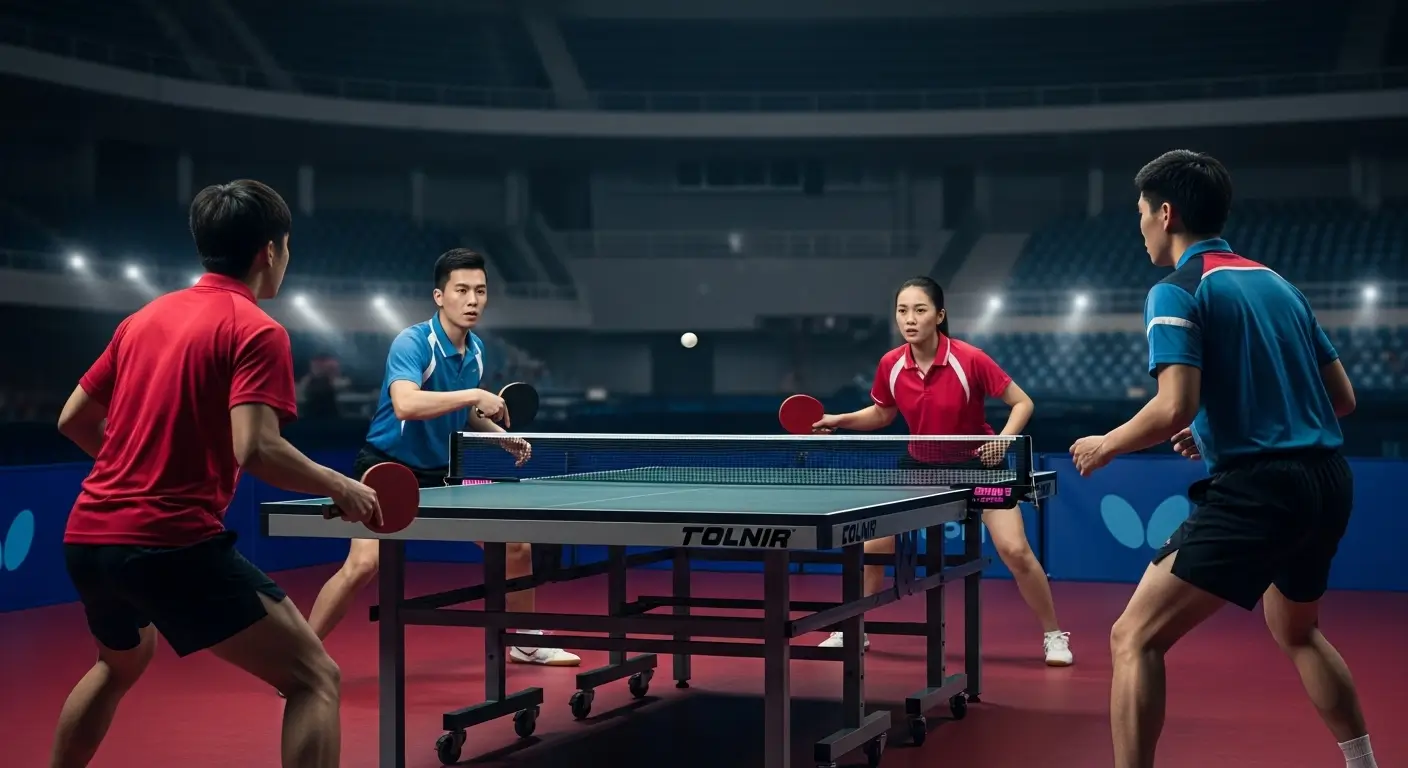
Table Tennis Doubles
Doubles table tennis involves two players on each side. Players must alternate hitting the ball during each rally, which requires coordination and communication. The serve must be diagonal, and each player serves twice before switching to the opponents. Doubles matches are generally faster and require strategic positioning to cover the table effectively.
Teamwork is essential in doubles table tennis because each player must anticipate not only their partner’s movements but also those of the opponents. Successful doubles teams communicate constantly, position themselves strategically, and adapt quickly to changing situations during rallies. Developing these skills requires both practice and understanding of the game’s strategies, which makes doubles play more challenging and engaging than singles.
For readers looking to explore teamwork and strategy in other court sports, All Courts Sports Guide provides well-researched and expertly written articles covering multiple sports and their techniques. You can check these resources for insights into how coordination and tactical planning are applied in similar games:
The Expedite System in Table Tennis
The expedite system is applied when a game lasts too long. If a game continues beyond ten minutes and fewer than 18 points are scored, the server must serve within ten seconds, and points are awarded if the receiver does not return the ball within 13 shots. This rule ensures that rallies remain fast-paced and the match progresses efficiently.
The expedite system is primarily used in professional tournaments and rarely in casual play. For official rules, visit the ITTF Rules Handbook.
Types of Strokes in Table Tennis
Players use different strokes to control rallies and score points:
- Forehand: Hitting the ball with the front of the paddle.
- Backhand: Hitting the ball with the back of the paddle.
- Push: A defensive stroke to keep the ball low.
- Block: Returning fast attacks with a stationary paddle.
- Smash: A strong downward stroke to win a point.
- Loop: Adding topspin to make the ball drop quickly and increase difficulty for the opponent.
Mastering these strokes is essential for both recreational and competitive play.
Coach’s Corner: From the Court
“In my training clinics, I see many players struggle with their ‘Loop’ and ‘Backspin’ shots simply because they are playing with dirty or worn-out rubber, which causes the ball to slide rather than grip.
My Tip: Treat your paddle surface as a precision engine; just as restoring the grit on a pickleball paddle is vital for spin control, keeping your table tennis rubber clean is the only way to ensure your ‘wrist snap’ actually translates into point-winning rotation.”
Effects of Spin
Spin greatly influences ball movement and gameplay. There are three main types:
- Topspin: The ball rotates forward, causing it to drop quickly.
- Backspin: The ball rotates backward, slowing it down and making it harder to attack.
- Sidespin: The ball curves sideways, creating an unpredictable trajectory.
Skilled players use spin strategically to control rallies, deceive opponents, and gain an advantage. Top-level players, such as those competing in the Olympic Games, often rely heavily on spin to dominate matches.
Origin and History of Table Tennis
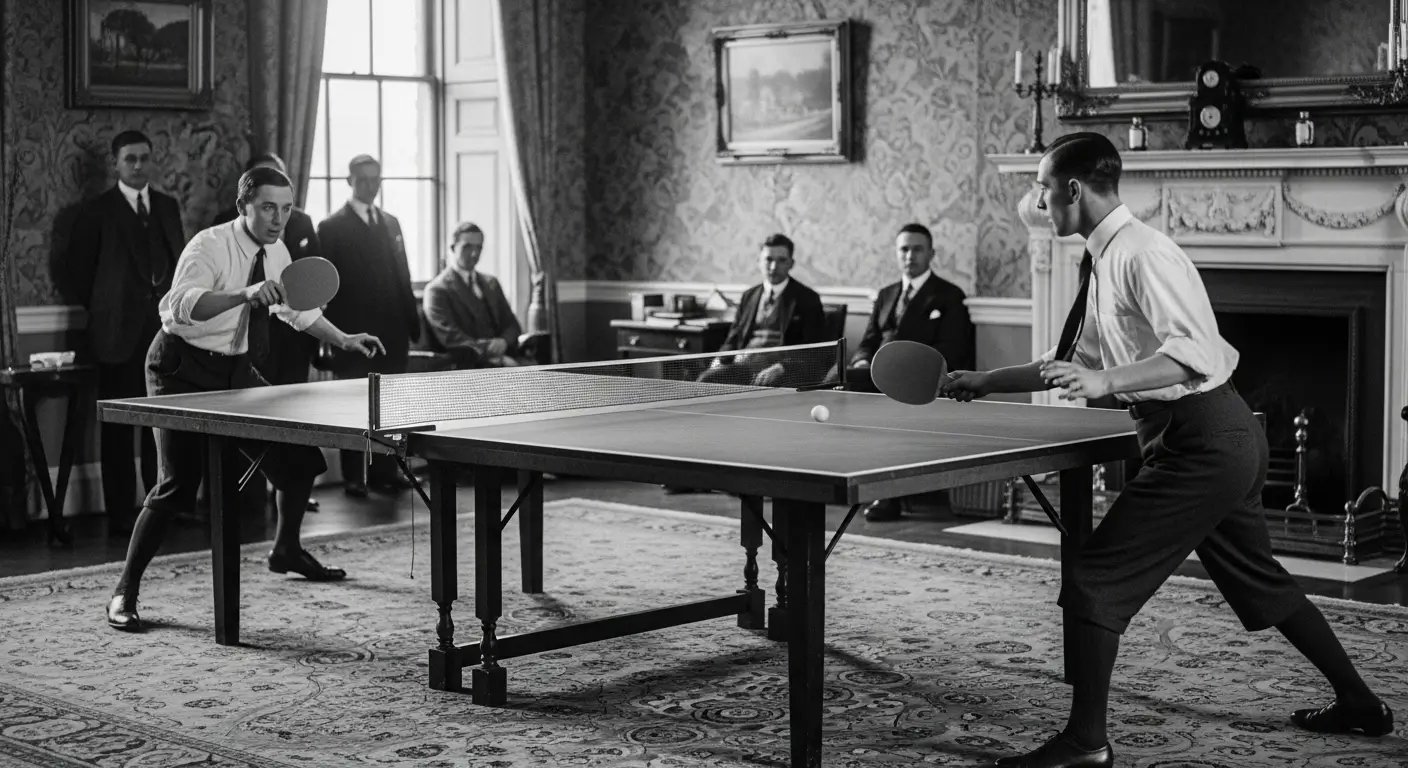
Table tennis originated in England during the late 19th century as a parlor game. It was originally called whiff whaff and was played using improvised materials such as books for paddles and corks or rubber balls. Over time, the game evolved, with standardized rules emerging in the 1920s.
In 1926, the International Table Tennis Federation (ITTF) was formed, formalizing the sport and hosting the first world championships. Table tennis has since become a global competitive sport with professional leagues, tournaments, and Olympic inclusion (ITTF Official).
The First Official Tournaments
The first organized table tennis tournaments took place in England and quickly spread to Europe. National championships were followed by the first World Championships in 1926. These early tournaments established international rules, competitive formats, and ranking systems.
For insights into how other racket sports developed competitive tournaments, see The Complete History of Badminton.
The Rise of Table Tennis in Asia
After World War II, table tennis saw rapid growth in Asia. Countries like China, Japan, and South Korea became dominant in international competitions, producing world-class players and innovative techniques. Asian nations continue to lead in global tournaments, and training academies in these countries have become models for developing professional talent.
Famous Table Tennis Competitions
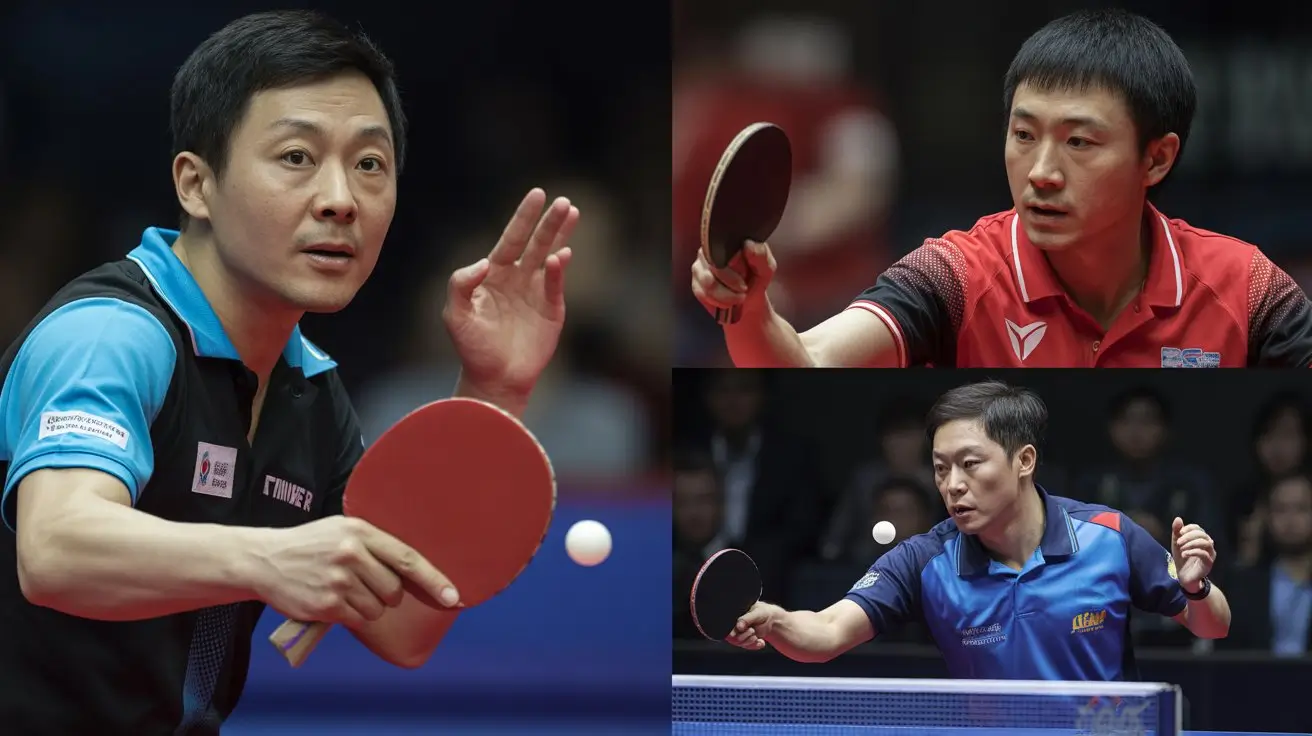
Some of the most notable competitions include:
- Olympic Games: Introduced in 1988, featuring singles and team events (Olympics Table Tennis).
- World Championships: Organized by ITTF since 1926.
- Continental Championships: Held across Asia, Europe, and the Americas.
These tournaments showcase the sport’s best players and highlight competitive strategies at the highest level.
Notable Players
Legendary players have defined table tennis history:
- Ma Long (China): Known for precision, speed, and consistency.
- Jan Ove Waldner (Sweden): Called the Mozart of table tennis for his strategic mastery.
- Ding Ning (China): Multiple-time world champion and Olympic medalist.
Competitive vs Recreational Play
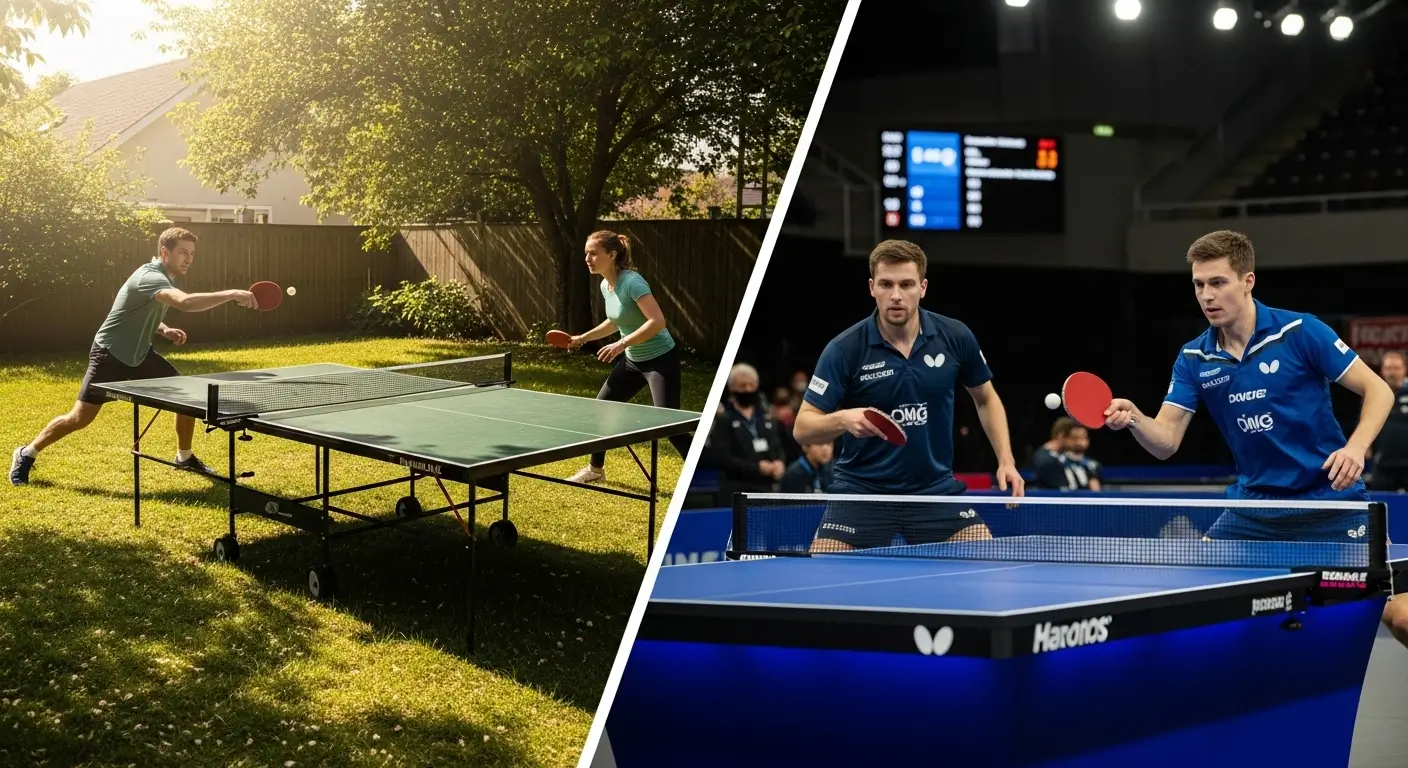
Competitive table tennis involves strict rules, professional equipment, and strategic play. Recreational play focuses on enjoyment and exercise, allowing for flexible rules. Both types are valuable, but competitive play requires understanding spin, stroke techniques, and placement strategies.
For beginners interested in starting competitive training, our guide What is Pickleball provides insights into training and strategy for court sports.
Other Names for Table Tennis
Table tennis has been known by many names around the world, reflecting its history, culture, and whether it is played competitively or recreationally.
Historical Names
- Whiff Whaff – The earliest recorded name, used in England in the late 19th century when the game was first played as a parlor game.
- Ping Pong – Popularized in the early 20th century, the term imitates the sound of the ball hitting the paddle and table. Often used informally, especially in the United States and England.
- Gossima – An early brand name in the 1900s in England; sometimes used to refer to the sport itself.
- Flim-Flam – Rarely used, historical English name for table tennis in private clubs in the late 19th century.
- Flick-Flock – Another playful historical name for the indoor version of lawn tennis in Victorian England.
Regional Names
- 乒乓球 (Pīng Pāng Qiú) – China, literally “ping pong ball.” The official term in China and widely used in both formal and informal settings.
- 卓球 (Takkyu) – Japan, meaning “table ball.”
- Tischtennis – Germany, literal translation “table tennis.”
- Tennis de table – France, literal translation “table tennis.”
- Tennistavolo – Italy, literal translation “table tennis.”
- Tenis de mesa – Spain, literal translation “table tennis.”
- Bordtennis – Scandinavian countries such as Norway and Sweden, meaning “table tennis.”
Brand and Commercial Names
- Gossima and Ping-Pong were also trademarked brand names used by companies that manufactured equipment in the early 1900s. Over time, “ping pong” became a generic informal name.
Today, the sport is officially called table tennis, especially in competitive and professional contexts. Informal names like ping pong are common in casual play, while historical names like whiff whaff, flick-flock, and gossima reflect its Victorian-era origins. Understanding these names gives a richer sense of the sport’s cultural and historical spread across different regions.
For historical context and formal rules, see International Table Tennis Federation History.
Why Table Tennis is So Popular
Table tennis is popular because it is:
- Accessible to people of all ages and skill levels.
- Easy to learn yet challenging to master.
- Suitable for casual recreational play and professional competition.
The combination of speed, skill, and mental strategy makes table tennis an engaging sport worldwide. Its global appeal is supported by major tournaments, legendary players, and international media coverage.
Conclusion
Table tennis is a sport that combines speed, skill, strategy, and mental focus. From its origins as a parlor game in England to its development into a global competitive sport, table tennis has become one of the most popular sports in the world, played by millions of people of all ages.
Whether you play casually at home, in a community center, or professionally in international tournaments, table tennis offers fun, exercise, and mental challenges. Its simplicity in equipment, fast-paced gameplay, and competitive depth make it accessible for beginners while still challenging for professionals.
For more information on equipment and techniques for similar sports, you can explore our guides: Ultimate Guide to Platform Tennis and What is Squash.
If you want to experience a sport that is both physically engaging and mentally stimulating, table tennis is an excellent choice. Pick up a paddle, set up a table, and start playing to see why it has captivated millions around the globe.
Frequently Asked Questions (FAQ)
- What is the difference between table tennis and ping pong?
Table tennis refers to formal, competitive play with standardized rules and equipment. Ping pong is usually informal, recreational, and flexible in its rules. For a detailed comparison, see Difference Between Table Tennis and Ping Pong. - How do I start playing table tennis?
You need a table, paddles, a ball, and a net. Beginners can start by learning basic strokes, serving rules, and simple rallies. Practice regularly and gradually learn spin and placement techniques. - What equipment is best for beginners?
Basic tables and paddles are sufficient for casual play. A standard 9-foot table, a lightweight plastic ball, and a rubber paddle will allow beginners to enjoy the game before moving to professional equipment. - What are the main types of strokes in table tennis?
The main strokes are forehand, backhand, push, block, smash, and loop. Each stroke serves a different purpose in controlling the ball and scoring points. - What is the expedite system?
The expedite system is used in competitive play to speed up long games. If a match lasts more than 10 minutes and fewer than 18 points are scored, players must serve within 10 seconds, and points are awarded if the receiver cannot return the ball within 13 shots. See ITTF Rules Handbook. - Who are some famous table tennis players?
Notable players include Ma Long (China), Jan Ove Waldner (Sweden), and Ding Ning (China). These athletes have won multiple championships and contributed to the sport’s global popularity. - How does spin affect the game?
Spin affects the ball’s trajectory and makes it harder for opponents to predict and return shots. Topspin, backspin, and sidespin are commonly used in both recreational and competitive play. - Can table tennis improve health and fitness?
Yes, playing table tennis improves hand-eye coordination, reflexes, concentration, and overall physical activity. Studies show it can be beneficial for both cognitive and physical health (NIH Study). - Is table tennis suitable for all ages?
Absolutely. The sport is accessible for children, adults, and seniors because it does not require extreme physical strength but encourages coordination, focus, and mental agility. - What is the difference between singles and doubles play?
In singles, two players compete against each other, alternating shots. In doubles, teams of two alternate hitting the ball, requiring teamwork, strategy, and coordination to cover the table efficiently.