
 By Ghulam Mustafa Khan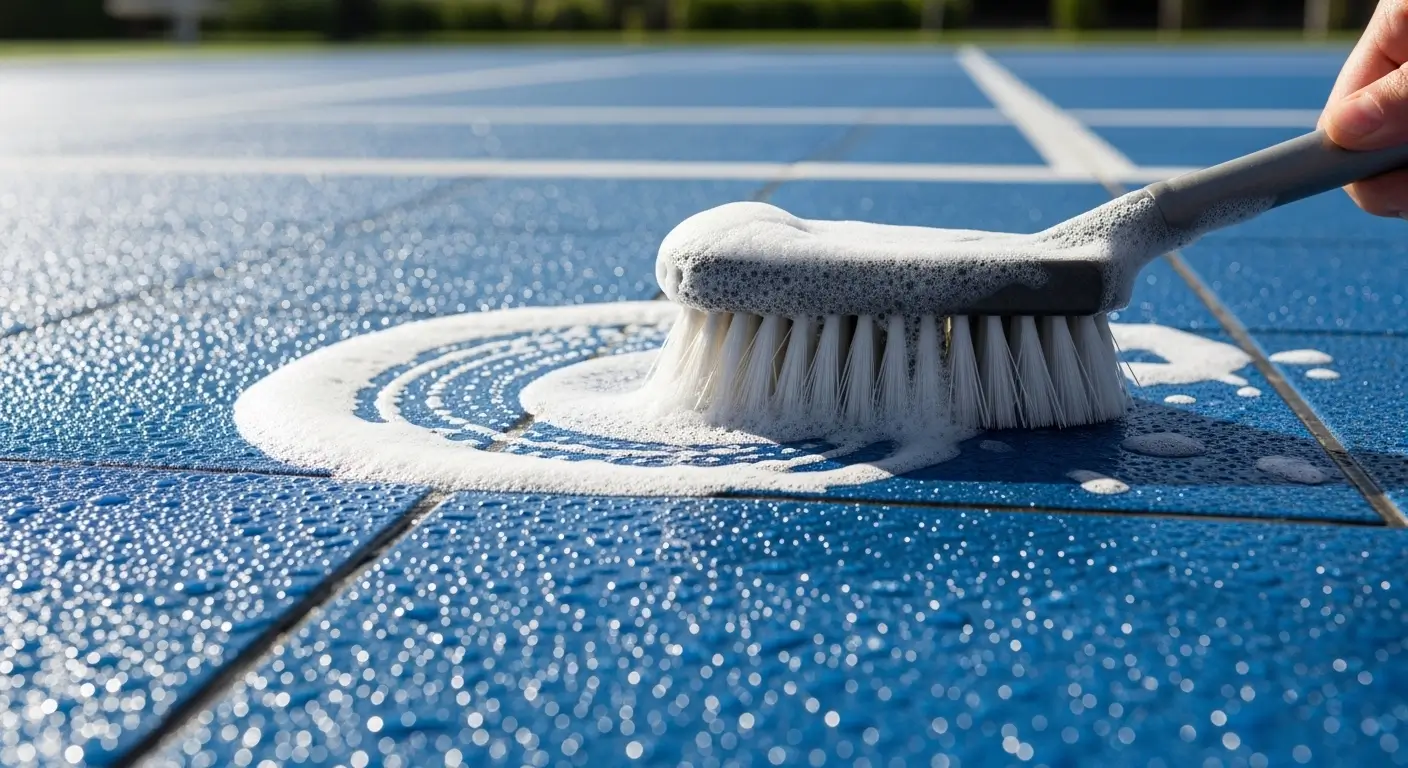
Owning a backyard court is a high-performance experience until local wildlife leaves its mark. Because most modern outdoor sports tiles feature a perforated, open-grid design, bird droppings pose a unique technical problem. They don’t just sit on the surface; they penetrate the grid, leading to bacteria growth, slip hazards, and chemical damage.
If you are currently facing a mess on your kitchen line, here is the professional strategy for cleaning sport court tiles without compromising your investment.
Stopping Acidic Damage: How to Prevent Bird Waste from Etching Your Surface
The Problem: You’ve noticed that even after a quick rinse, a “shadow” or dull spot remains on your blue or green tiles.
The Solution: Bird waste is highly acidic, containing high levels of uric acid (C5H4N4O3). When baked by the sun, this acid chemically “etches” the polypropylene, leading to permanent fading.
The Fix: You must neutralize the pH immediately. Apply a solution of one part white vinegar to five parts water. The mild acetic acid in the vinegar breaks down the uric acid before it can bond with the painted pickleball lines or the tile’s UV-protective coating.
From the Coach’s Perspective
“A single slick spot from organic debris can lead to a traction failure during a fast-paced pivot or jump. Keeping a soft-bristle brush and water courtside for immediate spot cleaning ensures that your footwork remains as precise as your pickleball paddle’s grit and spin potential.”
The Grid Gap Challenge: Clearing Trapped Waste from Perforated Tiles
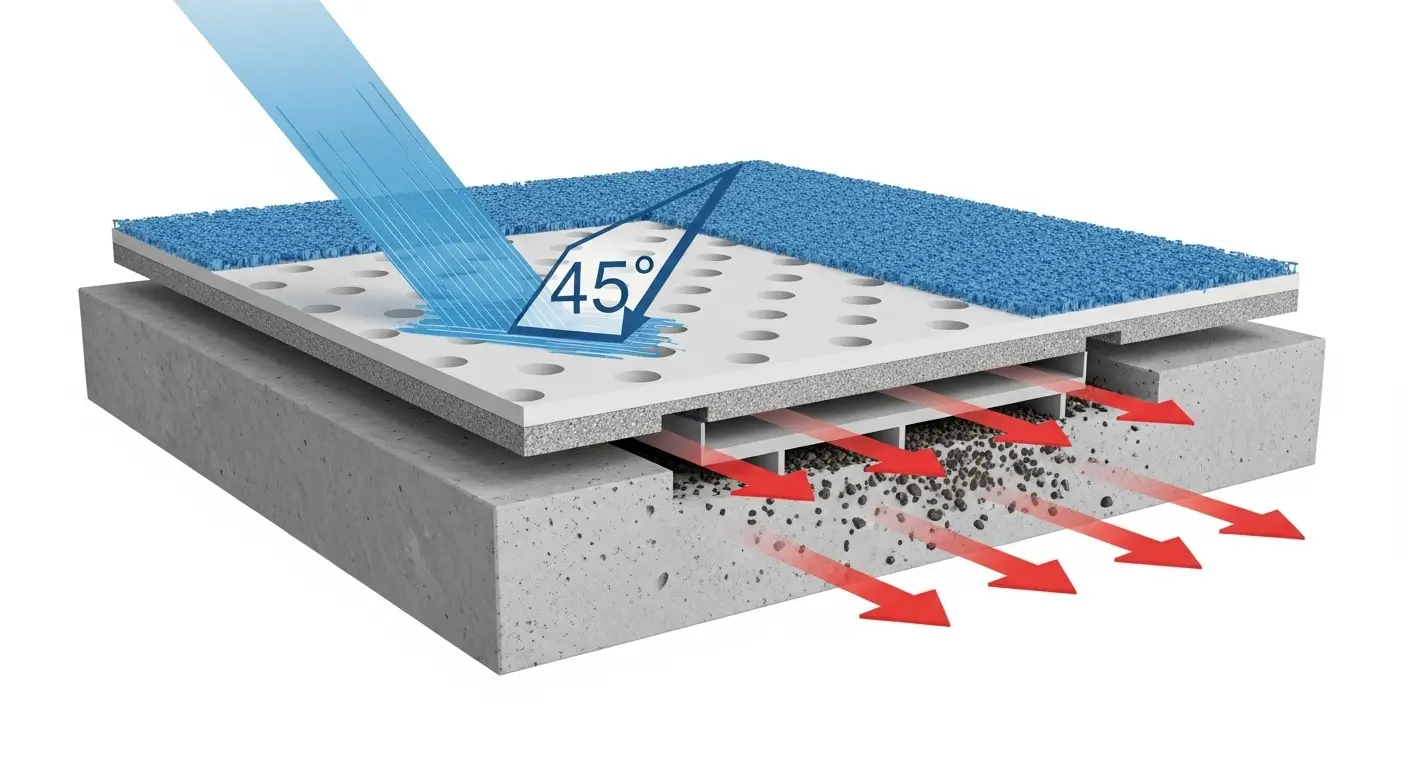
The Problem: Scrubbing or spraying straight down simply pushes the waste through the holes, trapping it against the concrete sub-base where it rots and smells.
The Solution: Managed Hydraulic Direction.
The Fix: Never spray a hose or pressure washer directly downward. Instead, use a 45-degree angle. This creates a directional “flush” that pushes the debris through the drainage channels and out toward the court’s perimeter. This is the only way to ensure the sub-base remains hygienic as per ASBA maintenance standards.
Preserving the Surface: Safe PSI Limits for High-Impact Tiles
The Problem: You want to use a power washer for speed, but you’re afraid of turning your expensive tiles brittle.
The Solution: Pressure Calibration.
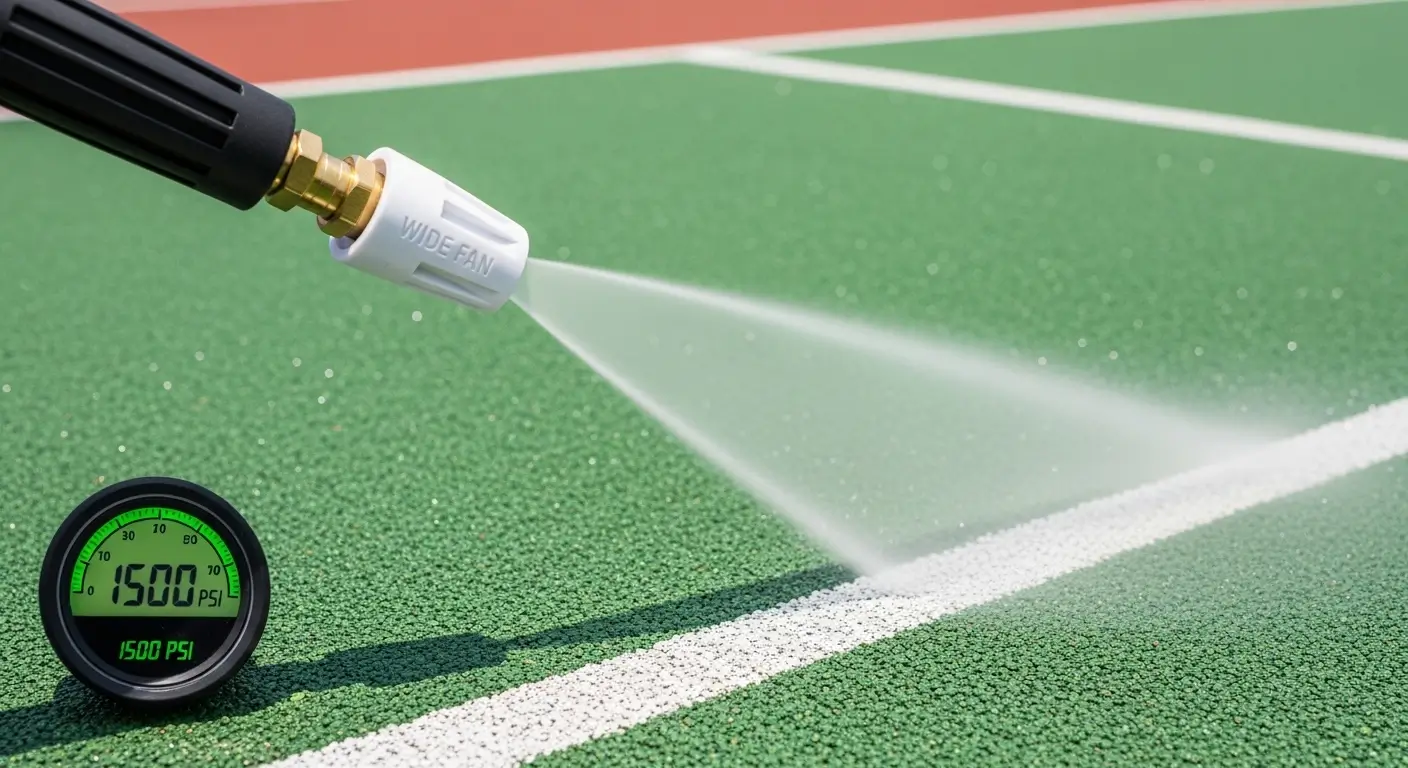
The Fix: Keep your pressure washer below 1,500 PSI. Use a 40-degree wide-angle fan tip and maintain a 12-inch distance. Crucially, avoid ammonia or bleach. These chemicals react with plastic polymers, causing micro-cracking and brittleness. Stick to pH-neutral detergents that lift grime without damaging the zoning-approved materials used in your court.
Critical Precautions for Tile Preservation
To avoid accidental damage during your cleaning routine, keep these technical safeguards in mind:
Abrasive Alert: Never use wire brushes or metal scrapers. They create micro-scratches that trap future dirt, making the court harder to clean over time.
Temperature Control: Do not use water exceeding 120°F. Excessive heat can cause the interlocking tabs to expand unevenly, leading to temporary buckling.
Chemical Runoff: Ensure your cleaners are biodegradable to stay in compliance with local backyard court permits regarding groundwater safety.
Frequently Asked Questions (Problem Solved)
What if the stain is already “baked” in?
Use a specialized enzymatic cleaner. These contain biological agents that “eat” the organic proteins in the dropping. Apply it, let it sit for 10 minutes (keep it damp!), and rinse.
Will pressure washing ruin my court’s traction?
Only if you use too much pressure or harsh chemicals. Using the 1,500 PSI limit with a pH-neutral soap actually improves traction by removing the slick “biofilm” that bird waste leaves behind.
How do I stop birds from returning to the same spot?
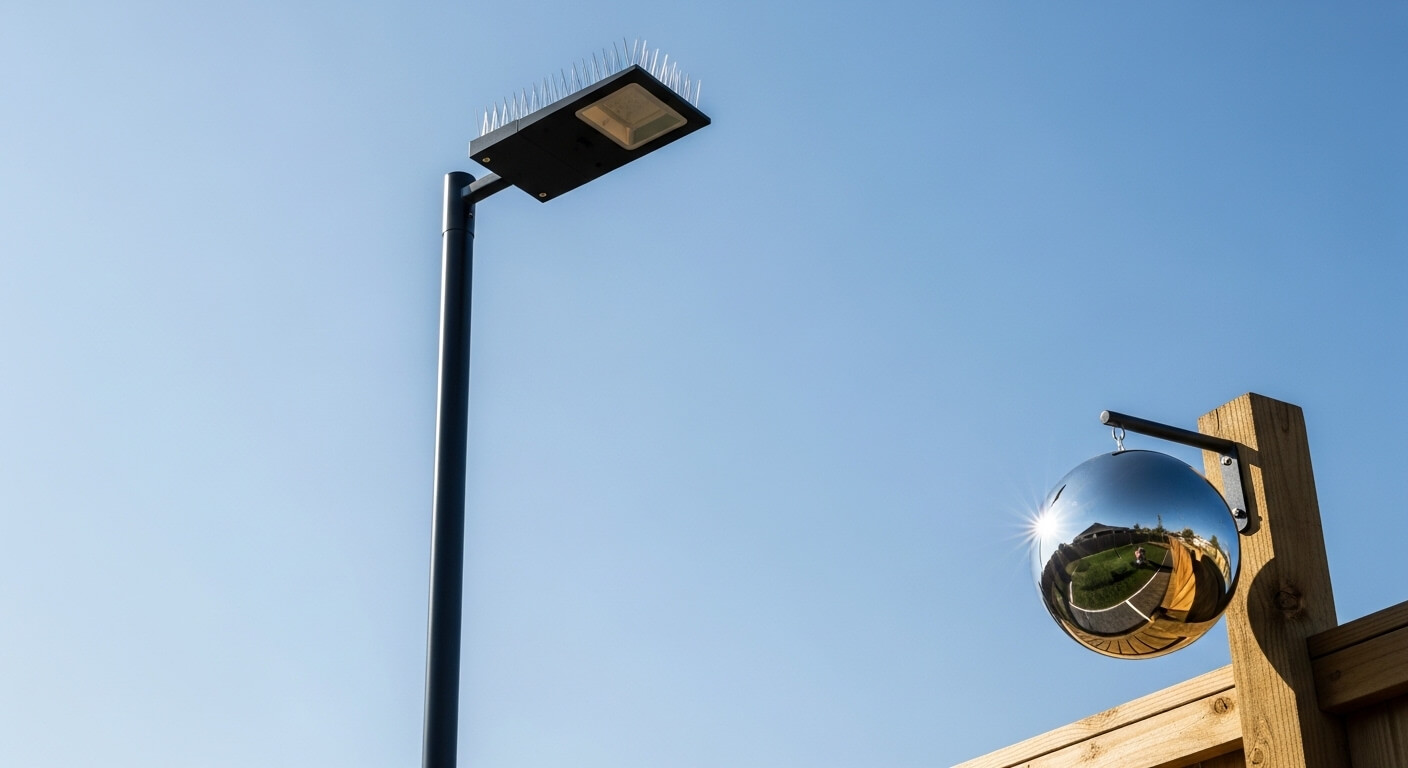
Birds are territorial. In 2026, the most effective solution is a multi-layered defense: install stainless steel bird spikes on your court lighting fixtures and hang reflective spheres to disrupt their flight path.
Conclusion: A Proactive Defense
A clean court is a high-performance court. By understanding the chemical and hydraulic requirements of cleaning sport court tiles, you move from reactive scrubbing to professional-grade maintenance. Consistency in your cleaning routine is the only way to prevent environmental contaminants from shortening the lifespan of your sports surface.