
 By Ghulam Mustafa Khan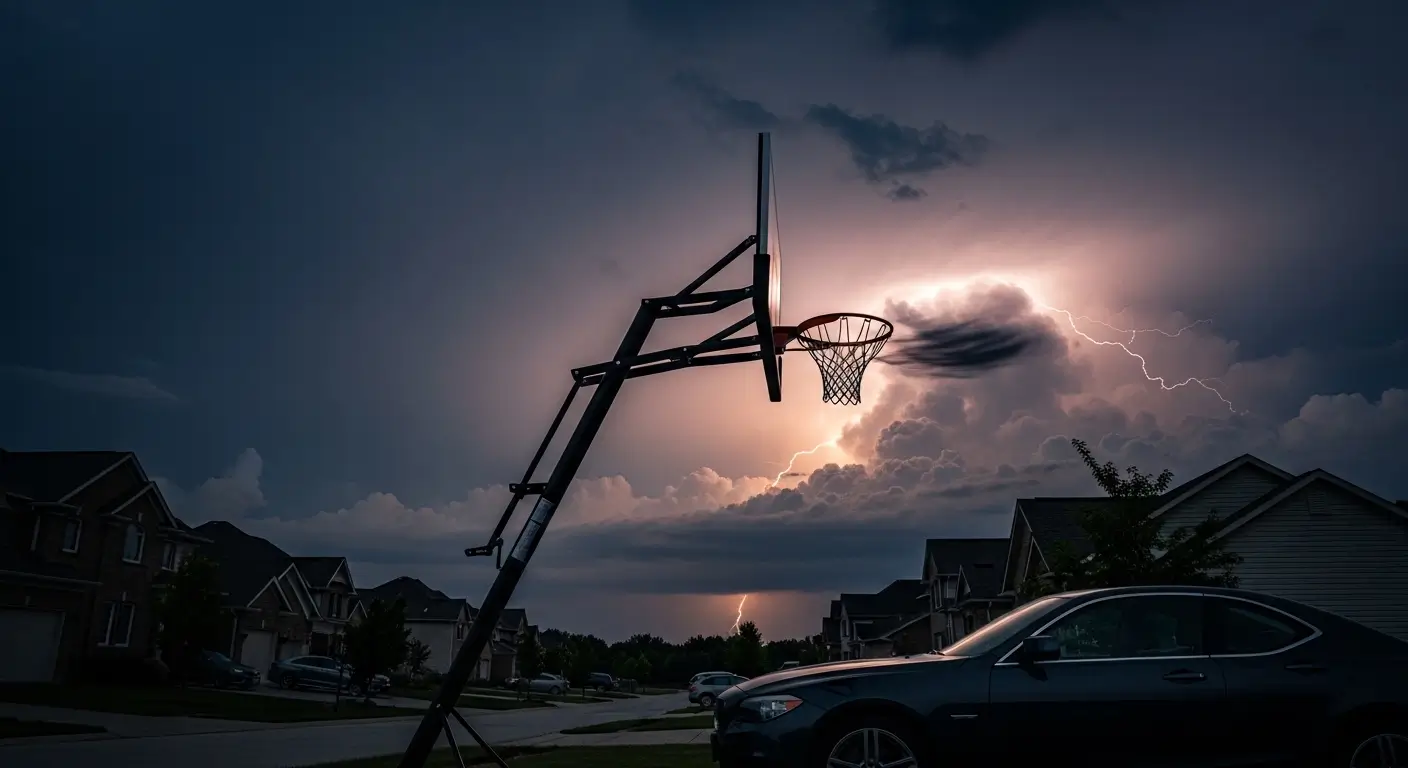
In 2026, the suburban landscape is shifting. With high-velocity wind events becoming more frequent, homeowners are no longer asking which hoop looks the best; they are asking which one will still be standing after a gale.
A fallen basketball goal isn’t just a ruined piece of equipment—it’s a $1,000 liability that can crush a car hood, shatter a backboard, or cause a material disclosure issue in a real estate sale. When you search for a windproof basketball hoop, you are looking for a system that defies the “Sailing Effect.” To choose correctly, you must understand the engineering gap between a standard driveway toy and a professional-grade fixture.
The Weighting Game: What Manufacturers Won’t Tell You About Tip-Over Risks
The most common question in the driveway sports market is: How stable are portable basketball hoops? To an engineer, the answer is found in the ballast-to-surface-area ratio.
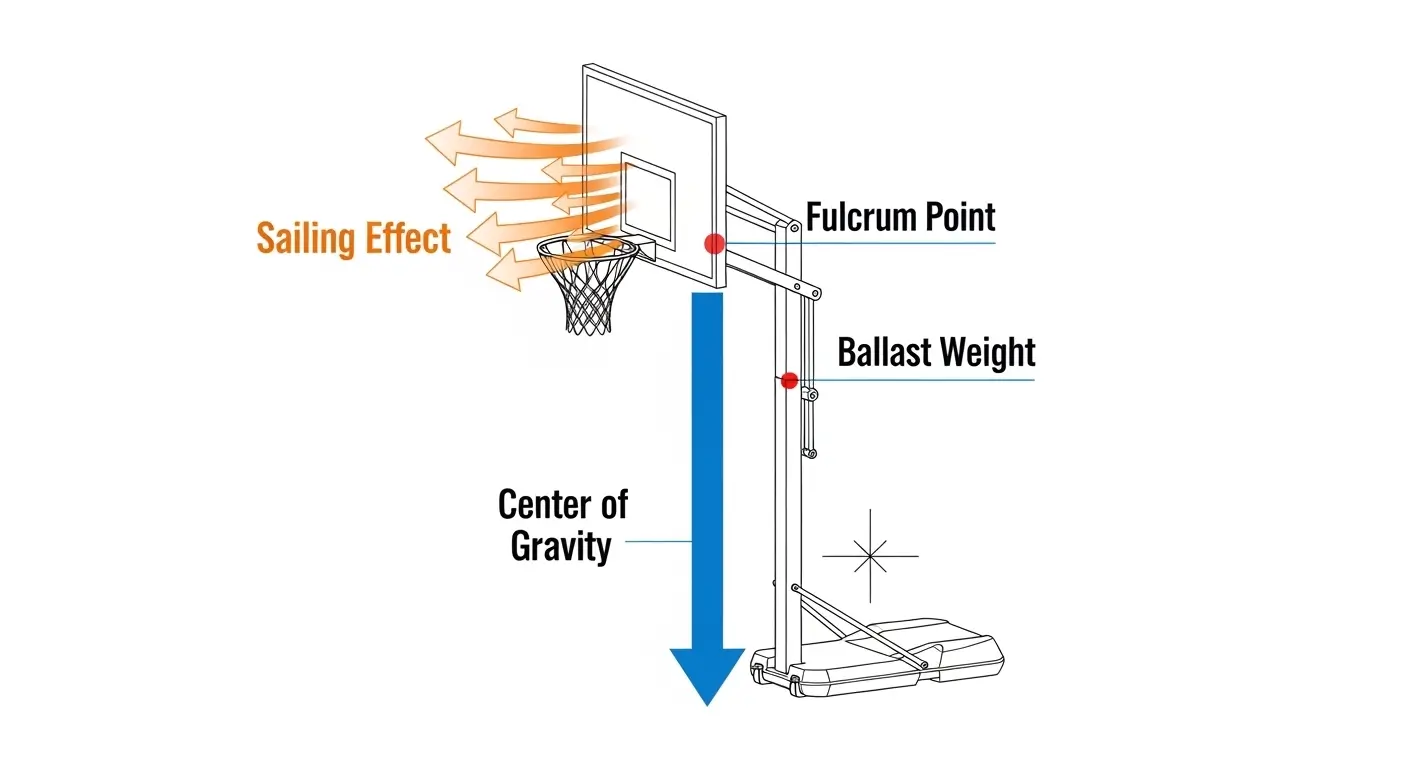
Portable hoops rely on a plastic base filled with water or sand. While this provides enough weight for a casual jumper, it creates a dangerous center of gravity. In high winds, a 54-inch backboard acts like a massive sail. Once wind speeds exceed 40mph, the force exerted on that sail often overcomes the weight in the base, turning the hoop into a fulcrum that tips forward.
Before you finalize your layout, see our comprehensive guide on basketball court dimensions to ensure your driveway has enough clearance for a high-stability base.
Are Portable Basketball Hoops Worth It?
Portable basketball hoops are a good choice for renters or families who plan to move soon. Their main benefit is mobility. However, you are choosing convenience over the permanent strength of an in-ground system.
The risk is clear. If you do not buy the most stable portable basketball hoop available, you are buying a product that is vulnerable to the wind. A large backboard acts like a sail. Without enough weight in the base, even a moderate breeze can knock the system over and damage your property. To protect your investment and keep your driveway safe, make sure you upgrade to the best portable basketball hoop for windy conditions.
Expert Tip: The Sand Advantage
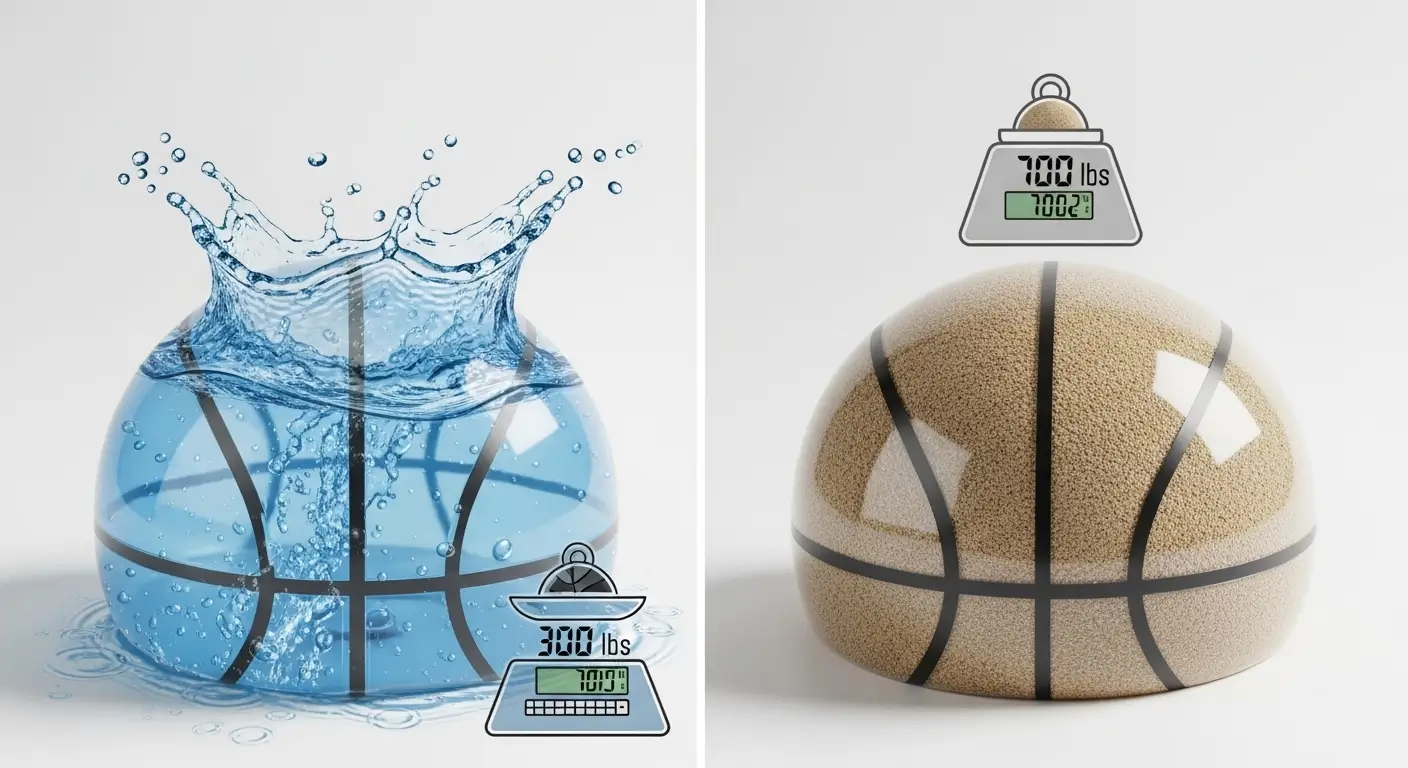
For the best results, fill your base with dry play sand instead of water. Sand is heavier and does not evaporate over time. This ensures your hoop stays at its maximum weight all year, providing much better protection against sudden wind gusts.
From the Coach’s Perspective
“A hoop that wobbles for five seconds after every shot ruins the flow of a real practice session because you can’t read your own rebounds. My tip is to focus on creating a ‘dead’ weight in the base to kill vibrations; this rock-solid stability is the only way to get the high-repetition feedback needed when mastering solo tennis or basketball drills in a garage or driveway.”
Multi-Sport Stability: Don’t Ruin Your Court Surfaces
When a portable hoop tips over, it doesn’t just break the rim—it gouges the surface of your driveway. This is especially critical for homeowners who have invested in a multi-sport setup.
If you have used our guide on how to paint lines on a pickleball court, the last thing you want is a 500lb steel pole dragging across your fresh acrylic coating. A walking or vibrating portable hoop can strip away your precision-painted lines, leading to expensive resurfacing costs.
Are Freestanding Basketball Hoops Good?
Freestanding basketball hoops are good for versatility, but they require a higher level of situational awareness. Unlike in-ground systems, they aren’t part of the property’s foundation. According to NOAA’s wind scale standards, gusts in open driveways can often exceed the safety ratings of entry-level hoops.
If you live in a high-wind corridor, a freestanding unit requires a specific maintenance routine to ensure it doesn’t become a projectile during storm season.
Which Portable Basketball Hoop is Right for Your Home?
When evaluating the best portable basketball hoop for a driveway, the market in 2026 is divided into three tiers of stability:
1. The Junior Class (e.g., Top Shot Portable Basketball System)
What is the Top Shot portable basketball system? These are typically lightweight systems designed for poolside play or younger kids. With smaller backboards and light telescopic poles, their wind resistance is low. They are best kept in a garage or weighted down with extra sandbags when not in play.
2. The Mid-Range Tier (e.g., Silverback NXT)
These offer the best basketball hoop outdoor experience for most families. They typically feature 44-54 inch backboards and 35-gallon bases. They are sturdy for play but still require “storm prep” during high-wind warnings.
3. The Professional Tier (e.g., Spalding The Beast)
If you want the most sturdy portable basketball hoop, this is it. Spalding portable basketball hoops in the “Beast” category use 50+ gallon bases and massive 5-inch square poles. They are the only portables that truly approach the “windproof” feel of an in-ground system
Technical Breakdown: Specs for Wind Resistance
To find the most stable portable basketball hoop, ignore the flashy graphics and look for these technical specs:
- Base Volume: Look for 40–55 gallons. Water is 8.3 lbs/gallon, while sand is approximately 13 lbs/gallon.
- Pole Shape: Square poles are inherently more wind-resistant than round poles because they resist the “twisting” motion (torsion) that wind creates.
- Material Density: Heavy tempered glass actually helps dampen wind vibration—provided the base is heavy enough to counter it. For more on material durability, check ASTM International standards for weather resistance.
The Storm-Ready Playbook: Strategic Defense for Your Court
Even the most sturdy portable basketball hoop can meet its match during a severe weather event. While hardware selection is the foundation, your “active defense” determines if your system survives a 2026 “micro-burst” or a seasonal gale.
The 60-Minute Storm Protocol
If a high-wind warning is issued, do not rely solely on the weight of the base. Follow this three-step tactical defense to secure your equipment:
- Reduce the Lever Arm: Lower your hoop to its minimum height (typically 7.5 feet). The Physics: By lowering the backboard, you drop the center of gravity closer to the ballast. A hoop at 10 feet creates massive torque on the base; lowering it makes the system significantly harder for a gust to initiate a tip.
- Utilize Aerodynamic Breaks: If your hoop is on wheels, move it into a “Wind Shadow.” Position the unit against a garage wall or between two parked vehicles. This breaks the wind’s velocity before it hits the backboard “sail.” If gusts are predicted to exceed 70 mph, the only fail-safe move is to gently lay the unit forward on its face (placing a protective moving blanket under the rim).
- Eliminate Mesh Drag: A standard basketball net acts as a micro-sail. According to research on aerodynamic drag coefficients, porous surfaces like nets still create significant resistance. During high winds, the mesh creates air turbulence that puts extra stress on the rim bolts. Removing the net takes 60 seconds but can reduce the total wind-load on the rim by up to 15%.
While these temporary protocol steps will help you survive a sudden squall, they are not a substitute for proper mechanical anchoring. If high-wind warnings are a regular occurrence in your area, you cannot rely on a water-filled base alone. Read our complete guide on exactly how to secure a portable basketball hoop to learn which heavy-duty ground anchors, steel cables, and hybrid sandbag systems will permanently keep your equipment grounded.
Frequently Asked Questions (FAQ)
Q: Can I use cinder blocks on top of the base for extra weight?
A: It is common, but risky. Cinder blocks can vibrate off during play or slide during a storm, potentially cracking the plastic base or causing injury. For a cleaner look and better safety, use weighted base bags filled with pea gravel or sand.
Q: How often should I perform a stability audit?
A: Every 90 days. Check for base leaks and evaporation. A portable hoop that was stable in the humid spring may be dangerously light after a dry, hot summer.
Q: What is the Top Shot portable basketball system and is it windproof?
A: The Top Shot portable basketball system is a specialized junior or poolside recreational unit. While excellent for its intended use, its light frame is not windproof. It should always be stored in a garage or shed during inclement weather.
Expert Tip: The “Pivot-Sleeve” Solution
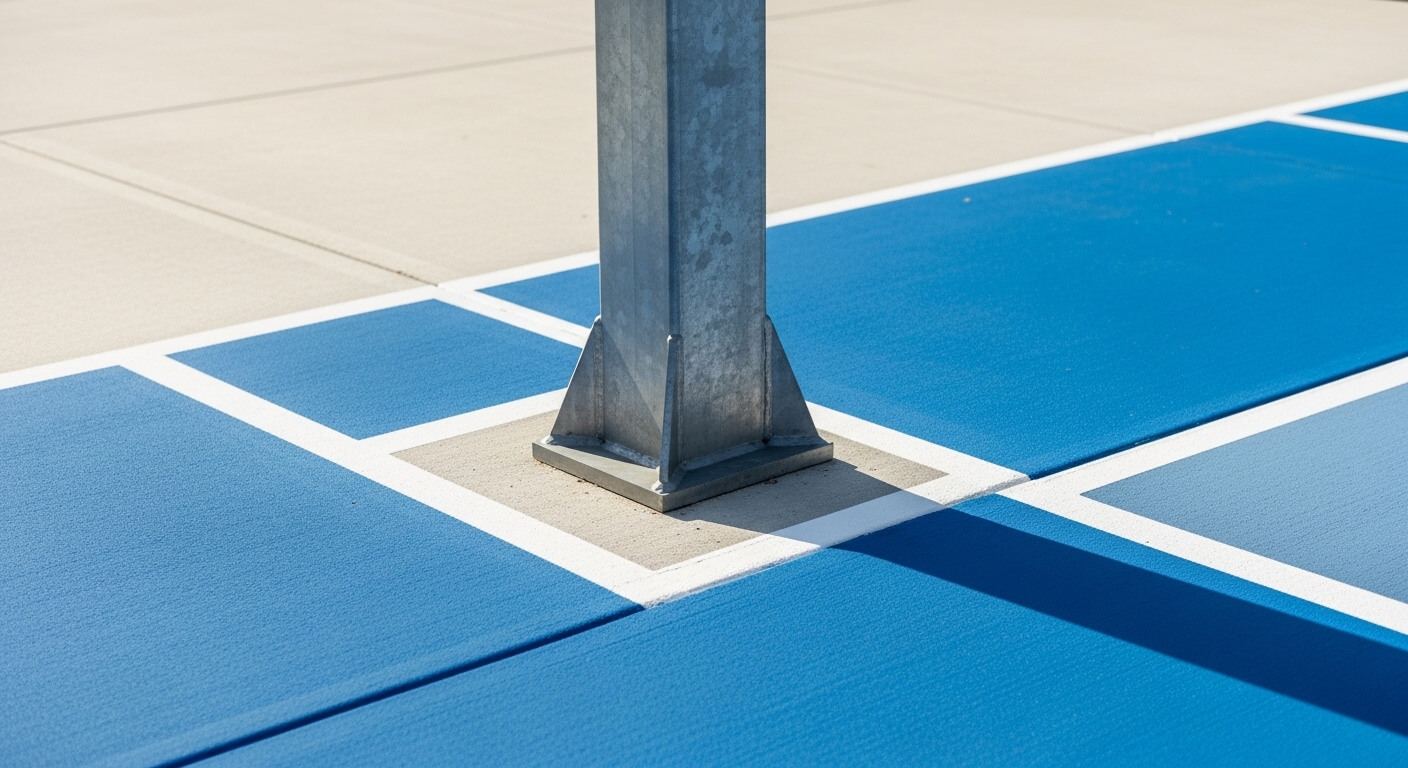
If you are a renter or plan to move in a few years, you don’t have to settle for a flimsy portable. Many professional systems now use a Bolt-Down Anchor System. > This allows you to install a high-end, wind-resistant pole into a concrete base and simply “unbolt” the entire system when you move. You leave the anchor behind—which adds value for the next homeowner—while you take your professional-grade hoop to your next driveway. It’s the ultimate 2026 hack for high-wind stability without losing your investment.
Conclusion: Choosing Resilience Over Convenience
Choosing between portable vs. in-ground hoops is a balance of your current housing situation and your local climate. If you live in a high-wind zone, the best basketball hoop outdoor is one that considers physics as much as the athlete.
Whether you are preparing for the next storm or looking to expand your driveway’s utility, remember that stability is your foundation. Invest in a high-capacity base, utilize sand-gel ballast, and never ignore a weather warning. Your driveway, your car, and your game will be better for it.