
 By Ghulam Mustafa Khan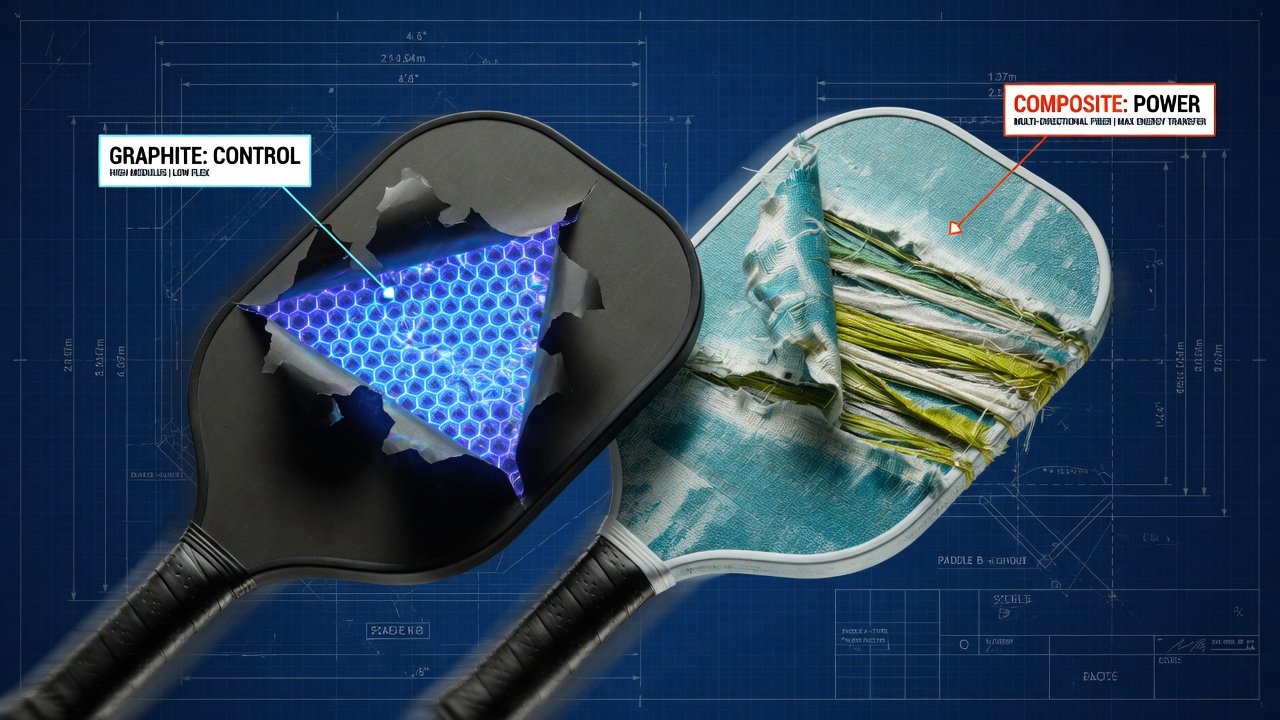
Precision is the silent partner of every elite athlete. In the fast-growing world of pickleball, that precision starts exactly where the plastic ball meets the paddle face.
When players begin analyzing the mechanics of their swing, the first major equipment hurdle they face is understanding the structural differences in a pickleball paddle composite vs graphite. Most marketing materials treat these paddles like simple pieces of sporting goods. However, if you want to elevate your game, you need to view your paddle as an engineered tool designed for specific kinetic responses.
Whether you are stepping onto a tournament facility or testing the trampoline effect of your new gear within your carefully measured pickleball driveway dimensions, choosing the right surface material dictates your entire playstyle. Let’s deconstruct the engineering behind composite vs graphite pickleball paddles so you can match the material science to your mechanics.
Deconstructing the Paddle: Why the Surface Face Matters Most
A common search query among new players is, “What is a composite pickleball paddle?“ To answer this, we first have to bust the biggest myth in pickleball equipment manufacturing.
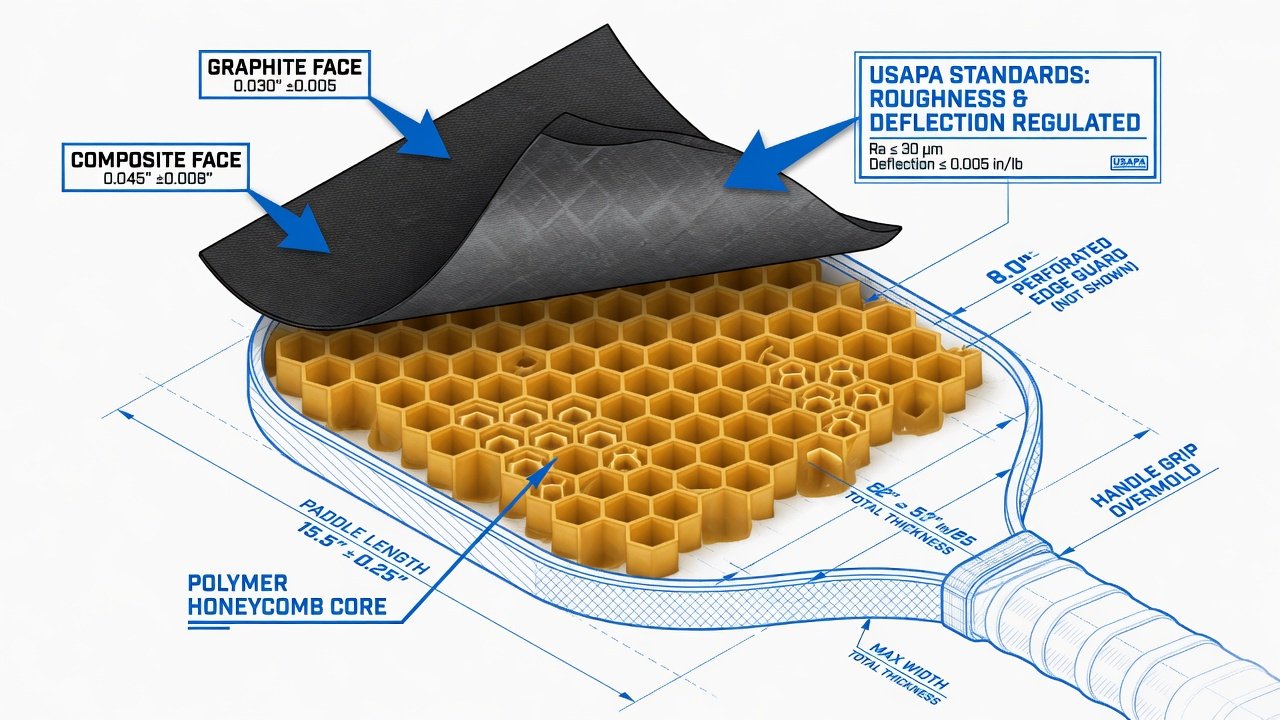
When manufacturers and players debate these materials, they are almost exclusively talking about the paddle’s surface face, not the entire structure.
- The Honeycomb Core: Underneath the surface, nearly 90% of modern paddles share the exact same structural foundation—a polymer (plastic) honeycomb core. This core is responsible for the paddle’s structural integrity, sound dampening, and overall shock absorption.
- The Surface Face: The material bonded to the outside of that honeycomb core is where the graphite or composite distinction is made. The face dictates the friction coefficient (spin), the deflection rate (power), and the tactile feedback (control).
According to the official equipment standards outlined by USA Pickleball (USAPA), paddle faces are strictly regulated regarding their surface roughness and structural deflection. The material you choose must stay within these engineering parameters while maximizing your unique swing mechanics.
The Physics of the Strike: How Material Deflection Works
Before diving into the specific traits of each material, it is essential to understand the physics of a pickleball strike.
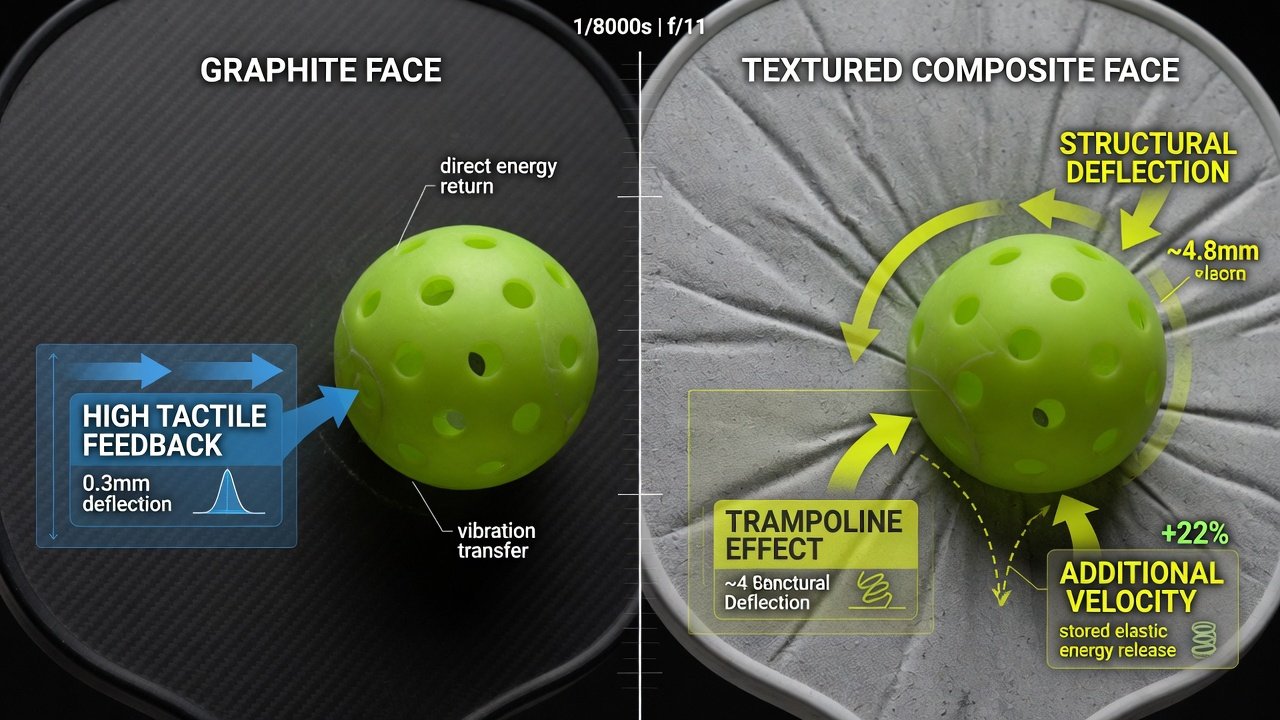
When a hard polymer ball strikes the paddle face, kinetic energy is transferred.
- A stiffer material resists the impact, forcing the ball to deform slightly and bounce off immediately. This provides high tactile feedback and absolute precision—the ball goes exactly where you aim it, with minimal added velocity.
- A flexible material bends upon impact (known as the trampoline effect), absorbing the ball slightly before snapping back into place. This structural flex actively propels the ball forward, generating extra velocity and power.
Understanding this kinetic transfer is the foundation for deciding which paddle surface will elevate your baseline drives or perfect your touch at the Non-Volley Zone.
Graphite vs Composite Pickleball Paddles: The Head-to-Head Engineering Breakdown
To truly understand which paddle will elevate your game, we must look at the specific performance metrics of each face material. When evaluating a graphite vs composite pickleball paddle, the decision ultimately comes down to a trade-off between absolute precision and kinetic power.
Graphite Pickleball Paddles: The Precision Instrument
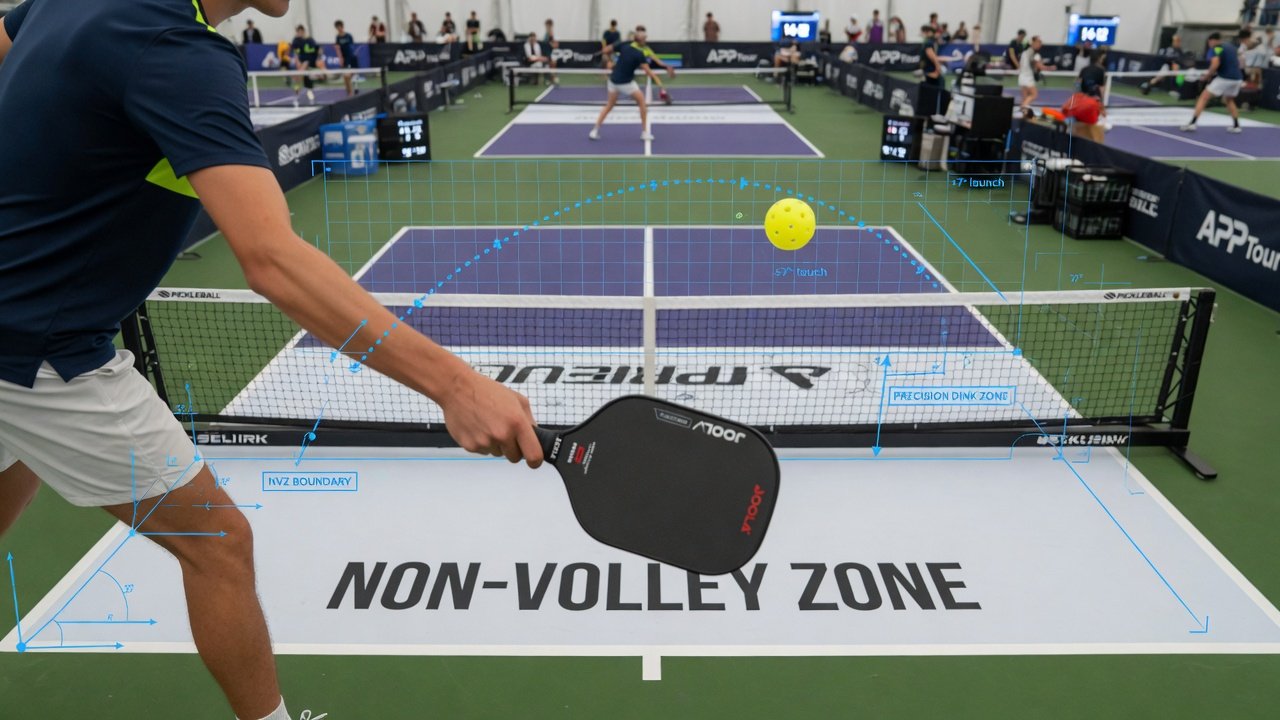
Graphite (a form of carbon fiber) is an incredibly stiff and lightweight material. In aerospace and sports engineering, carbon-graphite is prized for its high modulus of elasticity—meaning it resists bending under force.
When you strike a ball with a graphite face, the paddle does not flex. Instead, the energy is immediately transferred back into the ball.
- Control & Touch: Because there is no “trampoline effect” delaying the ball’s exit, graphite offers superior tactile feedback. You feel exactly where the ball strikes the sweet spot, making it the ultimate tool for precision placement.
- Weight Profile: Graphite faces are exceptionally thin and light, often keeping the total paddle weight between 7.2 and 7.8 ounces. This lower mass translates directly to faster hand speed during rapid-fire volleys at the Non-Volley Zone (the kitchen).
- The Ideal Playstyle: If your game relies on third-shot drops, strategic dinking, and fast defensive resets, a graphite paddle is your blueprint for success. You supply the power; the paddle supplies the accuracy.
It is a debate we hear constantly: “Do pro pickleball players use graphite or composite?” If you look closely at the professional circuit, elite tacticians overwhelmingly reach for graphite or raw carbon fiber. These athletes don’t need a paddle to generate kinetic energy—their own biomechanics do that for them. Instead, they demand a surface that acts as a precision instrument, offering the absolute, surgical control needed to dominate the kitchen.
Composite (Fiberglass) Paddles: The Power Engine
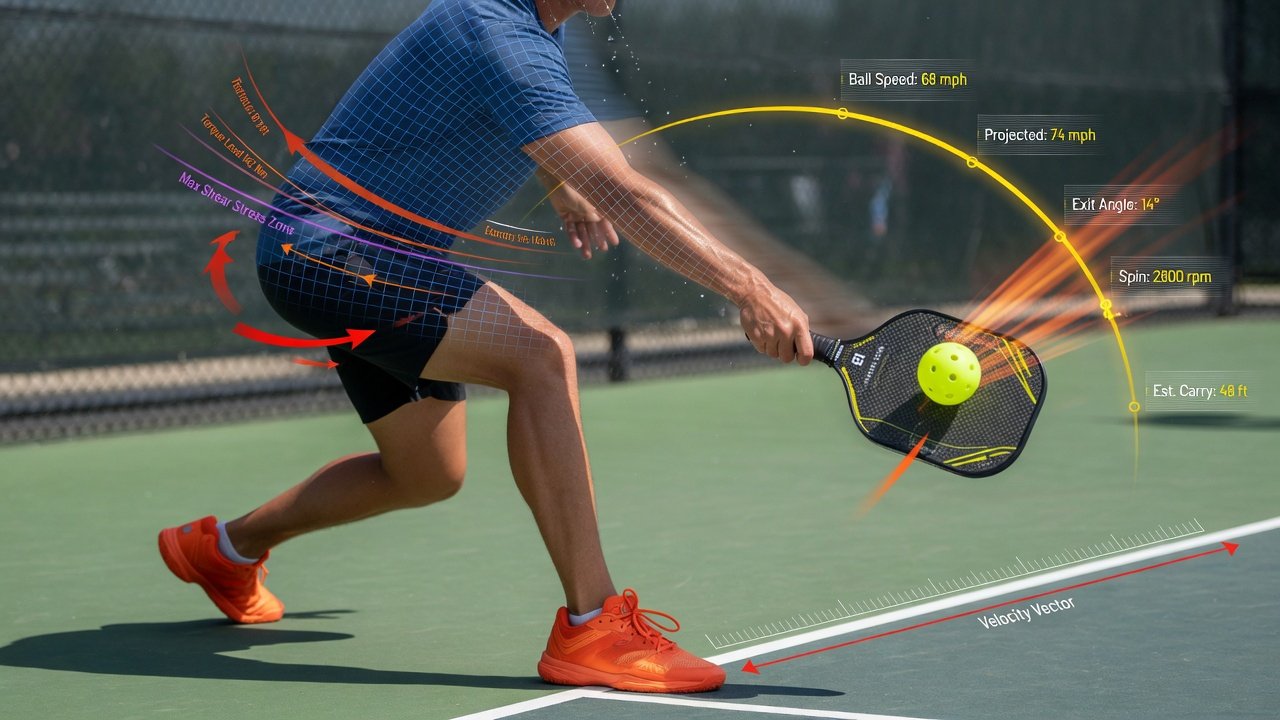
When the industry refers to a “composite” face, they are generally talking about a fiberglass resin blend. Unlike the rigid structure of carbon-graphite, fiberglass is engineered to be slightly heavier and significantly more flexible. According to material science principles used in sports engineering and composite manufacturing, fiberglass allows for greater structural deformation upon impact.
When comparing composite vs graphite pickleball paddles, the fiberglass composite face is the undisputed king of power.
- The Trampoline Effect (Power): As the ball hits a composite face, the fiberglass bends inward, absorbs the kinetic energy, and snaps back. This physically propels the ball off the paddle with more velocity than you put into your swing.
- Surface Friction (Spin): Composite resins naturally hold a rougher texture than smooth graphite. This texture grips the plastic polymer of the pickleball, allowing players to generate heavy topspin on drives and sharp backspin on slices.
- The Ideal Playstyle: This material is engineered for the aggressive “banger.” If you prefer dominating from the baseline with heavy, driving shots, composite is your material.
However, generating that massive baseline power requires a heavy, planted stance. Because composite paddles often weigh more (7.8 to 8.4+ ounces), they encourage a highly physical, lateral playstyle. To support the torque generated by these baseline drives, proper footwear is just as critical as your paddle. We highly recommend reviewing our technical guide on the best basketball shoes for pickleball to ensure you have the lateral stability required for an aggressive composite-paddle playstyle.
The Technical Comparison Matrix
To make your decision easier, here is the engineering breakdown of pickleball paddles graphite vs composite:
| Engineering Metric | Graphite Face | Composite (Fiberglass) Face |
| Primary Advantage | Surgical Precision & Touch | Maximum Power & Heavy Spin |
| Material Deflection | Stiff (Minimal flex) | Flexible (High trampoline effect) |
| Average Weight | Lighter (7.2 – 7.8 oz) | Heavier (7.8 – 8.4+ oz) |
| Sweet Spot Size | Smaller, concentrated | Larger, more forgiving |
| Target Player | Kitchen tacticians, defensive players | Baseline drivers, tennis converts |
If you are still searching for the best pickleball paddle graphite vs composite, the answer lies in identifying your current weaknesses. If you hit the ball too hard and pop it up out of bounds, switch to graphite to dampen your power. If you struggle to get the ball deep into your opponent’s court, let the composite face do the heavy lifting for you.
Durability, Maintenance, and Your Ultimate Decision Matrix
Understanding the kinetic differences between surface materials is only half the equation. When investing in high-performance athletic equipment, you must also consider material fatigue and long-term durability. The structural integrity of a composite vs graphite pickleball paddle degrades in fundamentally different ways over thousands of strikes.
Material Degradation: Which Face Lasts Longer?
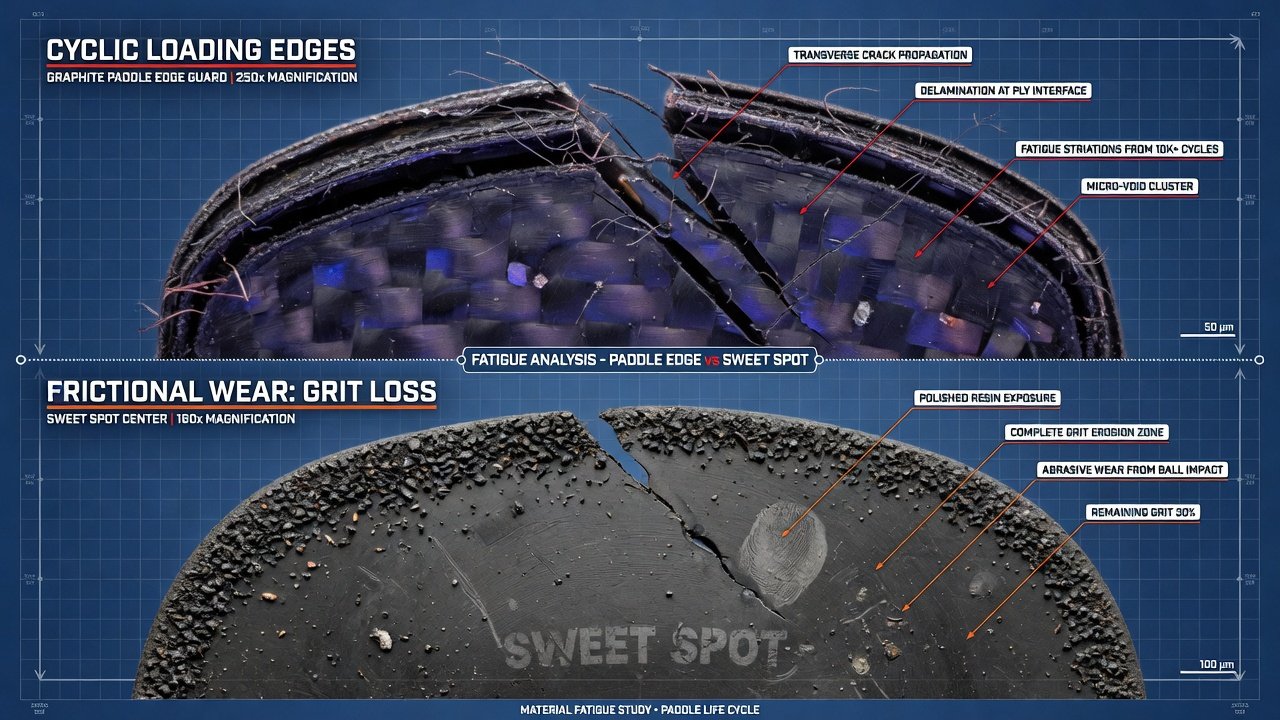
Every time the polymer ball strikes the paddle face, the material undergoes cyclic loading (stress and release). According to research published in the journal of Sports Engineering, composite structures in racquet sports experience micro-level matrix fatigue over time, altering their flex profile and deadening their “pop.”
- Composite (Fiberglass) Wear: Because fiberglass relies on surface resin and applied grit for its heavy spin capabilities, it is highly susceptible to frictional wear. Over months of aggressive play, the center of the paddle will smooth out, reducing its ability to grip the ball.
- Graphite Wear: A woven carbon-graphite face is incredibly resilient to surface smoothing. The stiff lattice retains its structural integrity and tactile feedback much longer than fiberglass. However, graphite is inherently more brittle. If you frequently scrape your paddle along the court surface to dig out low shots, the graphite edges are prone to micro-fractures and chipping.
To protect your investment and maintain the friction coefficient of your paddle’s surface, proper cleaning is mandatory. We highly recommend reading our technical breakdown on pickleball paddle maintenance to learn how to safely remove court dust from fiberglass grit and protect carbon edges.
The Material Decision Matrix: Which Paddle Face Fits Your Game?
Ultimately, finding the best pickleball paddle graphite vs composite is not about finding the universally superior material; it is about finding the engineering profile that masks your weaknesses and amplifies your strengths.
- For Beginners & Casual Players: Composite. The fiberglass face provides a larger, more forgiving sweet spot. The natural trampoline effect helps generate power even if your swing mechanics and weight transfer are not yet fully developed.
- For Tennis Converts: Composite. Former tennis players usually prefer dominating from the baseline with heavy topspin drives. The flexible, textured fiberglass face mimics the kinetic response of a strung tennis racquet better than stiff graphite.
- For Advanced & Tournament Tacticians: Graphite. High-level players already generate their own power through superior footwork and core rotation. They need a paddle that acts as a precision instrument to execute soft dinks, drop shots, and fast kitchen resets. The stiff, lightweight graphite face delivers unparalleled control.
Frequently Asked Questions (People Also Search For)
What is the main difference in a composite vs graphite pickleball paddle? The main difference is material deflection. A composite (fiberglass) paddle flexes upon impact to generate power and spin (the trampoline effect). A graphite paddle is stiff and rigid, absorbing less energy to provide maximum control, touch, and precision.
Which paddle material is better for generating spin? Generally, composite fiberglass paddles are better for generating spin. The resin matrix allows manufacturers to apply a rougher surface texture that grips the plastic ball more effectively than the inherently smoother weave of a standard graphite face.
Are graphite paddles lighter than composite paddles? Yes. Due to the high modulus of carbon fiber, graphite faces can be manufactured exceptionally thin without losing structural integrity. This results in a lighter overall paddle (typically 7.2 to 7.8 ounces), which increases hand speed at the net.
Should I upgrade to raw carbon fiber? Raw carbon fiber is an advanced subset of graphite. It utilizes an unpainted, highly textured carbon weave that offers the extreme stiffness of graphite combined with the heavy spin-potential of a composite paddle. It is the current gold standard for professional engineering, though it comes at a premium price.
The Final Verdict
Your paddle is your blueprint for success on the court. If you want to overpower your opponents with heavy drives and aggressive spin, engineer your game around a composite paddle. If you want to outsmart them with surgical placement and unshakeable defense, graphite is your ultimate tool.