
 By Ghulam Mustafa Khan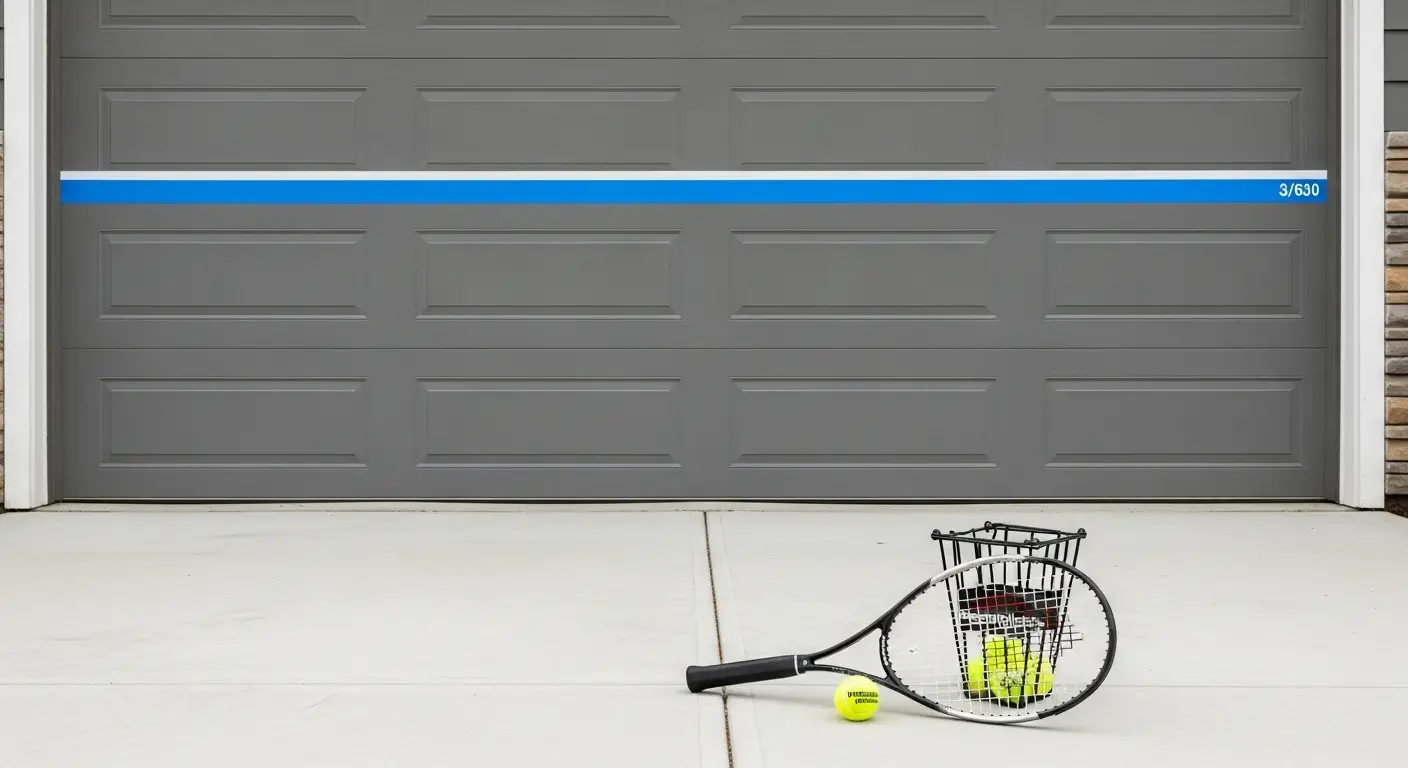
Improving your tennis game usually requires a partner, a booked court, and a commute. However, many of the greatest players in history, including Roger Federer and Andre Agassi, spent countless hours hitting against simple walls. When you cannot get to the club, a solo tennis practice garage setup turns your driveway into a laboratory for your swing. By mastering a few simple setup techniques, you can hit more balls in thirty minutes than you would during a two-hour match.
Preparing Your Garage Tennis Setup
The first step in creating a functional garage tennis setup is evaluating your hitting area. Most residential garage doors are made of thin metal or wood. If you hit a tennis ball directly against these surfaces, you might cause damage over time. Metal doors can dent or vibrate loudly upon impact, which often leads to unwanted noise throughout the house.
To solve this, you can hang a heavy tarp or a specialized hitting net in front of the door. This absorbs the energy of the ball and keeps the noise level low. This is especially important for anyone conducting tennis training at home who lives in a neighborhood with strict noise rules.
Expert Tip: If you decide to build a more permanent hitting structure outside, you should review our guide on Backyard Court Permits and Zoning Laws to stay compliant with local regulations regarding permanent structures and noise ordinances.
Mastering Tennis Wall Drills and Rebound Physics
Practicing against a wall is excellent for your reaction time because the ball returns to you much faster than in a standard match. On a full court, you have time to watch the ball travel across the net. In a garage setting, that time is cut by more than half. Learning to read these bounces is a fundamental skill in many racket sports.
For example, this type of rebound training is very similar to the skills used in Platform Tennis. In that sport, players must master the art of hitting balls after they bounce off a surrounding wire screen. Perfecting your tennis wall drills in your garage will directly improve your ability to anticipate ball movement and adjust your footwork in almost any court environment.
Managing Your Driveway Tennis Practice
Your driveway serves as the floor of your practice facility. Most driveways are made of concrete or asphalt. These surfaces are much rougher than the materials used for professional courts or specialized outdoor sports tiles.
Choosing the Right Tennis Balls
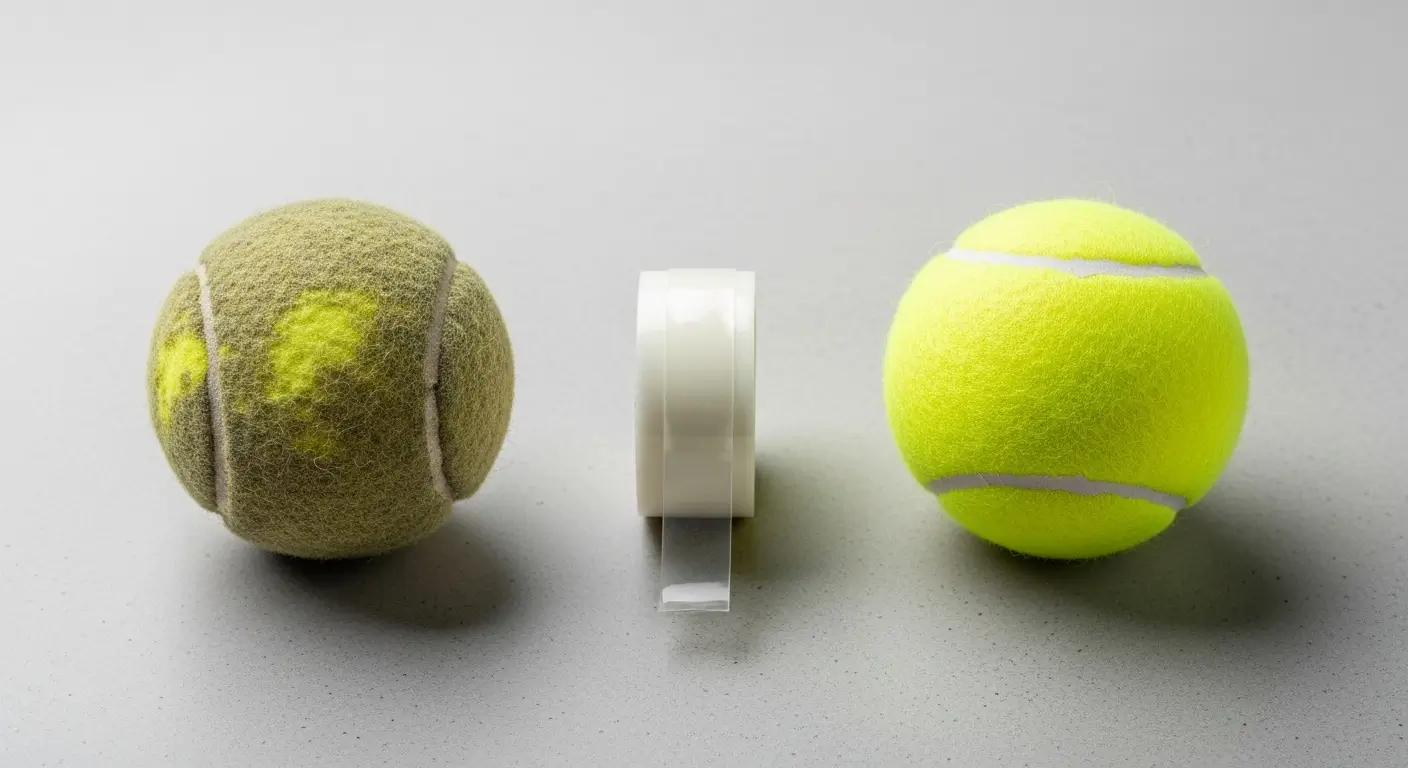
Standard tennis balls wear out quickly during a driveway tennis practice because the rough surface acts like sandpaper on the felt.
Pressureless Balls: These are the best choice for driveway practice. They have a solid rubber core and stay bouncy even as the felt wears down, saving you money on equipment.
Foam Balls: If you have limited space or neighbors nearby, foam balls provide a realistic bounce with very little noise.
Transition Balls: Often called green dot or orange balls, these are slightly slower and help you focus on perfect form.
Footwork and Safety
Concrete provides a significant amount of grip. Unlike clay courts, your feet will not slide on a driveway. To avoid injury, make sure you wear shoes with good lateral support. Always clear the area of small rocks or debris. Just like the process for cleaning sport court tiles, keeping your practice area clear of grit ensures you have the best possible traction and prevents slipping.
From the Coach’s Perspective
“In a confined space like a garage, the temptation is to shorten your swing, but you should instead focus on shortening your steps to stay balanced. This mindset of ‘structural preparation’ applies to your entire property; just as you’d protect your garage door from ball impact, you must ensure your outdoor court setup is windproof to prevent a sudden 2026 storm from turning your training gear into a liability.”
Simple Drills for Your Garage Setup
You do not need a lot of space to improve your technique. Most tennis training at home sessions focus on timing and contact points rather than raw power.
The Net Line Technique
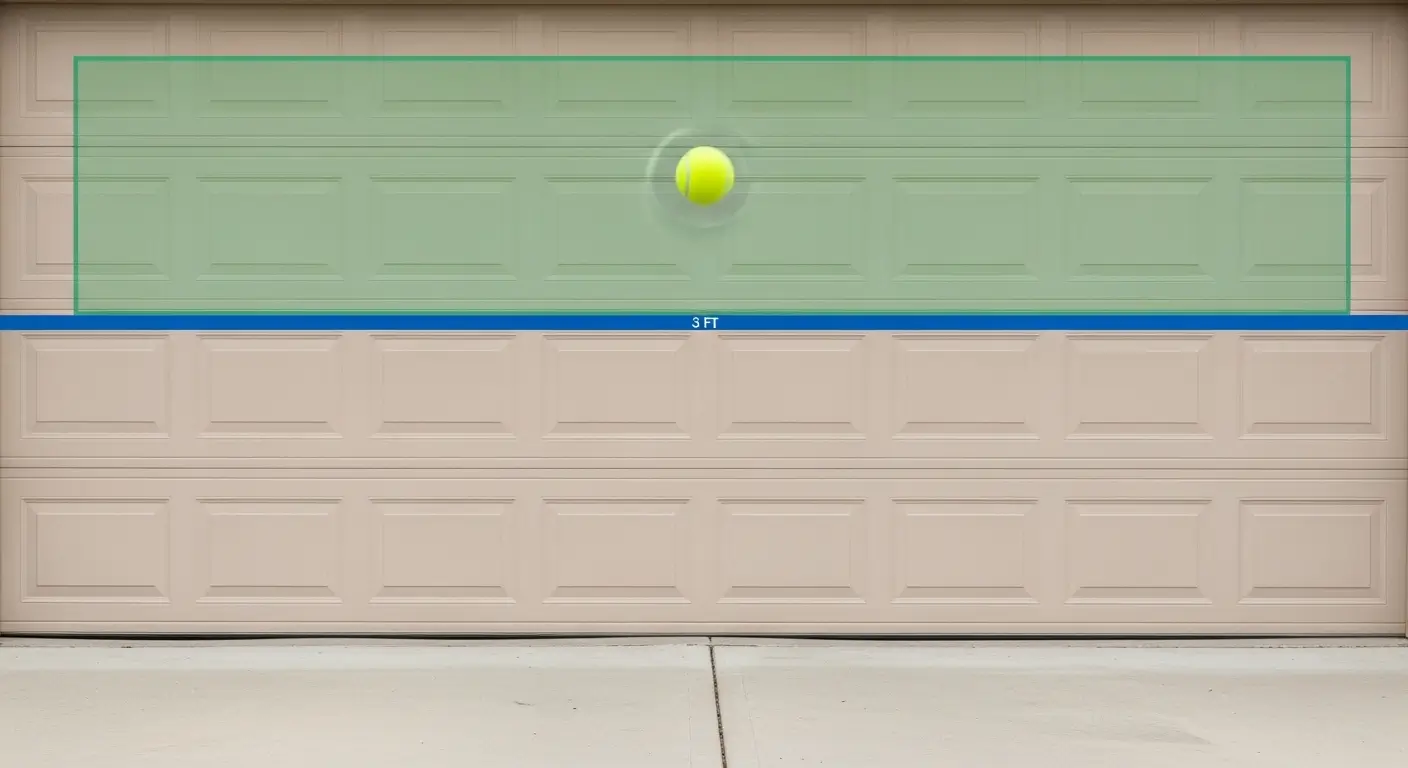
Use a piece of painter’s tape to mark a horizontal line on the wall exactly three feet high. This represents the top of a standard tennis net. Stand about twelve to fifteen feet back from the wall. Your goal is to hit the ball so it strikes the wall just above the tape. This drill improves your consistency and helps you find a reliable contact point in front of your body.
According to training resources from the USTA, wall work is one of the most effective ways to improve preparation speed because the ball returns to the player so quickly, forcing a faster backswing.
Hand Eye Coordination and Volleys
Effective tennis wall drills involve standing closer to the wall—about six feet away—and practicing short volleys. Because the wall returns the ball faster than a human player, your reaction time must improve. This builds the muscle memory you need for fast exchanges at the net during a real match. Focus on keeping your racket head up and your movements compact.
Frequently Asked Questions
Can I practice tennis in a one car garage?
Yes. You only need enough room to swing your racket comfortably without hitting the walls or ceiling. Most players find that a single car driveway provides enough space for technical drills and footwork practice.
Will the tennis ball mark up my garage door?
Tennis balls can leave yellow scuff marks on painted surfaces over time. Hanging a protective barrier like a tarp or a moving blanket prevents these marks and keeps your garage looking clean.
How do I reduce the noise for my neighbors during driveway tennis practice?
The best way to reduce noise is to use transition or Stage 3 tennis balls. These are softer and do not make a loud sound when they hit the wall or the ground. Additionally, practicing during mid-day hours helps ensure you do not disturb your neighbors during quiet times.
Conclusion
A solo tennis practice garage is a convenient way to get better at tennis on your own schedule. By protecting your garage door, choosing the right balls, and using a simple tape line for a target, you can turn your driveway into a high repetition training area. Consistency is the key to mastering your tennis strokes. Even fifteen minutes of daily wall work can lead to a significant improvement in your timing and confidence on the court.