
 By Ghulam Mustafa Khan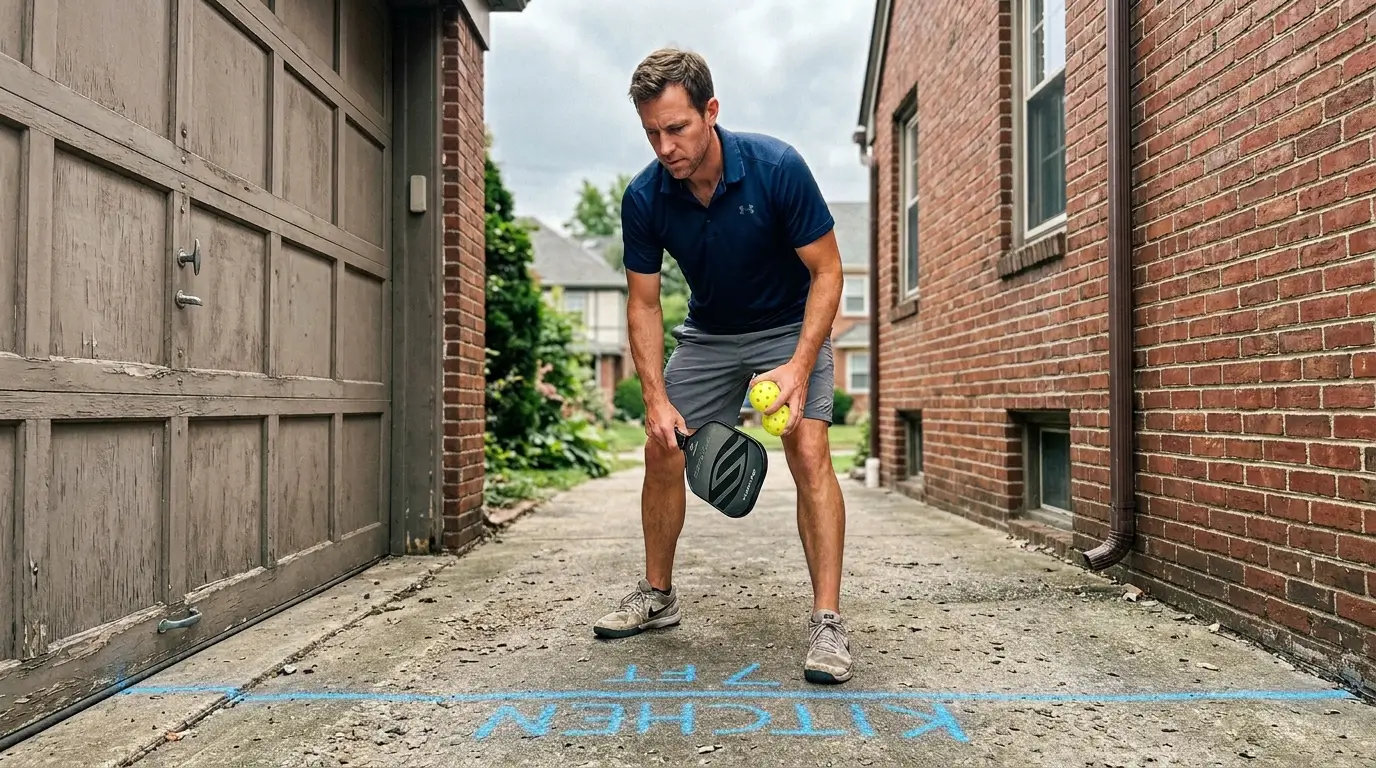
So you want to improve your pickleball game, but you have no practice partner, a tight space, and only a concrete slab to work with. I completely understand the frustration. The good news is that you can build serious, game-ready skills doing solo pickleball drills driveway style.
In this guide, we are going to cover exactly how to set up your limited space to maximize your reps. You will learn specific, solo driveway pickleball practice routines designed to improve your dink consistency, your reset game, and your third-shot drop. You do not need a full court to gain soft hands and elite control. If you train intentionally and treat your small space like a laboratory, these drills will absolutely translate to winning more matches.
Can You Really Get Better with Solo Pickleball Drills in a Driveway?
Yes, you can significantly improve your game by practicing alone in a driveway, provided you design drills that accurately simulate in-game scenarios like dinks, resets, and third-shot drops.
When you practice without a partner, you remove the pressure of winning a point. This isolation allows you to focus 100% of your mental energy on your mechanics. Small space pickleball training forces you to pay attention to your paddle angle, your grip pressure, and your footwork. Over time, these isolated, high-volume reps build the muscle memory required to execute difficult soft shots automatically during a fast-paced game.
How to Set Up a Small Driveway for Solo Pickleball Practice
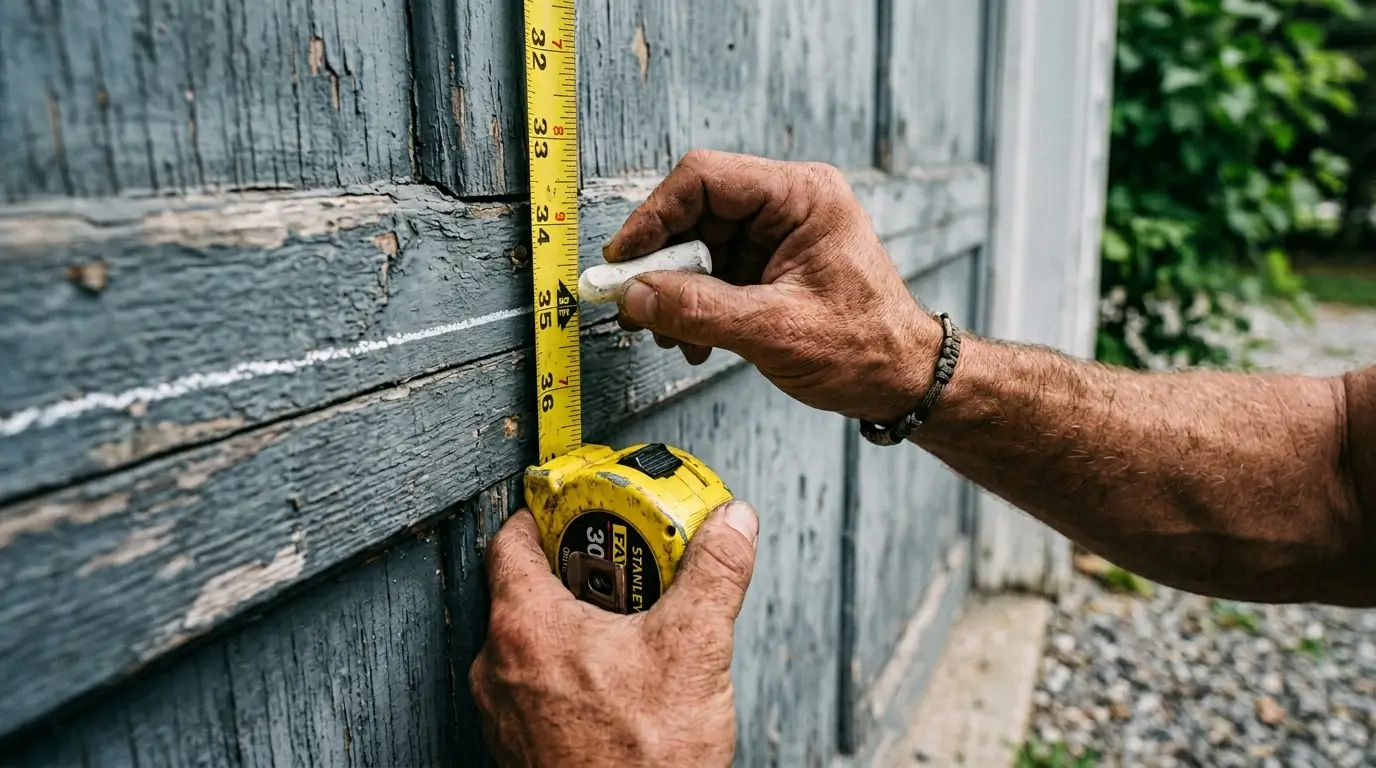
Before you start swinging, you need to prep your driveway pickleball setup. A good setup ensures your practice actually mirrors a real court.
Marking Lines and “Net” Height
Your garage door or a flat brick wall will be your best practice partner. Grab some painter’s tape or sidewalk chalk.
Measure exactly 34 inches up from the ground on your wall and draw a straight, horizontal line. This represents the center height of a standard pickleball net.
Next, measure 7 feet back from the wall on your driveway and draw a line. This is your non-volley zone (kitchen) line.
Safety Note: Always practice away from windows and parked cars. Pickleballs will not typically dent a modern garage door, but they will shatter glass.
Minimum Space You Need
You do not need a massive driveway to get a good workout. A standard driveway that fits one car gives you about 10 to 15 feet of depth. This is plenty of room for dinking and reset practice.
If you are unsure how your space measures up to a regulation court, review the recommended pickleball driveway dimensions and layout to see how to properly scale your practice lines. If your concrete is severely cracked and causing bad bounces, you might also want to look into whether your driveway surface is too rough for sport tiles to upgrade your training area.
Gear Checklist
Keep it simple. To run these drills, you only need:
Your game-day paddle
5 to 10 outdoor pickleballs
Sidewalk chalk or painter’s tape
A few small cones (or empty water bottles) for targets
Solo Dink Drills for Tight Spaces
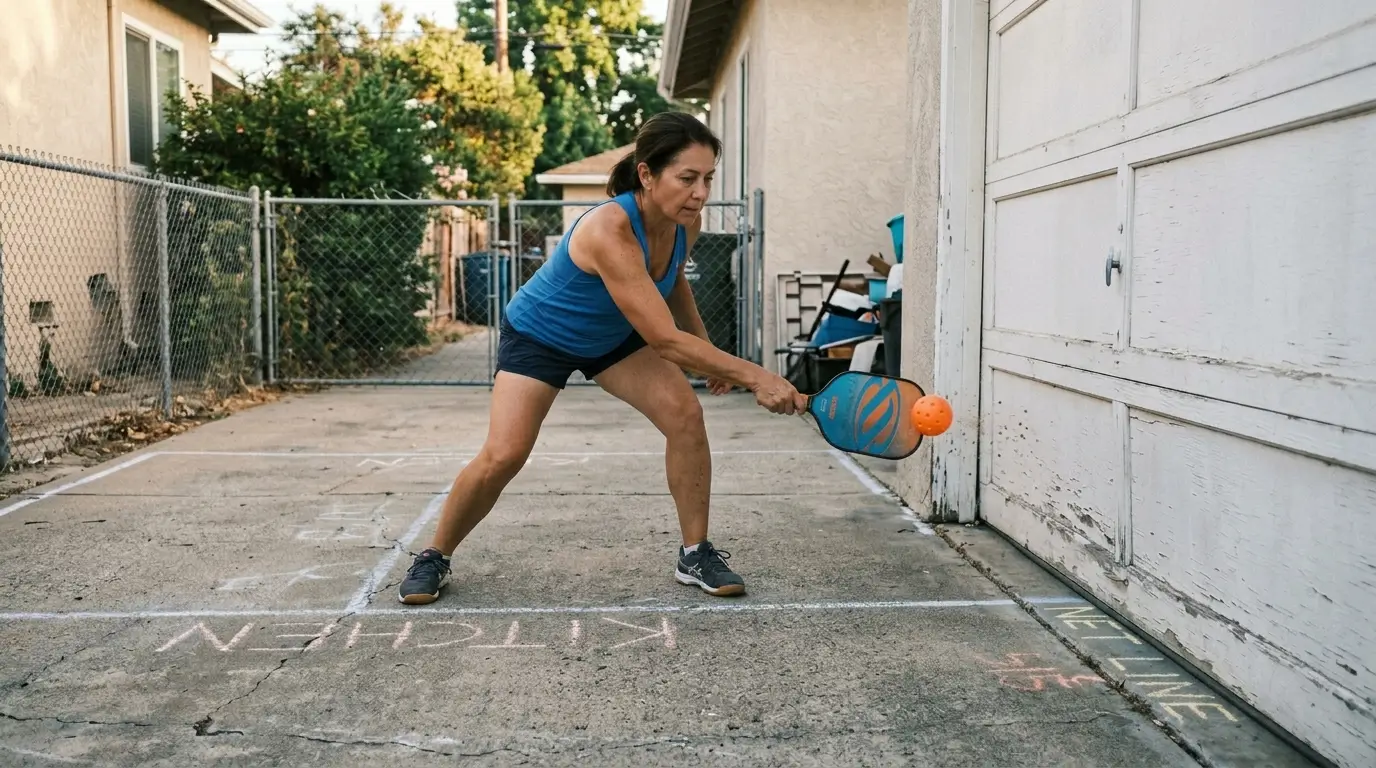
Dink drills at home are all about mastering your paddle face and keeping your grip light. These drills require very little room but deliver massive results for your short game.
Wall Dink Target Drill (Driveway Version)
Stand right behind your 7-foot chalk line facing your wall. Draw a 2-foot by 2-foot square target directly above your 34-inch “net” line.
Hit continuous forehand-only dinks into the target box. Aim for 25 in a row without a mistake.
Switch to backhand-only dinks for another 25 reps.
Finally, alternate forehand to backhand on every single hit.
Focus on:
Keeping your paddle out in front of your body.
Using a gentle pushing motion from your shoulder, not a flick of your wrist.
Maintaining a light grip pressure (around a 3 out of 10).
If you want to see visual examples of how professionals structure their wall routines, check out this great guide to solo pickleball drills you can do without a partner from trusted coaching organizations.
“Kitchen Box” Footwork Dink Drill
Pickleball is played with your feet as much as your hands. Use chalk to draw a small 3×3 foot square on the ground just behind your kitchen line.
Hold a ball in your non-dominant hand and drop-feed it to yourself.
Step into the ball, dink it against the wall, and immediately shuffle your feet back into a strong, wide, ready position.
Move laterally across your chalk box between every single shot.
Focus on:
Staying low in an athletic stance.
Stepping toward the ball rather than reaching wildly with your arm.
Solo Reset Game Drills in a Small Driveway
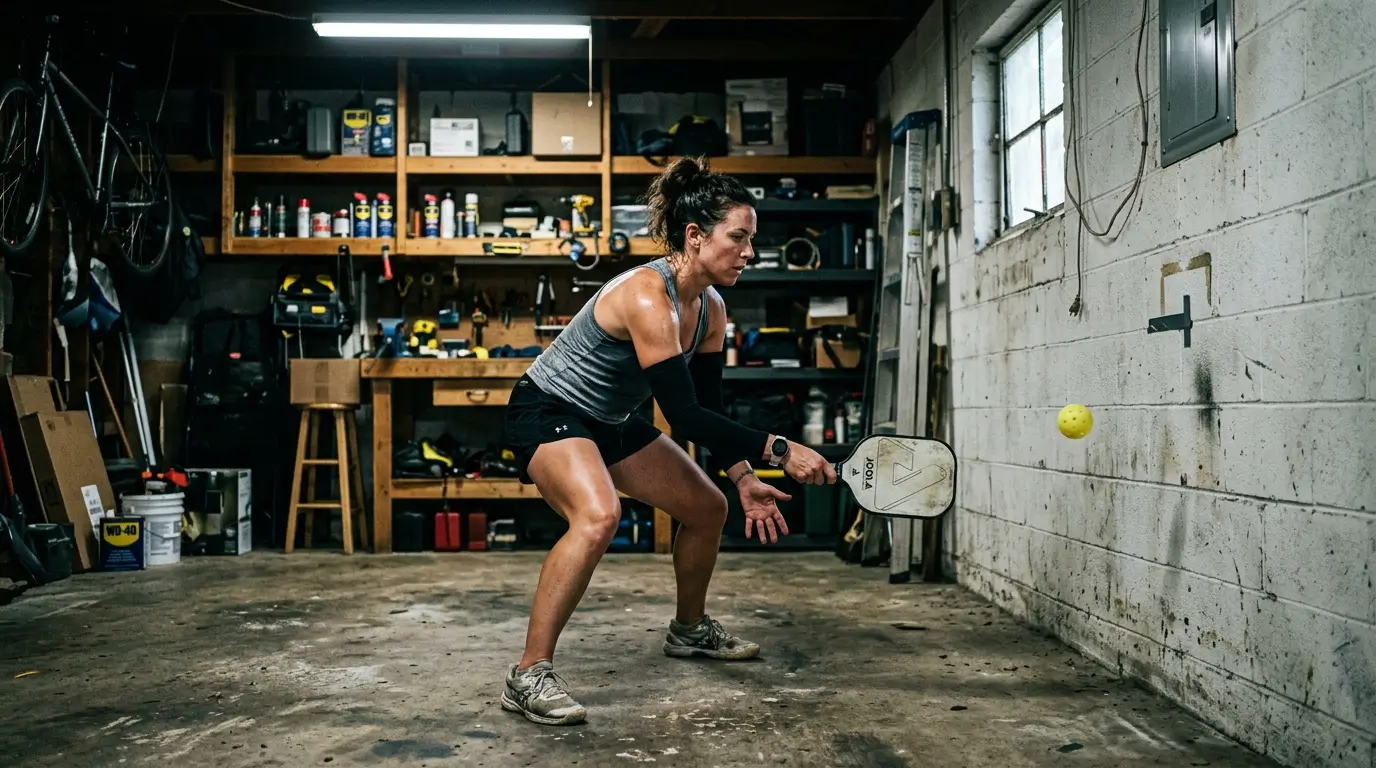
A reset is when your opponent hits a hard drive at you, and you softly block the ball back into their kitchen to neutralize the attack. Garage / driveway pickleball practice is the absolute best way to master this.
Wall Reset Ladder Drill
Stand about 5 to 7 feet from the wall. You will purposefully hit the ball hard against the wall to simulate an opponent’s speed-up, and then you will softly block the rebound.
Hit a firm drive against the wall.
As the ball rockets back at you, loosen your grip and softly “catch” the ball on your paddle, popping it gently back against the wall.
Repeat this hard-soft ladder sequence.
Focus on:
Taking virtually zero backswing on your reset block.
Absorbing the pace by loosening your fingers on the paddle handle.
Keeping your paddle angle slightly open to lift the ball gently over your imaginary net.
You can learn more about absorbing pace by studying various wall drill ideas to improve dink consistency and control.
Shadow Reset + Footwork Pattern
No partner pickleball drills do not always require hitting a ball. Shadowing is a powerful tool for muscle memory.
Stand in your ready position.
Visualize an opponent speeding up the ball at your right hip.
Perform a rapid split-step, drop your paddle face to defend your hip, and shadow a soft reset block.
Recover instantly to neutral.
Third Shot Drop Drills You Can Do Alone in a Driveway
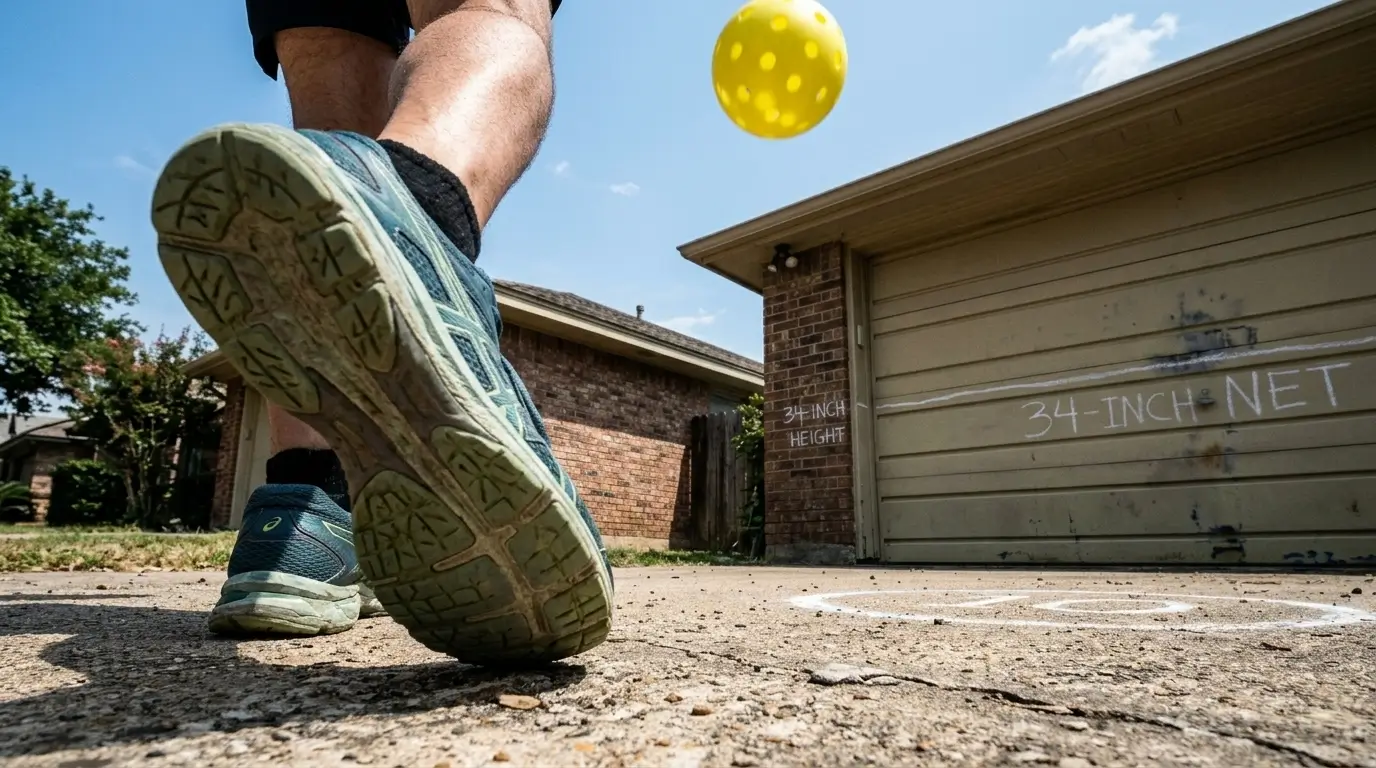
Third shot drop drills alone can be tricky if your driveway is short, but you can still train the trajectory and touch required for the shot.
Drop Feed to Target Drill
Walk back as far as your driveway allows (ideally 12 to 15 feet from the wall). Draw a chalk target on the ground right at the base of the wall.
Drop the ball in front of you so it bounces once.
Hit a high, lifting shot that arcs over your 34-inch net line and lands softly on your chalk target.
Grab another ball and repeat.
Focus on:
Pushing up with your legs to create lift.
Creating a rainbow-shaped arc that peaks on your side of the net and drops down as it hits the wall.
Drive-Then-Drop Sequence (Tight Space Version)
In a real game, you often have to choose between driving the third shot or dropping it. You can train this mental switch in your driveway.
From 15 feet back, drop-feed yourself and hit a hard, flat drive against the wall.
Catch the ball.
Drop-feed yourself again, but this time, execute a soft, arcing drop shot.
Alternate between the aggressive drive and the soft drop.
Focus on:
Changing your mindset and grip pressure instantly between the two shots.
Ensuring your setup looks identical to the imaginary opponent before you hit.
Serve, Return, and Footwork Drills for Small Driveways
Even if you lack the 44-foot depth of a real court, you can still drill the mechanics of your serve and return.
Short-Box Serve Targets
Stand at the back edge of your driveway. Draw two medium-sized chalk boxes on your garage door: one high and to the left, one high and to the right.
Practice your exact pre-serve routine (the bounce, the breath, the stance).
Execute your serve, aiming directly for the chalk boxes.
Focus on:
A consistent ball drop or toss.
Hitting the ball at the exact same height and contact point every time, regardless of how much space you have.
Split-Step and First-Step Footwork
Shadow receiving a deep serve.
Perform your split-step as the imaginary opponent makes contact.
Pivot and take a strong first step back to shadow a deep return.
Immediately hustle forward and split-step again just before your driveway kitchen line.
Sample 20–30 Minute Solo Driveway Sessions (No Partner)
Do not just go outside and hit aimlessly. Use these structured session blocks to maximize your small space pickleball training.
Session A (Control & Dinks):
5 min: Warm-up shadow swings and lateral footwork.
10 min: Wall Dink Target Drill (forehand, backhand, alternating).
5 min: Kitchen Box Footwork drill (moving laterally to the ball).
5 min: Wall Reset Ladder (hard drive followed by soft block).
Session B (Drops & Resets):
5 min: Wall dink warm-up to loosen the shoulder.
10 min: Drop Feed to Target Drill (focusing on the rainbow arc).
5 min: Drive-Then-Drop Sequence.
5 min: Shadow Reset + Footwork Pattern.
Coach’s Corner: How Driveway Drills Translate to Real Games
I once worked with a player who was stuck at the 3.0 level because he kept popping up his resets. He didn’t have time to hit the courts every day, so I assigned him 15 minutes of the Wall Reset Ladder drill in his driveway every evening.
Within three weeks, his muscle memory shifted. When opponents smashed the ball at him in real rec games, he stopped panic-swinging. His driveway practice trained his hands to instinctively loosen up and block the ball softly into the kitchen. Quality solo reps beat random, sloppy open play every time.
If you also play tennis or other racket sports, the cross-training mindset is identical. You can review our solo tennis practice ideas for garages to see how scaling drills for tight spaces works across multiple disciplines.
FAQ: Solo Pickleball Drills in Small Driveways (No Partner Needed)
Can I practice pickleball alone in a small driveway? Yes. Practicing alone against a wall or garage door is one of the most effective ways to build paddle control, soft hands, and muscle memory for dinks and resets. You do not need a full-sized court to isolate and improve your mechanics.
What solo pickleball drills are best if I don’t have a partner? The best solo drills are wall dinks for consistency, wall reset ladders for absorbing pace, and drop-feed drills to practice the arc of your third-shot drop. These drills translate directly to the most critical in-game skills.
How do I practice third-shot drops without a full court? You can practice third-shot drops by standing 12 to 15 feet from a wall, marking a target on the ground near the wall’s base, and hitting soft, high-arcing shots that clear an imaginary 34-inch net line and land on your target.
Is it safe to hit pickleballs against my garage door? Generally, yes. Plastic pickleballs are light and will not dent standard metal or wood garage doors. However, you should never hit toward windows, glass panels, or parked cars to avoid accidental damage.
How much space do I need for driveway pickleball practice? To practice dinks and resets, you only need about 7 to 10 feet of flat driveway space in front of a wall. To practice simulated drops and serves, having 15 to 20 feet of depth is ideal.
Do driveway drills actually translate to real games? Absolutely. Driveway drills build automatic muscle memory. When you train your hands to stay soft against a garage wall, your body will naturally repeat that soft, controlled motion during a chaotic, fast-paced rally on a real court.
Final Advice: Turn Your Driveway into a Mini Pickleball Lab
You do not need an expensive ball machine, a dedicated partner, or a pristine country club court to level up your game. A paddle, a few balls, and a strip of concrete are all you need to turn your driveway into a highly effective training lab.
Focus on one specific skill per session—whether that is mastering the arc of your drop or calming your hands during a reset. Protect your surroundings, respect your neighbors’ quiet hours, and treat these solo driveway reps with the same focus you would a tournament match. Pick one drill today, commit to a weekly habit, and watch your confidence soar the next time you step onto a real court.