
 By Ghulam Mustafa Khan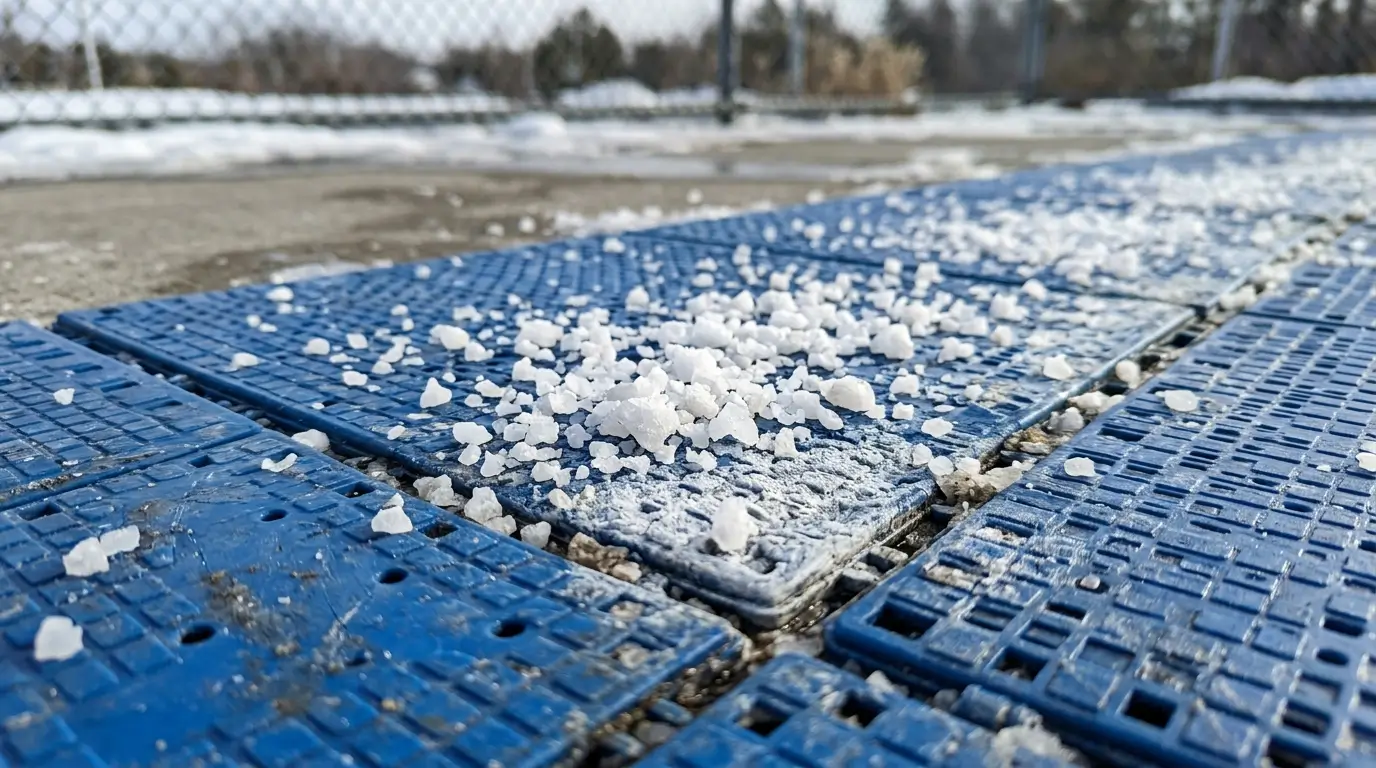
Winter is tough on outdoor courts, and the moment a sheet of ice covers your backyard playing surface, the instinct is to grab a bag of salt. If you are wondering if you can use de-icer on sport court tiles, the short answer is no. Traditional rock salt and most chemical de-icers are not safe for modular sport tiles.
They can cause the plastic to become brittle, fade the color, and severely damage the concrete or asphalt base underneath. In this guide, we will cover exactly why you should keep the salt bag in the garage. I will walk you through what safe snow removal tools you actually need, how to deal with stubborn ice without ruining your investment, and a simple winter care routine to keep your court safe until spring.
Can You Use De-Icer on Sport Court Tiles?
Most rock salt and conventional chemical de-icers are not recommended on modular sport tiles. These harsh chemicals attack the surface finish of the plastic, leave a damaging abrasive residue, and speed up cracking by holding moisture in the tile joints during freeze-thaw cycles.
Almost all major sport tile manufacturers advise against using harsh chemical melts. Your best option is always mechanical snow removal using soft, plastic-edged tools, combined with patience. If you absolutely must use a melting agent, it must be specifically approved by the manufacturer as non-corrosive and “safe for athletic surfaces,” and even then, it should be used sparingly.
Why Rock Salt and Harsh De-Icers Are a Problem for Sport Tiles
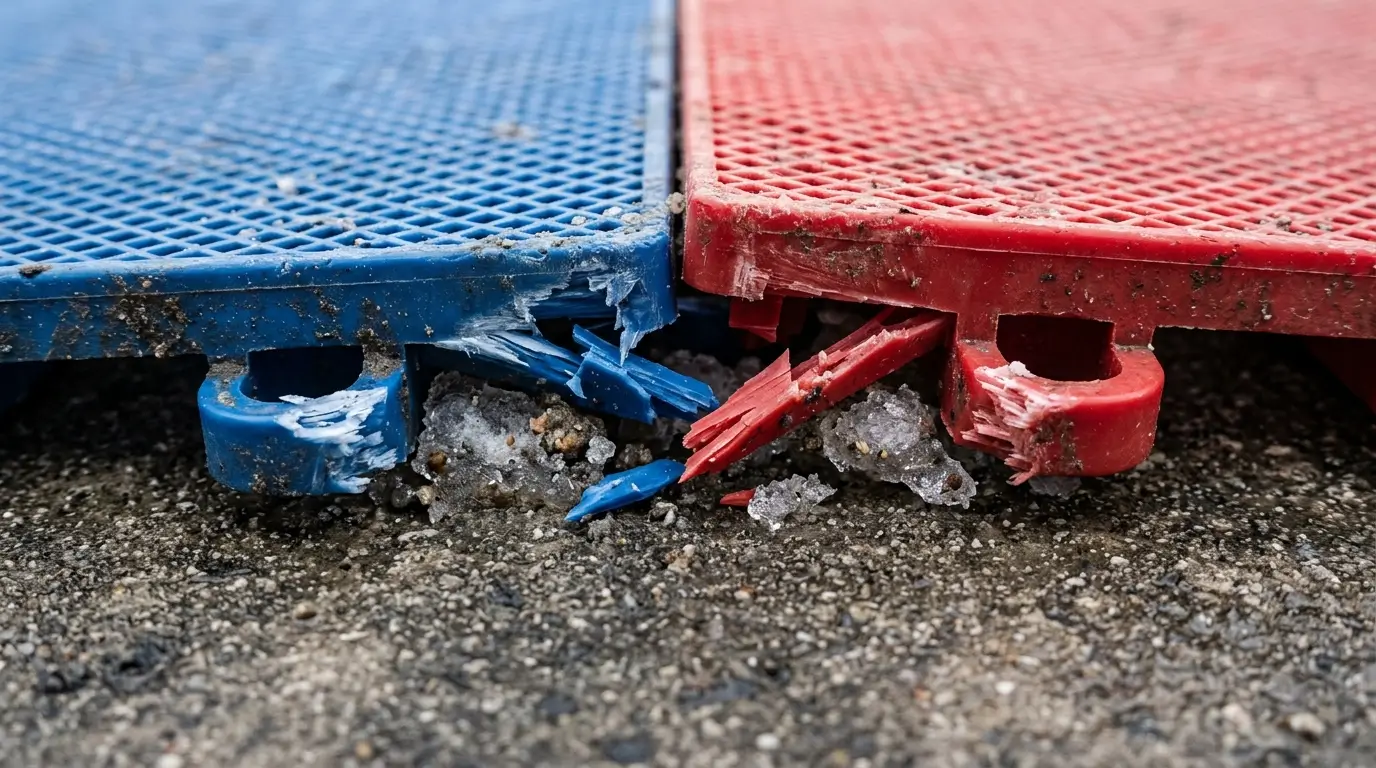
As a coach and installer who has seen dozens of courts weather brutal US winters, I can tell you that salt is the enemy of modular flooring. Here is exactly what happens when you pour generic ice melt on your court.
Chemical Damage to the Plastic
Sport tiles are made from high-impact polypropylene. While they are incredibly tough against basketballs and sneakers, they are vulnerable to continuous chemical exposure. Rock salt (sodium chloride) and calcium chloride can cause the plastic to oxidize, leading to severe fading, chalking, and eventual brittleness. A brittle tile will shatter when someone lands on it hard in the spring.
The Freeze-Thaw Trap
When you use salt to melt ice, the resulting saltwater seeps down through the perforations in the tiles. It gets trapped between the plastic and the concrete base. As temperatures drop overnight, that trapped water refreezes. Water expands when it freezes, which can heave the tiles upward, snapping the interlocking tabs that hold your court together.
Base Damage and Abrasive Residue
Rock salt leaves behind a gritty, sandy residue. When players step on the court later, this grit acts like sandpaper, grinding away the textured grip on the top of the tiles. Furthermore, salt that makes its way to the concrete slab below will slowly eat away at the cement, causing pitting and spalling over time.
What IS Safe to Use on Snow and Ice Over Sport Court Tiles?
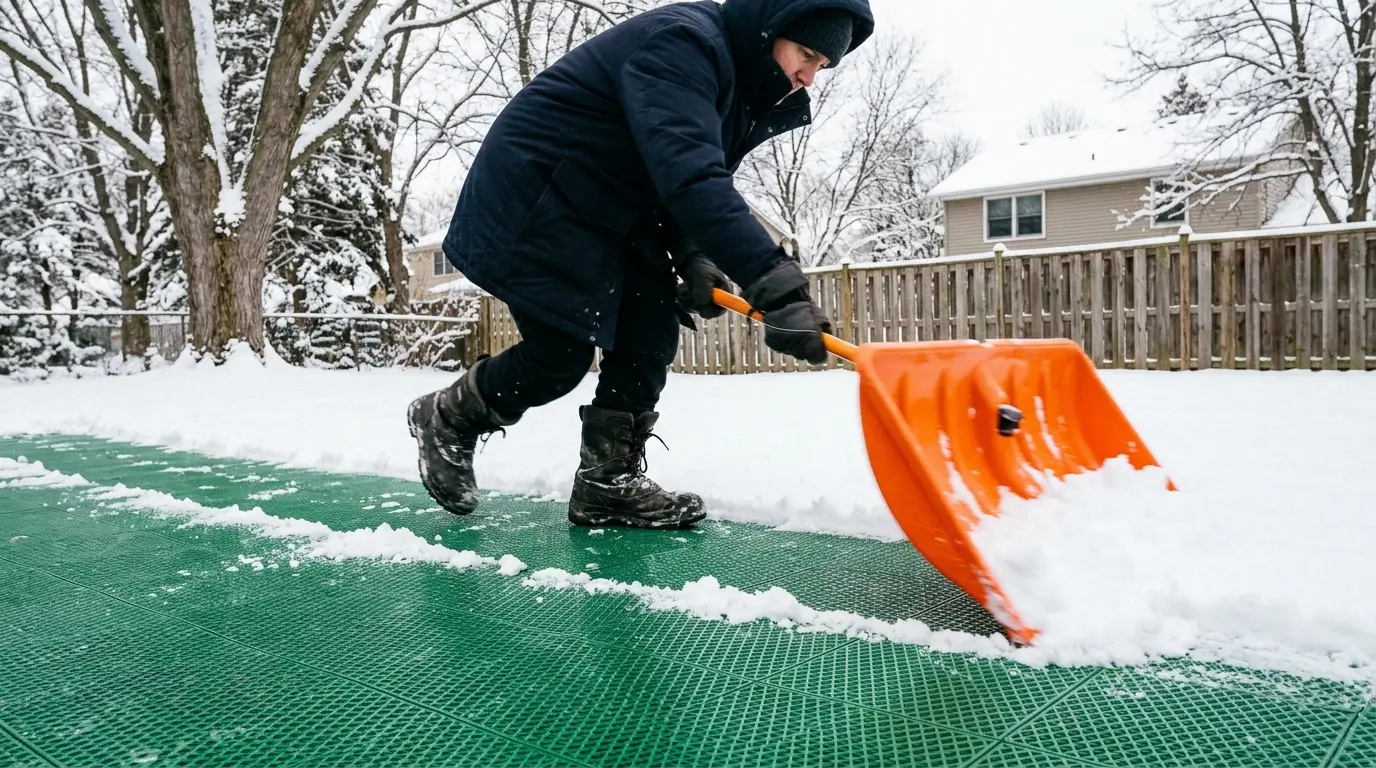
You do not need chemicals to maintain a safe winter court. You just need the right tools and a little bit of strategy.
Safe Tools for Snow Removal
Never use metal shovels or standard snow blowers with metal augers on your court. Metal will instantly gouge and scratch the plastic tiles. Instead, use:
Plastic Shovels: Opt for shovels with a completely plastic blade and no metal wear-strip.
Soft Snow Pushers: Wide, plastic snow pushers are excellent for clearing light, fluffy snow quickly.
Adjusted Snow Blowers: You can use a snow blower, but only if it has rubber paddles or if the metal skids are adjusted high enough that the machine never touches the tiles.
Soft Brooms: Great for sweeping away the last dusting of snow before it melts and refreezes.
Expert Tip: Always push the snow in the direction of the tile seams, not across them, to avoid catching an edge and ripping up a tile.
Safer Approaches to Ice
The absolute safest way to melt ice on sport court tiles is to let the sun do it. The dark colors of most sport courts naturally absorb solar heat. If you clear the snow off promptly, the sun will usually handle the remaining thin layer of ice.
If traction is a major safety concern, some premium tile systems allow for the extremely limited use of non-corrosive, magnesium chloride-based ice melts that are specifically labeled as safe for plastics and pets. However, you must confirm this with your installer first.
Temporary Traction Options
If your court is an ice rink and you have an upcoming game, you can lightly broadcast a very fine, non-abrasive traction sand over the ice. However, you must commit to sweeping and thoroughly rinsing the court with a hose on the very first warm day to remove the sand before it acts as an abrasive on the plastic.
Step-by-Step Winter Care Routine for Sport Court Tiles
Keeping your court in top shape requires a proactive approach. Here is a simple routine to follow:
Step 1 – Pre-winter prep: Before the first freeze, thoroughly clean the court with a leaf blower and hose. Inspect the perimeter for drainage issues and snap any loose interlocking tiles back into place.
Step 2 – After each snowfall: Remove snow promptly while it is still light and fluffy. Use safe plastic tools and clear it in thin layers. Do not let heavy snow sit and compact into a solid sheet of ice.
Step 3 – Dealing with ice: Prioritize patience. Let the sun clear the ice. If you must use a manufacturer-approved, non-corrosive product, use it sparingly on critical walkways. Never dump rock salt across the entire playing surface.
Step 4 – Post-thaw cleanup: On the first warm day above freezing, use a hose to rinse off any chemical residues or traction sand. Check the interlocking tabs to ensure nothing heaved during the freeze.
Step 5 – Ongoing safety checks: Watch for slick, shaded patches where ice tends to linger and refreeze. Ensure the snow piles at the edge of the court are not melting and draining back onto the playing surface.
How De-Icers Can Affect Your Warranty and Court Lifespan
Ignoring the rules on de-icers is one of the fastest ways to void your warranty. Most major sport tile brands explicitly state in their maintenance manuals that the use of unauthorized harsh chemicals or rock salt constitutes improper maintenance.
If your tiles become brittle and crack, the manufacturer will likely deny your warranty claim upon discovering chemical residue. This pushes you into an expensive, early replacement scenario. If you want to understand the financial risk, look at what it really costs to build or replace a sport court. Protecting your investment through proper winter care is far cheaper than buying a new court.
Coach’s Corner: Winter Mistakes I’ve Seen (and How to Avoid Them)
I once got a call in early April from a homeowner furious that their three-year-old basketball court looked twenty years old. The blue tiles were chalky white, and several had shattered under the hoop. They admitted they had been buying the cheapest bags of rock salt available and dumping them heavily after every snowstorm so the kids could play. The salt chemically burned the plastic and destroyed the traction. They had to replace half the court out of pocket.
Contrast that with a local high school facility I maintain. They strictly use wide plastic snow pushers and rely entirely on the afternoon sun to melt residual ice. They have never used a single cup of de-icer. Ten years later, those outdoor tiles still have their vibrant color, and the grip is perfectly intact. Patience and plastic shovels always win.
How De-Icer Fits Into Your Overall Winterizing Plan
Managing ice is only one piece of the puzzle. Proper winter care requires looking at the whole environment. You have to manage where you pile the snow, ensure your sub-surface drainage is clear so melting ice can escape, and decide if covering the court makes sense for your climate.
For a complete breakdown of prep, cleaning, and drainage management, review my full step-by-step winterizing checklist for sport courts. Treating the ice without managing the water runoff will still leave you with a damaged court in the spring.
FAQ: De-Icer and Winter Care for Sport Court Tiles
Is rock salt safe on sport court tiles? No. Rock salt (sodium chloride) can cause the plastic tiles to fade, become brittle, and lose their textured grip. It also leaves an abrasive residue that scratches the surface and can damage the underlying concrete slab.
What is the safest way to melt ice on sport tiles? The safest method is to remove the top layer of snow with a plastic-edged shovel and allow the sun’s natural heat, absorbed by the dark tiles, to melt the remaining ice.
Can I use any ‘safe for concrete’ ice melt on my sport court? Not necessarily. Ice melts labeled “safe for concrete” may still contain chemicals that are harsh on high-impact polypropylene plastics. You must check with your specific sport tile manufacturer to see if any non-corrosive melts are approved. You can read more regarding winter-care advice on avoiding harsh de-icing salts on outdoor surfaces for broader context on hardscape damage.
How do I remove snow from sport court tiles without scratching them? Always use shovels or snow pushers with a solid plastic blade and no metal wear-strip. If using a snow blower, ensure it has rubber paddles or that the metal skids are adjusted high enough to never touch the tiles.
Will using de-icer void my sport court warranty? Yes, in many cases, using unauthorized rock salt or harsh chemical de-icers is classified as improper maintenance and will void the manufacturer’s warranty if the tiles crack or fade prematurely.
Is it better to cover my sport court for winter? If you do not plan on playing from December to March, covering the court with a breathable, heavy-duty tarp can protect the tiles from UV fading and keep ice out of the interlocking joints.
Final Advice: Protect Your Court Through Winter, Enjoy It in Spring
Dealing with a frozen court is frustrating, but taking chemical shortcuts will cost you heavily in the long run.
Avoid rock salt and generic de-icers entirely. Invest in a good plastic snow pusher, remove snow promptly before it turns to ice, and let the sun do the heavy lifting. By following a simple, mechanical winter care routine, you ensure your warranty stays intact and your court is safe, vibrant, and ready for action the moment spring arrives.