
 By Ghulam Mustafa Khan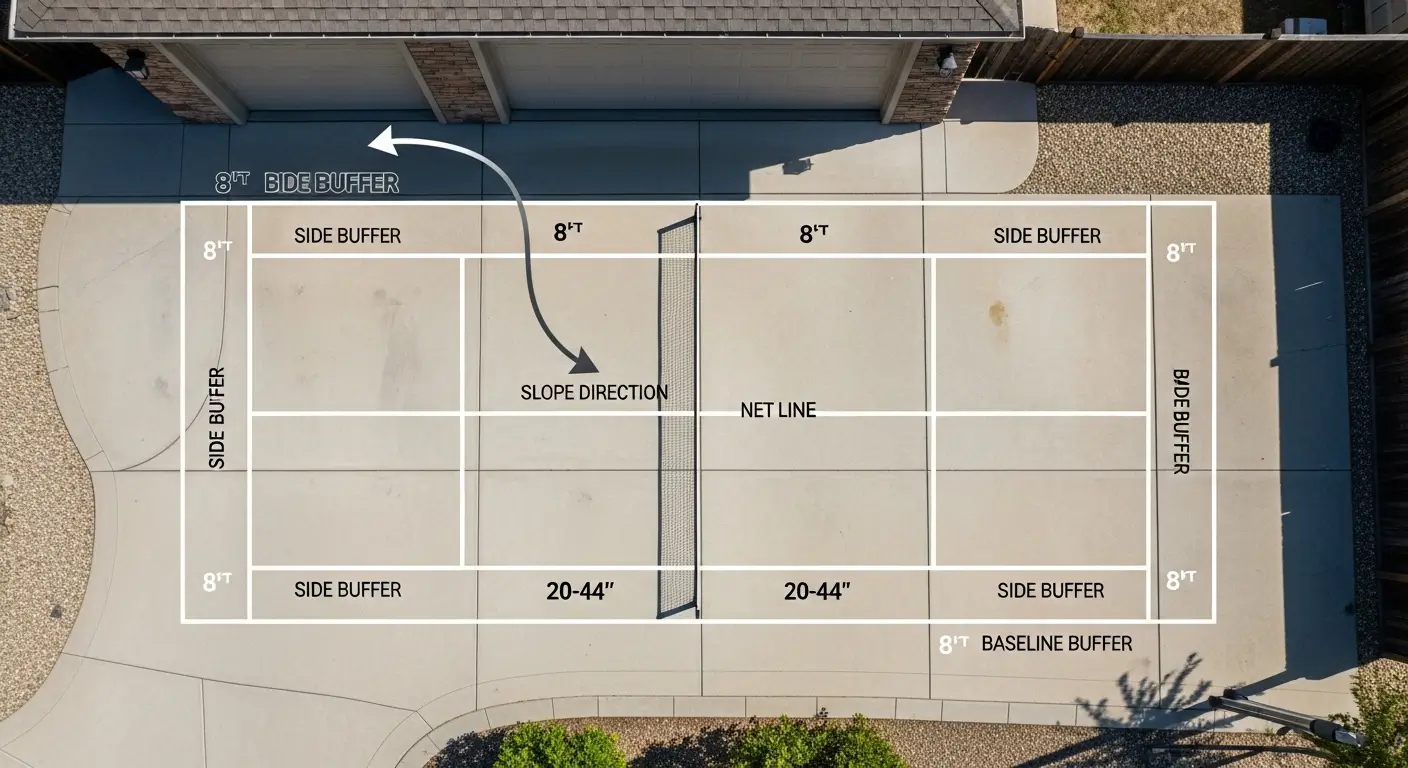
A regulation pickleball court measures 20 feet by 44 feet, but a safe and enjoyable driveway setup needs more room than that. Ideally, you should have a minimum space of about 30 feet by 60 feet. This extra space creates a safety buffer zone, giving players an additional 5 to 8 feet of overrun room to prevent collisions with garage doors, parked cars, fences, or landscaping during fast-paced rallies.
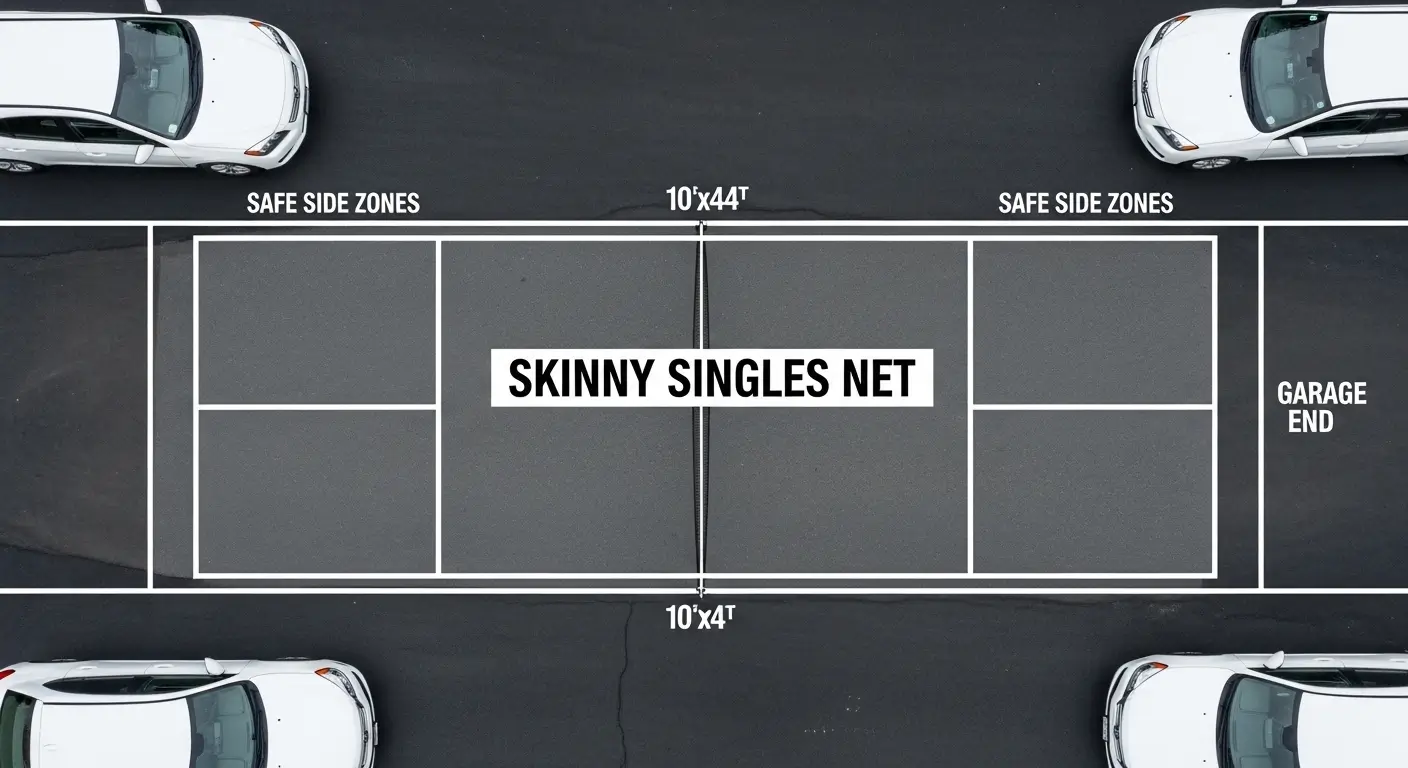
If your driveway is exactly 20 feet wide, playing full doubles can feel tight and risky. In that case, “skinny singles” is a much safer option and still a lot of fun.
Before you start measuring your non-volley zone, verify that your concrete is structurally sound. You need to meet specific driveway surface requirements for sport tiles to ensure your kitchen is flat and your bounces are true.
So, you’ve caught the pickleball bug. You do not have a gym membership or a $20K backyard makeover. What you do have is a driveway. The real question is whether you can turn it into a playable pickleball court without hurting your knees, damaging your car, or annoying the neighbors.
This guide is here to help. We’ll cover:
- True regulation vs. “real-life playable”
- Slope issues and fixes
- Buffer zones (what they are and why they matter)
- Tape vs. paint vs. chaos
- Real gear with real prices
- Homeowner advice from forums
Let’s break it down, square foot by square foot.
Regulation vs. Real-World: The Homeowner’s Dimension Checklist
Many homeowners only measure the 20′ × 44′ court area. That’s the bare small — and it’s not enough for safe play.
Here’s the complete breakdown: Block type in the original document: paragraph Block type in the original document:
- Feature: Court Size
- Regulation Spec: 20′ × 44′
- Real-World Smallest: 20′ × 44′
- Why It Matters: Official size
Shrinking it ruins fairness.
- Total Area: 34′ × 64′; 30′ × 60′
- Buffer Zones: Keep players and property safe.
- Side Buffer: ~10′; 8′ (5′ absolute min)
- Prevents car/garage collisions during wide rallies.
- Baseline Buffer: ~10′; 8′
- Allows backpedalling for deep serves and returns
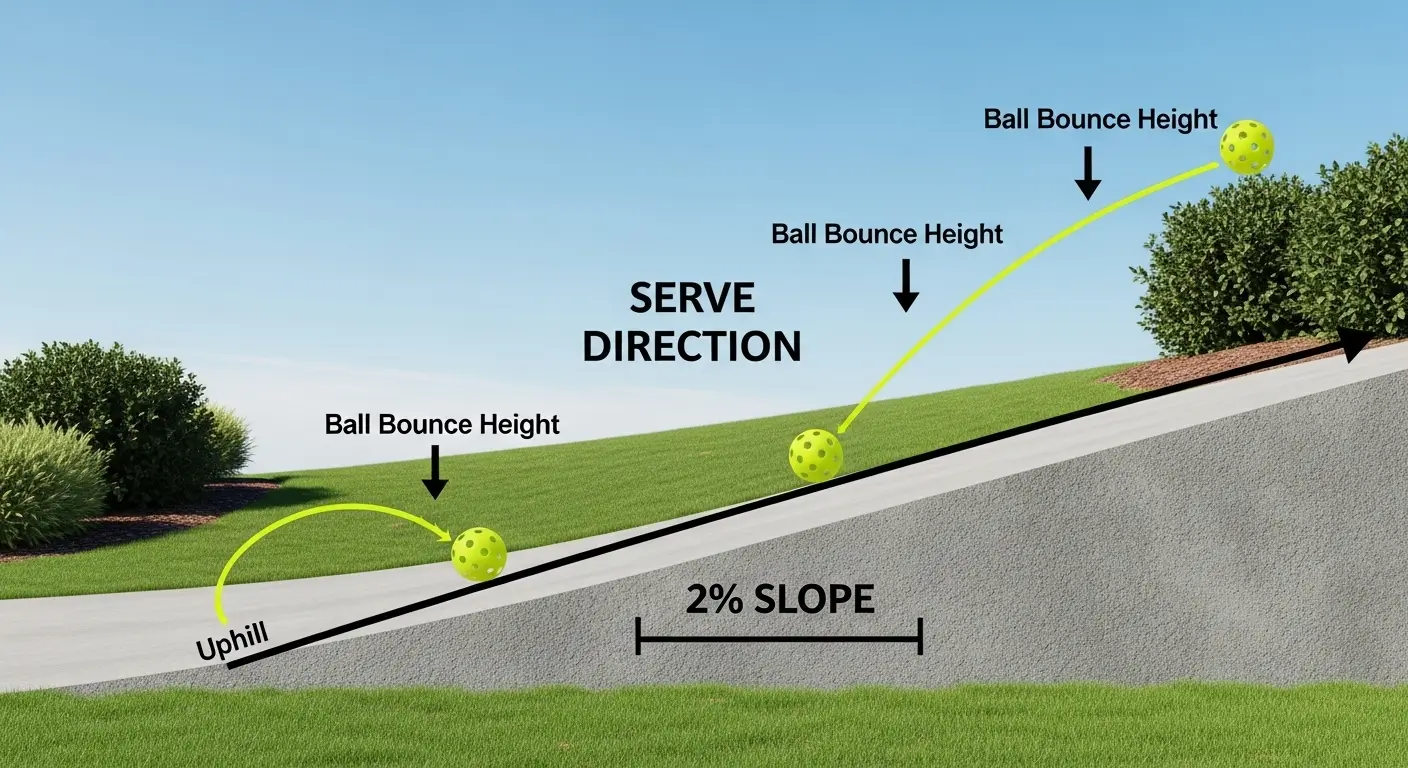
- Max Slope: 1% (ideal); 2% (absolute max)
- Balls skid downhill or come to a sudden stop
- Line Width: 2″; 2″
- Narrow lines can be confusing and unofficial
- Net Height (centre): 34″; 34″
- Tennis nets are too high—don’t mess with this.
These measurements are based on the official standards set by USA Pickleball, though we have adjusted the ‘Total Area’ recommendations to account for common residential driveway hazards.
The Physics of the Driveway Slope: Will My Ball Bounce Weird?
Builders construct driveways to drain water. This means they often have a slope.
Most driveways have a 2–3% grade. That may seem small, but it affects the game:
- Bounces vary by direction. A ball bouncing uphill loses speed
- Flat serves skid downhill like rockets
- Players get stuck in “slippery” or “dead” zones.
Technical Fix: Rotate the Net
Place your net parallel to the slope — this means the slope runs from sideline to sideline. This way, both players deal with the same conditions.
If you tilt the net downhill, one player gains an unfair advantage.
Want to be accurate? Use a 2-foot spirit level over a 20-foot run. Don’t exceed a 4.8-inch rise (2% grade).
The Buffer Zone: Why Rallies Die Without It
Driveways are not narrow — they’re cluttered. Cars, bins, walls, flowerbeds… It’s like playing pickleball in a trap.
The 2-Car Driveway Trap
Most suburban driveways are 20–24 feet wide — exactly the width of the court. This leaves zero side buffer.
- Chase a wide return? You risk smashing your elbow into a mirror
- Dive for a drink? Say goodbye to your bumper.
The Fix: Skinny Singles
Try a 10′ × 44′ “Skinny Singles” layout. It reduces side risks while keeping net height and real rally flow.
You’ll play safer. You’ll still work up a sweat.
Baseline Buffers = Rally Safety
A ball hit near your feet is tough to return — but it’s worse when you hit a garage door.
Give yourself at least 8 feet behind each baseline. Even in casual play, this space makes a big difference.
Surface Type Matters (and No One Talks About It)
Most advice misses this. But it’s important: While most driveways are concrete or asphalt, some homeowners choose to overlay their space with modular tiles for better joint protection. If you are considering a full upgrade, check out our deep dive on sports court flooring to see which material fits your budget and climate.
Asphalt vs. Concrete
- Asphalt: Softer and more forgiving but prone to slope. Watch for pebbles
- Concrete: Harder bounce, slicker on shoes, but flatter and more durable
Avoid playing on sealed blacktop during peak summer. It’s hotter and can melt tape.
Coach’s Corner: From the Court
“In my clinics, the biggest mistake people make when taping off a driveway court is forgetting that you don’t actually need full-court dimensions to get a pro-level workout.
My Tip: If your driveway is too narrow for full doubles, focus on ‘dinking’ and soft-game accuracy by setting up a ‘short-court’ layout; just as restoring the grit on your pickleball paddle is vital for competitive spin, practicing technical finesse in a confined space is the secret to winning points at the kitchen line.”
Marking the Court: What Works, What Fails
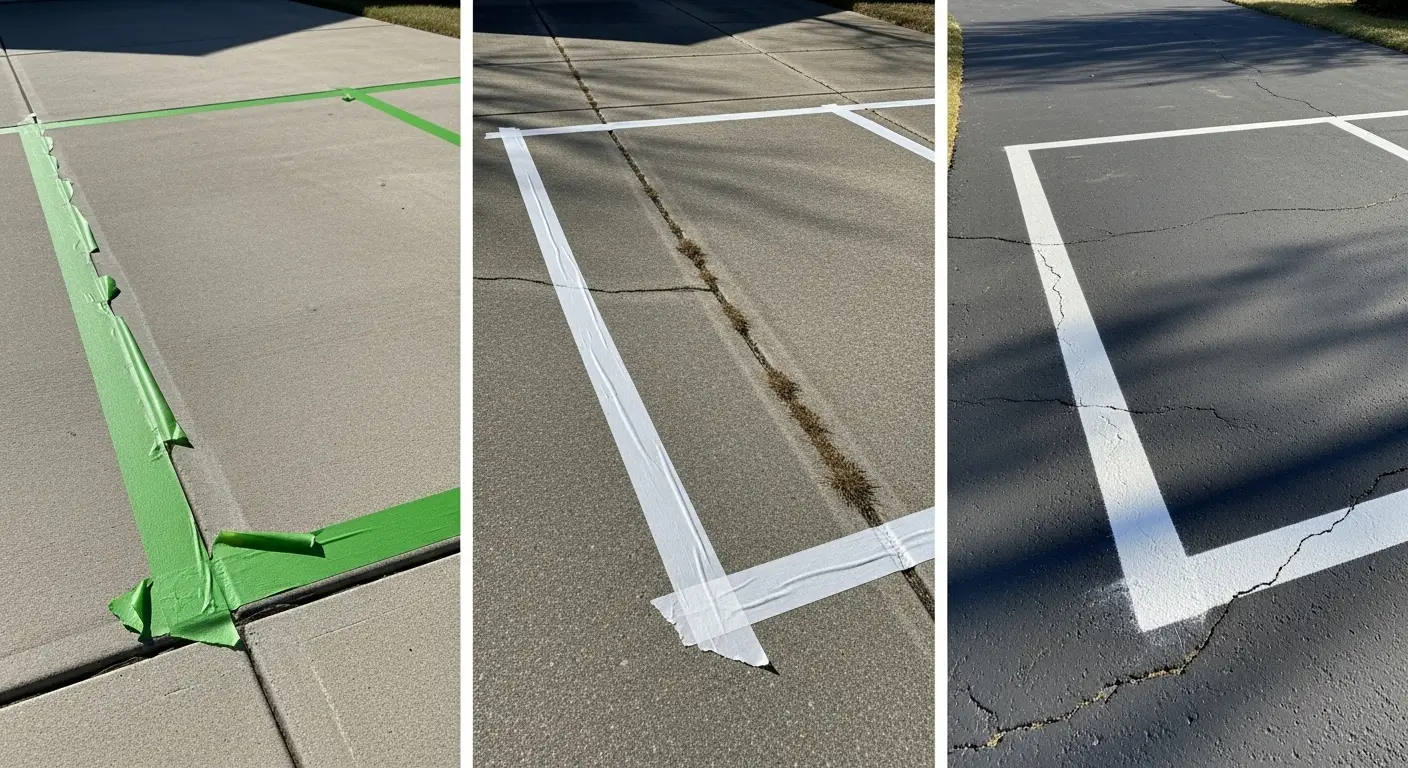
Want to mark a court in your driveway? You have options — each with trade-offs.
- Option: Use Case
- Durability: 1–3 days
- Effort: Low
- The Struggle: Peels with ease. Rain damages the surface
- Good for 1-day use
- Outdoor Cloth Tape
- Best for semi-permanent use.
- Lasts 1–3 months.
- Mid strength.
- Won’t damage concrete but needs a heat gun for cleanup
- Outdoor Gaffer
Works on unsealed areas. Acrylic Paint Long-term/permanent 3–5 years High Looks great. Needs primer, sealer, and a clean install.
Pro Tip: Use a clear sealer around your tape edges before painting. This stops white paint from bleeding into rough concrete, giving you sharp lines.
Real Gear Homeowners Use (w/ 2026 Prices)
No guesswork here. These are current listings:
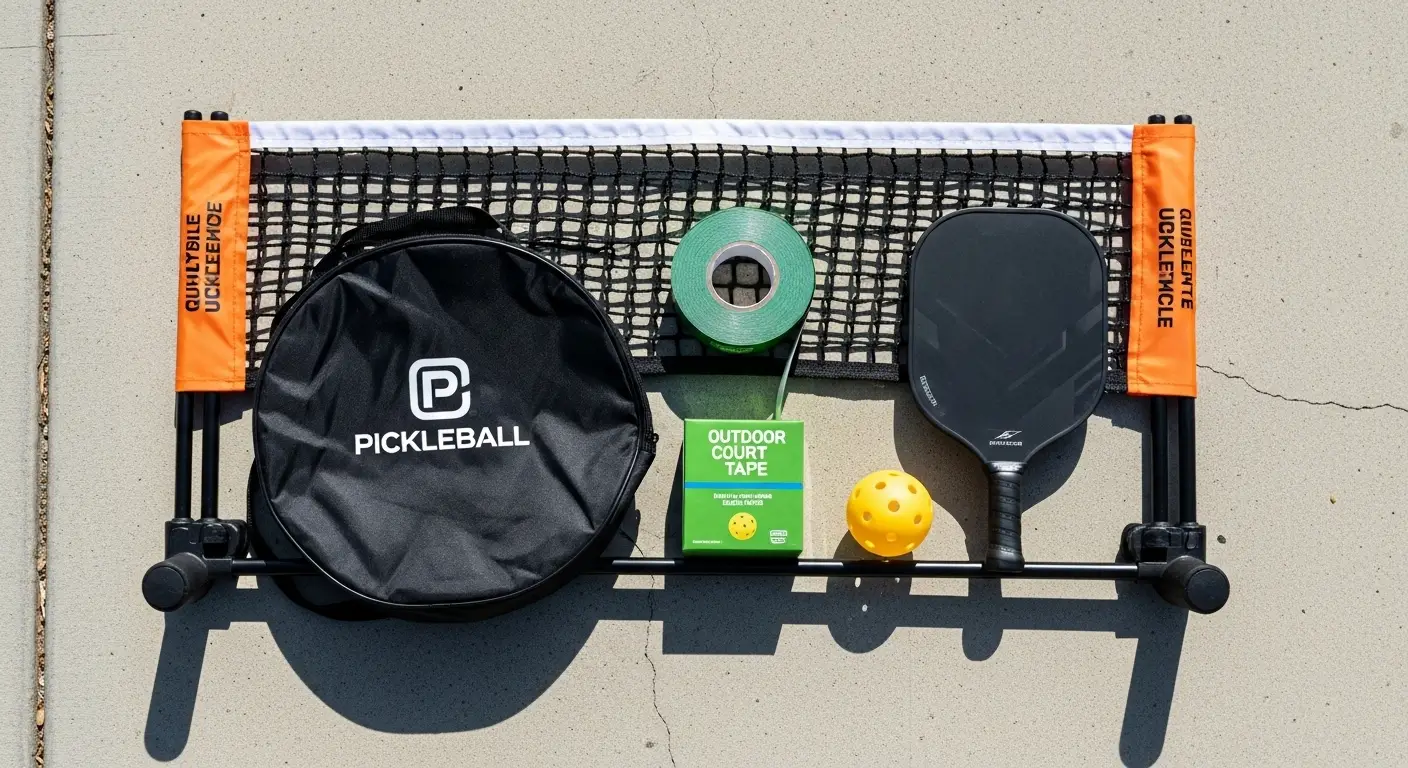
- Outdoor Court Tape – $25–$40: This tape is water-resistant. It sticks to concrete. It detaches with ease when heated.
- Portable Net System – $45–$60: Sets up in 5 minutes. Height adjustable. Not possible to remove the adverb.
- Heat Gun – ~$20: Essential for removing tape without residue on hot asphalt
What About the Noise?
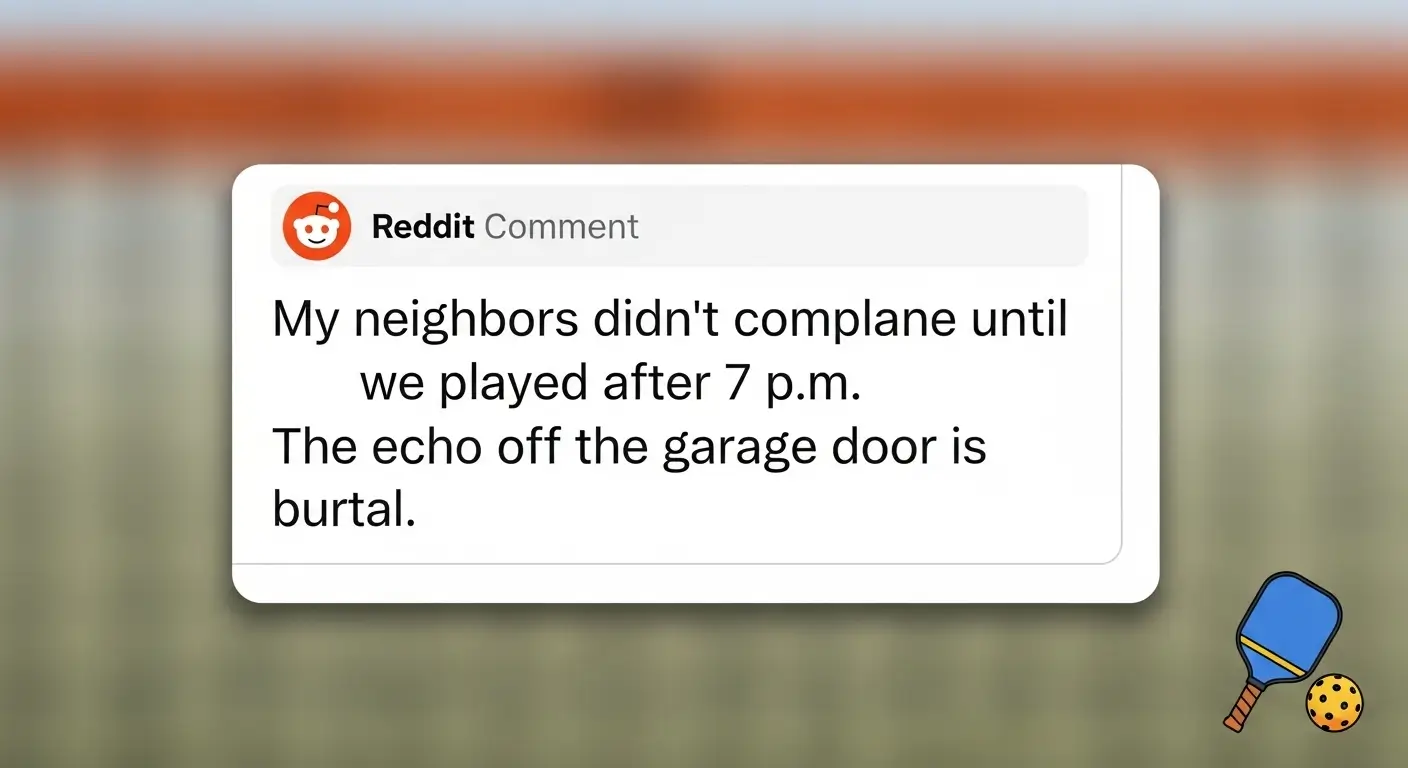
“My neighbours didn’t mind until we played after 7 p.m. Now, the sound of the ball hitting the paddle echoes off the garages.””
If your driveway is near a neighbour’s bedroom, consider Green Zone paddles — or “quiet paddles.”
Also:
- Avoid playing near dusk.
- Use foam balls for drilling shots.
- Line your garage wall with a hanging rug or acoustic panel to reduce noise
Slope Measurement Tool: The Tennis Ball Trick
Don’t have a level? Try this:
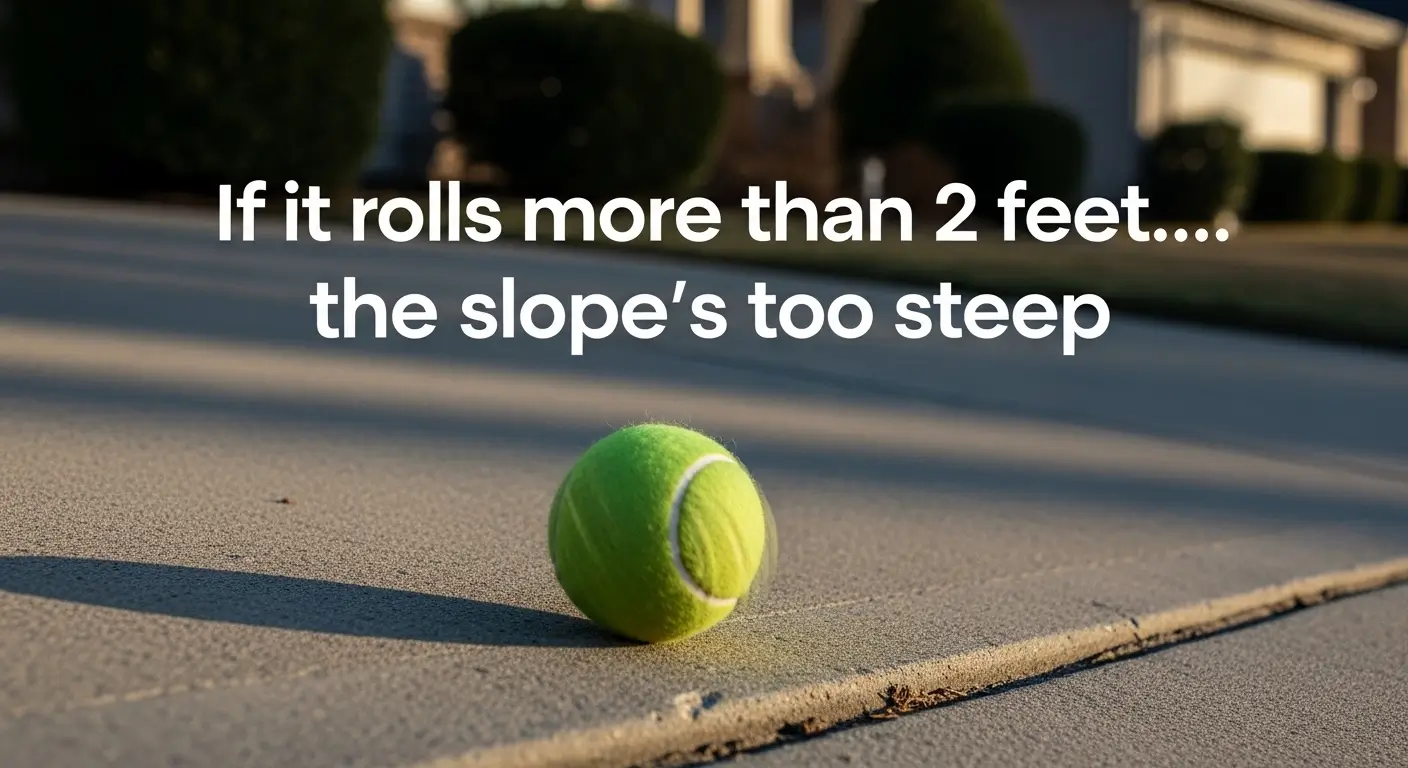
- Drop a tennis ball on one side of your driveway.
- If it rolls more than 2 feet on its own — your slope exceeds 2%
- If it settles in a short time, your court is playable
This won’t pass a construction inspection, but it’s good enough for backyard use.
FAQ — Real Technical Answers
Can I play on a slope?
Yes — if it’s 2% or less. No — if it’s more than that and you orient the net the wrong way.
What’s the best tape?
Outdoor cloth court tape is your best bet for semi-permanent setups. Avoid duct tape — it’s not UV-stable and turns into tar.
What if my driveway is too short?
Mark out Mini Pickleball or Half-Court Skinny Singles. You can still drill serves, returns, and dinks. Not tournament-ready, but better than staying inside.
Final Checklist: Is Your Driveway Playable?
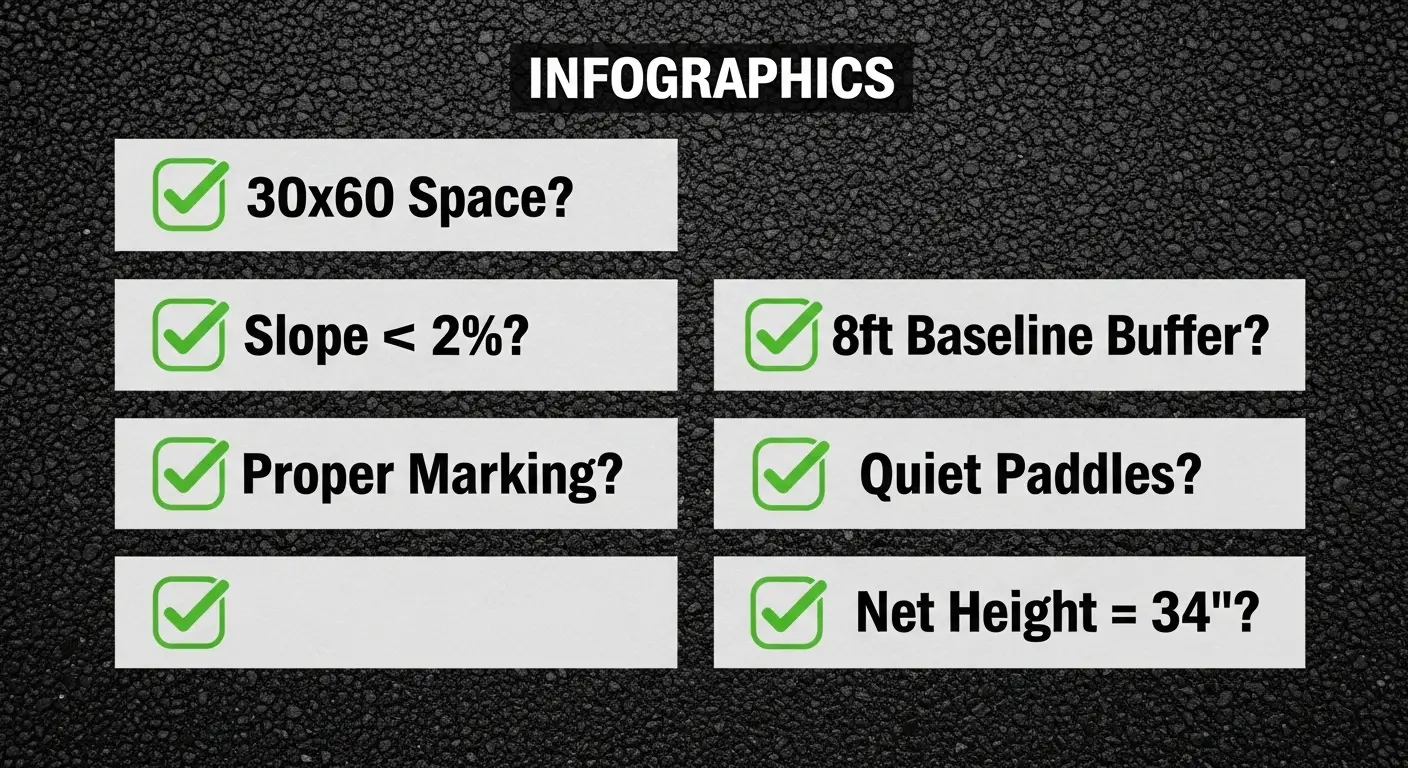
- Total space ≥ 30′ × 60′
- Side buffer ≥ 8′ each side
- Baseline buffer ≥ 8′
- Slope ≤ 2% (use level or tennis ball trick)
- Outdoor tape or proper paint chosen
- Net system installed at 34″ centre height
- Quiet paddles if neighbours are close
- Buffer zones marked for safety