
 By Ghulam Mustafa Khan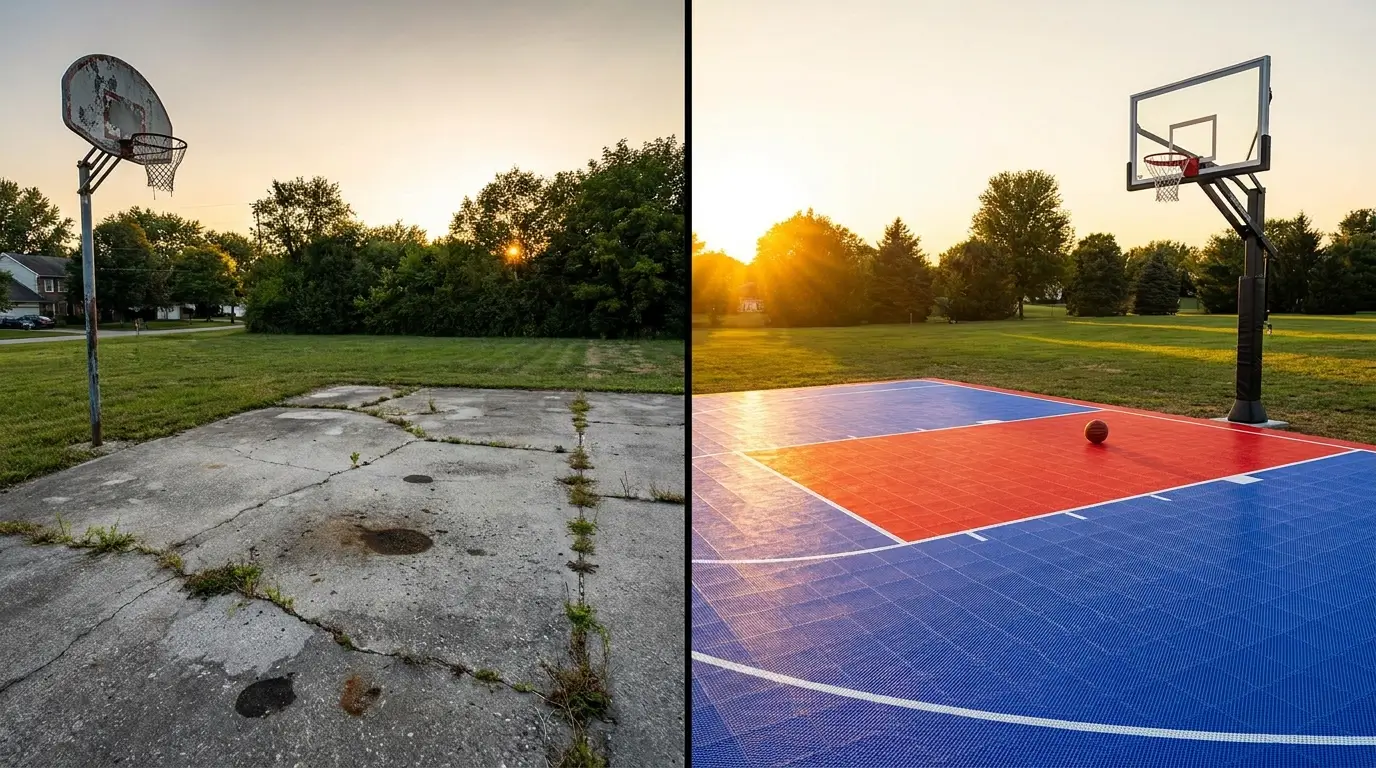
You finally decided to pull the trigger on a backyard transformation. You’ve spent weeks researching the best interlocking tiles, picking out the perfect color scheme, and imagining the sound of a pickleball hitting that crisp, professional surface. You think you can just snap those tiles together over your old driveway and call it a day.
I’m here to tell you that if you don’t respect the ground underneath those tiles, you are building a $10,000 house on a foundation of sand.
As a coach who has spent nearly two decades overseeing full cost breakdown of residential sport court installs projects, I have seen it all. I have walked onto “finished” courts where the ball dies in the corner because of a hidden dip in the concrete, and I have seen players roll ankles because a tile shifted over an unaddressed crack. Your driveway surface for sport tiles is the heartbeat of your court. If the surface is uneven, sloped improperly, or crumbling, no amount of high-end plastic is going to save your game.
The Foundation Crisis: Why Your Surface is Killing Your Quick Cuts
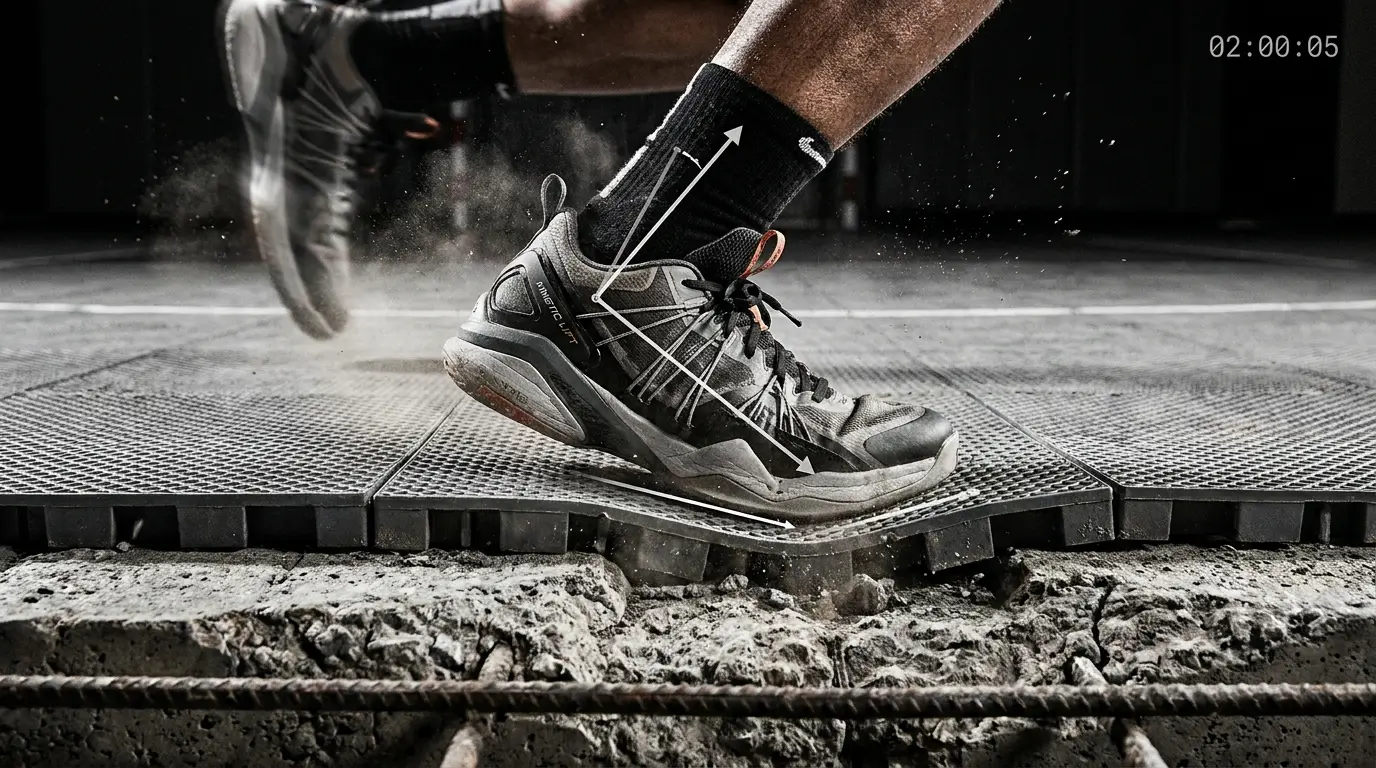
When we talk about the joint impact of uneven sport surfaces, we often focus on the “give” of the tile. But that vertical shock absorption only works if the tile has a flat, solid surface to press against.
If your driveway has “birdbaths”—those shallow dips where water pools after a rain—your tiles will bridge over them. This creates a hollow pocket. Every time you step on that spot, the tile flexes into the void. Not only does this kill your ball bounce, but it creates a micro-delay in your lateral movement. According to data from the National Institutes of Health (NIH), uneven playing surfaces increase the risk of acute ankle inversion injuries by over 40%. You aren’t just playing on a bad court; you are playing in a high-risk zone.
High-level play, especially if you are training for USA Pickleball sanctioned events, requires a “point-elastic” response. This means the energy you put into the ground should come straight back to you. An old, soft asphalt driveway absorbs that energy like a sponge. If your base isn’t rigid and level, your shoes can’t do their job, and you’ll find yourself fatigued thirty minutes into a session.
The Coach’s Blunt Truth: The “One More Game” Illusion
I once consulted for a homeowner in Phoenix who insisted on tiling over a 2-inch “lipped” expansion joint. Within three months, his son developed patellar tendonitis. Why? Because every time he landed a layup, the tile shifted just 3mm into that gap, sending a sheer force through his knee. Don’t let your kids pay the price for a lazy installation. Fix the slab before you click the tiles.
The Foundation Crisis: Why Your Surface is Killing Your Quick Cuts
When we talk about the best backyard court surface for knees, we often focus on the give of the tile. But that vertical shock absorption only works if the tile has a flat, solid surface to press against.
If your driveway has birdbaths those shallow dips where water pools after a rain your tiles will bridge over them. This creates a hollow pocket. Every time you step on that spot, the tile flexes into the void. Not only does this kill your ball bounce, but it creates a micro-delay in your lateral movement. According to data from the National Institutes of Health (NIH), uneven playing surfaces increase the risk of acute ankle inversion injuries by over 40%. You aren’t just playing on a bad court; you are playing in a high-risk zone.
High-level play, especially if you are training for USA Pickleball sanctioned events, requires a point-elastic response. This means the energy you put into the ground should come straight back to you. An old, soft asphalt driveway absorbs that energy like a sponge. If your base isn’t rigid and level, your normal shoes can’t do their job, and you’ll find yourself fatigued thirty minutes into a session.
The Equipment Trap: The Hidden Friction War Many homeowners think tiles protect the driveway. It’s actually the opposite. As you play, the tiles subtly shift. If your concrete is “spalling” (flaking off in white dusty chunks), those grit particles act like sandpaper between the tile and the concrete. Within two seasons, that friction will grind down the locking mechanisms of your tiles, causing the court to “creep” or shift out of alignment. Always power-wash and seal a flaking surface before the first tile touches the ground.
Is Your Driveway Worthy? (The Test)
Before you buy tiles, you need to test your driveway. I once had a client whose driveway looked perfect, but once we put the tiles down, the basketball hoop looked crooked. The ground had a hidden dip.
The 10-Foot Test
Take a long, straight piece of wood or metal (10 feet long). Lay it on your driveway. If you see a gap bigger than a coin under the wood, your driveway is too bumpy. This will make the ball bounce “dead” in those spots.
The Slope
Your driveway should tilt slightly (1%) so rain runs off. If it’s too flat, water sits under your tiles and smells. If it’s too steep, playing pickleball court dimensions on a driveway becomes annoying because the ball rolls away.
📊 Quick Checklist: Can You Install?
Flat Surface: Can you fit a coin under your 10ft straightedge? (If yes, you need to patch it).
Cracks: Are the cracks wider than a pencil? (If yes, you need to fill them).
Expansion Joints: Is one slab higher than the one next to it? (If yes, you need to grind it down).
Expert Tip: Always power-wash your driveway before installing. If there is sand or dirt under the tiles, it acts like sandpaper and destroys the plastic over time.
Diagnostic Protocol: Is Your Driveway Worthy of an Upgrade?
Before you order a single box of flooring, you need to perform a technical audit. I once worked with a client in Texas named Sarah. She had a 1980s concrete driveway that looked fine to the naked eye. We laid down a premium court, and within a week, she realized her most stable portable basketball hoop was leaning three degrees to the left. The culprit? A subtle, long-term sink in the concrete slab that was invisible until the lines of the tiles highlighted the tilt.
The 10-Foot Straightedge Test
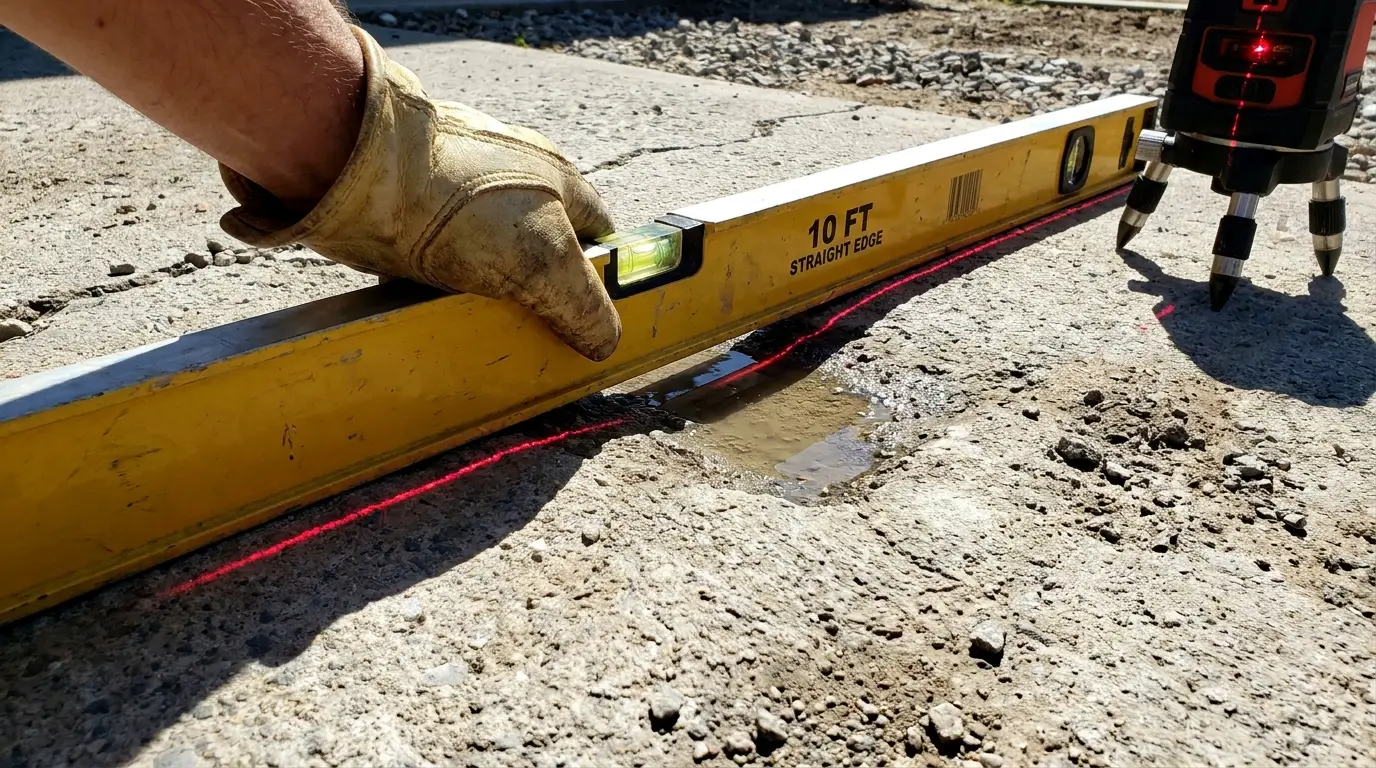
Go to a hardware store and buy a 10-foot straight piece of aluminum or use a laser level. Lay it across your driveway in a star pattern. If you see a gap of more than 1/8th of an inch anywhere under that straightedge, you have a planarity problem. Standard ASTM F2772 requirements for indoor and outdoor sports flooring emphasize that a sub-base must be virtually flat to ensure consistent ball rebound and player safety.
The Drainage and Slope Equation
You also have to calculate your grade. A driveway needs a slope to shed water, but too much slope turns a basketball game into a lopsided mess. The sweet spot is a 1% slope (about 1 inch of drop for every 10 feet of length). If your driveway is steeper than that, your pickleball driveway dimensions will feel fast on one side and slow on the other.
The Coach’s Blunt Truth: The Crack Fallacy
Homeowners always ask me, “Can I just tile over this crack?” My answer: Is the crack moving? If one side of the crack is higher than the other (a lipped crack), the tiles will eventually snap at the joints. If the crack is just a hairline fracture from surface shrinkage, you can fill it with a flexible epoxy and move on. But if you have a structural shift where the ground is literally heaving, tiles will only hide the problem for a month before the court looks like a topographical map.
Planarity vs. Level: Understanding the Difference
In my 17 years of installs, I’ve had to explain this a thousand times: A court doesn’t have to be perfectly level (horizontal to the horizon), but it must be plane (perfectly flat). You can play a great game on a 1% slope, but you cannot play a safe game on a wavy surface.
If your driveway has major depressions, you are looking at a leveling project using a cementitious patch or a self-leveling compound designed for outdoor use. If you skip this, the clacking sound of the plastic hitting the concrete will drive your neighbors crazy, and you’ll find yourself constantly checking your backyard court permits and zoning laws when the noise complaints start rolling in.
The Pro-Level Fix: Leveling, Patching, and Pre-Installation Prep
Once you’ve finished your diagnostics and realized your driveway isn’t as flat as a pool table, you have a choice. You can either ignore the dips and live with a clacking court, or you can fix the driveway surface for sport tiles properly. In my experience, taking forty-eight hours to prep the surface saves you five years of frustration.
Asphalt vs. Concrete: Two Different Beasts
If you’re working with an asphalt driveway, your biggest enemy is heat. Asphalt is a flexible pavement; it softens in the summer. If you have deep ruts from where you park your SUV, those ruts will mirror through your tiles by July. I once saw a DIY install in Florida where the owner ignored tire ruts. By mid-August, the pickleball paddle maintenance was the least of his worries because his tiles were literally warping into the driveway grooves.
For asphalt, you need to use a cold patch or a specialized asphalt mastic to fill depressions. For concrete, you have more options. You can use a high-strength, polymer-modified cement to feather out low spots. The goal isn’t to make the whole driveway level—remember, we need that 1% slope for drainage, but to make the surface plane so the tiles sit flush.
The Underlayment Debate: Silencing the Clack
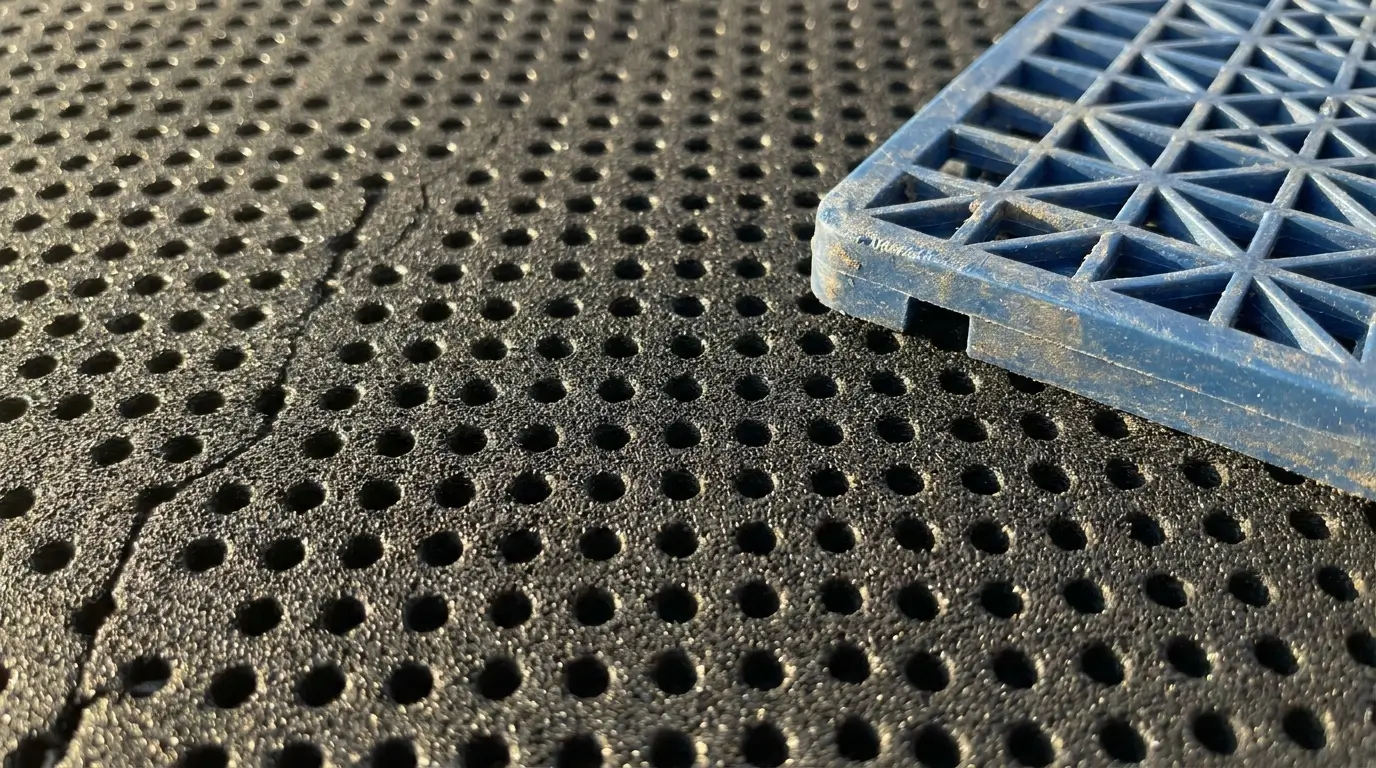
If you’ve ever played on a tile court that sounds like someone dropping a plastic tray on a sidewalk every time the ball bounces, it’s because there is a gap between the tile and the concrete. To fix this, we often use a 2mm or 3mm rubber underlayment.
Not only does this silence the court—keeping you in the good graces of your backyard court lighting neighbors—but it adds a secondary layer of protection for your joints. Even if you are wearing the best shoes for toe draggers, a little extra dampening between the plastic and the stone goes a long way.
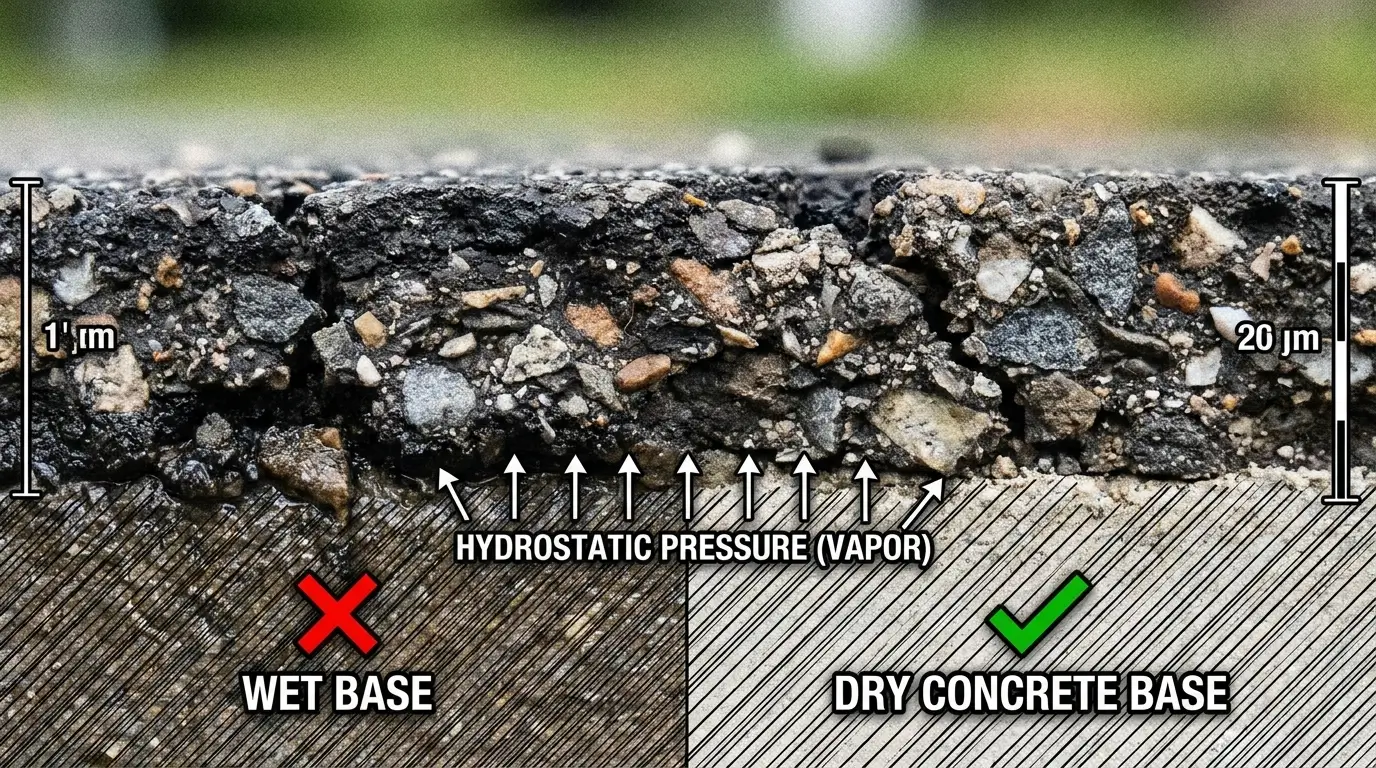
The Equipment Trap: The Vapor Barrier Blunder Be careful with solid rubber mats on concrete. Concrete “breathes” moisture (vapor transmission). If you seal it off completely with a non-breathable rubber mat under your tiles, moisture gets trapped. This leads to mold, a “musty” smell every time you play, and can eventually cause the concrete to scale. Always use a perforated or breathable underlayment that allows moisture to migrate to the edges of the court.
Dealing with Lipped Expansion Joints
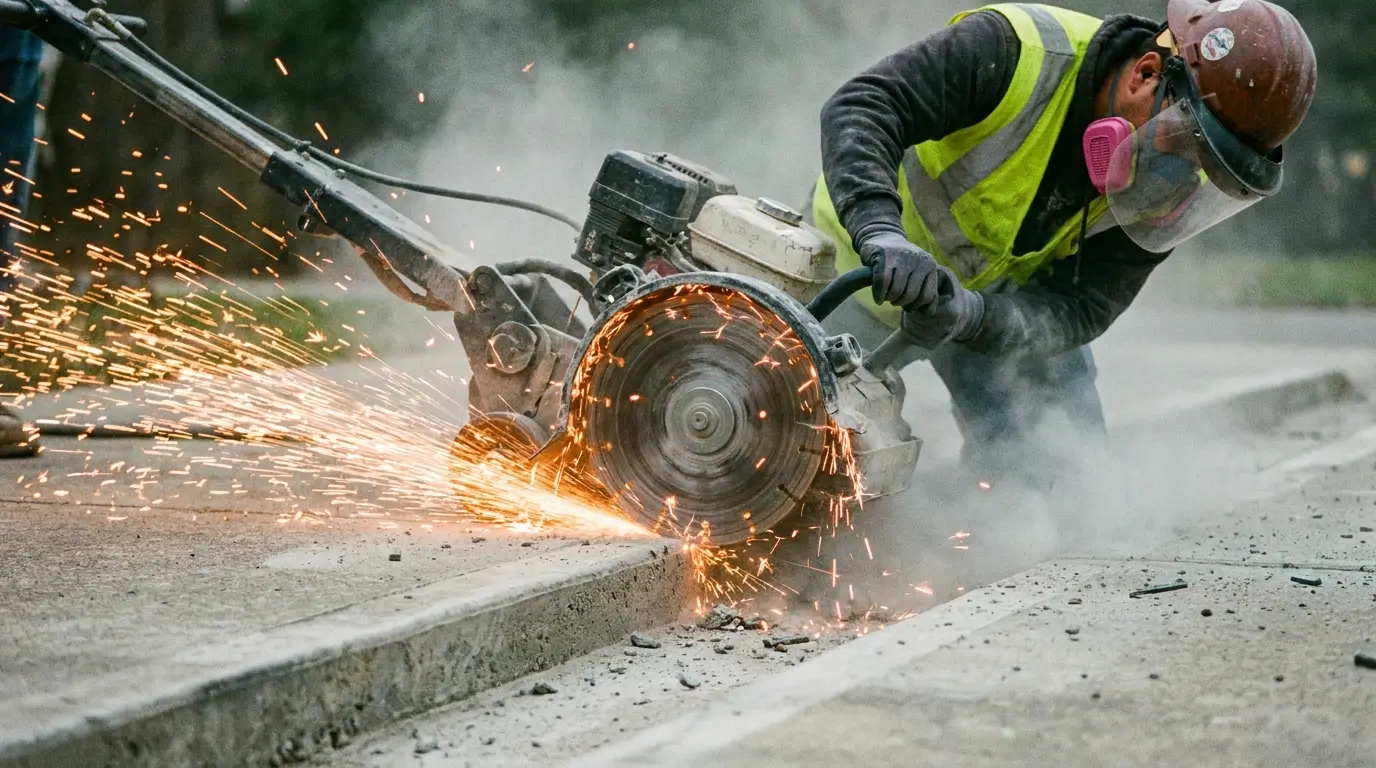
Driveways are poured in slabs with expansion joints to prevent cracking. Often, one slab will settle an inch lower than the one next to it. You cannot snap tiles over a 1-inch ledge. You’ll either need to grind the high side down using a concrete humping grinder (available at most rental shops) or build up the low side with a ramp of patch material.
I tell my students that a good court starts with a broom, but a pro court starts with a grinder. If you can feel the transition under your basketball shoes for pickleball, the tiles will feel it too.
The Coach’s Blunt Truth: The Cleanliness Factor
I’ve walked onto dozens of residential court installs where the owner is ready to snap tiles over a layer of fine dust and old oil stains. If your driveway is dirty, your tiles will slide. Before you install, you need to degrease and power-wash. If you have old bird droppings on sport court tiles from a previous temporary setup, or just years of driveway grime, get it off. A clean surface ensures the friction pads on the bottom of the tiles actually grab the concrete, preventing “court creep” during aggressive lateral play.
If you’re planning on painting lines on a pickleball court directly on the driveway instead of using tiles, these prep steps are even more critical. Paint won’t hide a single bump; it actually highlights them. But for a tile system, this prep work is the difference between a court that feels like a D1 facility and one that feels like a toy.
The Final Verdict: Don’t Compromise the Foundation
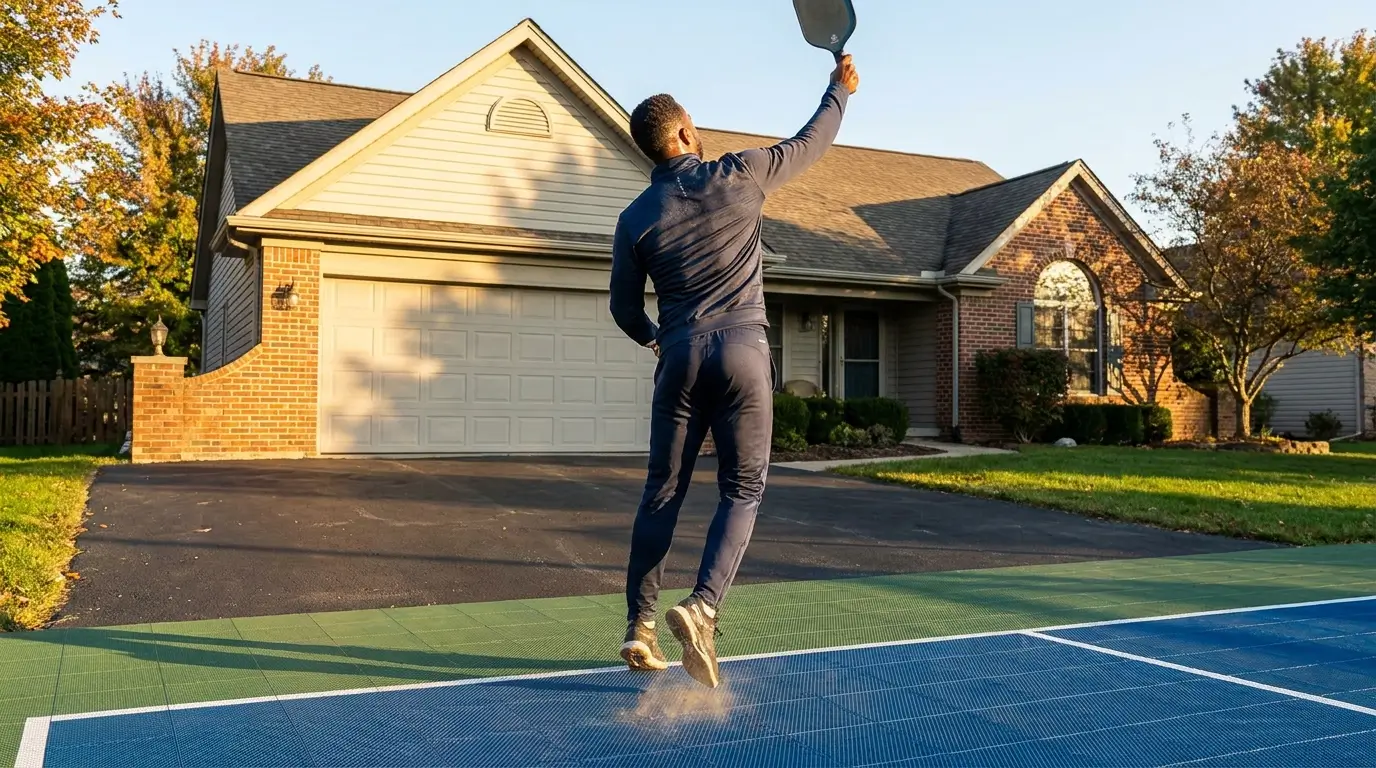
After 17 years in the dirt and on the concrete, my final takeaway is this: You can buy the most expensive, UV-stabilized, high-impact tiles on the market, but they are only as good as the driveway surface for sport tiles beneath them. If you skip the straightedge test or ignore a heaving crack, you aren’t saving money; you’re just delaying a much more expensive repair.
A successful driveway transformation turns an underutilized slab of asphalt into a high-performance arena. Whether you are using it for solo tennis practice in your garage or a full-court basketball setup, the floor is your most important teammate. Treat it with the respect it deserves, and it will reward you with consistent bounces and healthy joints for a decade.
Frequently Asked Questions (FAQ)
Can I install sport tiles over a gravel or dirt driveway?
Absolutely not. Modular tiles require a “hard-standing” surface. Gravel shifts underfoot, causing the interlocking tabs to snap, and dirt creates a mud-trap that will bubble up through the tile perforations. You must have a solid concrete or asphalt base.
Will sport tiles hide the puddles on my driveway?
They will hide the view of the puddle, but the water will still be there. Playing through standing water trapped under tiles causes a “splash effect” and can lead to a slippery, dangerous surface. Always fill “birdbaths” with a leveling compound before installation.
Is it safe to drive and park my car on top of the court tiles?
Most high-quality polypropylene tiles are rated for a high static load, but frequent turning of tires—especially power steering maneuvers while stationary—can grind the tile surface and stress the locking clips. If you must park on them, try to drive straight on and straight off.
How do I stop the tiles from shifting on my sloped driveway?
This is called “court creep.” On a slope, the weight of the players and gravity will slowly pull the court downhill. You should anchor the “top” edge of the court into the concrete using stainless steel masonry anchors to keep the entire system in place.
Do I need a permit to put tiles on my existing driveway?
Generally, no, because you aren’t adding “impervious surface” area. However, it’s always smart to double-check your local backyard court permits and zoning laws if you plan on adding permanent structures like a fixed basketball hoop.
Does the color of the driveway affect the tiles?
Dark asphalt absorbs more heat than light concrete. In extreme climates, this can cause more significant “thermal expansion” of the plastic. Ensure you leave a 1/2 inch gap between the edge of your court and any fixed structures like walls or curbs.