 By Ghulam Mustafa Khan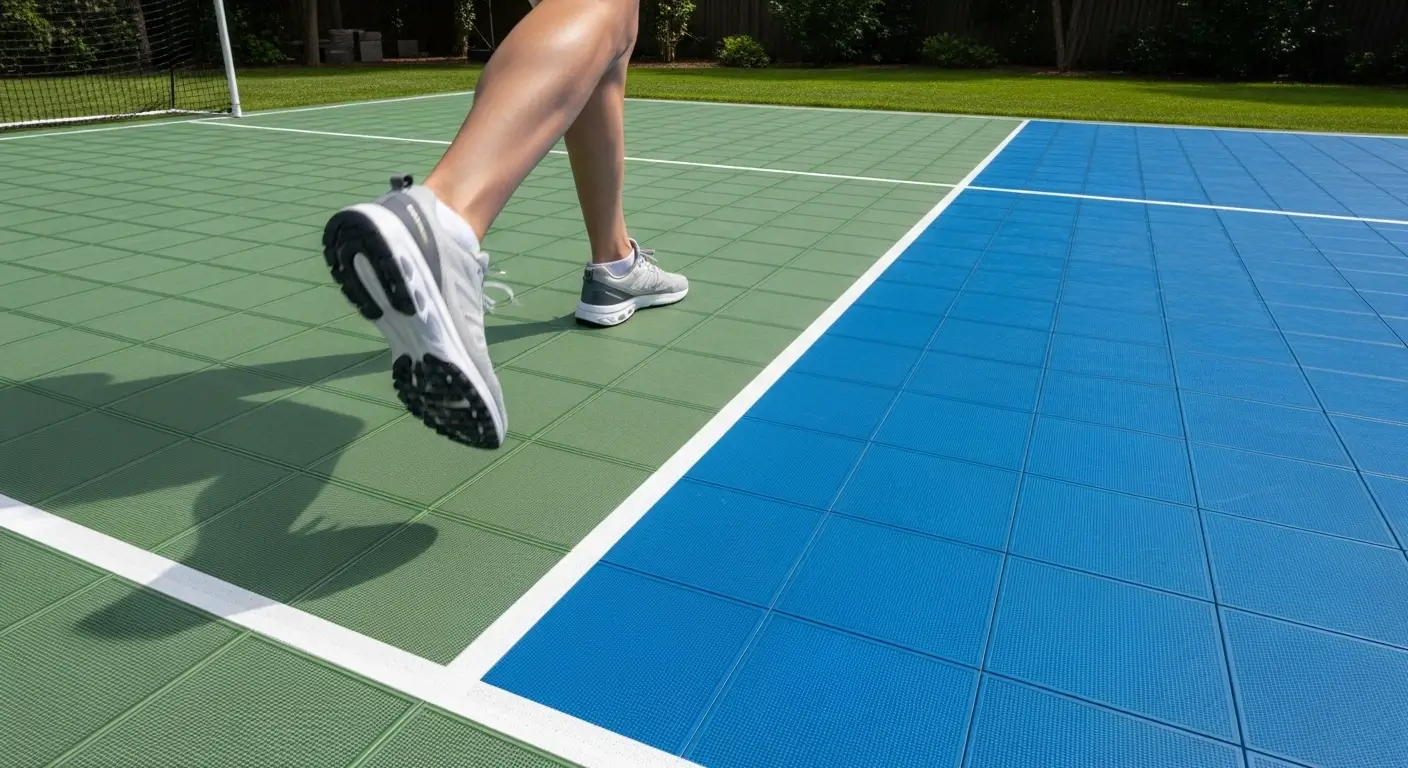
Building a home court is a major investment, but the hidden cost is often physical. Most homeowners prioritize the ball bounce, yet the most critical metric for longevity is Impact Attenuation.
If you want to play for hours without chronic inflammation, you have to stop thinking about your court as ground and start thinking about it as a biomechanical shock absorber.
While tile flex is great for your joints, it cannot compensate for a wavy sub-base. Before you pick a tile, you must ensure you are choosing a flat driveway surface for sport tiles to prevent the ‘hollow’ spots that cause ankle instability.
The Science of Impact: Why Your Knees Hurt
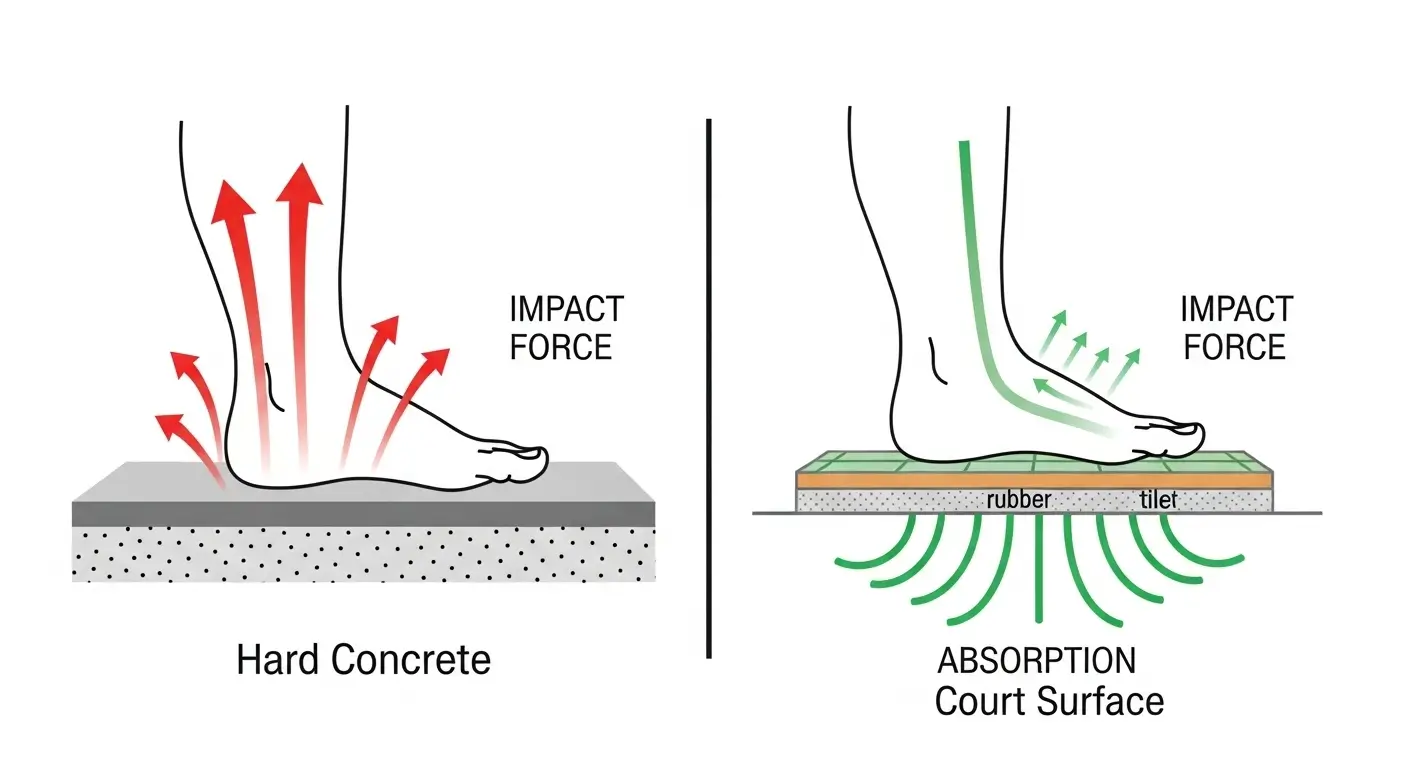
When your foot strikes a rigid surface like bare concrete, the kinetic energy has nowhere to go but back up your skeletal structure. This is known as Peak Impact Force. According to the American Academy of Orthopaedic Surgeons, repetitive impact on non-yielding surfaces is a primary driver of stress fractures and patellar tendonitis.
To solve this, we look for two specific engineering traits:
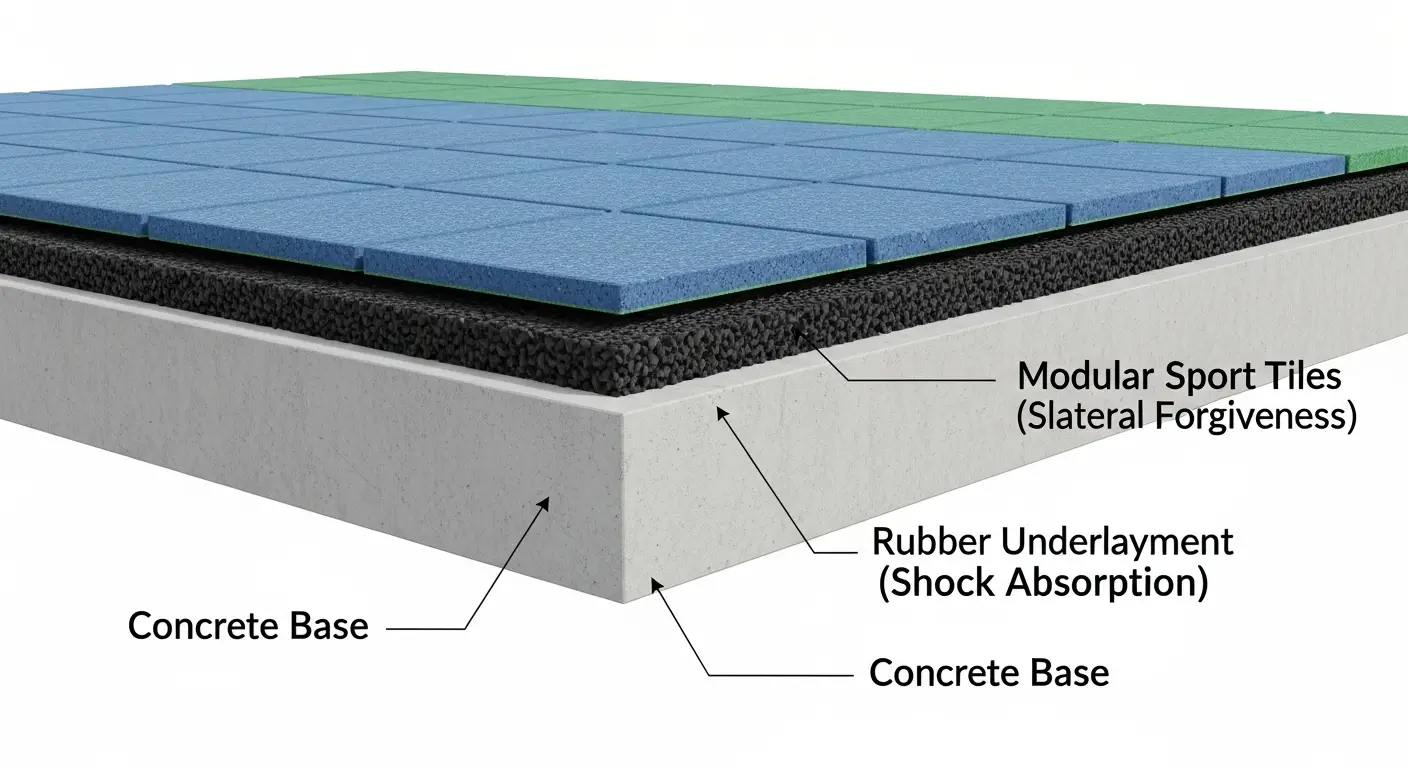
- Vertical Shock Absorption: The surface’s ability to compress downward under load.
- Lateral Forgiveness: The ability of the surface to slide slightly during a hard pivot, protecting your ACL and ankles from “locking” into the ground.
Top Surface Contenders: A Detailed Breakdown
1. Suspended Polypropylene (Modular Tiles)
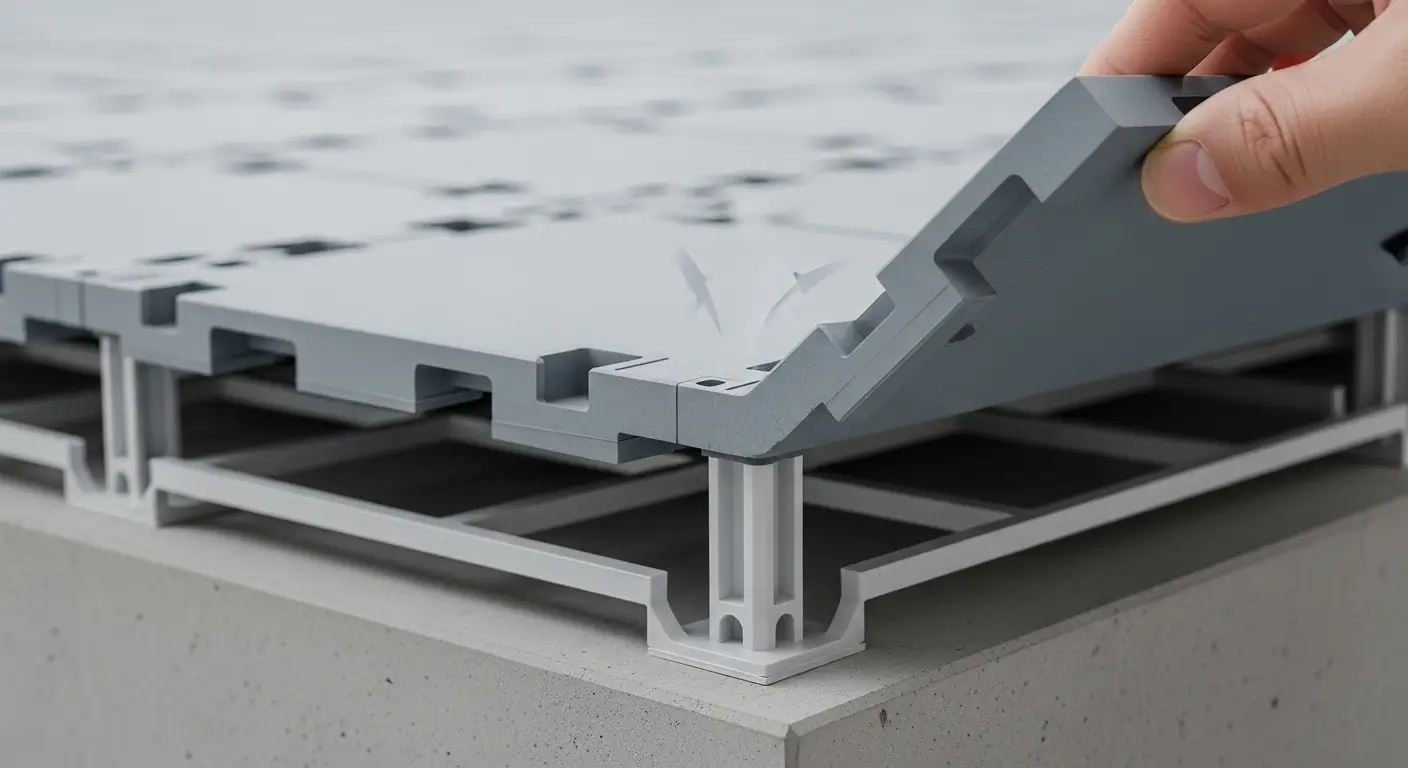
Modular tiles are the “Gold Standard” for DIYers. However, there is a technical secret: the “open-grid” design isn’t just for drainage—it’s for suspension.
- The Insight: High-end tiles use a post-and-flex system. The plastic bows slightly under weight, acting like thousands of tiny springs.
- The Cost: $4.50 – $7.00 per sq. ft.
- Maintenance Note: While durable, the hardware around your court needs care too. If your setup includes a hoop, ensure you fix any squeaky basketball rims immediately, as vibration from the rim can actually travel through the mounting system and affect the tile’s resonance.
2. Cushioned Acrylic Systems (The Pro-Circuit Feel)
This isn’t just paint; it’s a liquid-applied surface featuring layers of granulated SBR rubber.
- The Insight: This offers “Point Elasticity.” Unlike tiles, it only compresses exactly where you step, providing a stable “launch” for jumps while protecting the joints.
- The Provocation: Many skip the “cushion” layer to save money, but as we discussed in our guide to sports court flooring types, the long-term ROI on player health far outweighs the initial $5 per square foot savings.
3. Asphalt: The “Flexible” Pavement
Asphalt is a petroleum-based product, making it technically more “flexible” than concrete.
- The Insight: While it’s better than concrete for cardio-heavy court sports, it degrades quickly. Cracks in asphalt can create uneven surfaces that lead to ankle rolls.
Comparison Table: Cost vs. Joint Health
| Surface Type | Knee Safety | Energy Return | Estimated Cost |
| Bare Concrete | Very Low | High | See Cost Guide |
| Modular Tiles | High | Medium | $4 – $7 /sq ft |
| Cushioned Acrylic | Very High | High | $12 – $18 /sq ft |
| Asphalt | Low/Medium | Medium | $5 – $9 /sq ft |
The Hybrid Strategy: Maximum Comfort on a Budget
If you already have a concrete pad and a limited budget, you can use the Underlayment Sandwich. By installing a 3mm to 5mm high-density rubber mat under standard modular tiles, you achieve sound dampening and superior energy return.
Before you buy your materials, ensure your slab meets the proper pickleball driveway dimensions to avoid wasting expensive underlayment on “dead space.”
Coach’s Corner: From the Court
“In my coaching career, I’ve seen more players sidelined by ‘Jumper’s Knee’ from hard concrete than by almost any other training mistake.
My Tip: If you are over 30, never practice high-impact drills on un-cushioned surfaces; switching to modular tiles with vertical flex acts like a suspension system for your joints, allowing you to sustain the deep lunges required for high-intensity pickleball rallies without the next-day inflammation.”
Frequently Asked Questions (FAQ)
What is the softest surface for a backyard basketball court?
The softest surface is cushioned acrylic or poured-in-place EPDM rubber. Cushioned acrylic uses multiple layers of liquid rubber granules to provide high shock absorption without sacrificing the consistent ball bounce required for competitive play.
Does a rubber underlayment actually protect your knees?
Yes, it acts as a vibration dampener. This construction reduces the Peak Impact Force on your joints, specifically helping to prevent patellar tendonitis and lower-back strain.
Is asphalt better for your joints than concrete?
Technically, yes, because it is a petroleum-based flexible pavement. However, without a dedicated sports surface coating, it is still considered a high-impact surface that can lead to overuse injuries.
How do modular tiles prevent ankle injuries?
They are engineered with lateral forgiveness. The surface shifts slightly with the foot during sudden stops, absorbing the shear force that would otherwise be transferred to the ACL and ankles.
Final Thoughts for Homeowners
Whether you are training for a tennis ace or setting up a backyard pickleball court, your surface choice dictates how long you can stay in the game.