
 By Ghulam Mustafa Khan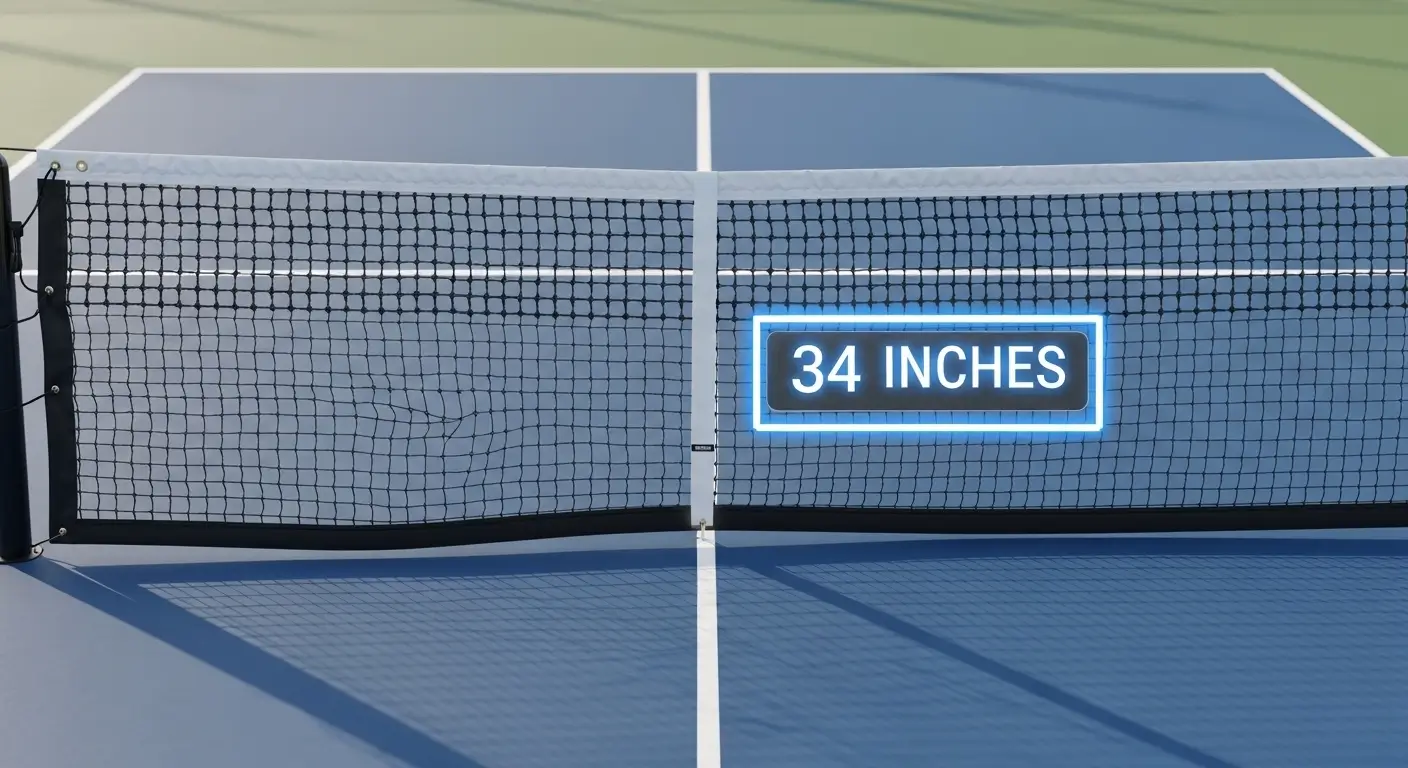
If you have ever played a serious game of pickleball, you know the frustration of a lazy net. You hit a perfect drive that should have cleared the tape, but it catches the middle because the center strap has dipped two inches below regulation.
A sagging net does more than just ruin a specific rally; it alters your muscle memory. Training on a court that is not at the correct height can hurt your performance when you transition to a tournament environment. Fortunately, finding a portable pickleball net fix is usually a matter of understanding tension physics rather than buying a new system.
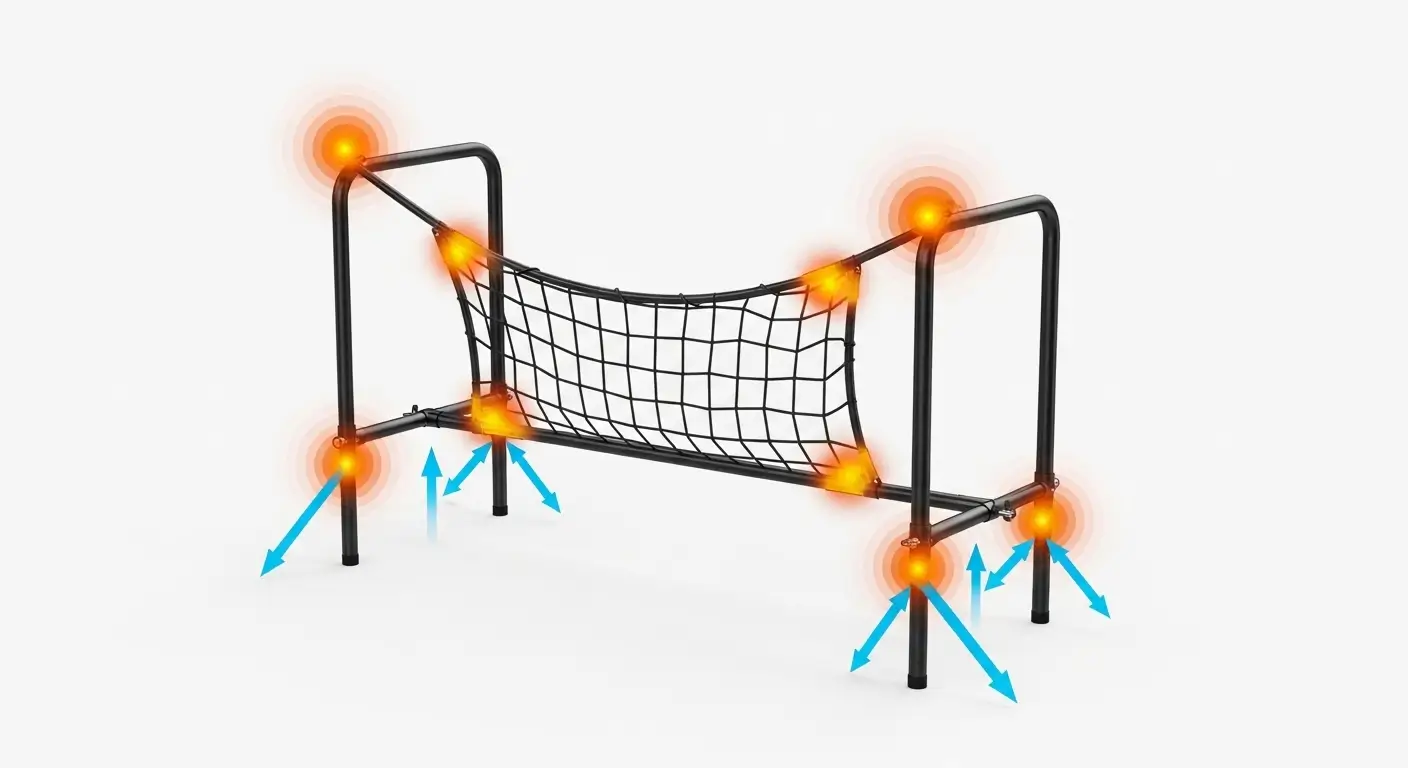
The Gravity Problem: Why Even the Best Portable Nets Lose Tension
Most portable pickleball nets sag because of tension fatigue or center strap slippage. Unlike permanent nets anchored into concrete, portable systems rely on fiberglass or steel frames. These frames are designed to be lightweight for travel, which means they naturally flex under the constant weight of a heavy vinyl headband.
Before you attempt a repair, you must verify the Golden Number. According to official USA Pickleball standards, a net must be 36 inches high at the sidelines and exactly 34 inches high at the center.
The height of a court fixture completely changes the mechanics of the game. For example, the height of a volleyball net is significantly greater, which is why an ace in volleyball requires a high-velocity downward trajectory. In pickleball, that two-inch dip in the center makes let cords more common and rewards poor shots that should have been errors. If your center measurement is 32 or 33 inches, your court is no longer regulation.
From the Coach’s Perspective
A sagging net is more than a visual problem. It changes how you play by rewarding shots that should not clear the tape. I recommend checking your center height before every session. This ensures your practice drills remain accurate, especially if you are also painting your own pickleball court lines to meet professional standards.
Step-by-Step Portable Pickleball Net Fix
1. The Center Strap Reset
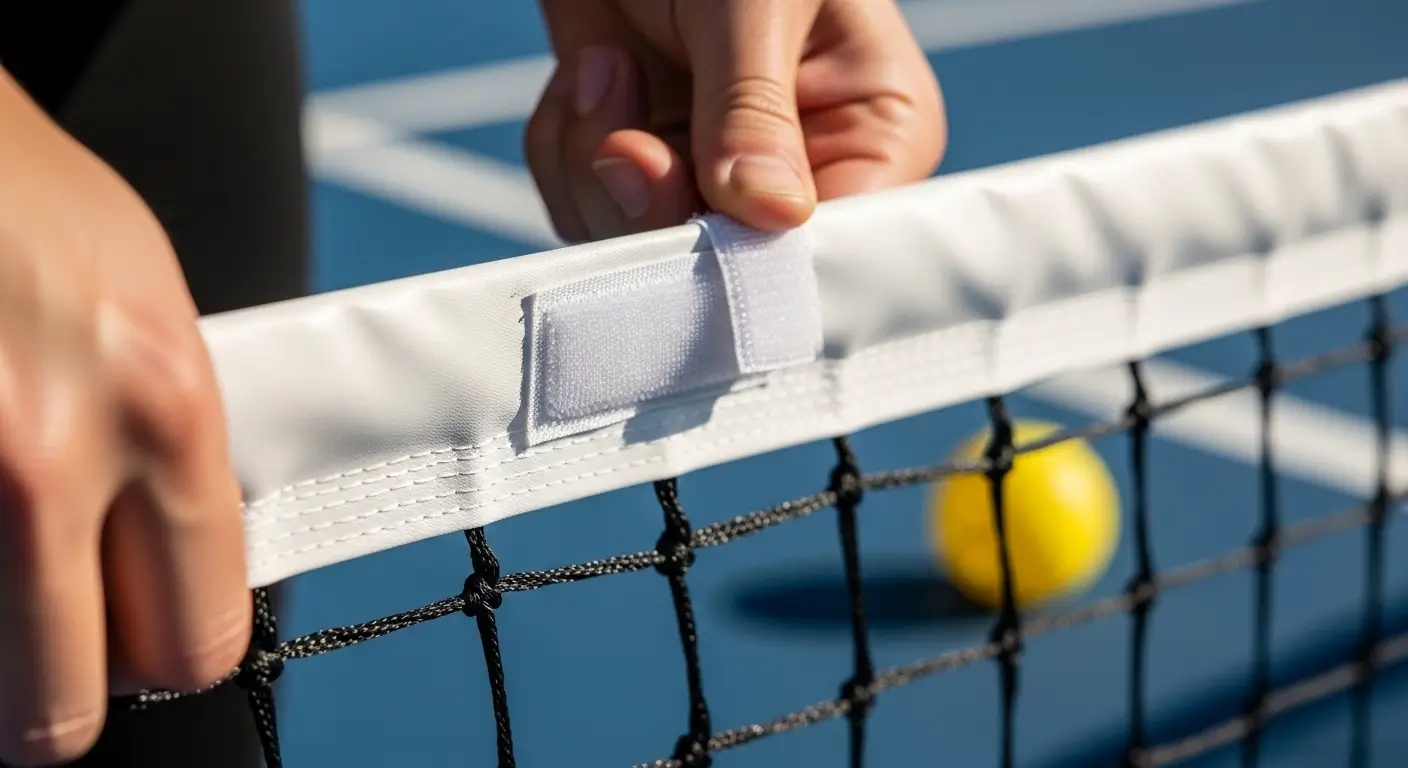
The most common culprit for a sagging net is a loose center strap. Most portable systems use a Velcro or nylon strap to pull the middle of the net down toward the base bar.
- The Fix: Completely undo the strap and pull it tight until the net measures exactly 34 inches from the ground. Use a dedicated net height tool or a standard tape measure; do not rely on your eyes, as the surrounding court lines can create an optical illusion.
2. Tension Adjustment Order
Many players make the mistake of tightening the center strap first. This actually puts more stress on the frame and increases the sag.
- The Fix: Tighten the end-line buckles or knobs before you adjust the center strap. Pulling the sides taut first creates a horizontal “bridge.” This structural tension supports the weight of the net, allowing the center strap to simply guide the height rather than bear the full load.
Surface Protection and Long-Term Maintenance
When adjusting your net, be mindful of where you are sliding the steel frame. If you followed our guide on how to paint lines on a pickleball court, you know that the acrylic finish is durable but not invincible. Dragging a heavy steel base across fresh lines can cause scuffing or “burn” marks that are difficult to repair.
For those still in the planning phase of a home court, the total sport court cost for residential or commercial projects often includes permanent net sleeves. These sleeves allow you to use heavy-duty ground-anchored posts, which eliminate sagging issues entirely and provide a professional-grade experience.
The Stability Checklist: 3 Signs You Need a Better Net
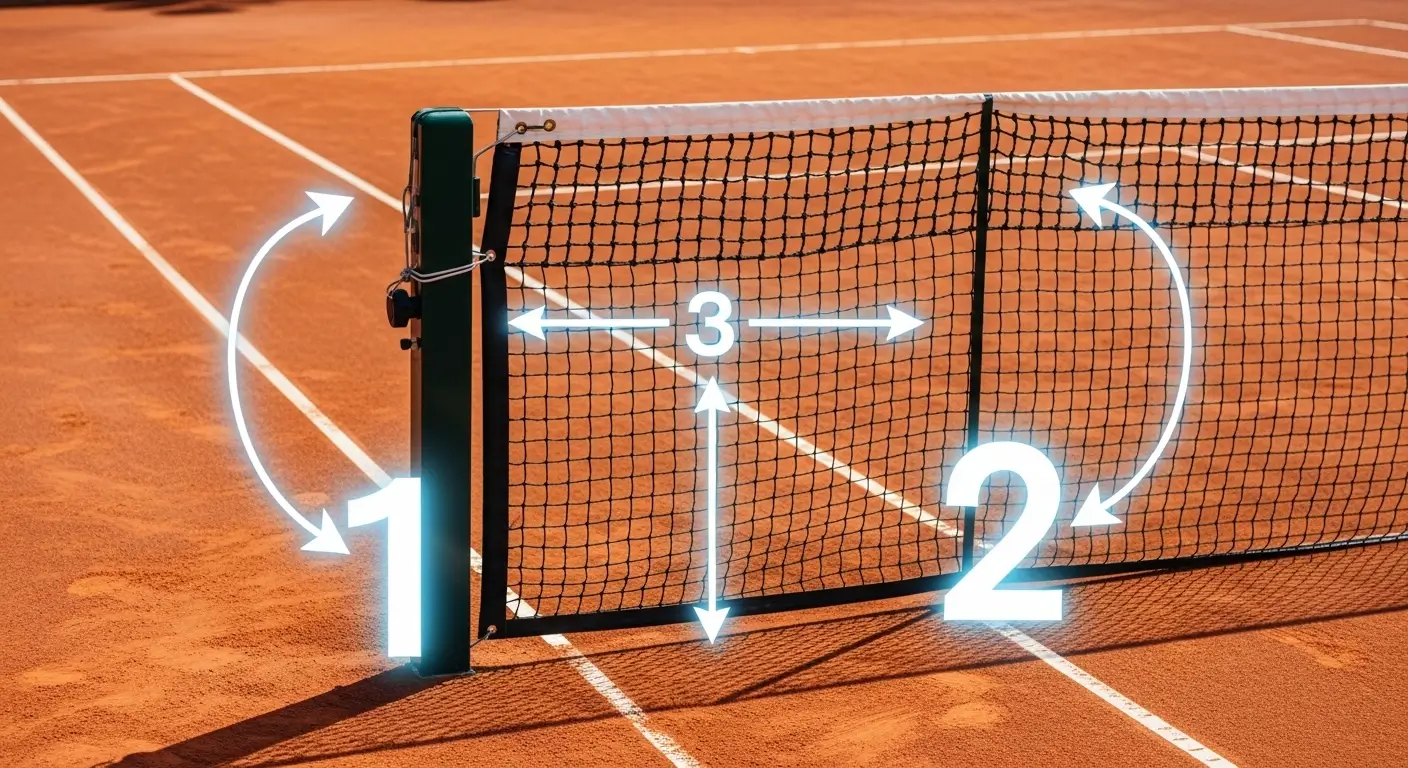
If your net continues to sag after adjustment, look for these structural failures:
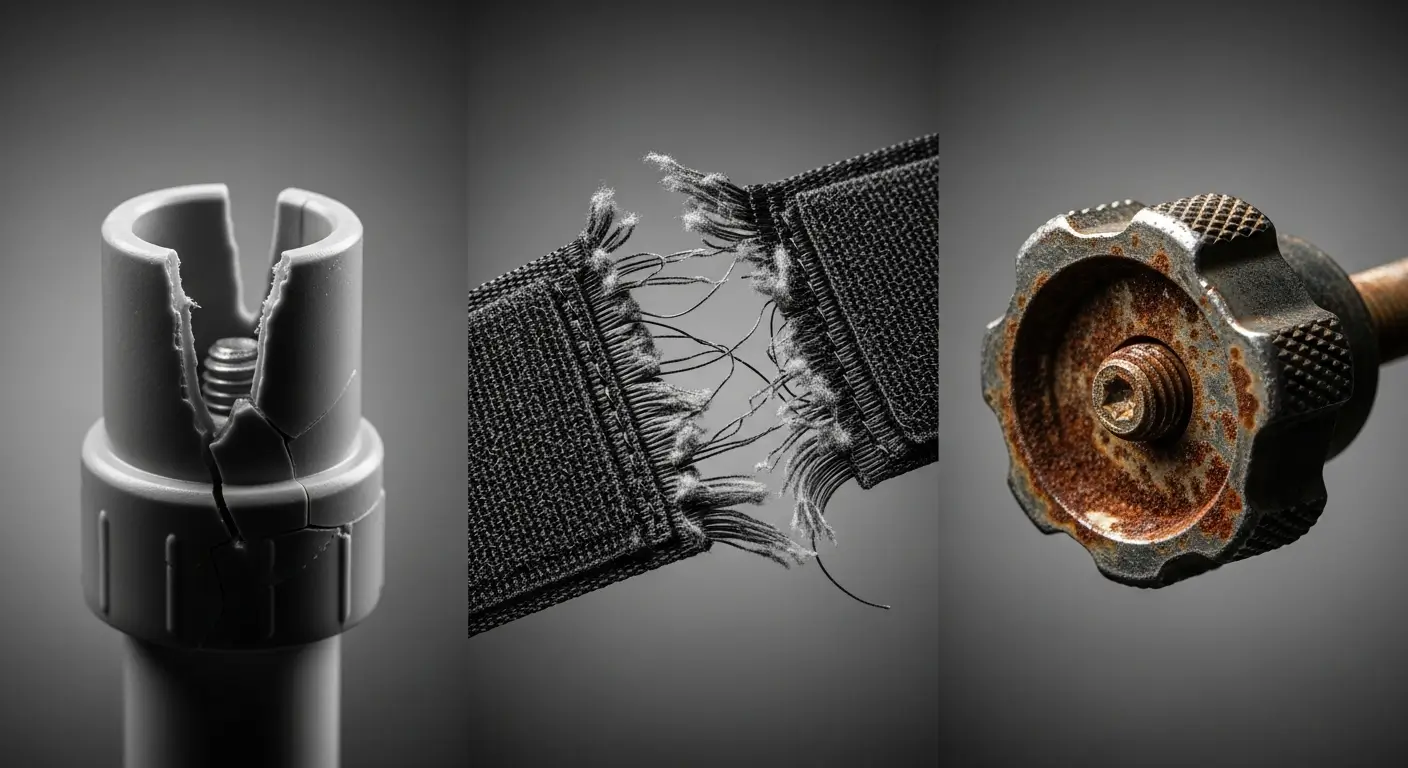
- The “U-Shape” Base: If the metal base bars are curving upward at the ends, the steel is too thin to handle the necessary tension.
- Fiberglass Fractures: Check the end poles for small vertical cracks. If the poles are splitting, they can no longer hold the headband taut.
- Velcro Fatigue: If your center strap slips mid-game, the Velcro hooks have worn down. Replacing this with a climbing-grade cinch strap is a cheap and effective fix.
Expert Tip: The “Tension-Release” Habit
The biggest cause of permanent net damage is “set-it-and-forget-it” behavior. Leaving a portable net under full tension during a heatwave or a cold snap causes the vinyl headband to stretch permanently.
The Pro Move: At the end of every session, loosen the end buckles by just 2 to 3 inches. This gives the material “room to breathe” and prevents the fibers from over-stretching. This simple 10-second habit can double the life of your net and keep your center measurement at a perfect 34 inches for years.
Weather-Proofing and the Best Sag-Resistant Nets for 2026
While mechanical adjustments are the first step, the environment is the silent culprit behind a drooping net. In 2026, we are seeing more extreme temperature swings that directly impact the synthetic materials used in sports gear.
The Environmental Impact: Why Your Net Sags Outdoors
If you leave your net outside, you are fighting a constant battle against material expansion.
- Heat and UV Rays: Most headbands are vinyl or polyester. High heat causes these fibers to “relax,” creating that annoying mid-game sag. Just as UV rays can degrade your gear, consistent pickleball paddle maintenance is required to keep your entire kit in tournament shape.
- Humidity and Moisture: High humidity adds weight to the net mesh. If you play on a surface that doesn’t drain well, the rising moisture can weaken the base connectors. Using the best sports court flooring ensures water doesn’t pool near your equipment.
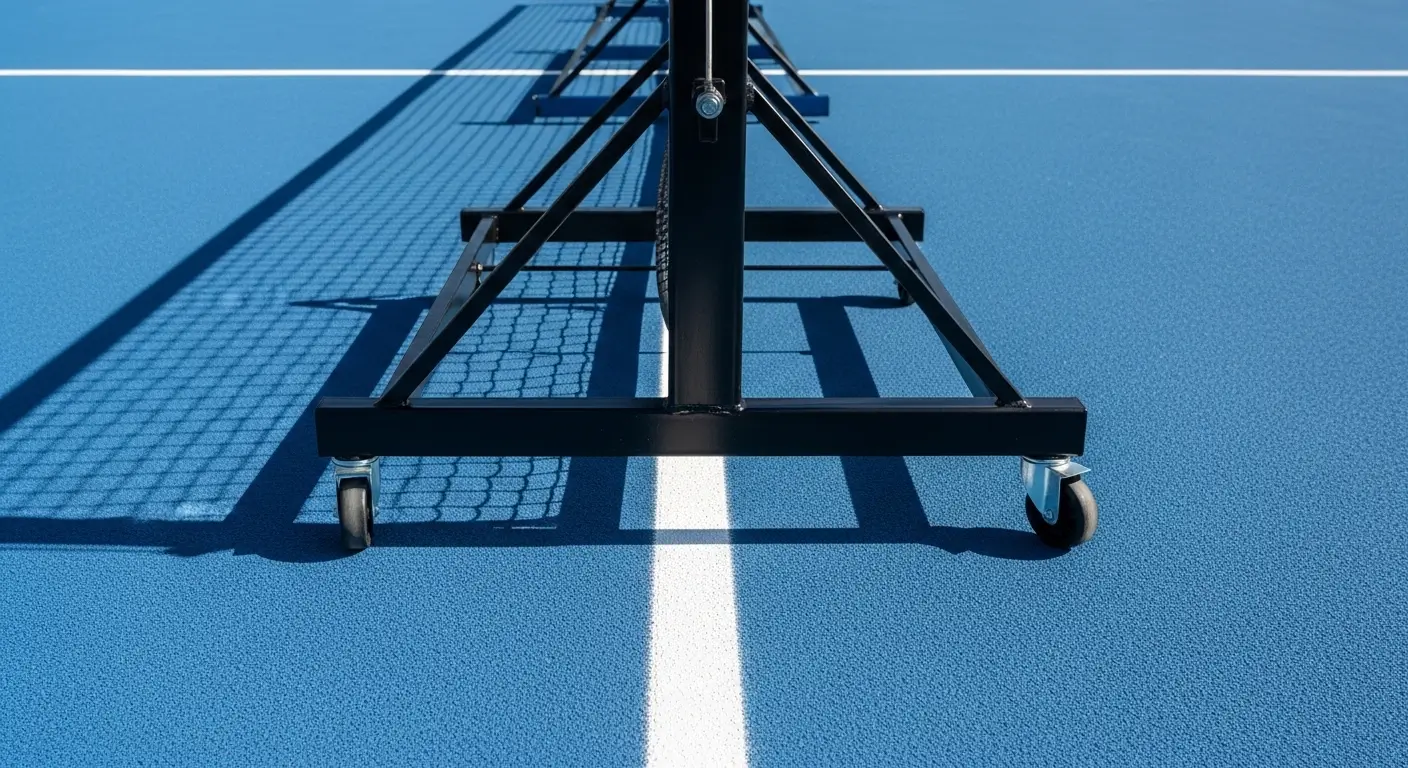
Top 3 Sag-Resistant Portable Nets for 2026
If your current net is beyond repair, these three models are currently leading the market for their ability to maintain a perfect 34-inch center height.
- The Premium Standard: SwiftNet 2.1
Widely considered the “Gold Standard,” it uses aerospace-grade carbon fiber instead of steel. This precision is ideal for those who followed our pickleball beginners guide and are ready to upgrade. - The Weather Warrior: OnCourt OffCourt PickleNet Deluxe
Featuring heavy-duty oval tubing that resists twisting, this is the go-to for driveways. Just ensure you have the proper pickleball driveway dimensions to accommodate its wider, sturdier stance. - The Best Value Fix: Srikel FlashCourt
This model offers professional-grade tension at a mid-range price. It is the perfect bridge for players who want a “set-and-forget” tension system.
Frequently Asked Questions (FAQ)
Q: Can I use a tennis net for pickleball if it’s sagging?
A: Not without adjustment. A tennis net is 42 inches at the posts and 36 inches in the center. Even if it sags, it’s usually still too high. You must use a center strap to pull it down to the 34-inch pickleball standard.
Q: Why does my net measure 34″ in the middle but feel “loose”?
A: This usually happens when you tighten the center strap before the sidelines. The sideline height must be a crisp 36 inches. If the sides are loose, the ball will “roll” over the tape rather than bouncing off, which changes the game’s physics.
Q: Is it safe to leave my portable net up during the winter?
A: It is not recommended. Cold weather makes the plastic connectors brittle and the vinyl headband lose its flex. If you enjoy platform tennis during winter, you know that specialized winter equipment is built differently; a standard pickleball net is not.
Q: How do I stop my net from blowing over in the wind?
A: Never cut holes in the net. Instead, place 25lb weight plates or sandbags over the end-line feet. This lowers the center of gravity without ruining the net’s structural integrity.
Final Checklist: Maintenance for a Perfect Court
To keep your playing experience professional:
- Safety Audit: Check for lateral movement. If you wear basketball shoes for pickleball, your increased traction puts more force on the court; make sure a sagging net won’t catch your foot during a kitchen dink.
- Surface Hygiene: Regularly remove debris. Cleaning bird droppings from sport court tiles prevents the base of your portable net from corroding.
Conclusion: Precision Height for Better Play
A sagging net is a barrier to your improvement as a player. When you master the portable pickleball net fix, you ensure that every dink and drive you practice at home translates to the tournament court.
Whether you use a carbon fiber frame or simply follow a regular tension routine, the 34 inch rule is essential. It is the difference between a casual rally and professional training. Keep your center strap tight and your standards high because a regulation net is the foundation of a fair game.