
 By Ghulam Mustafa Khan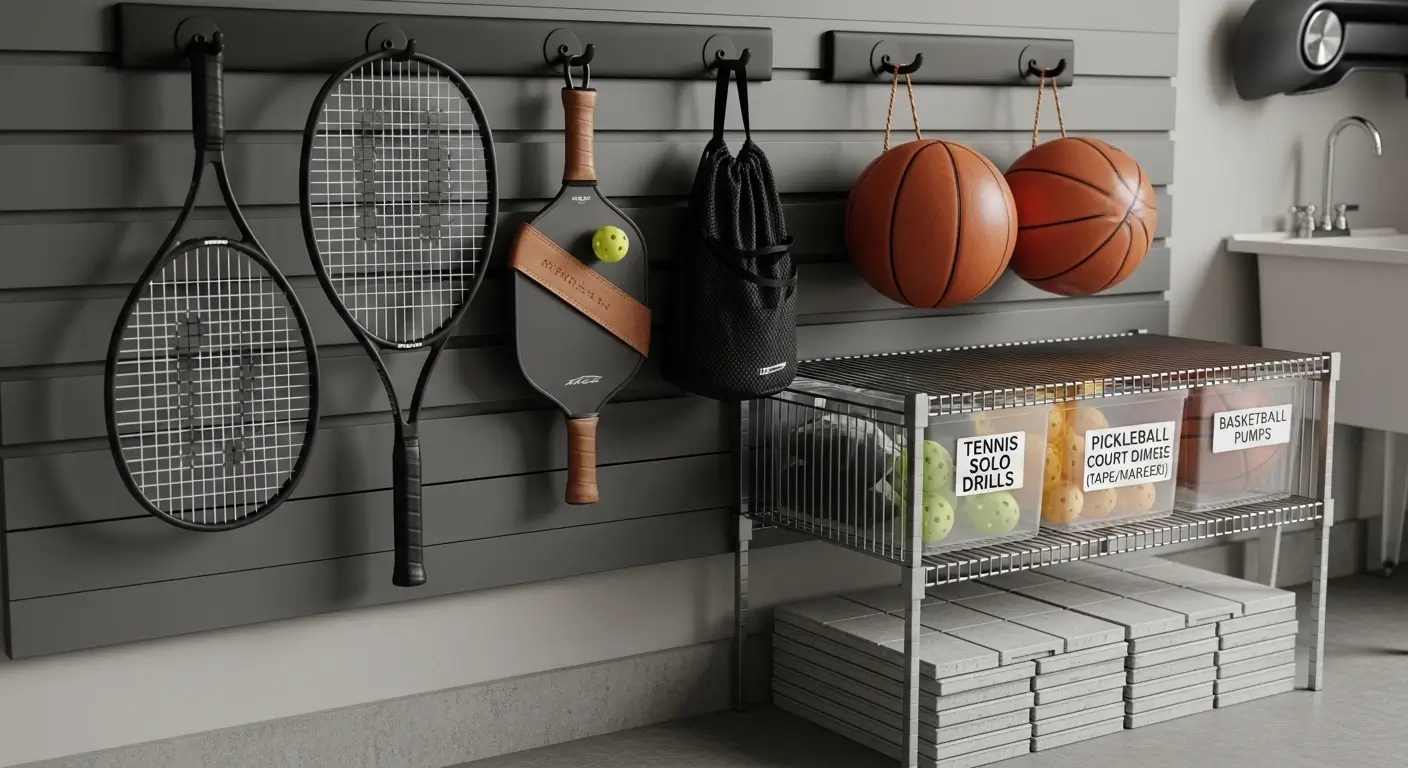
We’ve all been there. You walk into the garage on the first Saturday of spring, ready to pull out the tennis racquets or the basketballs, only to find a scene of quiet devastation. The bike chain is rusted orange. The leather on the weight bench is cracked. That $200 composite pickleball paddle? It feels “dead” and lacks the snappy “pop” it had last September.
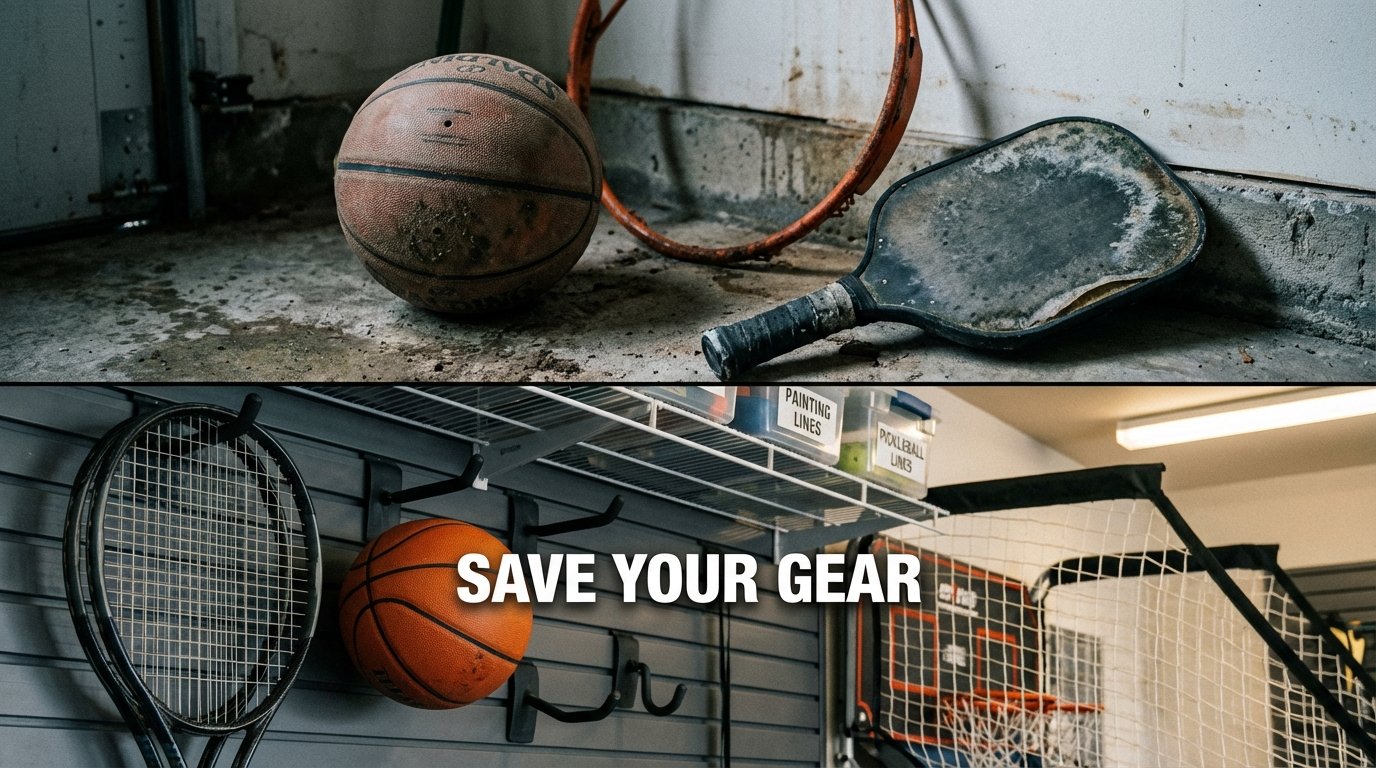
As a coach, I’ve seen more $500 gear bags ruined by three months in a damp garage than by three years of heavy play on the court; if you wouldn’t leave your car windows down in a rainstorm, you shouldn’t leave your high-performance equipment sitting on a cold, damp garage floor.
Most homeowners treat the garage as a simple storage box—a place to move clutter from the house to the driveway. But from a sports engineering perspective, the garage is a hostile environment defined by extreme temperature swings, high humidity, and chemical off-gassing. Storing sports gear in a garage effectively isn’t just about finding a hook; it’s about managing a micro-climate to protect your athletic investment.
If you want your equipment to perform at an elite level, you have to stop treating your garage like a junk drawer and start treating it like a specialized equipment room.
The Invisible Killers: Humidity, UV, and Concrete
Before we talk about racks and bins, we have to talk about the physics of decay. If you don’t understand the “Why” behind equipment failure, even the most expensive organizational systems won’t save your gear.
1. The Concrete Moisture Trap
Many people lean their bikes or stack their weight plates directly on the garage floor, which is a critical mistake for long-term durability. Concrete is porous; it “breathes” moisture from the ground through a process called capillary action. When metal sits on cold concrete, it creates a temperature differential that accelerates oxidation.
Whether it’s the high-tensile steel rim or the polished chrome of your dumbbells, direct contact with bare concrete is a slow death sentence for metal components. Because concrete acts as a thermal and moisture bridge, it triggers galvanic corrosion which can eat through protective coatings in a single season.
To prevent the onset of structural decay, expert installers often suggest utilizing a dedicated moisture-wicking barrier between your expensive gear and the porous concrete slab.
From a coach’s perspective, this isn’t just a matter of aesthetics or organization; it’s a critical step in ensuring the structural integrity of your equipment so it performs exactly as intended during a match. A smart expert tip for any athlete is to always elevate your primary gear at least two inches off the floor to allow for the passive airflow necessary to keep rust at bay and prevent the damp, stagnant air that leads to premature material failure.
2. Thermal Expansion and “Dry Rot”
Garages are rarely climate-controlled. In the summer, temperatures near the ceiling can reach blistering levels, while winter floors can drop below freezing. For equipment made of rubber, leather, or resins, these cycles cause materials to expand and contract at different rates, leading to internal structural stress.
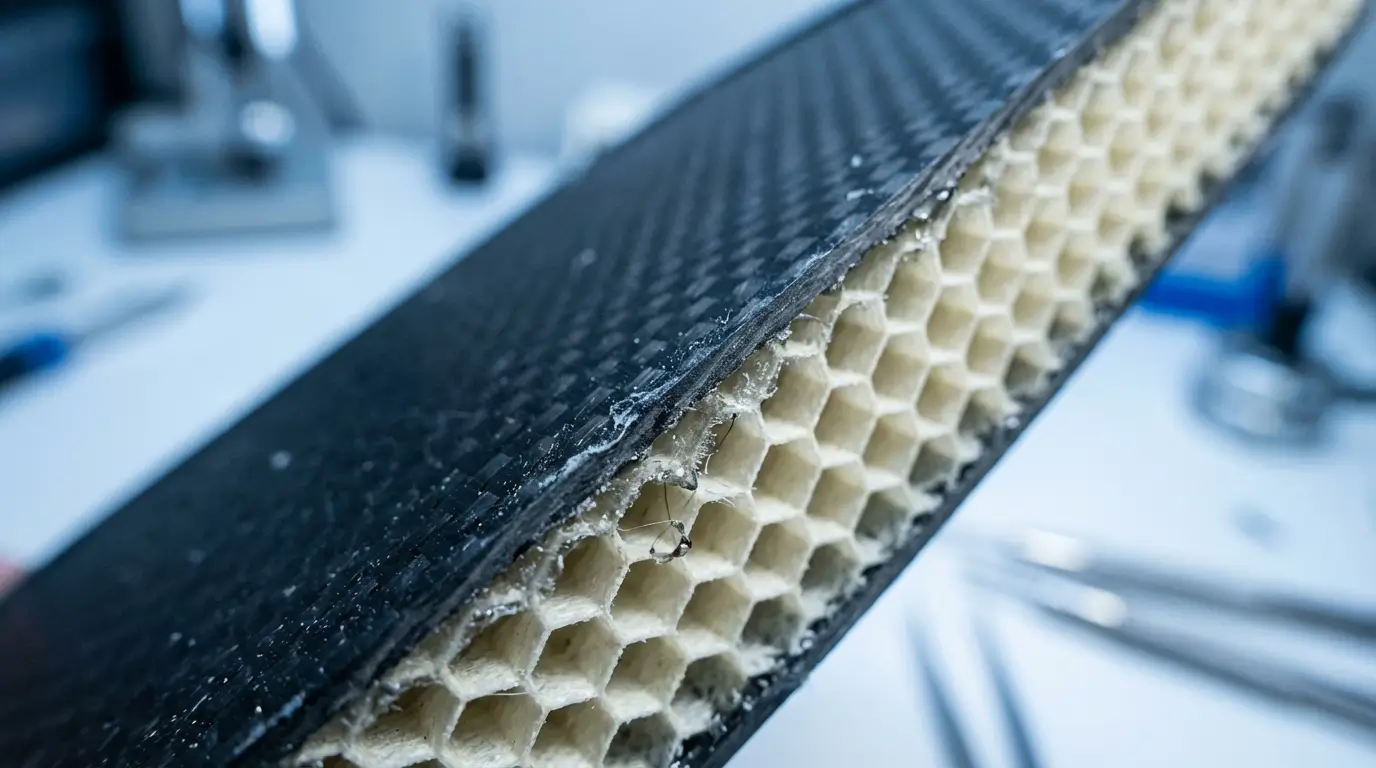
This leads to Dry Rot—a process where the essential oils in rubber and plastic evaporate, leaving the material brittle. This is a major concern when trying to expand and contract at different rates, for expensive pickleball equipment, where the honeycomb core can actually lose its bond with the face due to extreme heat.
3. The “Sweat Trap” (The #1 Human Error)
One of the most common mistakes in equipment maintenance is the habit of placing damp gear into a sealed plastic container immediately after a match. When you close that lid on moisture, you create an environment that leads to a rapid failure of structural adhesives.
From a technical standpoint, the structural integrity of your equipment depends on maintaining the chemical bonds of the materials. When moisture is trapped in a confined space, it acts as a solvent that slowly dissolves the specialized adhesives providing lateral stability in court shoes and the impact-absorbing foam that protects your joints.
Following a strict 12-hour air-drying rule is not just about cleanliness; it is a vital step for professional athletes to prevent hydrolytic degradation of these polymers. To further safeguard your investment, you should prioritize passive airflow by maintaining a 2-inch gap between your storage racks and the garage wall. This simple spacing creates a natural ventilation corridor that prevents humidity from pooling in corners, effectively neutralizing the stagnant conditions that cause mold and material fatigue.
The “3-Zone” Retrieval System and Vertical Engineering
Organizing a garage effectively requires more than just clearing floor space because it is about reducing the physical and mental friction between your front door and the opening serve. From a coaching standpoint, the primary hurdle to consistent training is often access friction.
If you have to spend fifteen minutes digging through disorganized bins to find matching court shoes or a specific racquet, you have already drained the mental energy needed for a high-quality practice session. To solve this, we utilize a 3-Zone Retrieval System, which is a logic-based layout that prioritizes your athletic workflow while maximizing the lifespan of your equipment.
Zone 1: The Active Player (Immediate Access Wall)
This zone should be located within a few steps of the door leading into your house and is reserved exclusively for the gear you use multiple times per week. Rather than hiding these items in dark cabinets where moisture can linger, professional setups utilize wall-mounted slatwalls with rubber-coated hooks.
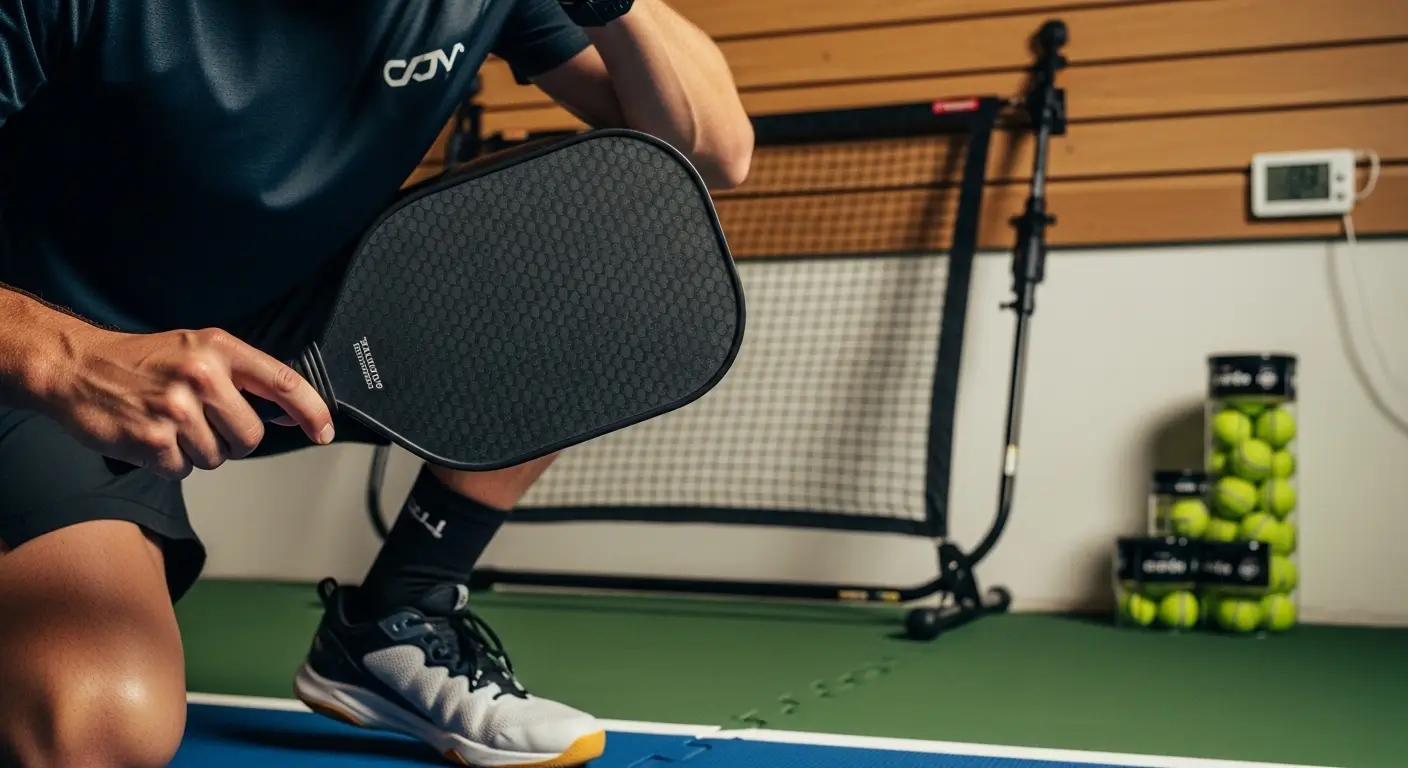
This specific coating is essential because it prevents the metal-on-metal contact that leads to surface pitting and maintains the balance of high-end frames. Keeping your equipment, such as rebounders and fresh ball cans, in this high-visibility zone ensures that you can transition into a practice session without hesitation.
A professional habit for this zone is to designate a specific ventilation hook where bags are left open for a few hours before being fully stowed.
Zone 2: The Seasonal Transition (Medium-Height Storage)
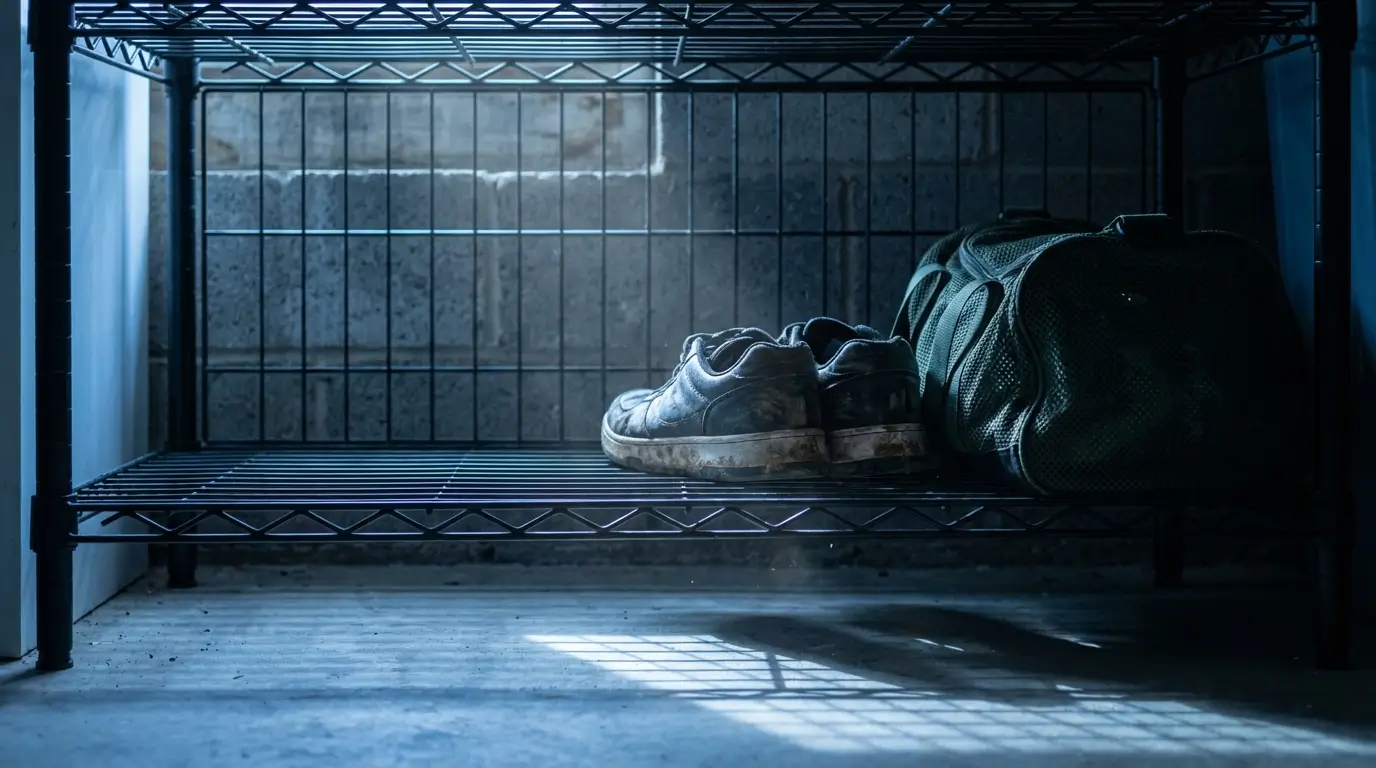
Zone 2 occupies the middle tier of your wall space and is intended for equipment that is currently in-season but used less frequently. This is the ideal location for specialized training aids, extra ball hoppers, or backup gear. The engineering solution here is to avoid solid plastic or wooden shelving in favor of heavy-duty wire shelving.
Wire units are superior because they allow for 360-degree ventilation, which is the only way to ensure that gear stored in the humid micro-climate of a garage does not develop the stagnant air rot discussed previously. This tier is also the most logical place to store the tape and markers required for laying out during temporary weekend setups.
Zone 3: The Off-Season Vault (The High Loft)
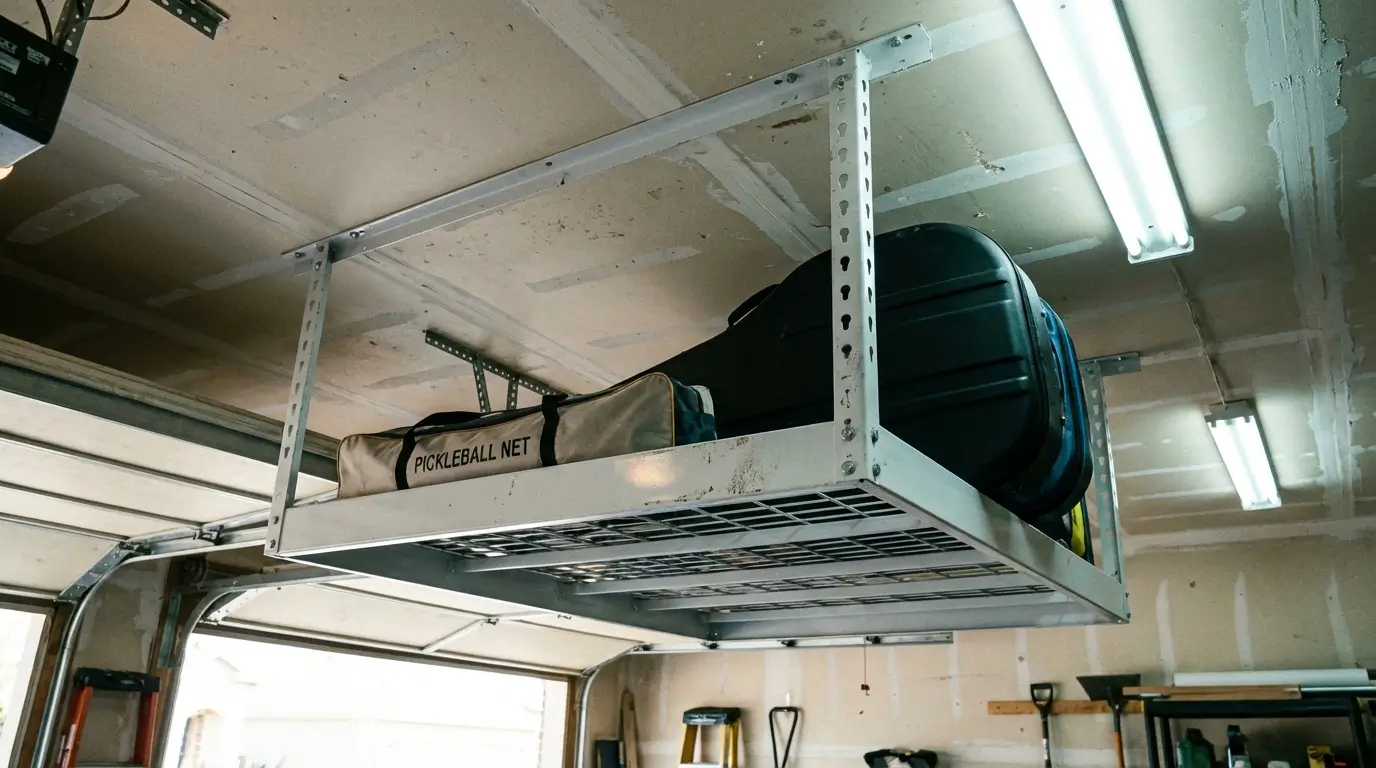
The final zone is the overhead space, which is best managed with motorized racks or ceiling hoists. This area is for off-season equipment that will not be touched for months at a time, such as skiing gear during the summer or portable volleyball nets in the winter. Utilizing overhead storage engineering allows you to reclaim significant floor space while keeping bulky items away from the moisture and chemical spills common on garage slabs.
To protect your investment, always store high-tension items like kayaks or carbon-fiber frames in padded slings rather than hard hooks. This prevents the point-load warping that occurs when heavy gear leans against a sharp corner for an extended period.
Material Science & Protection (The Engineering of Graphite, Leather, and Rubber)
Understanding the chemistry of your sports gear is the final step in mastering garage storage. High-performance equipment is often a complex composite of polymers, resins, and organic fibers designed for the court, not for the fluctuating environment of a garage.
From a coaching perspective, the “feel” of a racquet or the “grip” of a shoe is often the first thing to disappear when gear is stored improperly, directly impacting your performance and safety.
Graphite and Carbon Fiber: Managing Resin Fatigue
Most modern racquets and paddles rely on carbon fiber bound together by epoxy resins. While graphite is incredibly strong under tension, it is susceptible to thermal fatigue when subjected to the extreme heat cycles found in many garages. In high temperatures, these resins can soften slightly, leading to microscopic delamination.
This is a critical factor when attempting for premium pickleball gear. To protect these materials, avoid hanging graphite frames against exterior-facing garage walls, which act as thermal conductors. Instead, store them on interior-facing walls or within padded bags that provide a layer of thermal insulation.
Leather and Synthetic Fabrics: Preventing Microbial Rot
Leather gloves, weightlifting belts, and the synthetic mesh of court shoes are highly porous and organic in nature. When these materials absorb sweat and are then placed in a humid garage, they become breeding grounds for bacteria and fungi. This process does more than just create an unpleasant odor; it leads to the permanent breakdown of the fibers.
A professional expert tip is to treat these items with a moisture-wicking agent or cedar inserts before storage. Maintaining the hygiene of your gear is not just about comfort; it is a core part of [suspicious link removed] and overall health, as compromised materials can lead to skin irritation or equipment failure during a match.
Rubber and Polymers: The Battle Against Oxidation
The rubber soles of your court shoes and the bladders inside your basketballs or volleyballs are under constant attack from atmospheric ozone and oxygen. In a garage, where car exhaust and electric motors (like garage door openers) can increase ozone levels, this oxidation is accelerated.
This results in “glazing,” where the rubber becomes hard and loses its traction on the court. To maintain the “sticky” grip necessary for high-intensity play, store rubber-based gear in opaque, airtight containers only after they have been thoroughly air-dried. This limits the exposure to moving air and UV light, effectively slowing the chemical aging process that turns a professional-grade ball into a hard, useless sphere.
The Seasonal Maintenance Calendar & Professional Gear Audit
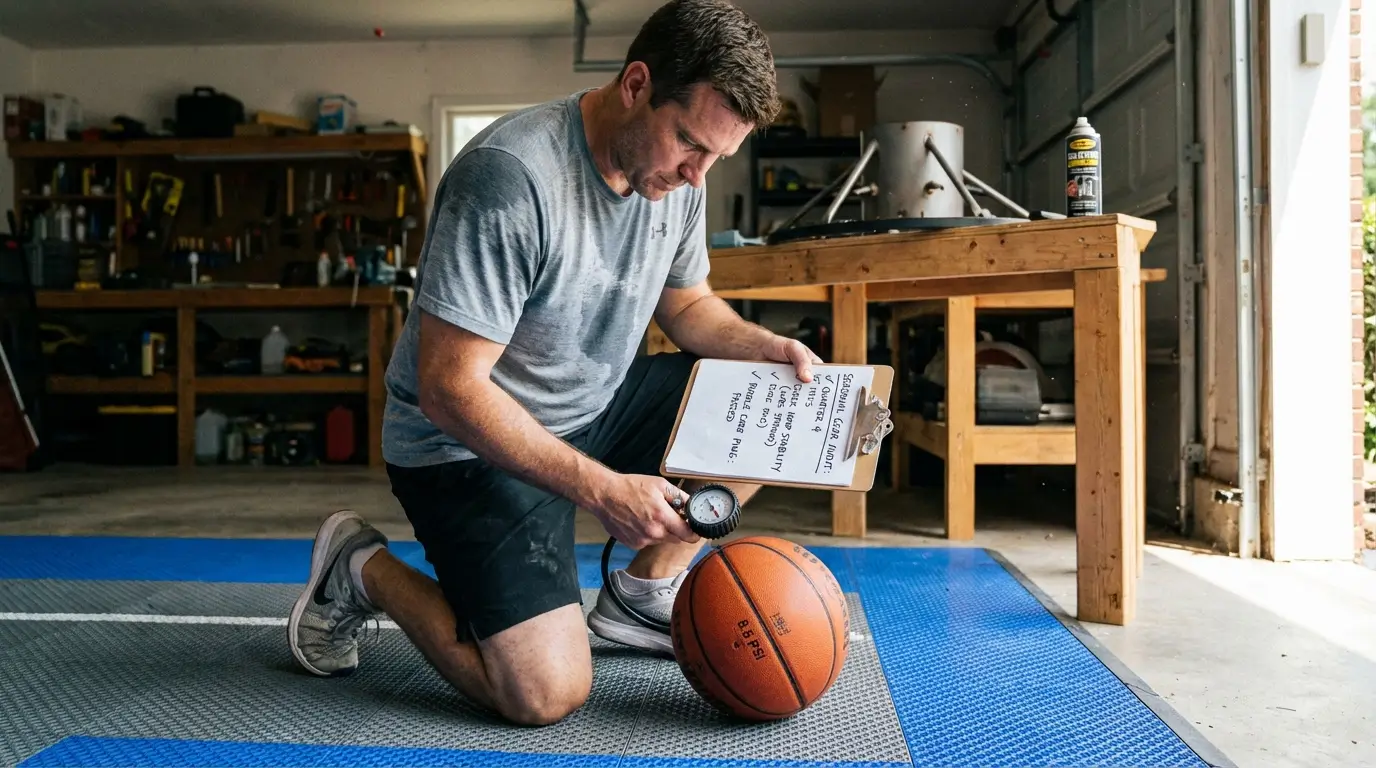
Even with a high-end 3-Zone system in place, storing sports gear in a garage is not a static process. It requires a proactive maintenance schedule to combat the shifting environmental variables of each season. From a coaching standpoint, your gear is an essential extension of your physical performance; if you do not audit its condition regularly, you risk entering a competition with equipment that has degraded beneath the surface. A professional gear audit ensures you identify subtle issues—such as a loosening grip or a compromised core—before they result in an injury or a missed point.
The Quarterly Gear Audit
Every three months, as the weather shifts, you should perform a physical stress test on your stored inventory. For racquet and paddle sports, this involves checking for frame warping or early signs of delamination caused by the thermal cycles described in Part 1. If you notice a change in the acoustic “ping” of your paddle, it is a likely sign that the internal core has been softened by garage humidity. This is the ideal time to review your pickleball paddle maintenance routine to ensure you are getting the maximum performance lifespan from your composite or graphite paddles.
The Humidity & Pressure Check
Twice a year, during the extreme transitions into summer and winter, you must address the physics of air pressure within your gear. Cold winter air causes the molecules inside balls and tires to contract, which can lead to permanent “flat spots” if the equipment is left sitting on a hard shelf for months. Part of maintaining outdoor infrastructure involves checking for hardware that may have loosened due to material expansion. A smart professional habit is to inspect the stability of your portable basketball hoop and ensure that your portable pickleball net isn’t sagging due to tension loss from temperature swings.
The “Deep Clean” Before Long-Term Storage
Before moving any gear into Zone 3 for the off-season, a thorough cleaning is essential to remove the embedded salts and oils that attract moisture. For outdoor equipment, this means inspecting your setup and learning how to fix a squeaky basketball rim by lubricating moving parts before they seize up in winter humidity. For footwear, ensuring the materials are completely sanitized is non-negotiable to prevent the midsoles from hardening. Utilizing a specific guide to remove smell from shoes will help neutralize bacteria before it eats away at the synthetic fibers. Finally, ensure that your toe-dragger durability shoes are stored with cedar inserts to maintain their shape and structural integrity while idle.
Frequently Asked Questions: Mastering Garage Sports Storage
How do I prevent rust on my basketball hoop and metal gear?
Preventing oxidation on metal gear like weight plates or hoop rims requires breaking the moisture bridge between the equipment and the ground. You should never store metal directly on a concrete floor. Instead, utilize a barrier like a backyard court surface or modular tiles to insulate the gear. If you notice noise developing during the winter, follow a guide to fix a squeaky rim by applying a silicone-based lubricant to neutralize chemical reactions that cause rust.
Can I use the same shoes for different court sports if I store them together?
While you can store them together, using the wrong shoe for a specific surface can lead to injury. For example, while many players try using basketball shoes for pickleball, the lateral support requirements differ. Storing them in a way that preserves their specific tread pattern is vital for on-court safety.
What is the best way to practice in my garage once it is organized?
Once you have cleared your floor space using the 3-Zone system, you can utilize the area for active training. A solo tennis practice garage guide can help you set up a DIY tennis rebounder so that your storage space doubles as a high-performance training lab.