
 By Ghulam Mustafa Khan
 You’ve spent weeks agonizing over your backyard court permits and zoning laws and finally laid down the best backyard court surface for your knees. The lines are painted, the hoop is up, and the game is perfect—until 6:00 PM hits. As the sun dips below the horizon, your $20,000 investment disappears into the shadows, leaving you with two choices: head inside or figure out how to light up the night.
The temptation to drive to a big-box store and grab a handful of $50 solar floodlights is massive. They promise zero wiring, zero electricity bills, and an “easy” DIY afternoon. But before you mount those panels, you need to understand that backyard court lighting isn’t just about making the ground visible; it’s about the complex physics of tracking a ball moving at 40 mph through 3D space.
Before you install lights, make sure your driveway surface is ready for sport tiles so you aren’t lighting up a bumpy, dangerous court.
The Physics of Play: Lumens, Lux, and the Vertical Plane
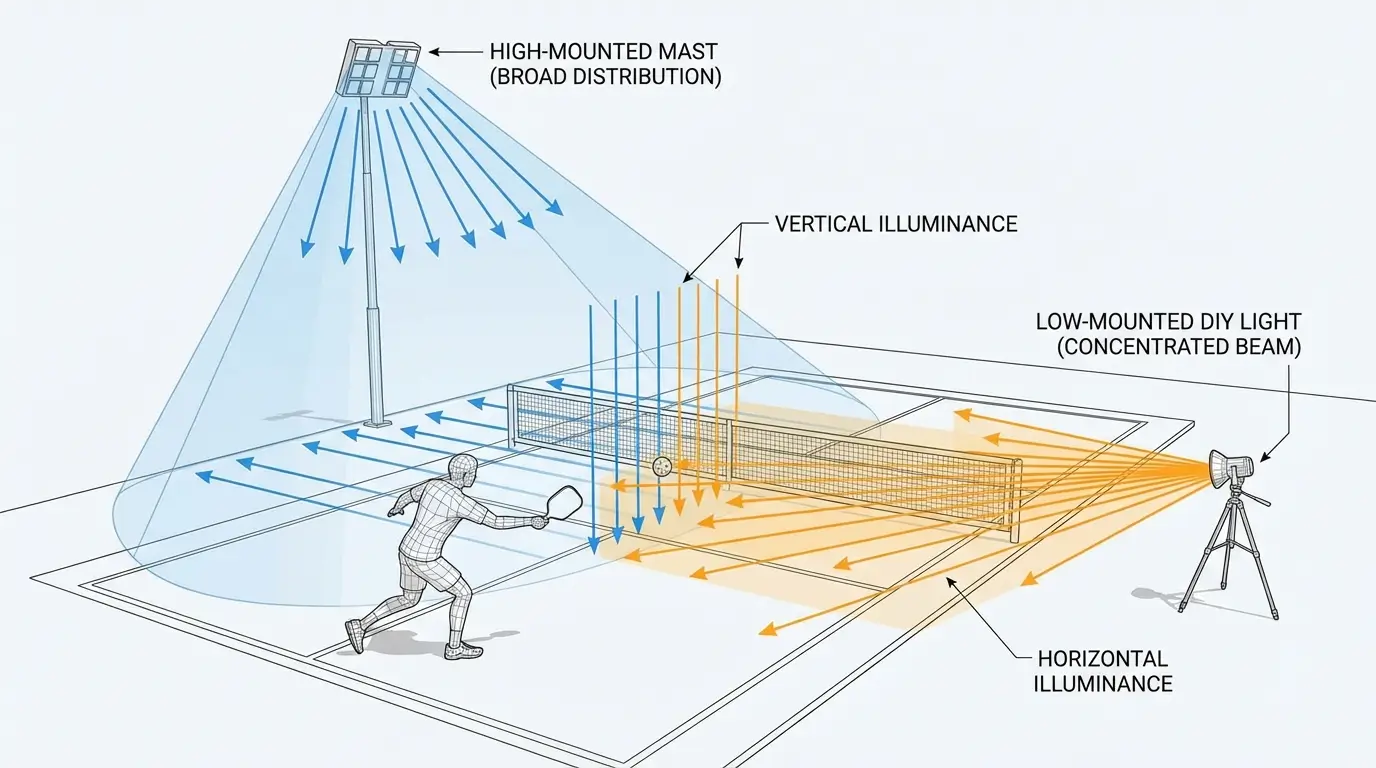
Most homeowners shop for lights based on Lumens (the total amount of light a bulb emits). However, on a sports court, Lumens are a “vanity metric.” The number that actually dictates your win rate is Lux (the amount of light that actually hits the surface).
For a casual backyard basketball game, you need a minimum of 200–300 Lux across the entire playing area. For competitive pickleball, where the ball is smaller and moves faster, that requirement jumps to 500 Lux. Cheap solar lights often boast “10,000 Lumens,” but because they lack professional-grade photometric design, that light scatters everywhere except where you need it.
More importantly, sports require vertical illuminance. Standard floodlights are designed to light up the ground (horizontal illuminance). But in sports, the ball spends half its time in the air. If your lights don’t provide enough vertical foot-candles, the ball will “disappear” as soon as it leaves your hand, becoming a ghost against the night sky until it suddenly reappears at eye level.
Expert Tip: When evaluating lighting, ignore the “Wattage” on the box. Modern LED efficiency varies wildly. Instead, look for the Luminous Flux and the Beam Angle. A narrow 60-degree beam is great for a solo tennis practice garage setup, but for a full court, you need wide-angle NEMA distribution to eliminate dark spots in the corners.
Solar Realities: Why “Free” Energy Often Fails the Fast Break
The allure of solar is the lack of trenching and conduit. You don’t have to dig up your yard or pay an electrician $150 an hour to run wires. However, the laws of physics are hard to bypass. To generate the 300+ Lux required for safe play, a light needs a massive amount of power.
Most “cheap” solar units use small lithium-ion batteries that struggle to maintain peak brightness for more than an hour. If you play a high-intensity game, you’ll notice the light beginning to dim by the third quarter. Furthermore, the mounting height is often restricted. Professional mounting heights (masts) should be 15–20 feet high to reduce glare rating and cast light downward. Most DIY solar poles are too short, placing the light directly in your eyes when you look up to shoot.
The Professional Edge: Hardwired Stability
A professional hardwired system uses Alternating Current (AC) to provide 100% consistent brightness from the first serve to the final whistle. These systems are designed with IP65 waterproof ratings and heavy-duty heatsinks that ensure the LEDs don’t overheat—a common cause of failure in cheap plastic solar units.
While the upfront cost is higher, the Uniformity Ratio (the consistency of light across the court) is vastly superior. In a professional setup, you won’t find “dead zones” where the ball suddenly changes speed in your vision because it moved from a bright spot to a shadow.
From the Coach’s Perspective
In a close game under poor lighting, the first thing to go isn’t your hustle—it’s your depth perception. If you can’t see the spin on the ball or the exact edge of the line, you aren’t playing the same game you play during the day. Invest in your vision, or you’re just guessing where the ball is going to land. Bad lighting leads to bad habits and, eventually, avoidable injuries like turned ankles or mistimed jumps. I’ve seen more injuries at dusk than at any other time of day because players try to “power through” the shadows. If you can’t clearly see the texture of your indoor vs outdoor pickleballs, you shouldn’t be swinging at full speed.
Performance Under Pressure: The Hidden Realities of Backyard Lighting
While the technical foundations are clear, the real test of backyard court lighting happens during a high-stakes game when the sun has been down for two hours. This is where the “unseen” variables—the true cost of power, the physics of glare, and the social contract of being a good neighbor—come into play. When you choose a lighting system, you aren’t just buying fixtures; you are committing to an infrastructure that either enhances your property or becomes a recurring maintenance headache.
The Solar Capacity Gap: Why “Dusk to Dawn” is a Myth
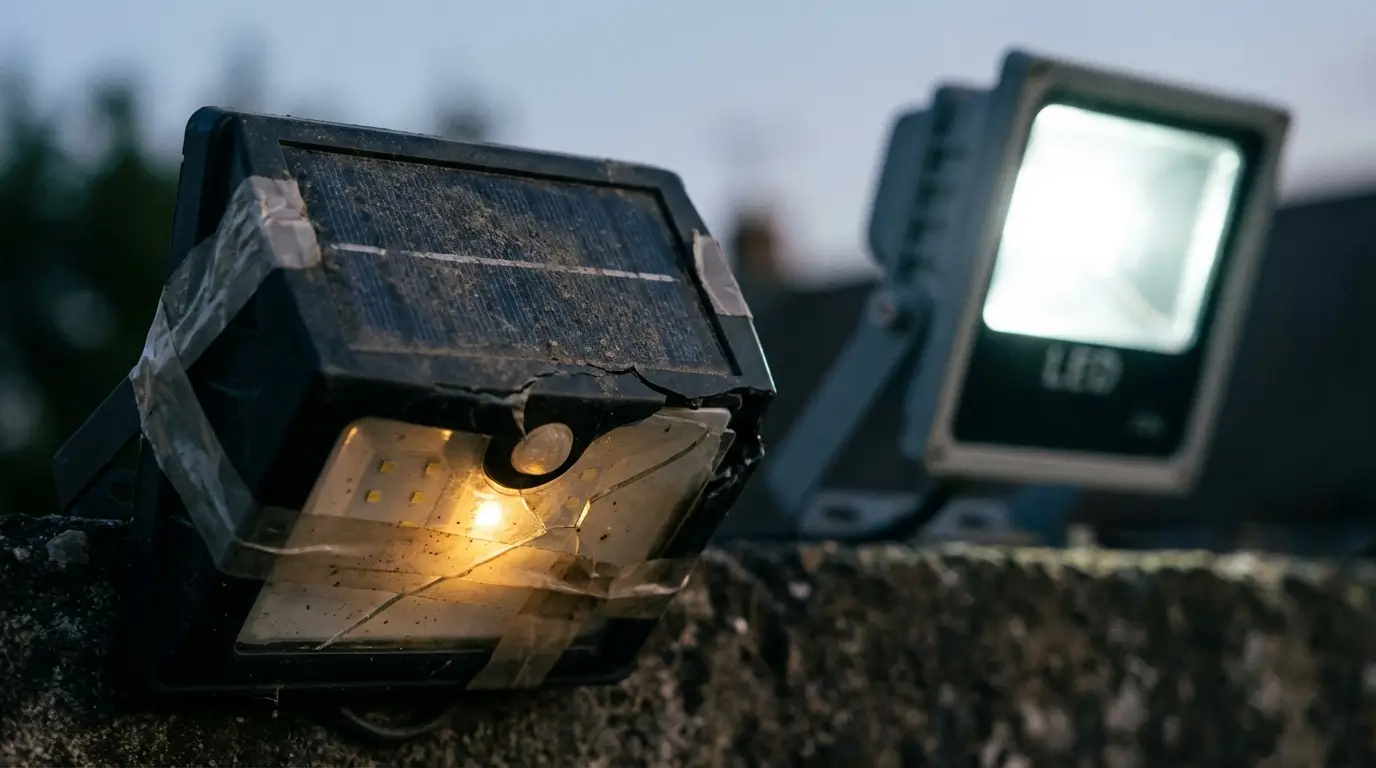
Most solar floodlights marketed for residential use boast massive Lumen counts and “Dusk to Dawn” runtimes. However, a simple energy audit reveals a massive gap between marketing and reality. To power a single professional-grade 400W LED equivalent—the minimum brightness required for a fast-moving game—you need roughly 40 to 60 amp-hours (Ah) of battery storage to maintain consistency through a two-hour session.
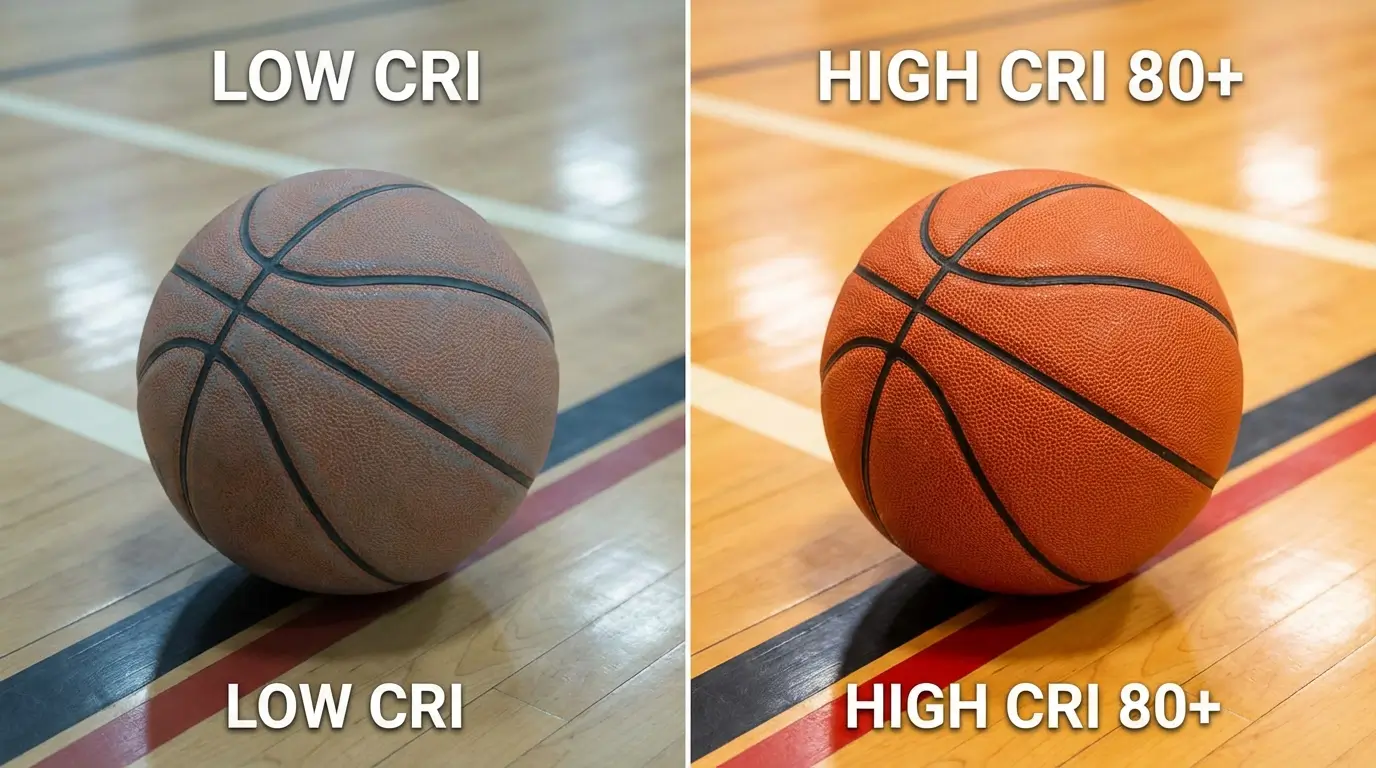
If you are determined to go the DIY route, you must prioritize lights with a Color Rendering Index (CRI) of 80 or higher. Low-quality LEDs often have a “blue-tinted” light (6000K+), which makes a yellow tennis ball or orange basketball look grey and flat against the court. A warmer, high-CRI light (4000K–5000K) makes the colors pop, allowing your brain to track the ball’s rotation and seams much faster.
Cheap solar units typically come with 5Ah to 10Ah batteries. In mid-winter, when the sun is low and the days are short, these panels struggle to reach a full charge. The result is a phenomenon I call “voltage sag.”
Your lights might be blindingly bright for the first 15 minutes, but as the battery AH capacity drains, the voltage drops. You’ll notice the ball begins to “strobe” or flicker as the controller tries to manage the remaining current. This inconsistent output is the primary cause of mistimed shots and increased eye strain during long rallies.
The True Cost of Professional Hardwiring
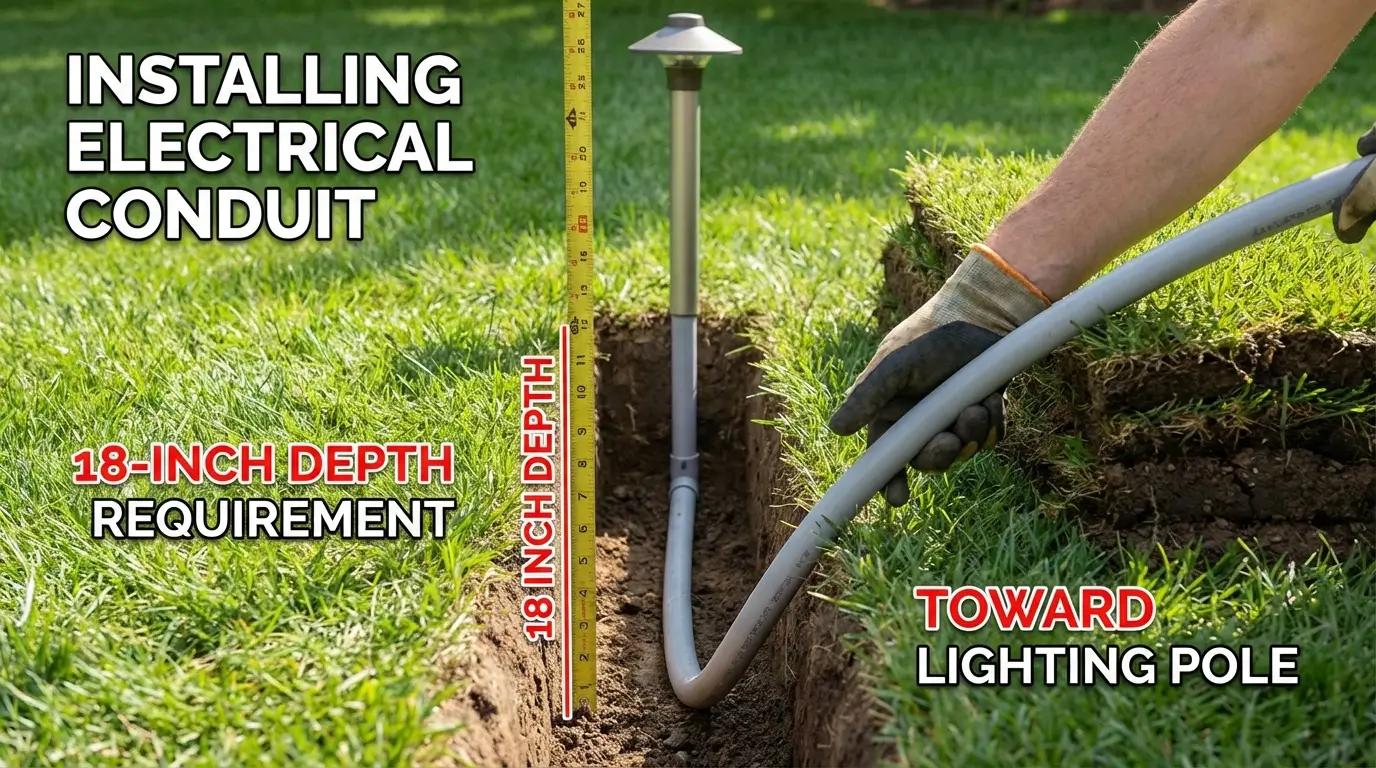
If solar is the “quick fix,” professional hardwired systems are the “forever fix,” but the price of entry requires a realistic budget. Unlike solar, where you simply bolt a bracket to a pole, professional systems require a dedicated electrical circuit.
This is a vital step often overlooked, but ensuring you are compliant with backyard court permits and zoning laws is essential for long-term property value and safety.
A professional installation involves digging 12–18 inches into your yard to bury PVC conduit, which is labor-intensive and varies in cost based on your soil type. You are also paying for an electrician to ensure the system is properly grounded and wired to a dedicated breaker, preventing power surges that could fry your expensive LEDs.
While the upfront cost for a hardwired 2-pole system might range from $2,500 to $4,500, the “per-hour” cost of play is significantly lower because the system won’t need to be replaced every 18 months like cheap plastic solar alternatives.
Planning your lighting layout should happen simultaneously with your groundwork. Proper driveway surface and site prep ensures your light poles are anchored on stable, level ground, preventing tilt and vibration.
In my 17 years of installs, I’ve seen homeowners mount heavy lights on thin poles. You must understand EPA (Wind Loading). This is a measure of how much wind “grabs” your light fixture. If you put a big light on a weak pole, a strong wind will snap it or make it shake so much the light dances across the court.
Pro Tip: If you want a stable game, you need a 15 to 20-foot square steel pole set in concrete. This keeps the light high enough to stop glare and steady enough to handle a storm.
Glare Control and the Coach’s Reality
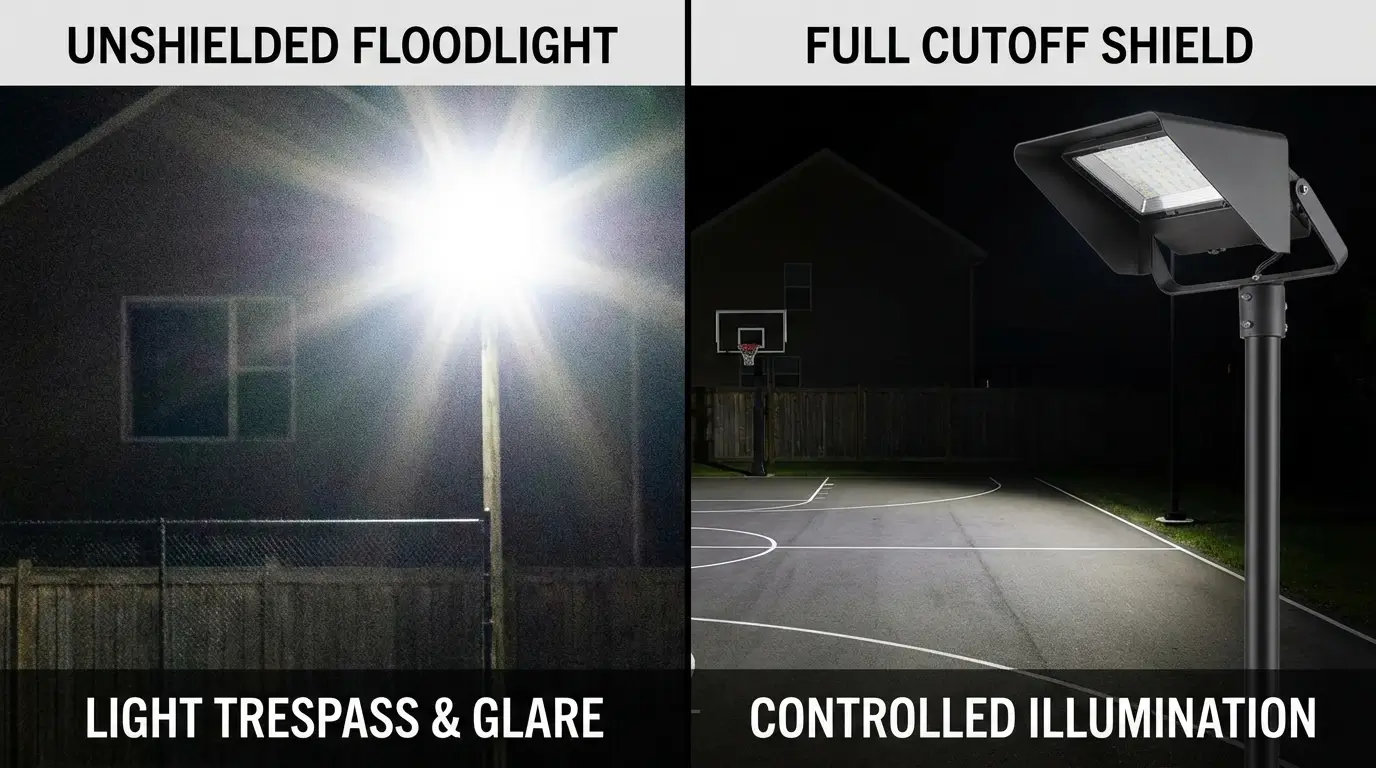
Nothing kills a night game faster than a knock on the door from a frustrated neighbor. The biggest complaint with DIY lighting isn’t the light on the court—it’s the light trespass (or “spill”) into the bedroom window next door. Cheap floodlights use a “wide-flood” distribution, which throws light in a 120-degree arc. This creates massive amounts of glare for the players and light pollution for the neighborhood.
Professional sports lighting uses specific NEMA beam spreads that “cut off” the light at the edge of the court. By using light shields or shrouds, you can ensure that 100% of the illumination stays on the court, keeping your backyard a sports zone and your neighbor’s yard a “dark sky” zone.
From a coaching standpoint
playing under low-quality artificial light forces your eyes to work three times harder than they do during a midday match. If your court has “hot spots” of bright light mixed with deep, murky shadows, your brain will struggle to calculate the ball’s velocity and spin accurately. I’ve coached athletes who were absolute superstars during the day but completely fell apart at night because they were effectively playing in a “strobe-light” environment. You simply cannot build reliable muscle memory when the ball appears to vanish and reappear as it moves through uneven light pockets. If you want your evening practice to actually translate to tournament wins, your lighting must be as consistent as your stroke; don’t let a budget solar light undo 50 hours of hard daytime work.
The Final Verdict: Illuminating Your Game
Choosing between a weekend DIY solar project and a professional hardwired installation comes down to a single question: Are you lighting a landscape, or are you lighting a sport? If the goal is simply to see your way across the driveway after dark, solar is a magnificent, cost-effective tool. However, if the goal is to improve your shooting percentage or master the spin on a pickleball, you cannot afford the inconsistency of budget-grade gear.
Investing in high-quality backyard court lighting ensures that your court remains a safe, high-performance environment long after the sun goes down. By prioritizing Lux over Lumens and focusing on a high CRI, you protect your joints, your eyes, and your neighbors’ peace of mind.
At-a-Glance: Solar vs. Professional Comparison
| Feature | Cheap Solar Floodlights | Professional Hardwired LED |
| Upfront Cost | $100 – $300 (Total) | $2,500 – $5,000+ (Installed) |
| Consistency | Dims as battery drains; weather-dependent. | 100% brightness regardless of duration. |
| Visual Quality | High glare; low CRI (grey/flat colors). | Controlled beam; high CRI (vibrant colors). |
| Installation | DIY (Bolt and go). | Professional (Trenching, permits, wiring). |
| Longevity | 12–24 months (battery/plastic failure). | 10+ years (industrial-grade heatsinks). |
The Hybrid Compromise
If a full professional rig isn’t in the budget this year, don’t settle for the cheapest solar option. Look for “Commercial Grade” solar units that feature detached, oversized panels and lead-acid or high-capacity lithium batteries. While more expensive than box-store kits, they offer a more stable battery AH capacity and can often be mounted higher on existing structures. Just remember that even the best solar setup will eventually hit a power ceiling that hardwiring simply doesn’t have.
Regardless of your choice, keep the surface clean to maximize light reflection. Regularly cleaning bird droppings and debris off sport court tiles isn’t just about hygiene; a clean, vibrant surface helps bounce ambient light back up, improving the overall brightness of your playing area.
The Hard Truth: If you just want to see where you’re walking, solar is fine. If you want to play a competitive game, solar usually fails. Most solar lights don’t have the ‘battery muscle’ to pump out 30 foot-candles of light for more than an hour. If you’re serious, hire an electrician to run a dedicated 120V line. It’s a higher full cost breakdown of residential sport court installs, but it’s the only way to ensure your game doesn’t go dark at 10-10.
Frequently Asked Questions (FAQs)
How many lumens do I need for a backyard basketball court?
For a standard half-court, you should aim for a total output of 20,000 to 30,000 lumens, but more importantly, you need a minimum of 200 Lux on the ground. Professional setups achieve this by using two 150W–200W high-efficiency LED fixtures mounted at 15–20 feet.
Will backyard court lights annoy my neighbors?
They will if you use cheap floodlights with a wide 120-degree beam. To prevent complaints, use lights with a “Full Cutoff” design or add external shields. This keeps the light trespass contained within your property lines and prevents glare from hitting neighboring windows.
Can I mount lights directly to my basketball pole?
You can, but it is rarely the best option for visibility. Mounting a light on the hoop pole often creates a “blind spot” directly under the basket and causes extreme glare when you look up for a layup. Separate 15-foot masts positioned at the corners or sides of the court provide much more uniform light.
Are solar lights bright enough for pickleball?
Generally, no. Because a pickleball is small and moves rapidly, you need high-intensity, flicker-free light to track it. Most solar lights suffer from “voltage sag” which can cause subtle flickering that makes the ball appear to jump or stutter in flight, ruining your timing.
How do I hide the wires for my court lights?
The only safe way to hide wires is through trenching and conduit. You must bury the electrical lines at least 18 inches deep (or 6 inches if using rigid metal conduit) to protect them from lawnmowers, weather, and accidental shovel strikes.
What is the best color temperature for sports? Go with 5000K (Daylight White). It provides the highest contrast, making the ball and the court lines pop. Avoid ‘Warm White’ (3000K), as it makes the court look yellow and muddy at night.
From a coaching perspective, the transition from day to night play is the ultimate test of an athlete’s adaptability. I’ve watched countless players lose their confidence simply because they were fighting shadows rather than their opponents. A well-lit court removes that mental barrier, allowing you to focus entirely on your footwork and follow-through. If you treat your lighting with the same respect you treat your pickleball paddle maintenance, you’ll find that the “home court advantage” stays with you even after the lights come on. Consistency in your environment is the fastest shortcut to consistency in your game.