
 By Ghulam Mustafa Khan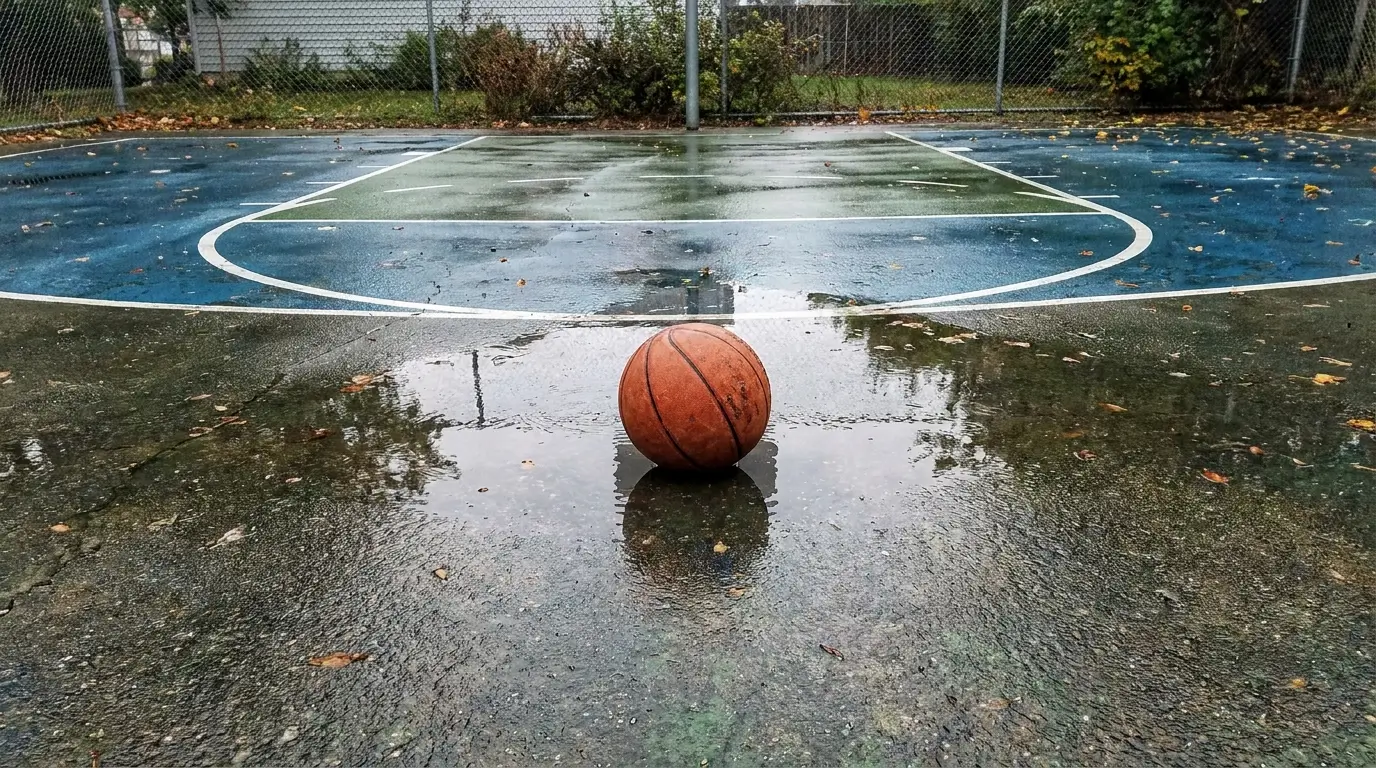
There is nothing more frustrating than having a beautiful backyard court that becomes unplayable after every rainstorm. If standing water, slick spots, and massive puddles are delaying your games and creating safety hazards, you need effective sport court drainage solutions.
In this guide, we will walk through the main causes of poor drainage, from improper slope to yard layout. More importantly, we will cover the best fixes. Whether you need minor edge maintenance, a French drain installation, or permeable modular tiles to keep the playing surface dry, you will find practical, realistic options here to ensure your court is always ready for tip-off.
Why Your Backyard Court Keeps Getting Puddles
If you have puddles sitting on your court for days, the water simply has nowhere to go. Here are the most common reasons why:
The Slope is Wrong: Concrete and asphalt must be poured with a slight, consistent pitch so gravity pulls water off the surface. If it was poured perfectly flat, water will sit. If it was sloped inward, it acts like a bowl.
The Base is Failing: If the sub-base beneath the court was not compacted properly, it can sink over time. This creates low spots or “birdbaths” on the surface where water pools.
Lack of Drains: The court was built without integrated channel drains or perimeter French drains to catch the runoff.
The “Bathtub” Effect: Your court is situated lower than the surrounding grass or landscaping, meaning water from the rest of your yard actually flows onto your court.
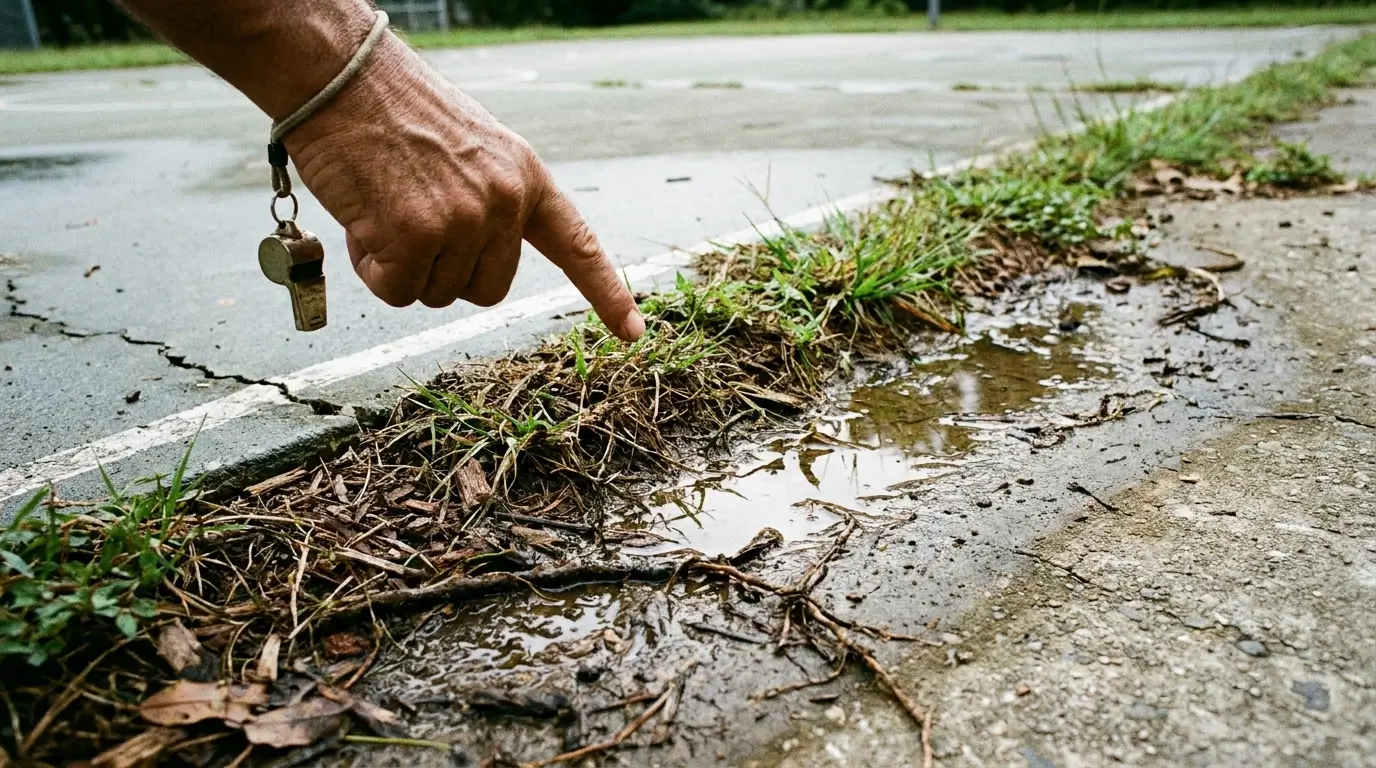
Blocked Edges: Mulch, overgrown grass, or decorative edging is acting like a dam, trapping water on the low side of the court.
What Are the Best Sport Court Drainage Solutions?
The best drainage solution depends entirely on whether your problem is surface-level or structural.
Fixing Slope and Grading: The most permanent fix, but it often requires grinding down high spots, using leveling compounds, or re-pouring the surface.
Installing Perimeter Drains: Adding French drains or channel drains along the edges to catch water as it runs off the court and route it away safely.
Using Permeable Modular Tiles: Installing interlocking plastic tiles over the concrete so water drains through the surface, leaving the top dry for immediate play.
Edge Maintenance: Clearing away landscaping dams so water can escape the slab naturally.
Fixing Slope and Grading Problems
Every outdoor court should have a gentle, consistent slope—usually around 1% (or 1 inch of drop for every 10 feet of distance). This ensures water rolls off without players feeling like they are running uphill.
If your concrete or asphalt has deep birdbaths, minor low spots can sometimes be fixed using a specialized acrylic patch binder. However, if the entire plane of the court was poured completely flat or slopes back toward your house, you have a major structural issue.
Regrading or re-pouring a slab is contractor-level work. It is expensive and is usually only considered if you are doing a massive resurfacing project or a full rebuild.
Perimeter, Channel, and French Drains Around Your Court
If your court has a decent slope but the water has nowhere to go once it leaves the concrete, you need to manage the runoff.
Perimeter Drains to Catch Water Before It Reaches the Court
If your court sits at the bottom of a hill, you need a catch basin or a perimeter drain installed above the court. This intercepts the water running down your lawn before it ever floods your playing surface.
French Drains and Strip Drains Along Low Sides
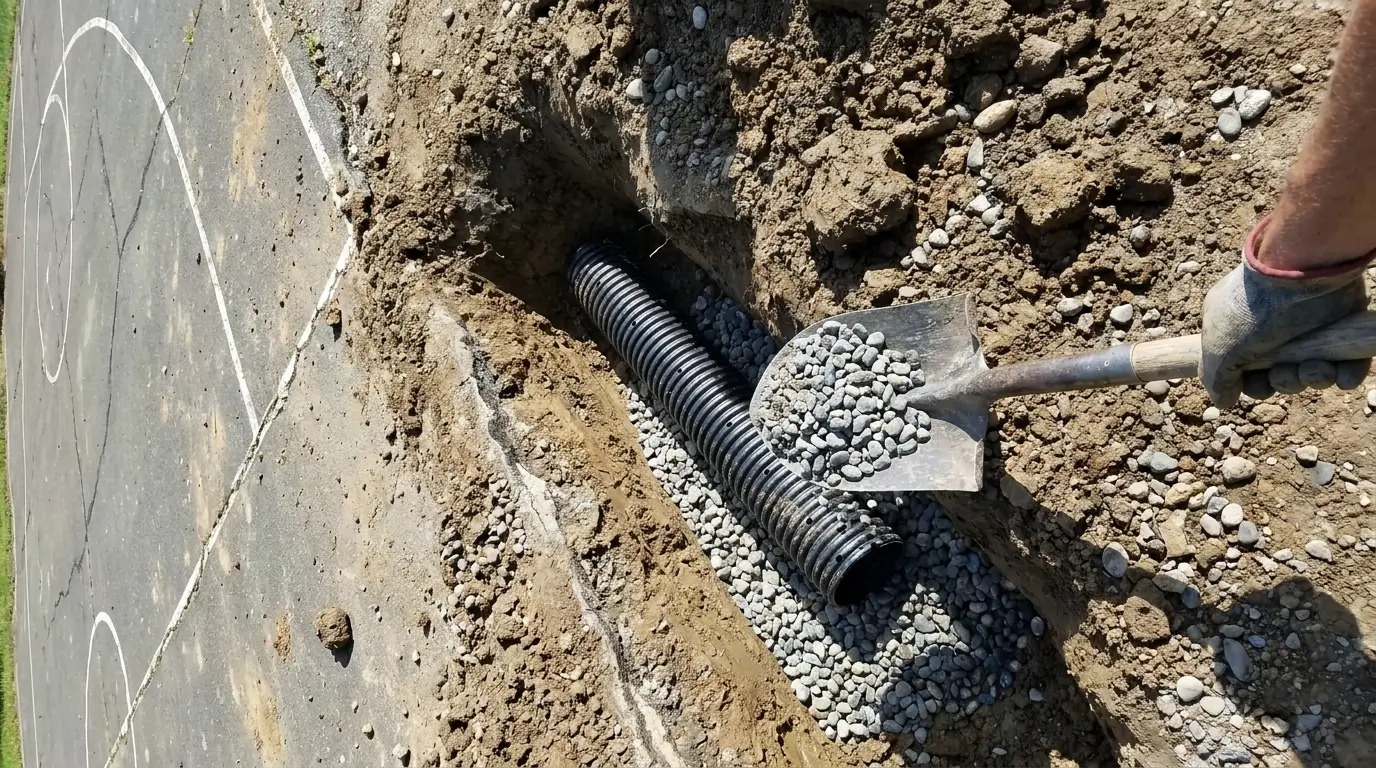
A French drain is a trench filled with gravel and a perforated pipe. Installed along the low edge of your court, it catches the water as it rolls off the asphalt and safely directs it underground toward a storm drain or a lower part of your yard. You can read more about how French drain systems move water away from hard surfaces to understand the mechanics.
Channel and Slot Drains at Court Edges
Channel drains are long, narrow grates installed directly into the concrete or right at the edge of the slab. They are excellent for heavy rainfalls because they can swallow a large volume of water instantly.
If you already have these drains, check them regularly. A common homeowner issue is simply that the grates are clogged with wet leaves, pine needles, or sediment, rendering the entire system useless.
Permeable and Modular Tile Options to Improve Drainage
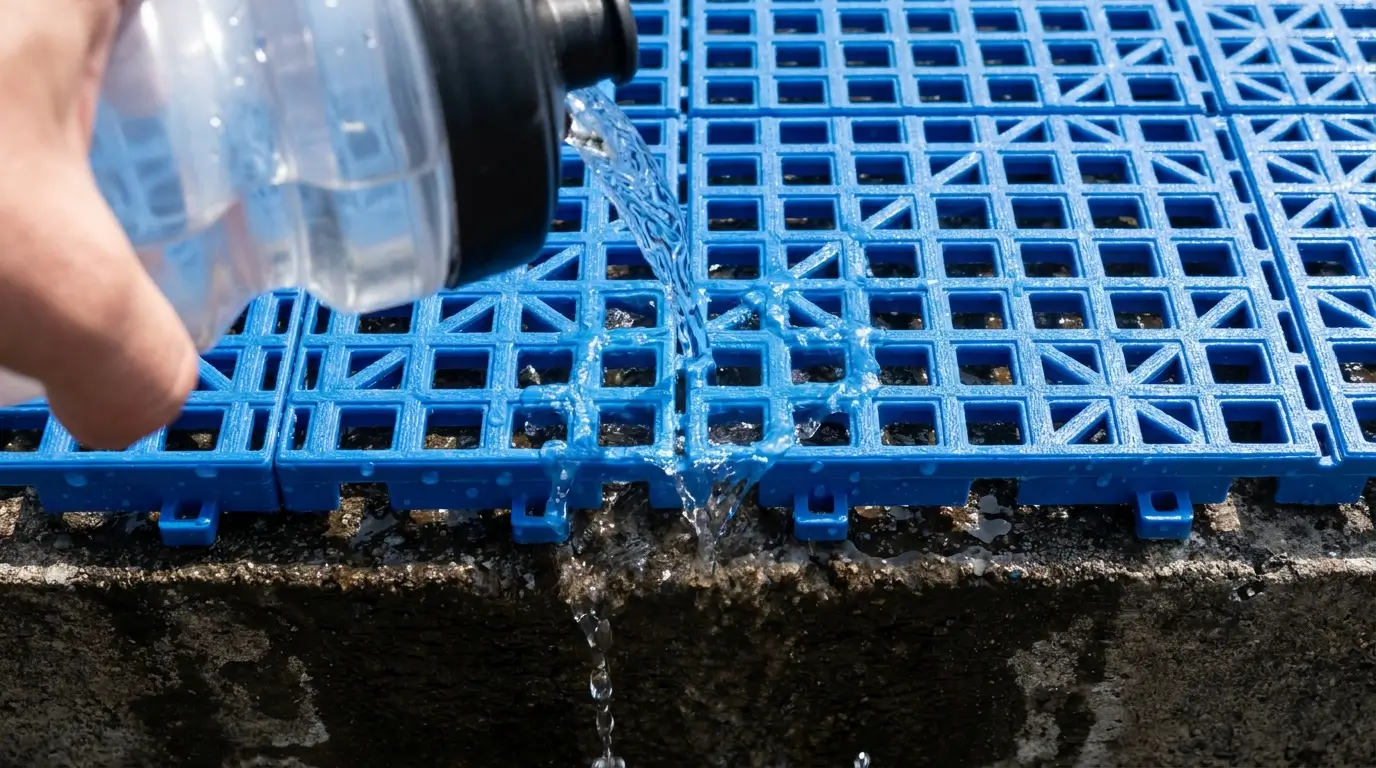
If your concrete slab has minor low spots but is structurally sound, one of the fastest and most popular sport court drainage solutions is to install permeable modular sport tiles directly over the existing surface.
These interlocking plastic tiles feature an open-grid design. When it rains, the water falls through the gaps in the tile and rests on the concrete below, while the top of the tile remains dry and provides excellent grip.
While modular tiles are fantastic for keeping the playing surface playable after rain, they do not magically fix bad base drainage. The water still has to run off the concrete eventually. However, if you combine permeable tiles with a good edge drain, you will virtually eliminate slick spots and puddles on game day.
Simple Maintenance Habits That Improve Backyard Court Drainage
Sometimes, the fix is free. Before you call a contractor, check your perimeter.
Clear the Dams: I see this constantly. Homeowners let their lawn grow thick right up against the low side of the court, or they build a raised mulch bed. This creates a dam. Take an edger and cut a clear channel between the grass and the concrete so water can escape.
Sweep the Low Spots: Pine needles and dirt naturally wash into the lowest spots of your court. Keep these areas swept clean so the water’s exit path is never blocked.
Adjust Your Sprinklers: Turn on your irrigation system and watch it. If three sprinkler heads are blasting your pickleball court every morning, adjust the spray patterns immediately.
Planning Drainage When You Haven’t Built the Court Yet
If you are still in the planning phase, drainage must be your first priority, not an afterthought.
Choose the highest possible, flattest spot in your yard. Ensure your contractor designs a 1% slope into the slab from day one. More importantly, you must understand backyard court permits and zoning rules regarding stormwater runoff. Many municipalities have strict codes preventing you from sloping a massive concrete slab so that it dumps hundreds of gallons of rainwater directly into your neighbor’s yard.
When to Bring in a Contractor for Drainage Problems
DIY edge clearing and adding modular tiles can fix 80% of backyard court puddle issues. However, you need to bring in a professional if:
The puddles are over an inch deep and cover half the court.
The poor drainage is causing the asphalt to heave, crack, or sink heavily.
Your entire backyard is a swamp, and there is nowhere for the water to naturally drain.
A good sports court contractor will assess your base sub-soil, shoot the elevations with a laser level, and design a proper drainage route. If you are worried about the financial impact of this level of work, reviewing typical sport court costs for residential projects can help you budget for the necessary earthwork and grading.
Coach’s Corner: Real Backyard Drainage Fixes I’ve Seen
A few years ago, a family asked me to look at their backyard basketball court. They hadn’t played on it in a month because it was constantly flooded. They assumed they needed to tear out the entire $15,000 concrete slab.
When I looked at it, the slope of the court was actually perfect. The problem? They had hired a landscaper who built a beautiful, raised stone retaining wall exactly one inch away from the low side of the court, completely blocking the water’s exit. We spent a Saturday morning cutting a small channel drain through the bottom of the retaining wall and routing a pipe into the woods. The court was dry an hour after the next rainstorm.
Always look for the simple exit path before you assume the court itself is broken.
FAQ: Sport Court Drainage Solutions for Backyard Courts
Why does my backyard basketball court always have puddles? Puddles form when the court lacks a proper 1% slope, when low spots (birdbaths) develop in the asphalt, or when landscaping at the edges creates a dam that prevents water from running off the surface.
What is the best sport court drainage solution for a small backyard? The best solution is a combination of a properly sloped slab and a perimeter French drain along the low edge of the court to catch the runoff and route it away from your house and neighboring properties.
Can I fix court puddles without tearing out the whole slab? Yes. Minor low spots can be filled with an acrylic patch binder. For widespread, shallow puddling, installing permeable modular sport tiles over the slab allows water to drain beneath the playing surface, keeping the top dry for play.
Are permeable sport tiles enough to solve drainage problems? Permeable tiles solve surface puddling by keeping the player above the water. However, the water still needs a way to exit the concrete slab underneath. If the slab sits in a deep bowl with no exit, tiles alone will not fix the underlying flooding issue.
How much does it cost to add drains around a backyard court? A DIY French drain installed along one edge of a court can cost $200 to $500 in materials. Professional installation of channel drains or extensive perimeter drainage systems typically ranges from $1,500 to $4,000, depending on trenching and routing requirements.
What slope should my backyard sport court have for good drainage? Outdoor sport courts should generally have a 1% slope. This equates to roughly 1 inch of drop for every 10 feet of distance, which is enough to shed water quickly without affecting gameplay. You can verify these specifications by checking recommended slope and drainage guidelines for outdoor courts.
Should I worry about where the drained water goes in my yard? Absolutely. You must route the drained water to a safe, lower elevation, a dedicated dry well, or a municipal storm drain. Dumping concentrated runoff onto a neighbor’s property or toward your home’s foundation can cause severe damage and violate local zoning laws.
Final Advice: Make Drainage Part of Your Game Plan
Do not let standing water ruin your investment. Start by diagnosing the actual problem—watch what the water does during the next heavy rain. Check your edges for landscaping dams, ensure your existing drains are clear of leaves, and assess the severity of any low spots.
By combining proper slope management, perimeter drains, and potentially upgrading to a permeable modular surface, you can ensure your court is dry, safe, and ready for action year-round.
Before you spend thousands tearing out concrete, take an edger to the low side of your court this weekend and clear a path for the water. You might be surprised at how quickly the puddles disappear.