
 By Ghulam Mustafa Khan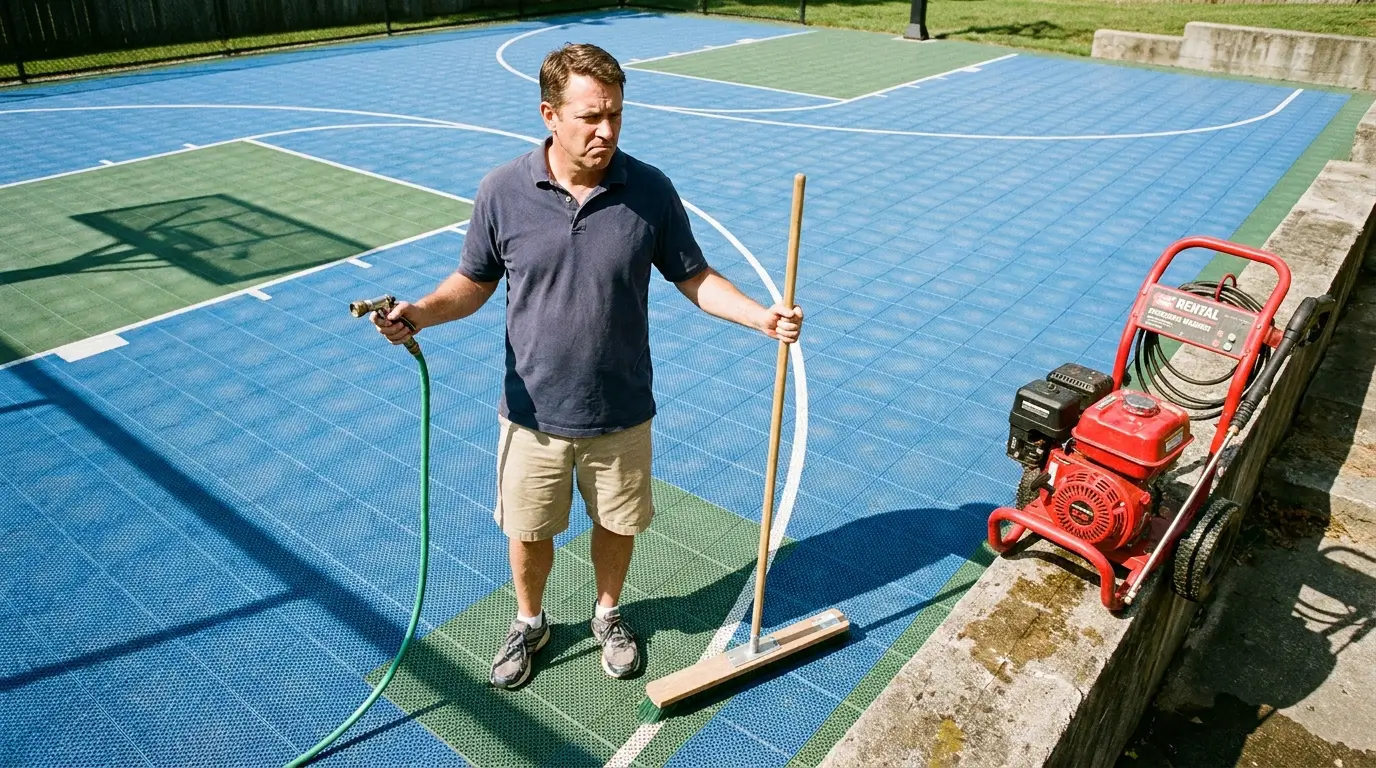
Wondering if it is safe to pressure wash sport court tiles? As a court maintenance expert and coach, my direct answer is: generally, no. You shouldn’t do it. High-pressure water can easily crack the interlocking plastic, force debris underneath the surface, and even void your manufacturer’s warranty.
But don’t worry, maintaining your court isn’t complicated. In this guide, I will show you exactly how to clean an outdoor sport court safely without risking thousands of dollars in damage. We will cover the simple tools you actually need, how to tackle stubborn stains, what to do instead of pressure washing, and how to avoid costly maintenance mistakes.
Can You Pressure Wash a Sport Court?
Technically, yes, but practically, it is a huge risk for the average homeowner or facility manager. While it might seem like the fastest way to blast away dirt, you are taking a massive gamble with your court’s structural integrity.
Think of it like this: treat your court like you’d treat a good pair of basketball shoes. You clean them, wipe them down, and take care of them, but you don’t blast them with a 3,000 PSI industrial hose.
When people ask me, “can you pressure wash a sport court?” I always advise against it unless it is done by a certified professional using specialized, low-pressure equipment. For DIY maintenance, the risks of ruining your interlocking court tiles far outweigh the convenience of a quick wash.
What Happens When You Pressure Wash Sport Court Tiles?
If you decide to fire up a standard gas or electric pressure washer on your backyard court, several things can go wrong very quickly. Here are the hidden dangers of blasting your court.
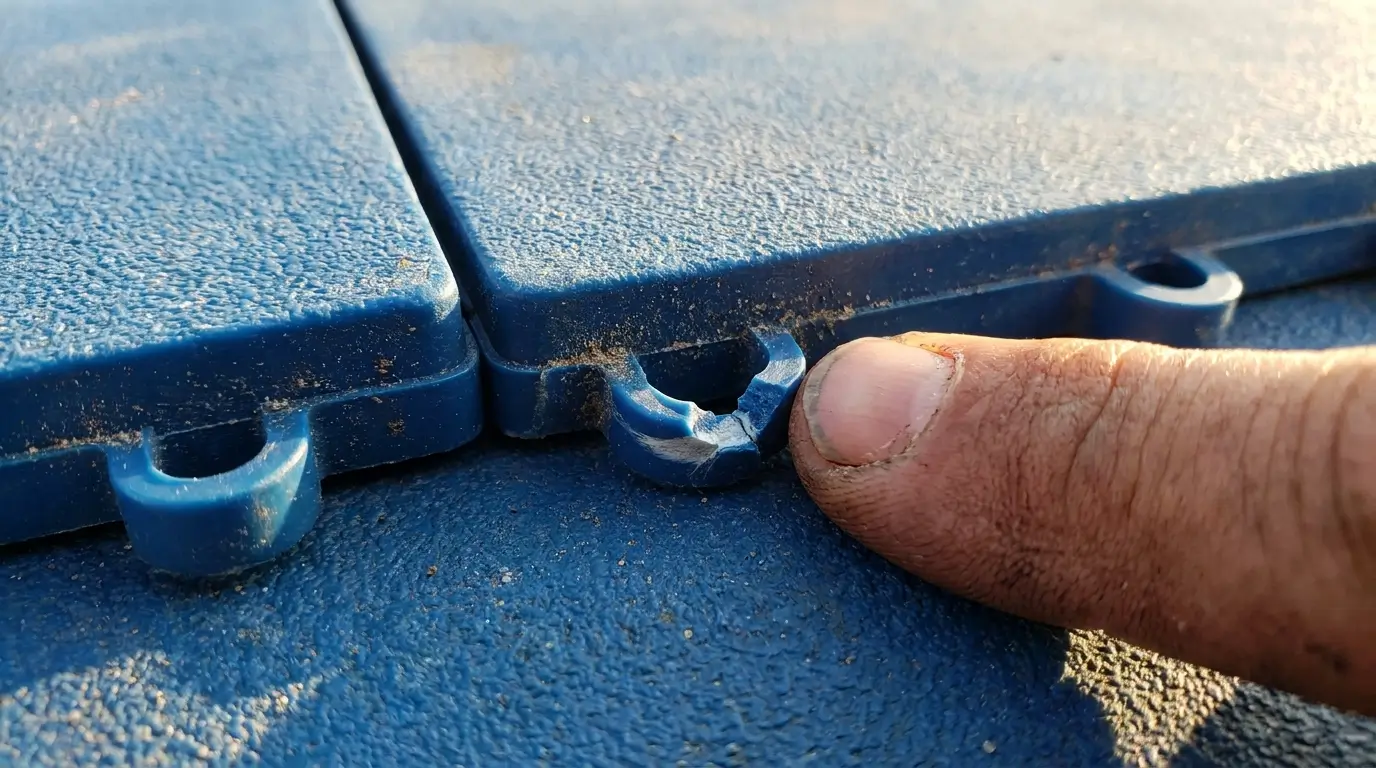
Risk of Cracking and Chipping Interlocking Tiles
Modular sport tiles are made from high-impact polypropylene. They are incredibly tough against basketballs, sneakers, and weather. However, they are not designed to withstand a concentrated, zero-degree stream of high-velocity water.
Over time, UV exposure from the sun can make plastics slightly more brittle. Hitting an older tile with high pressure can instantly crack the grid, chip the edges, or break the locking mechanisms that hold your court together. If you want to avoid cracking sport court tiles, keep the heavy machinery away from them.
Water Infiltration Under Tiles and Subsurface Damage
Interlocking tiles are designed to let water drain through them to the concrete or asphalt subbase below. But when you use a pressure washer, you aren’t just letting water flow—you are actively driving dirt, mud, and debris through the perforations at high speed.
This forces sludge to build up beneath the tiles, blocking your court’s natural drainage slope. Trapped moisture can degrade your subbase over time, creating dead spots where the ball won’t bounce properly.
Slippery or Uneven Surfaces After Improper Cleaning
Many sport court tiles have a specialized, textured coating designed to provide grip and prevent slips. Aggressive pressure washing can literally strip this texturing right off the plastic.
Once that grip is gone, it doesn’t come back. You are left with a slick, dangerous surface that becomes a major slipping hazard the moment a player sweats or a little morning dew settles on the court.
How Pressure Washing Can Void Your Warranty
This is the most expensive mistake you can make. Most major manufacturers have strict sport court tile maintenance guidelines.
If you read the fine print, you will almost always find a clause making a sport court warranty void pressure washing is used improperly. According to general maintenance standards for synthetic sports surfaces, using unauthorized high-pressure cleaning methods relieves the manufacturer of any liability for damaged tiles. If you ruin a section of your court, the replacement cost comes straight out of your pocket.
The Safe Way to Clean Sport Court Tiles (Step-by-Step)
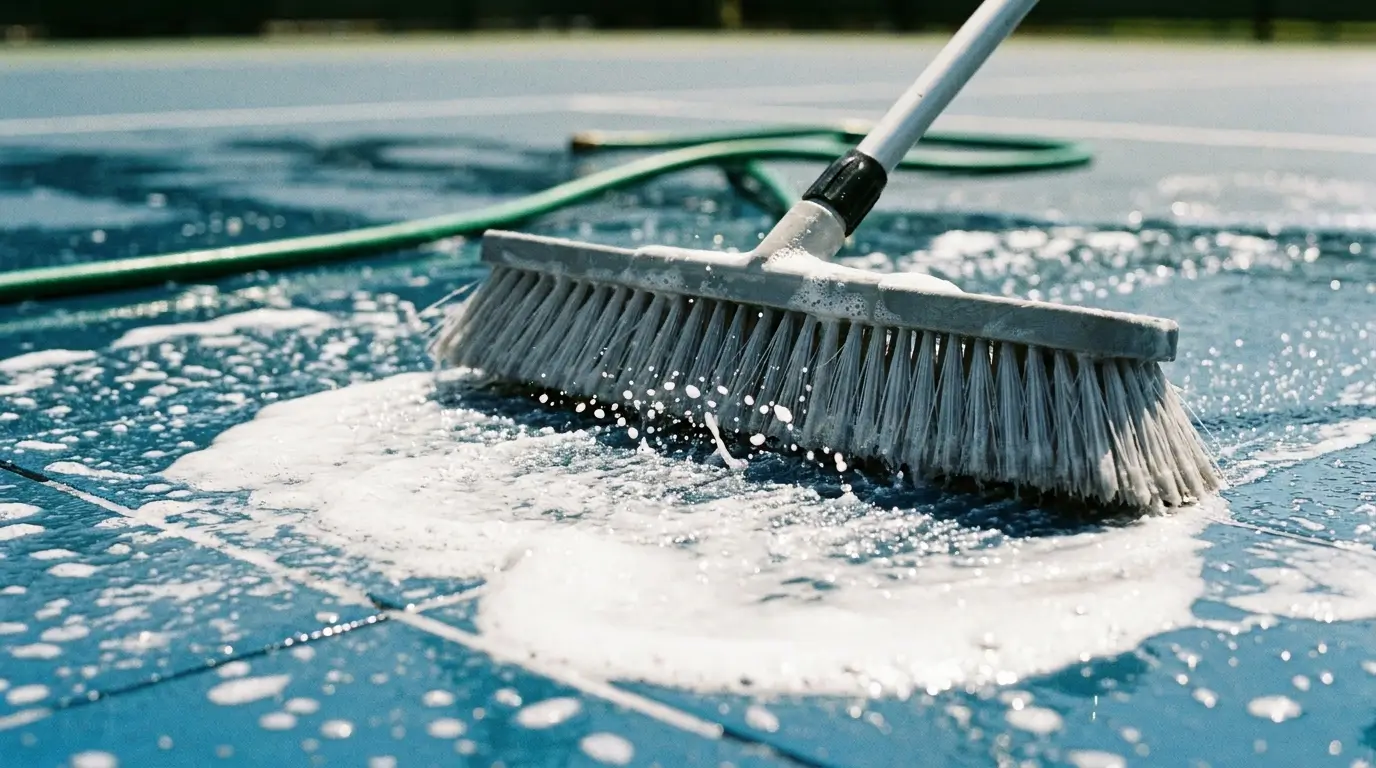
You do not need heavy machinery to keep your court looking pristine. The safe way to clean sport court tiles relies on patience, mild chemicals, and gentle agitation.
Basic Tools You Actually Need
Keep it simple. To execute these DIY sport court cleaning tips, you only need:
A wide, soft-bristled push broom
A standard garden hose with a spray nozzle
A bucket of warm water
A mild, pH-neutral detergent (like a gentle dish soap or a specialized court cleaner)
A leaf blower (optional but highly recommended)
How to Do Routine Cleaning
Consistent interlocking court tiles cleaning is incredibly straightforward if you stay on top of it.
Clear the Debris: Use your leaf blower or push broom to remove all loose leaves, pine needles, and dirt. Do this weekly.
Hose it Down: Use a standard garden hose on a “shower” or “jet” setting to rinse the court from the center out toward the edges.
Apply Mild Soap: For a deeper clean, mix a few squirts of mild dish soap into a bucket of warm water.
Gently Scrub: Dip your soft-bristled push broom into the soapy water and lightly scrub the tiles.
Rinse Thoroughly: Hose off all the soap residue completely so the court doesn’t become slippery when it dries.
How to Deal with Mold, Mildew, and Stains Without Pressure Washing
If your court sits in the shade, you might notice mold and mildew on sport court tiles. Do not reach for bleach, as harsh chemicals can discolor the plastic.
Instead, use a mixture of white vinegar and warm water, or a specialized, eco-friendly mildew remover. Apply the solution, let it sit for ten minutes to break down the organic matter, and scrub gently with your broom before rinsing.
For other stubborn messes, like tree sap or animal droppings, you need a targeted approach. Rather than blasting the spot, you should see this guide on cleaning bird droppings from sport court tiles to learn how to break down the stain safely without melting or scratching the plastic.
Special Care for Outdoor Courts Exposed to Weather
Outdoor courts take a beating from dust, pollen, and tree fallout. If you live in an area with heavy autumn leaf drop, make sure you are blowing the leaves off every few days. Wet leaves left to rot on the tiles will cause deep, tannin-based stains that are incredibly frustrating to scrub out later.
When (and How) a Pro Might Use Pressure Washing
I mentioned earlier that pressure washing is generally a bad idea. However, there is an exception: professional low-pressure cleaning for sports court maintenance.
Sometimes, a court gets so neglected that a garden hose simply won’t cut it. In these cases, professional facility cleaners use a method called “soft washing.”
They use specialized wands equipped with wide-fan nozzles (usually 40-degree tips) and dial the equipment down to a very safe PSI (often under 1,000 PSI). They keep the wand at least 12 to 18 inches away from the surface, constantly moving so the pressure never rests on a single interlocking joint.
Professional cleaning equipment guidelines strictly dictate that low pressure and proper chemical application do the heavy lifting, not brute water force. A DIY rental washer from the hardware store does not offer this level of fine-tuned control.
How Regular Maintenance Extends Your Court’s Life
Knowing how often to clean sport court surfaces is the secret to maximizing your investment. A good sport court surface lifespan can easily exceed 15 years, but only if you treat it right.
I recommend sweeping or blowing off the court once a week, rinsing it with a hose once a month, and doing a soapy push-broom scrub twice a year (once in the spring, and once in the fall).
This is especially critical if you live in a climate with harsh winters. If you let mud and dirt build up under the tiles in the fall, that wet sludge will freeze during the winter. When water freezes, it expands. This freeze-thaw cycle can heave your tiles upward, snapping the locks. To prevent this, learn how to winterize your sports court properly before the first freeze hits.
My Experience as a Coach & Court Owner
As a coach who has played on and maintained dozens of outdoor courts, I’ve seen the good, the bad, and the ugly.
A few years ago, a local community center called me out to inspect their basketball court. The maintenance crew had rented a 3,500 PSI commercial pressure washer to “deep clean” the facility for a summer tournament. The operator used a narrow nozzle and got too close to the surface.
The result? They completely sheared off the textured grip on the top of the tiles and snapped the expansion joints in three different zones. The court became an ice rink, and they had to spend thousands replacing massive sections of the grid.
Conversely, I manage a private futsal and pickleball court that is going on ten years old. It looks almost brand new. Our secret? A battery-powered leaf blower twice a week and a garden hose once a month. Gentle, consistent care always wins over aggressive, infrequent blasting.
Frequently Asked Questions About Cleaning Sport Court Tiles
Can you pressure wash Sport Court brand tiles? No, you should avoid pressure washing brand-name modular tiles unless explicitly directed by the manufacturer. High pressure can break the interlocking tabs, strip the surface texture, and drive debris into the subbase. Stick to a garden hose and a soft push broom.
What is the best way to clean sport court tiles? The safest and most effective method is to clear debris with a leaf blower, rinse the court with a standard garden hose, and gently scrub the surface using a mixture of warm water and a mild, pH-neutral dish soap.
How often should I clean my outdoor sport court? You should clear loose leaves and dust with a broom or blower weekly. A light rinse with a garden hose should be done monthly, and a deeper scrub with mild soap is recommended twice a year (spring and fall).
Will pressure washing void my sport court warranty? Yes, in most cases, using unauthorized high-pressure cleaning equipment will void the manufacturer’s warranty. Always check your specific warranty documentation before applying any harsh chemicals or mechanical cleaning tools.
How do you remove bird droppings from sport court tiles? Do not use a pressure washer. Instead, spray the droppings with a mixture of warm water and mild soap, let it soak for a few minutes to soften, and then scrub the area gently with a soft-bristled brush.
Can mold and mildew grow under sport court tiles? Yes, if your court is in a shaded, damp area, mold can grow on and underneath the tiles. Prevent this by ensuring your subbase drains properly and cleaning the tiles with a vinegar-water solution to kill organic growth.
Is it okay to use a leaf blower on my sport court? Absolutely. A leaf blower is actually the best, safest tool you can use for daily or weekly maintenance. It removes abrasive dirt, leaves, and pine needles without causing any physical wear and tear to the plastic tiles.
Final Advice: Don’t Let Cleaning Shortcuts Cost You a New Court
At the end of the day, modular sport courts are designed to be low-maintenance, not no-maintenance.
The temptation to hook up a pressure washer and blast away a year’s worth of grime in twenty minutes is strong, but the risk of snapping tiles, ruining your drainage, and voiding your warranty is simply too high.
Before you rent a pressure washer, follow this safe cleaning routine first: grab your leaf blower, a garden hose, and a push broom. By taking the gentle approach, you ensure your court stays safe, vibrant, and ready for game day for years to come.