 By Ghulam Mustafa Khan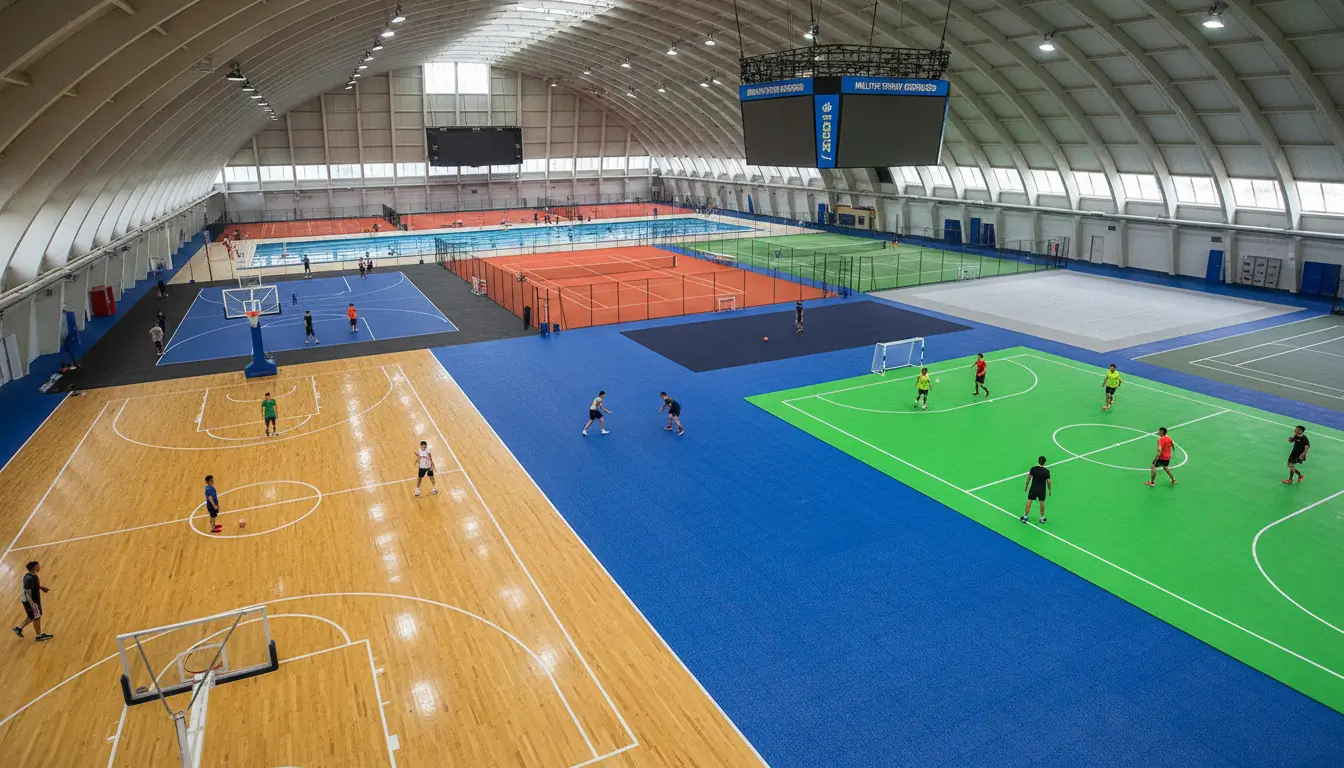
Sports courts are essential for many athletic activities, and selecting the proper flooring is critical to ensure performance, safety, and durability. Whether you’re building a basketball court, a tennis court, or a multi-sport facility, choosing the right flooring can make a significant difference. This guide will provide valuable insights into the basics of sports court flooring, explore the various types available, and help you make the right decision for your needs.
What is Sports Court Flooring? Understanding the Basics
Sports court flooring is the surface used for athletic activities, designed to provide the ideal balance of grip, cushioning, and durability. A well-chosen floor ensures player safety, enhances performance, and stands up to the demands of frequent use. Below are the key factors that define sports court flooring:
- Grip & Traction: Adequate traction prevents slipping and ensures that athletes can move swiftly and safely.
- Cushioning: Shock-absorbing flooring helps reduce stress on joints and prevent injuries.
- Durability: The floor needs to withstand frequent impacts, especially for outdoor and commercial use.
- Maintenance: Easy upkeep ensures that the court remains safe and functional over time.
Common Types of Sports Court Flooring: Which Is Best for Your Court?
When deciding on sports court flooring, it’s important to choose the material that best fits your needs. Here are the most common types of flooring for sports courts:
1. Wooden Sports Court Flooring (Maple Wood)
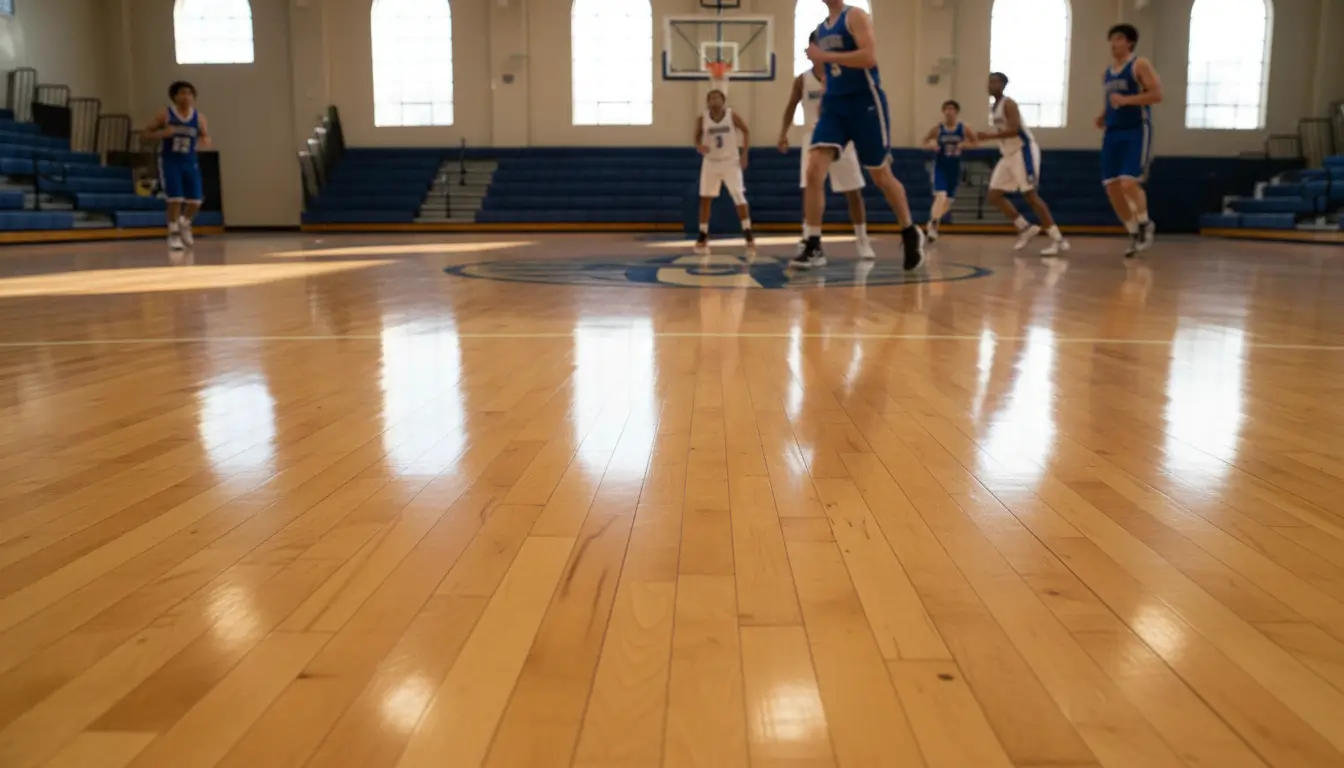
Wooden flooring, particularly maple, is a top choice for indoor basketball courts due to its excellent balance of performance, aesthetics, and comfort.
- Best For: Indoor basketball courts, volleyball courts, and other high-impact indoor sports.
- Pros: Professional look, good shock absorption, comfortable underfoot.
- Cons: Expensive, requires maintenance, not suitable for high-moisture areas.
2. Modular Sports Court Flooring (Plastic & Rubber Tiles)
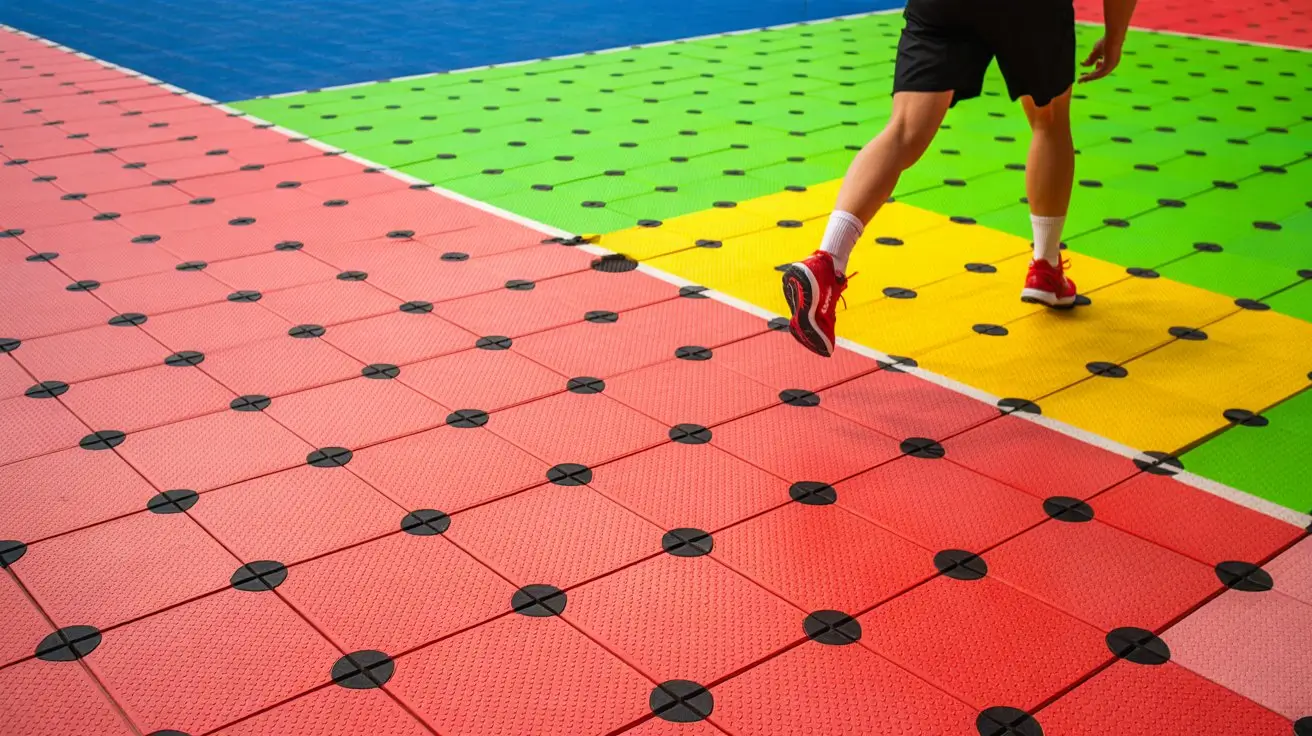
Modular sports court tiles offer flexibility and versatility, making them an excellent choice for DIY installations, multi-sport courts, and outdoor courts.
- Best For: Outdoor courts, multi-sport courts, DIY installations.
- Pros: Easy installation, low maintenance, customizable.
- Cons: Less cushioned than wood, not as professional in appearance.
3. Rubber Sports Flooring
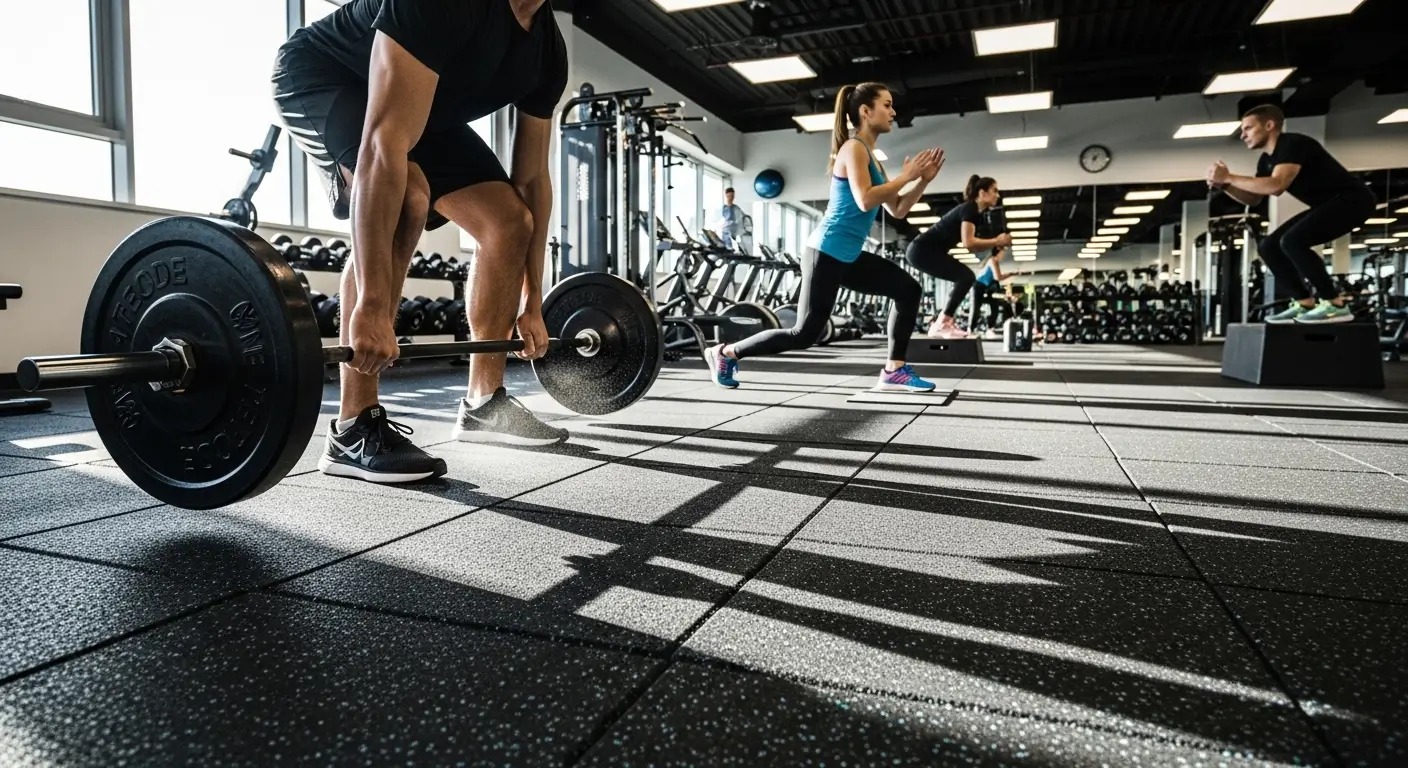
Rubber flooring is durable and provides excellent cushioning and traction, making it ideal for both indoor and outdoor courts.
- Best For: Multi-sport courts, playgrounds, and fitness centers.
- Pros: Durable, injury prevention, soundproofing properties.
- Cons: Heavy, can discolor over time, less professional aesthetic.
4. Vinyl and PVC Sports Flooring
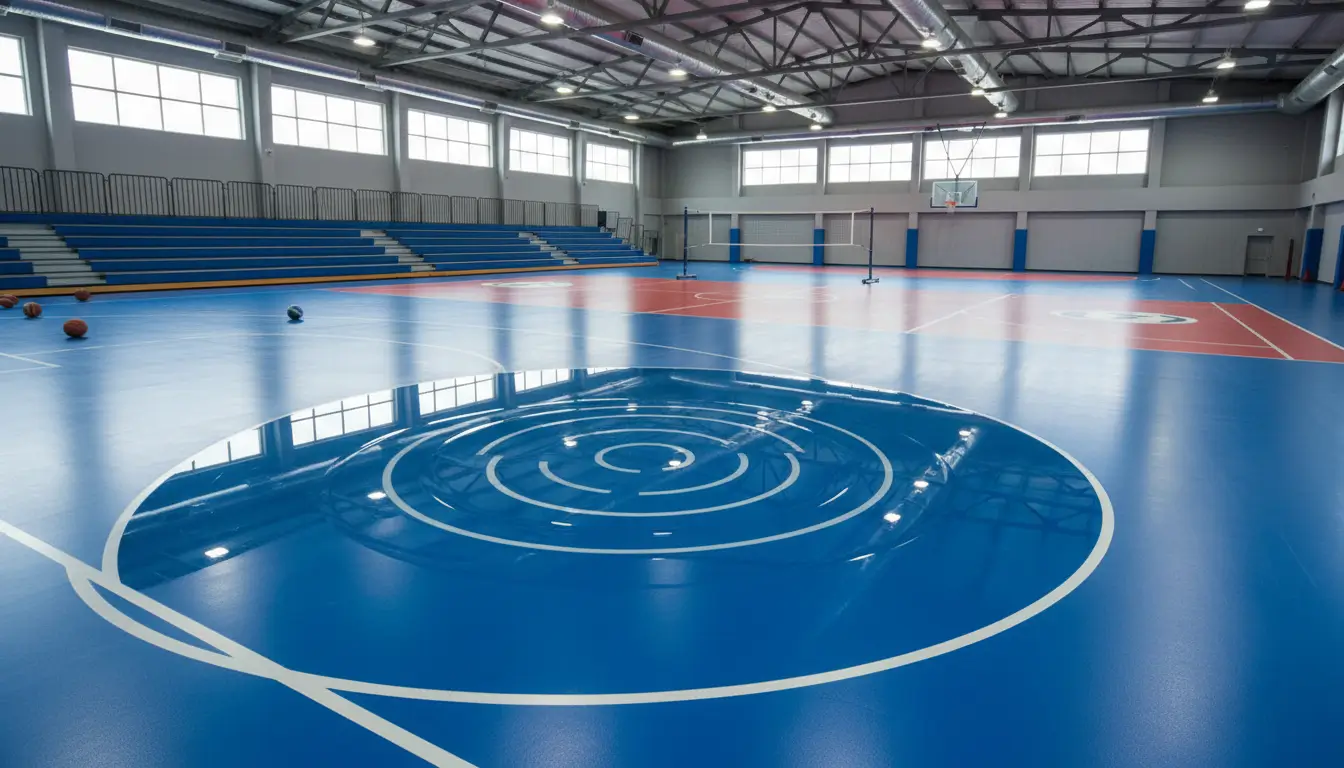
Vinyl and PVC floors are affordable options, often used in gyms and indoor courts. These materials are water-resistant and easy to clean.
- Best For: Gymnasiums, volleyball courts, and other indoor facilities.
- Pros: Budget-friendly, water-resistant, easy maintenance.
- Cons: Wear over time, less comfortable than rubber or wood.
5. Outdoor Sports Court Tiles (Plastic)
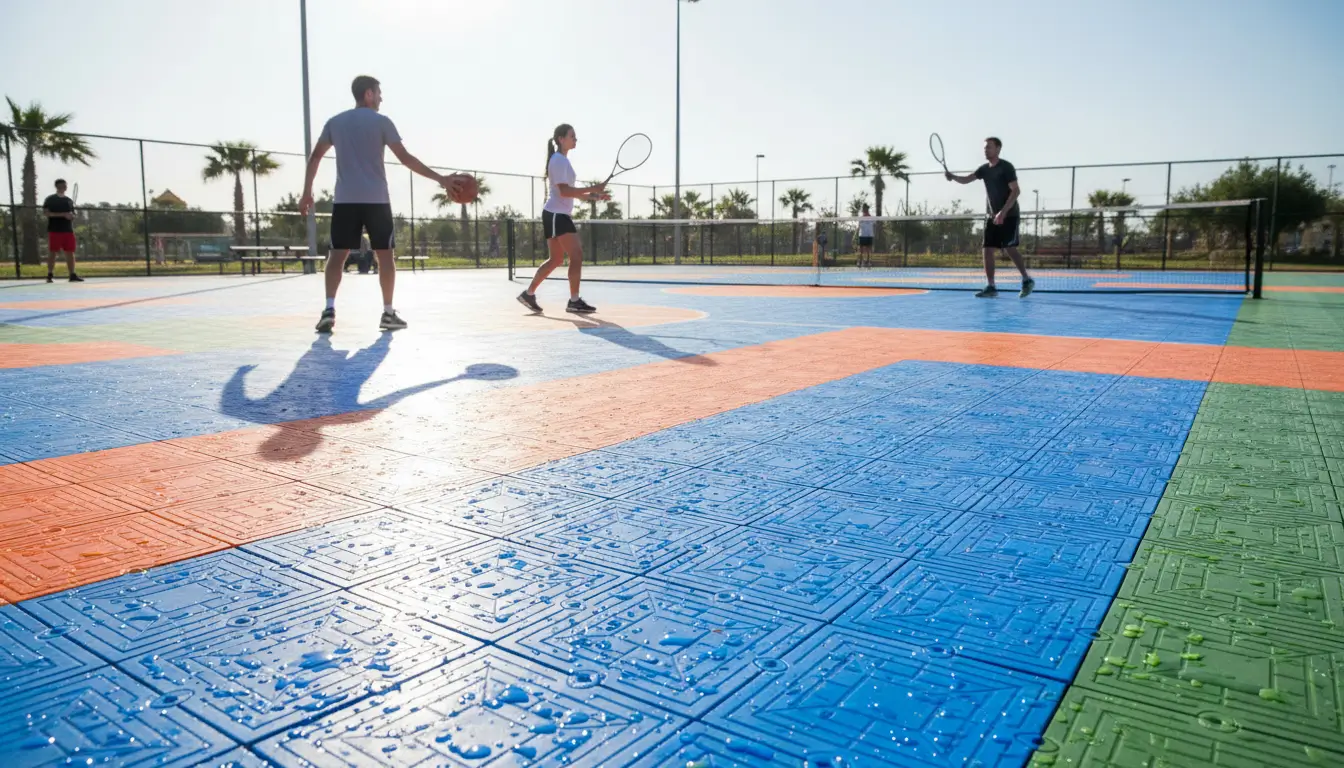
Outdoor tiles made from durable plastic are designed to handle the elements, providing great performance for tennis and basketball courts outdoors.
- Best For: Outdoor courts such as tennis and basketball courts.
- Pros: Weather-resistant, durable, easy to install.
- Cons: Can be harder on joints without proper cushioning, less aesthetically pleasing than wood.
How to Choose the Best Sports Court Flooring: A Step-by-Step Guide
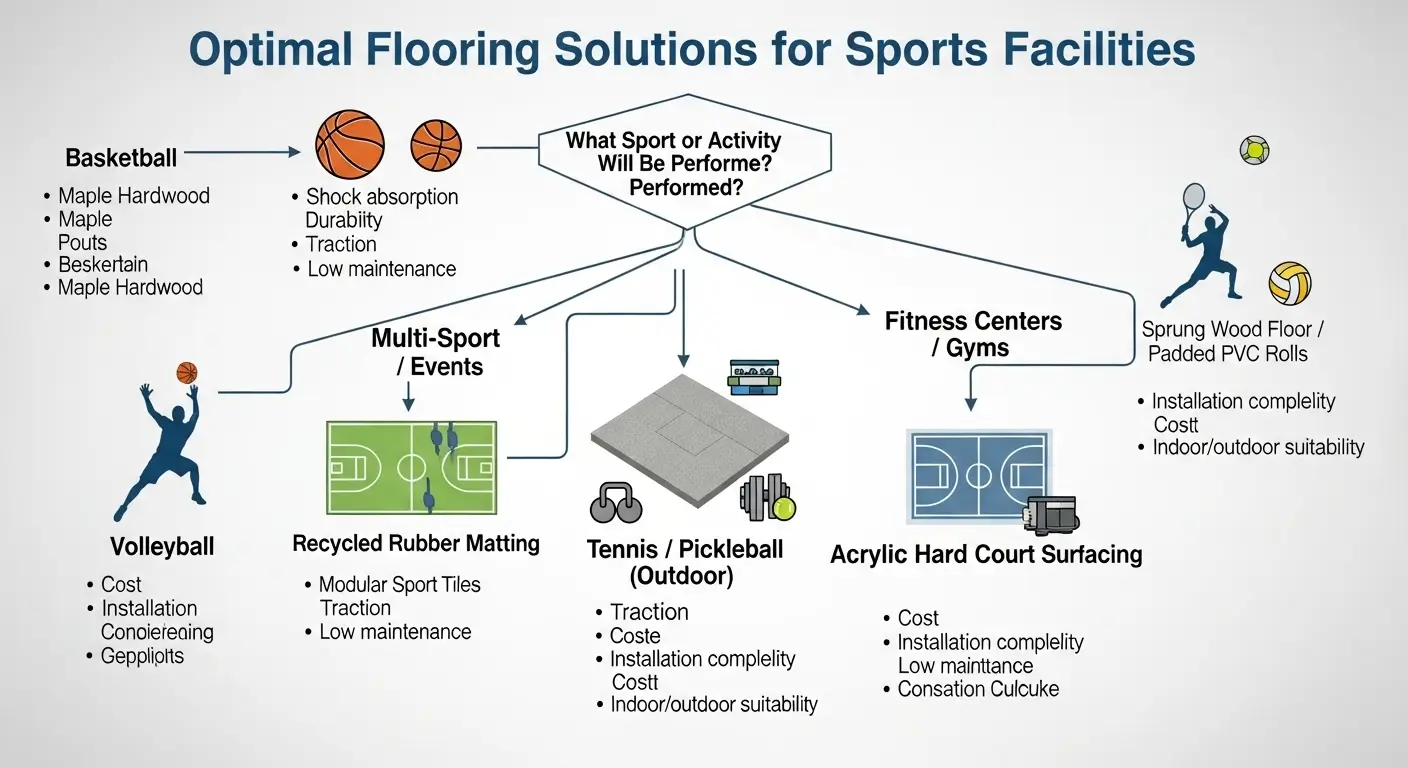
Choosing the right sports court flooring depends on various factors including the type of sport, the court’s location (indoor vs. outdoor), your budget, and maintenance considerations. Follow these tips to help guide your decision:
- Consider the Sport Played: Different sports have unique flooring requirements. For example, basketball courts typically require wooden floors, while tennis courts benefit from smooth outdoor tiles.
- Indoor vs. Outdoor: Indoor courts often use wood or vinyl flooring, while outdoor courts need durable, weather-resistant materials like modular tiles or rubber.
- Budget and Maintenance: Wooden floors are more expensive and require maintenance, while modular flooring tiles are more affordable and easier to maintain.
- Injury Prevention: For high-impact sports, such as basketball, choose flooring with good shock absorption to protect players’ joints.
- Aesthetic Preferences: Modular tiles and rubber flooring offer customizable colors and designs, while wooden flooring provides a classic, professional look.
When considering outdoor court flooring, it’s also crucial to take drainage into account. Proper drainage helps to protect your flooring investment by preventing water damage. Understanding the basics of outdoor surface drainage is important, as poor drainage can lead to costly repairs and shorten the lifespan of your court. A resource like the University of California’s guide offers essential tips for managing drainage around outdoor courts.
Coach’s Corner: From the Court
“In my experience, the ‘best’ flooring isn’t just about the budget—it’s about finding the right balance of lateral friction and vertical energy return.
My Tip: If you’re building a multi-sport space, prioritize a surface with consistent ‘slide control.’ A floor that is too grippy can lead to ankle rolls, but a floor that is too slick ruins your defensive reaction time. This balance is especially critical for high-intensity indoor games like competitive squash, where the wrong floor choice can lead to chronic knee strain during deep, explosive lunges.”
Understanding the Cost of Sports Court Floor
The cost of installing sports court flooring can vary widely depending on the materials used, the court’s location, and the level of professional installation required. Understanding the factors that influence pricing will help you make an informed decision and avoid unexpected expenses.
Key Cost Factors for Sports Court Flooring
- Material Type:
- Wooden Flooring: One of the most expensive options, especially for high-quality maple wood used in indoor courts.
- Modular Tiles: More affordable than wood, but costs can add up if you choose high-quality interlocking tiles.
- Rubber Flooring: Generally cost-effective, especially for multi-sport courts or gymnasiums.
- Vinyl and PVC Flooring: Budget-friendly, making it an attractive option for gymnasiums or temporary sports courts.
- Size of the Court:
The larger the court, the more materials you will need, which will increase the overall cost. Standard basketball courts are typically 28 by 15 meters (94 by 50 feet), but multi-sport courts can vary greatly in size depending on your needs. - Installation:
- DIY Installation: Modular sports court tiles, rubber flooring, and vinyl can often be installed by homeowners, reducing costs. If you’re handy, this can be a great way to save money.
- Professional Installation: For wood or custom courts, you’ll need professional installers, which can significantly raise the overall price. Professional installation ensures that the court is built to last and meets all the necessary specifications.
- Maintenance:
Flooring material impacts long-term costs. Wooden floors, for instance, require regular refinishing, while modular tiles are low-maintenance. Consider ongoing maintenance costs as part of your total budget.
Residential vs. Commercial Sports Courts: What’s the Difference?
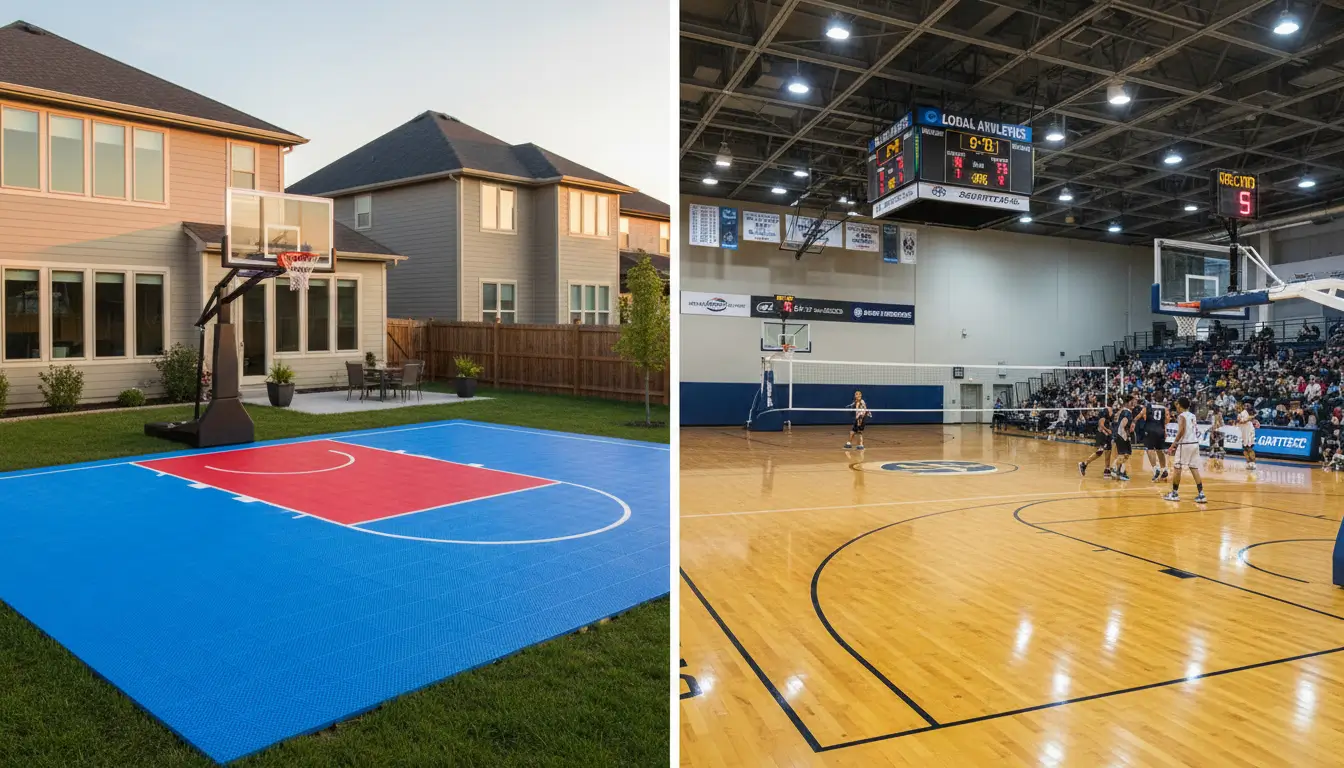
The type of flooring you choose can differ depending on whether you’re building a residential or commercial court. Each setting comes with its own set of requirements that impact the overall cost and material choice.
Residential Sports Courts:
- Residential courts are typically smaller in size, and the materials chosen often prioritize cost-effectiveness and easy installation.
- Recommended Flooring: Modular interlocking tiles, rubber flooring, or even vinyl floors are excellent choices for home use due to their affordability and ease of installation.
- Costs: A typical residential basketball court can cost between $3,000 and $10,000, depending on the flooring choice and size of the court.
Commercial Sports Courts:
- Commercial courts are larger and are used for more demanding applications. They need flooring that can handle high traffic, wear and tear, and various weather conditions (for outdoor courts).
- Recommended Flooring: High-quality wood, modular sports flooring, or outdoor plastic tiles are common choices for commercial use.
- Costs: Commercial installations can range from $10,000 to over $50,000, with premium options (like high-end wood) pushing the cost higher.
If you’re interested in learning more about the specific costs for both residential and commercial courts, you can explore this sports court cost breakdown to help understand your options and budget accordingly.
Modular tiles are the top choice for DIYers, but they require a ‘plane’ sub-base. Check your driveway surface for sport tiles for birdbaths and ruts before you start snapping tiles together.
DIY vs. Professional Installation: Which Is Right for You?
When it comes to installing sports court flooring, you have two main options: DIY installation or hiring professional installers. Each has its pros and cons, depending on your budget, time, and the complexity of the project.
- DIY Installation:
- Pros: Significant cost savings, more control over the project, and a rewarding hands-on experience.
- Cons: Requires time, effort, and some skill in flooring installation. Mistakes during installation can lead to problems down the line.
- DIY is especially suitable for modular tiles or rubber flooring, as these are relatively simple to install. Be sure to read the manufacturer’s instructions thoroughly to ensure a quality job.
- Professional Installation:
- Pros: Guaranteed results, less risk of errors, and professional knowledge to handle complex installations like wood flooring or specialized sports surfaces.
- Cons: Higher upfront costs for labor and expertise.
- Professional installation is generally recommended for hardwood floors, larger projects, or when precise alignment and durability are critical for the court’s use.
Cost Breakdown Recap: The overall cost of sports court flooring depends on factors such as material choice, court size, installation method, and maintenance needs. By evaluating these factors carefully, you can plan your budget and ensure you choose the best flooring for your court’s demands.
Maintenance and Longevity of Sports Court Flooring: Ensuring Long-Term Performance
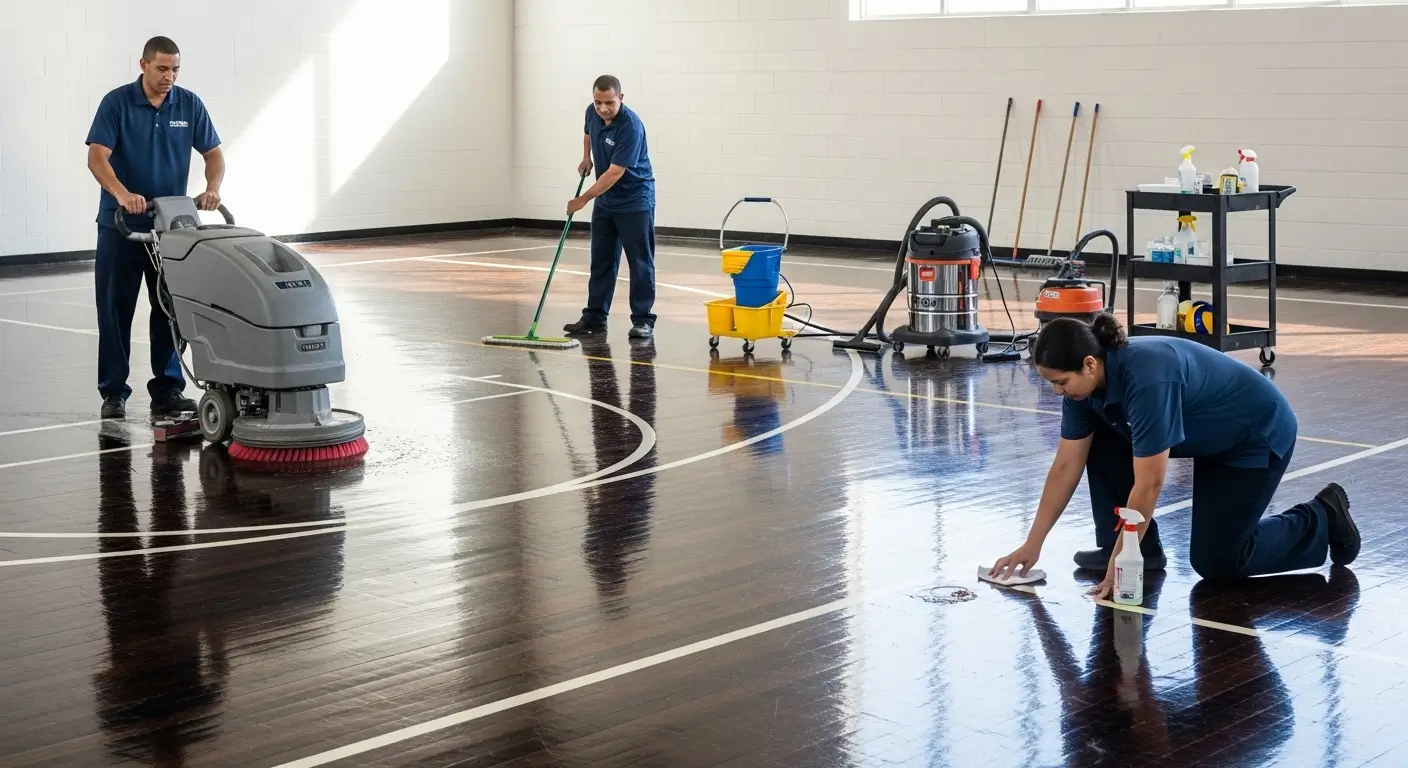
The longevity of your sports court flooring depends heavily on regular maintenance and the type of flooring material you choose. Each type of flooring has its own care requirements to ensure it remains in top condition, performing well for years.
1. Wooden Sports Court Flooring (Maple Wood)
Wooden floors, while offering superior aesthetics and performance, require ongoing care to maintain their quality and appearance.
- Regular Cleaning: Dust and dirt can cause scratches and dull the finish. Sweep regularly and mop with a damp cloth to avoid water damage.
- Refinishing: Wooden floors need to be refinished every 5-7 years to maintain their smoothness. This process involves sanding the floor and applying a fresh coat of finish to restore its look and protection.
- Humidity Control: Wood floors are sensitive to humidity and temperature changes. To prevent warping, try to keep indoor courts in a controlled environment with consistent temperature and moisture levels.
Lifespan: With proper care, wooden floors can last 20-30 years.
2. Modular Sports Court Flooring (Plastic and Rubber Tiles)
Modular tiles are low-maintenance and easy to replace if damaged, making them a great option for DIY projects.
- Routine Cleaning: Sweep debris regularly and use a mild soap solution to mop the surface. Be careful not to use excessive water that might seep under the tiles.
- Tile Replacement: If a tile becomes damaged or worn, it can be easily replaced without the need for removing the entire floor.
- Inspect for Shifting: Over time, tiles may shift or separate. It’s a good idea to periodically check the flooring and make sure the tiles are securely interlocked.
Lifespan: Modular tiles typically last 10-15 years, depending on usage and the quality of the tiles.
3. Rubber Sports Flooring
Rubber flooring requires minimal maintenance and is durable under heavy use.
- Sweeping and Mopping: Keep the surface clean by sweeping regularly to remove dirt and debris. Mop with a damp cloth and mild cleaner to maintain the appearance and prevent stains.
- Check for Damage: Over time, rubber can become discolored or damaged, especially if exposed to harsh chemicals. Replace damaged sections to prevent further deterioration.
Lifespan: With regular maintenance, rubber floors can last 15-20 years.
4. Vinyl and PVC Flooring
Vinyl and PVC floors are easy to maintain but should be cared for to avoid damage and wear.
- Cleaning: Sweep or vacuum the surface regularly to remove dirt. Mop with a mild vinyl-safe cleaner to keep the floor clean without damaging the finish.
- Protect from Heavy Furniture: If heavy equipment or furniture is placed on the flooring, ensure it’s properly supported to avoid leaving permanent marks or indentations.
Lifespan: Vinyl and PVC flooring typically lasts around 10-15 years with proper care.
5. Outdoor Sports Court Tiles (Plastic)
Outdoor flooring tiles need to withstand the elements, so maintenance is important to prevent mold growth and damage from the weather.
- Regular Cleaning: Sweep away dirt, leaves, and debris regularly. During wet conditions, rinse the tiles to prevent the growth of mold and mildew.
- Inspect for Damage: Check for cracks or shifts in the tiles, especially after extreme weather events. Replace damaged tiles immediately to prevent further issues.
Lifespan: Outdoor tiles can last anywhere from 10 to 20 years, depending on the material quality and exposure to weather.
Common Mistakes to Avoid in Sports Court Flooring Maintenance
Maintaining your sports court flooring is essential, but certain mistakes can compromise its lifespan and performance. Here are some common errors to avoid:
- Neglecting Regular Cleaning: Dirt and debris can cause damage to flooring over time. Regular cleaning is essential to prevent unnecessary wear and tear.
- Using Harsh Cleaning Chemicals: Some chemicals can strip the finish from wooden floors or damage rubber and vinyl surfaces. Always use cleaning products specifically designed for the type of flooring you have.
- Ignoring Minor Damage: A small crack or tile shift may seem insignificant, but if left unaddressed, it can lead to bigger issues down the line. Always repair or replace damaged sections immediately.
- Over-Wetting Wooden Floors: Excess moisture can warp and discolor wooden floors. Always clean with a damp (not wet) cloth to avoid water damage.
Expert Tips and Buyer Advice for Sports Court Flooring
- Plan for Long-Term Maintenance: Choose flooring that matches your maintenance preferences. For instance, if you prefer low-maintenance options, modular tiles or rubber may be ideal, while wood requires more effort but provides a premium aesthetic.
- Invest in Quality: Higher-quality materials like maple wood or premium rubber flooring tend to last longer, providing better value over time.
- Factor in Future Costs: Consider the total cost of ownership, including installation, maintenance, and potential repairs. Modular flooring might have a lower upfront cost but could require more frequent replacements compared to durable wood.
- Consult Experts for Professional Installation: If you’re unsure about which flooring is best or how to install it, consider consulting with professionals to ensure the job is done right the first time.
Conclusion
Choosing the right sports court flooring is crucial to ensuring both performance and longevity. Whether you opt for the premium look of wood, the flexibility of modular tiles, or the durability of rubber, understanding the maintenance needs and lifespan of each type will help you get the most out of your investment. Keep your court in top shape with regular care, and it will serve you well for many years to come.
Get the Facts: Frequently Asked Questions on Sports Court Flooring!
How often do I need to refinish wooden sports court flooring?
Wooden courts should be refinished every 5-7 years, depending on the amount of use they receive. Regular cleaning and refinishing help extend the life of the floor.
What’s the best flooring for an outdoor basketball court?
Outdoor courts often benefit from durable plastic or rubber flooring. These materials can withstand the elements and provide good traction.
How long do modular sports court tiles last?
Modular tiles typically last 10-15 years, depending on the quality of the tiles and how often they’re used.
Is rubber flooring suitable for indoor sports?
Yes, rubber flooring provides excellent cushioning and is great for a variety of indoor sports, offering both comfort and durability.
Can I install sports court flooring myself?
Yes, modular flooring and rubber tiles are ideal for DIY installation. However, for more complex flooring types like wood, it’s best to hire professionals.