
 By Ghulam Mustafa Khan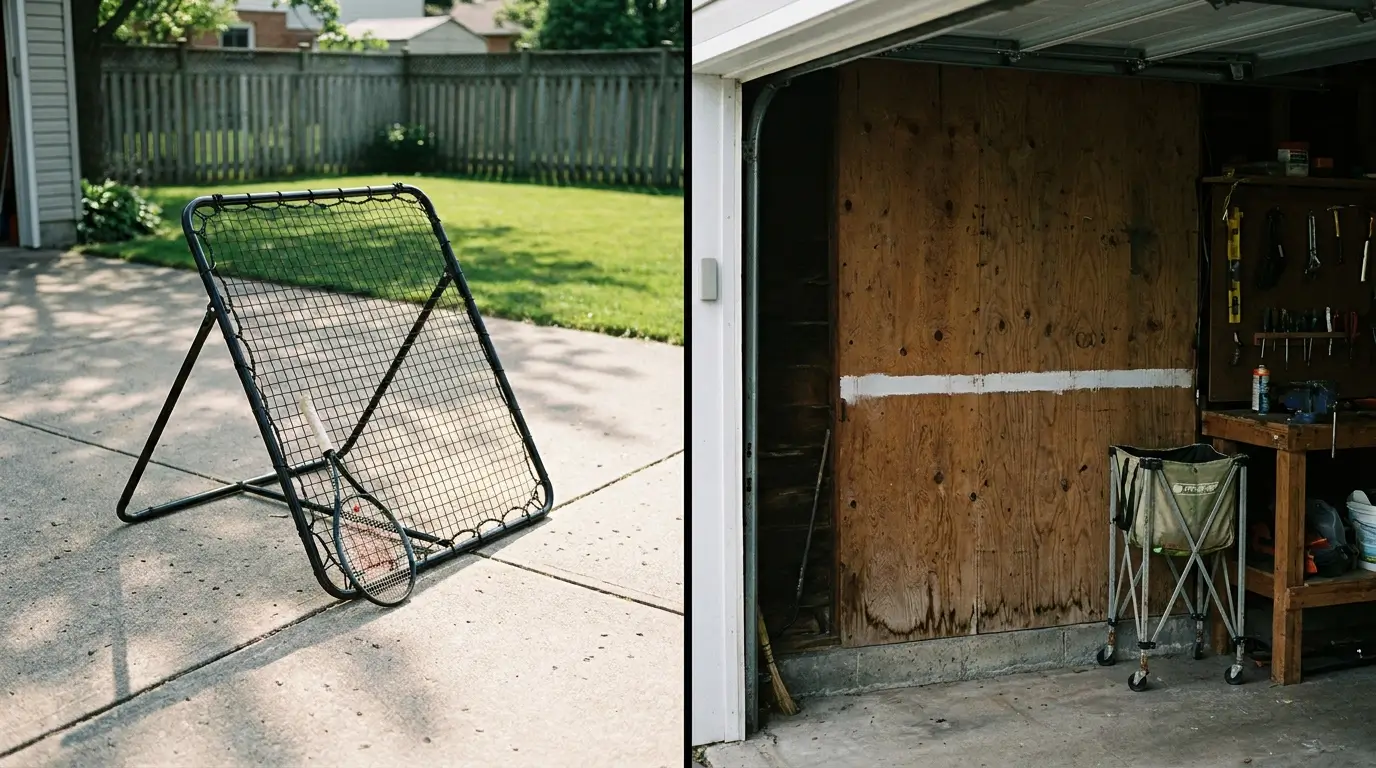
Practicing tennis alone is frustrating. You want to drill your topspin backhand, but finding a reliable hitting partner on short notice is nearly impossible. Public courts are packed with pickleball players. Renting a ball machine costs a fortune. This leaves you with the most reliable training partner in the sport. A solid wall.
When you decide to take solo training seriously, you face a major decision. You have to choose between two real solutions. You can set up an outdoor tennis rebounder, or you can build an indoor practice wall. Most players guess which one fits their game and end up wasting their money. To prevent that, you need a detailed outdoor tennis rebounder comparison. Which one actually wins? Let us break down the physics, the costs, and the training benefits.
What Is a Tennis Rebounder or Practice Wall?
A tennis rebounder is a freestanding frame strung with a high tension net or elastic cords. It acts like a vertical trampoline for tennis balls. You hit the ball into the net, and the tension shoots it back toward you.
An indoor practice wall is exactly what it sounds like. It is a solid, vertical surface built from thick wood or plywood, usually set up in a garage or an unfinished basement.
Many players buy the wrong tennis solo practice equipment because they do not understand the physics of a rebounding ball. A net rebounder forces you to react quickly because the ball returns fast and slightly upward. A solid wall gives you a more traditional hard court bounce, provided you hit it hard enough. You use a rebounder to improve reaction time and volley reflexes. You use a solid wall to groove heavy baseline groundstrokes.
Why Solo Tennis Practice Matters
Hitting with a partner is fun, but it is not always efficient. Casual play involves too much time picking up balls at the fence and reacting to erratic, unforced errors. Solo tennis practice removes the unpredictable variables.
You build muscle memory through pure, uninterrupted repetition. Striking 200 forehands against a flat surface in 30 minutes does more for your stroke mechanics than playing a two hour match. It forces consistency. You cannot cheat your footwork when the ball comes back at the exact pace you hit it. The wall never misses, it never complains, and it never gets tired.
Outdoor vs Indoor Tennis Practice Quick Comparison
To make the best decision for your home setup, you need to compare the raw data.
| Feature | Outdoor Rebounder | Indoor Practice Wall |
| Space Required | Large backyard or long driveway | Empty garage bay or basement wall |
| Cost | Medium to High | Low to Medium |
| Weather Dependency | Extremely High | Zero |
| Ball Realism | Fast and springy | True to court bounce |
| Noise Level | Low (Soft thud) | Extremely High (Loud boom) |
| Skill Target | Reflexes, volleys, footwork speed | Heavy groundstrokes, serve toss |
Outdoor Tennis Rebounder Pros & Cons
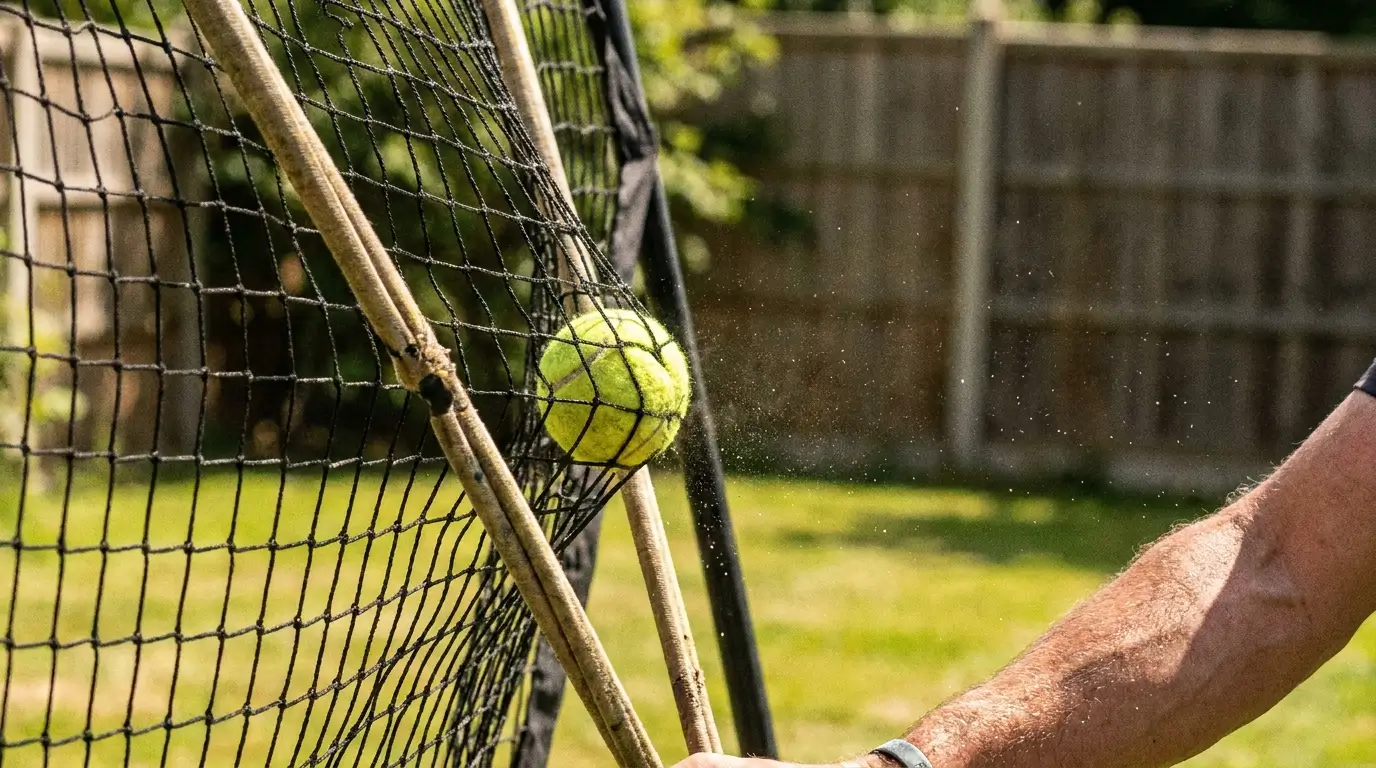
Practicing outside gives you the physical freedom to take a full, aggressive swing. You can track the ball against natural sunlight, and you have the physical room to step back behind the baseline. A backyard tennis rebounder lets you hit high, looping defensive shots without worrying about crashing into a garage ceiling.
The primary advantage is mobility. You can move a net based rebounder around your driveway or roll it into the grass. The main disadvantage is the weather. Rain, snow, and heavy wind will shut down your practice session immediately. Setup cost can also climb rapidly if you buy a premium metal frame.
If you want to create a custom setup outside that survives the elements, you need to know exactly how to build your own tennis rebounder using weather resistant materials.
Indoor Practice Wall Pros & Cons
The indoor wall removes the weather from the equation entirely. You can drill your backhand slice at midnight during a thunderstorm. This is the ultimate setup for dedicated players who refuse to miss a scheduled training day.
However, space constraints will limit your shot variation. You cannot hit a high defensive lob inside a standard garage with a nine foot ceiling. Noise is the other massive issue. Hitting a tennis ball against a sheet of plywood creates a loud, echoing boom that will travel through the framing of your house.
If you have the space and want a permanent, weatherproof setup, you can easily practice tennis indoors in your garage with a few sheets of thick wood and some heavy acoustic soundproofing material.
Key Differences Explained
To determine which setup improves your game, you have to look past the surface level features and analyze how these tools actually function.
Space Requirements
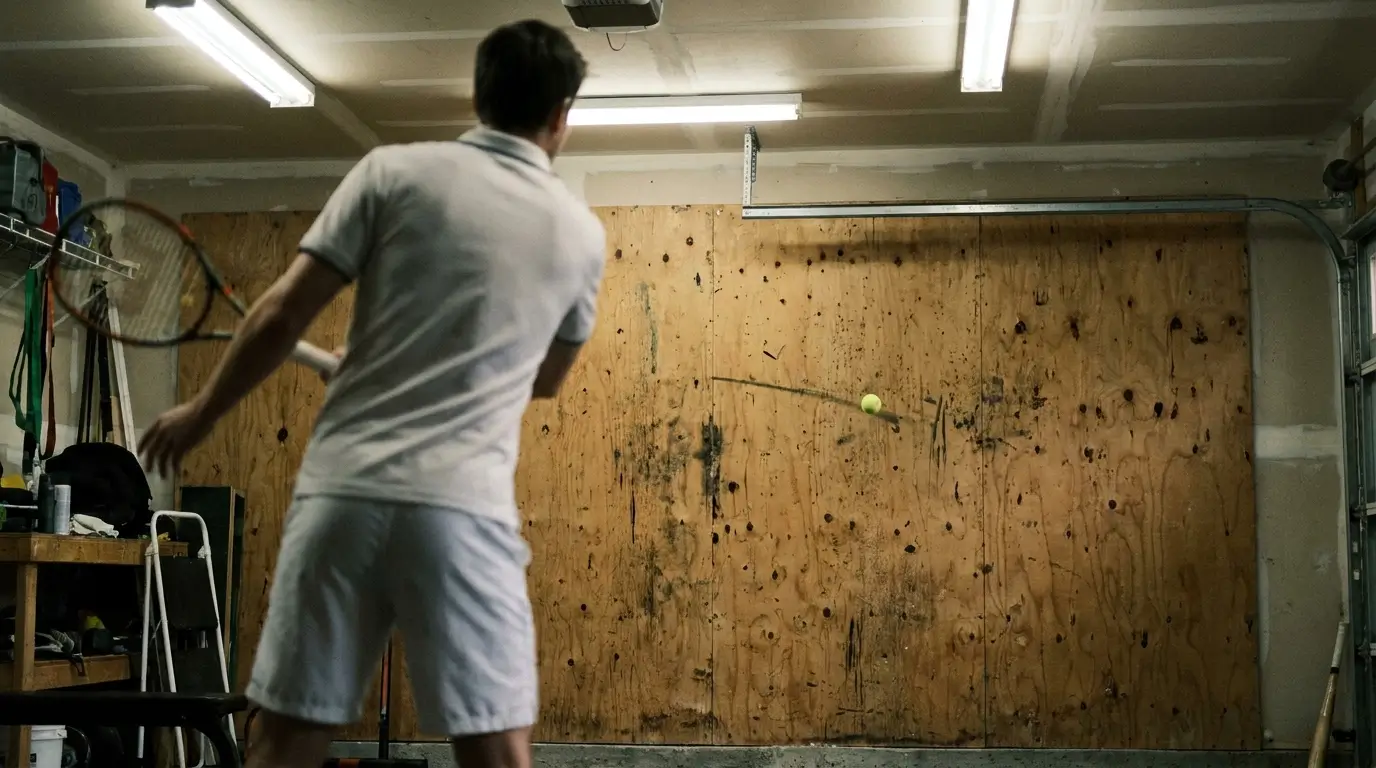
Outdoor rebounders require a large physical footprint. You need at least 20 feet of depth to practice full groundstrokes comfortably. If you place a rebounder on a short driveway, the ball will shoot back past you before you can complete your backswing. Indoor walls demand less depth because the ball loses energy upon impact, but they require total clearance of fragile items. You cannot park a car next to your indoor hitting zone without risking a broken windshield.
Weather Resistance
An indoor tennis practice wall wins this category by default. Outdoor rebounders feature painted metal frames that will eventually rust and elastic bungee cords that will dry rot in the direct sun. You have to replace the tension cords on an outdoor net every few years to maintain a consistent bounce. Indoor walls require zero maintenance once the wood is properly secured.
Cost Breakdown
A DIY tennis rebounder built from wood for your garage is the cheapest tennis practice setup available. You can construct a solid, reliable wall for under $150 using hardware store lumber. Commercial outdoor rebounders start around $200, and premium adjustable models easily exceed $800.
Ball Response & Realism
Most players get this wrong. A net rebounder does not simulate a real tennis court bounce. The elastic net absorbs the ball and shoots it back with spring tension. This makes the ball come back faster and flatter than a normal shot. A solid wood wall provides a true hard court bounce. The International Tennis Federation (ITF) maintains strict standards for ball pace on different surfaces, and a rigid wooden wall best mimics the physical energy return of a fast hard court. If you want realistic timing, you need a solid wall.
Noise Levels
Net rebounders are quiet. The elastic mesh absorbs the impact and produces a soft thud. Plywood walls are violently loud. If you live in an apartment, a townhome, or have neighbors living ten feet away, an indoor wood wall will generate immediate noise complaints.
Skill Development Potential
Outdoor rebounders excel at sharpening your net game. The fast, springy return forces you to keep your racket up and shortens your reaction time for volleys. Indoor walls are vastly superior for grooving heavy topspin groundstrokes. The solid wood allows you to hit the ball with maximum power, and the true bounce forces you to perfect your split step timing.
Which One Should You Choose?
Your decision depends entirely on your living situation, your budget, and your specific tennis goals.
If you have a large backyard and understanding neighbors, the outdoor rebounder wins. It gives you the space to run, track the ball in the air, and hit full aggressive strokes without feeling confined.
If you live in an apartment, neither option is ideal. However, a small indoor rebounder net is your only chance to practice volleys quietly without damaging the drywall.
If you are on a strict budget and have an empty garage bay, the indoor wood wall is your best option. It costs very little to build and provides a highly realistic bounce for baseline training.
If you are a serious competitive player, you want a heavy solid wall. The true bounce allows you to develop the heavy, penetrating groundstrokes required to win sanctioned matches. According to player development research from the United States Tennis Association (USTA), mastering the timing of the split step is critical for advanced play. A solid wall forces you to time that step perfectly.
Final Verdict
The ultimate winner of the outdoor tennis rebounder vs wall debate comes down to space and weather predictability. An indoor practice wall offers the most realistic baseline training and complete immunity to rain. It is the best pure training tool for building stroke mechanics from the ground up.
But if you lack garage space or cannot handle the extreme noise of a solid wall, an outdoor rebounder is an excellent alternative for reflex training and cardiovascular conditioning. Pick the system that actually fits your home, commit to the daily repetitions, and watch your match results transform.
Frequently Asked Questions
Can you use a tennis rebounder indoors?
Yes. You can set up a net rebounder indoors if you have enough ceiling clearance. Net rebounders are much quieter than solid wood walls, making them a much better option for shared living spaces or basement setups.
Is a tennis wall better than a rebounder?
A solid wall provides a much more realistic bounce for baseline groundstrokes. A rebounder net is better for fast paced volley drills and reaction training because it returns the ball with spring tension.
What is the cheapest tennis practice setup?
Building a solid wood practice wall against an existing garage structure is the most affordable route. Plywood and framing studs cost significantly less than purchasing a commercial rebounder net.
Is indoor practice effective for beginners?
Yes. Indoor practice removes environmental distractions like wind and sun glare. It allows beginners to focus purely on their contact point and swing mechanics without having to chase tennis balls across a massive public court.