
 By Ghulam Mustafa Khan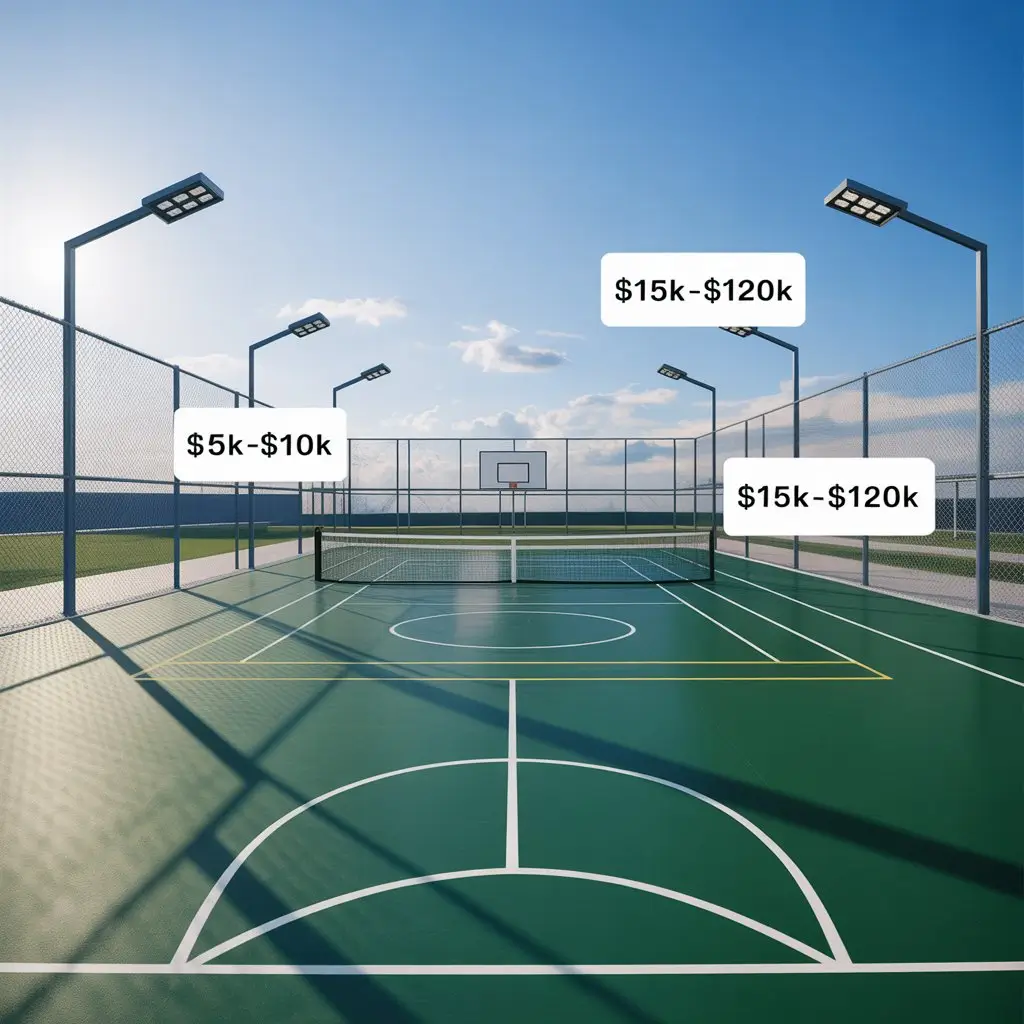
A sport court is a custom-built, all-weather surface designed for recreational or competitive sports. These courts are used for basketball, tennis, pickleball, futsal, volleyball, and more. They can be installed indoors or outdoors.
Sport courts are typically built by:
- Homeowners for backyard play
- Schools and universities are upgrading athletic programs
- Municipalities and recreation centers
- Churches, athletic clubs, and private gyms
ASBA provides technical guidelines for sport court layout, base preparation, and surfacing systems used in residential and commercial projects.
Why Are Multi-Sport Game Courts Gaining Popularity?
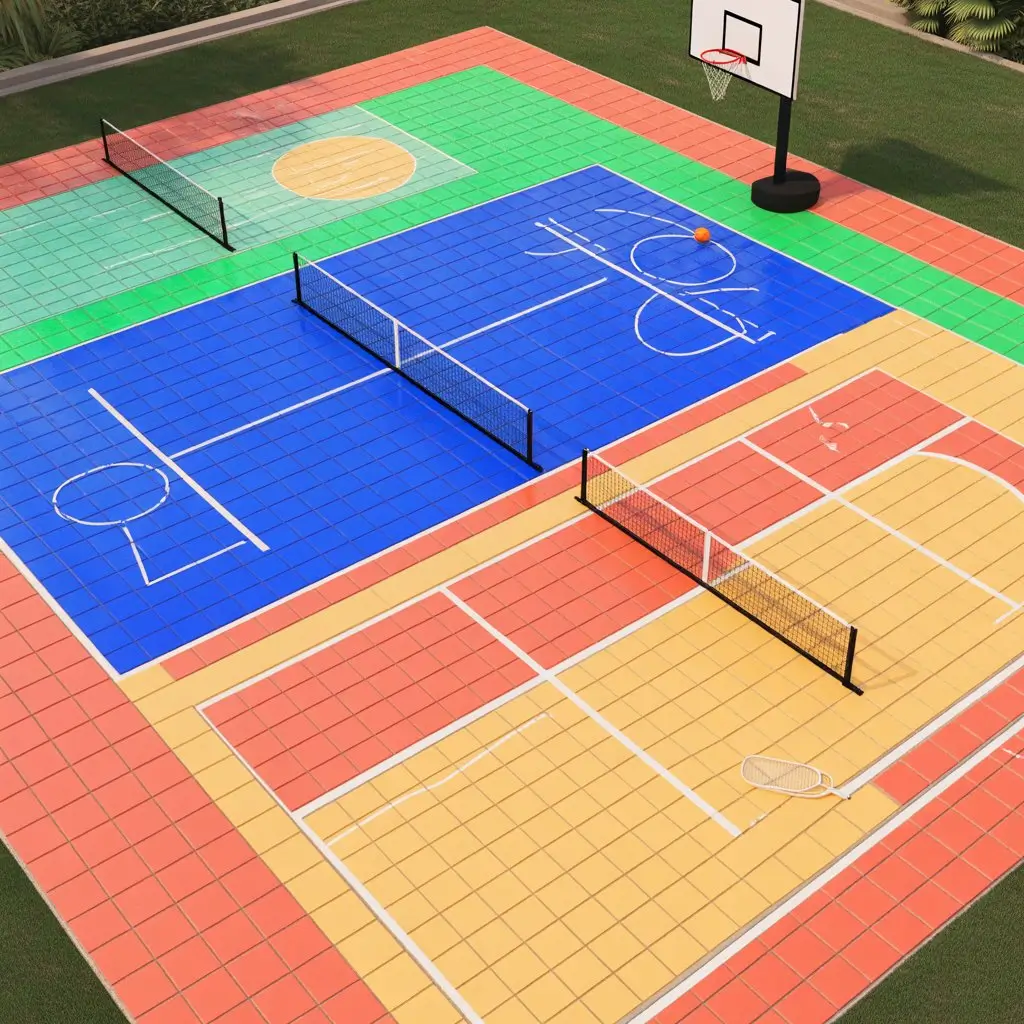
Multi-sport courts are efficient, space-saving, and versatile. They appeal to both families and facilities because they:
- Support multiple sports with shared court lines
- Require less maintenance than natural turf
- Improve long-term property usability
- Offer safer surfaces for children and athletes
Participation in sports like basketball, pickleball, and futsal is driving the demand for home- and facility-based courts. For a deeper look at which court sports offer the most cardiovascular and age-specific health benefits, explore our sport-by-sport analysis. According to SFIA, participation in court-based sports has seen consistent growth.
How Much Does It Cost to Build a Sport Court?
General Price Range
The cost to build a sports court ranges from 15,000 to 120,000 USD or more. Key cost factors include:
Don’t let your budget be blindsided by groundwork. Accurate driveway surface prep for sport tiles can account for 10-15% of your total cost, but skipping it will lead to a complete surface failure within two years.
- Indoor or outdoor construction
- Court size and sport configuration
- Surface and base material
- Add-ons such as lighting, fencing, and accessories
Estimated Cost by Court Type
| Court Type | Estimated Cost | Common Use |
| Backyard Court | 15,000 to 45,000 USD | Private recreational use |
| Indoor Court | 35,000 to 90,000 USD | Gyms, homes, fitness centers |
| Commercial Court | 50,000 to 120,000 USD+ | Schools, parks, facilities |
Detailed cost breakdowns are available from HomeGuide and Angi.
Coach’s Corner: From the Court
“In my experience working with high-performance athletes, the ‘playability gap’ between a budget build and a commercial-grade court is found in the sub-base consistency.
My Tip: If you are building a home court for serious training, prioritize the sub-base over aesthetic upgrades; a professional-grade bounce is the only way to ensure the muscle memory you develop at home translates perfectly to a competitive tournament environment.”
What Is the Cost Per Square Foot?
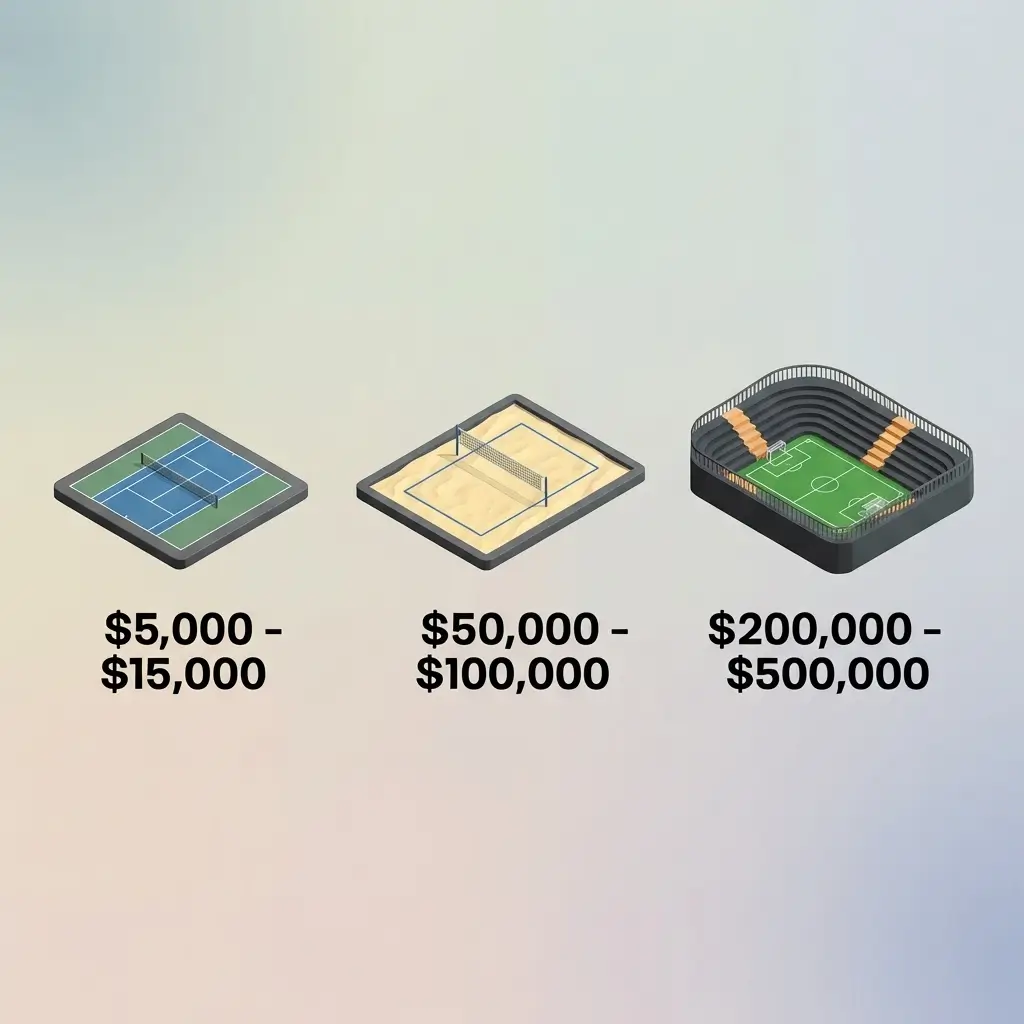
The cost of a sports court per square foot typically ranges from $4 to $17.
| Court Size | Area (sq ft) | Cost Estimate |
| 30 x 30 ft (Basketball) | 900 sq ft | 3,600 to 15,300 USD |
| 60 x 90 ft (Multi-sport) | 5,400 sq ft | 21,600 to 91,800 USD |
Factors That Influence Cost
- Surface type: acrylic or modular tiles
- Base options: asphalt, concrete, or panels
- Terrain, slope, and drainage needs
- Labor rates and access challenges
- Extra features like lighting or nets
The National Association of Home Builders notes that regional labor can increase total project costs by up to 30 percent (NAHB).
Indoor vs. Outdoor Sport Court Cost
Outdoor Sport Court
- Cost: 15,000 to 45,000 USD
- Materials: acrylic coating or outdoor sport tiles
- Requires grading, drainage, and weather resistance
Indoor Sport Court
- Cost: 35,000 to 90,000 USD+
- Materials: maple hardwood or indoor tiles
- Requires HVAC, insulation, and indoor lighting
Additional costs for indoor builds can include ventilation and professional striping. Maple Flooring Manufacturers Association outlines indoor sports court flooring standards.
Residential vs. Commercial Sport Court Costs
| Feature | Residential | Commercial |
| Court Size | 500 to 2,500 sq ft | 4,000 to 15,000+ sq ft |
| Permitting | HOA or local permits | ADA, zoning, engineering |
| Engineering | Optional | Often required |
| Estimated Cost Range | 15,000 to 60,000 USD | 50,000 to 120,000 USD+ |
ADA compliance and public accessibility rules for commercial courts are explained at ADA.gov.
Sport Court vs. DIY Court vs. Portable Hoops
When budgeting for a backyard sports setup, you have three distinct paths. Understanding the massive price and performance gap between these options will stop you from throwing money at a solution that doesn’t fit your family’s actual needs.
Permanent Sport Court ($15,000 – $50,000): This is a professional-grade, permanent fixture. It requires heavy machinery for a concrete base and utilizes shock-absorbing modular tiles or premium acrylics. It provides a true multi-sport environment, protects athletes’ joints, and lasts for decades.
DIY Court Build ($3,000 – $8,000): If you already have a perfectly flat, crack-free driveway or concrete patio, you can purchase interlocking sport tiles and install them yourself over a weekend. You save heavily on installation and concrete pouring, but you are strictly limited by the size and slope of your existing slab.
Portable Hoops & Nets ($300 – $1,500): The ultimate budget option involves buying a high-quality portable unit for your bare driveway. While cheap, this setup lacks shock absorption, exposes your knees to harsh concrete impacts, and leaves your equipment vulnerable to tipping during severe weather unless you use proven methods to secure your portable hoop against high winds.
What Is a Good Size for a Multi-Sport Court?
| Sport | Minimum Size (ft) |
| Half-Court Basketball | 30 x 30 |
| Full-Court Basketball | 50 x 84 |
| Pickleball | 20 x 44 |
| Futsal | 60 x 90 |
| Tennis | 36 x 78 |
| Combo Multi-Sport | 30 x 60 to 60 x 90 |
Court layout recommendations are also available from the USTA Facility Services Guide.
Base Options and Site Preparation
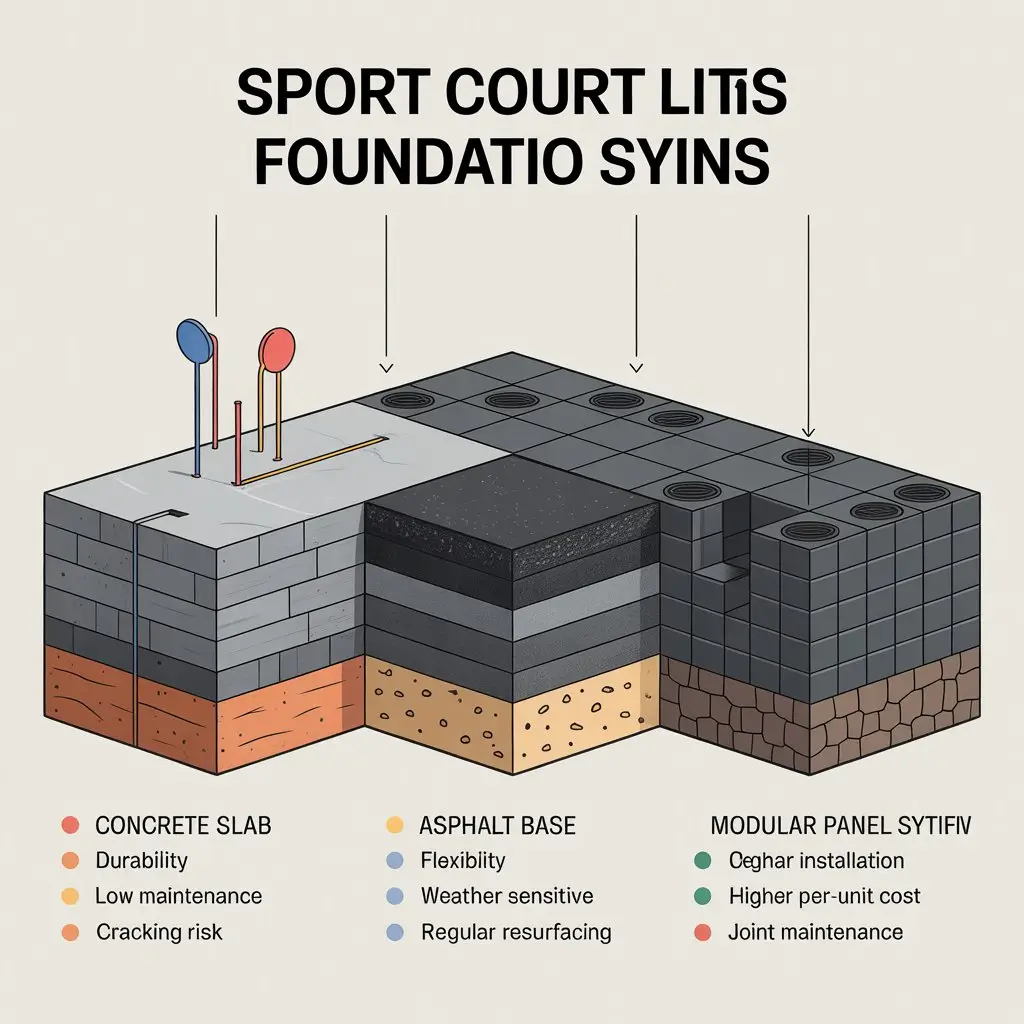
| Base Type | Cost per Sq Ft | Pros | Cons |
| Concrete | 4 to 8 USD | Stable and long-lasting | Higher material cost |
| Asphalt | 3 to 6 USD | Cost-effective | Prone to cracking |
| Modular Panels | 8 to 15 USD | Portable and reusable | Not permanent |
Site Preparation Steps
- Clearing and grading land
- Installing slope or trench drainage
- Compacting sub-base
- Pouring concrete or asphalt
- Applying surface coating or tile
Many municipalities and facility planners reference the American Sports Builders Association (ASBA) guidelines when evaluating sport court sitework, drainage design, and base construction methods.
Surface Materials and Brand Options
Acrylic Surfacing
- Cost: 1.50 to 4.00 USD per sq ft
- Best for: tennis, outdoor basketball
- Pros: low maintenance
- Cons: less cushion and durability
Modular Sport Tiles
- Cost: 4.00 to 9.00 USD per sq ft
- Best for: indoor and outdoor multi-sport
- Pros: weatherproof and shock absorbent
- Cons: higher installation cost
Trusted Brands
| Brand | Features |
| Sport Court | ITF-certified tiles, UV-stable design |
| VersaCourt | Custom color options, water drainage |
| SnapSports | Athletic-grade impact resistance |
For more detailed performance specifications, surface system data, and installation documentation, visit each manufacturer’s official site. These brands are widely referenced in professional sports court design due to their engineering standards and sport-specific certifications:
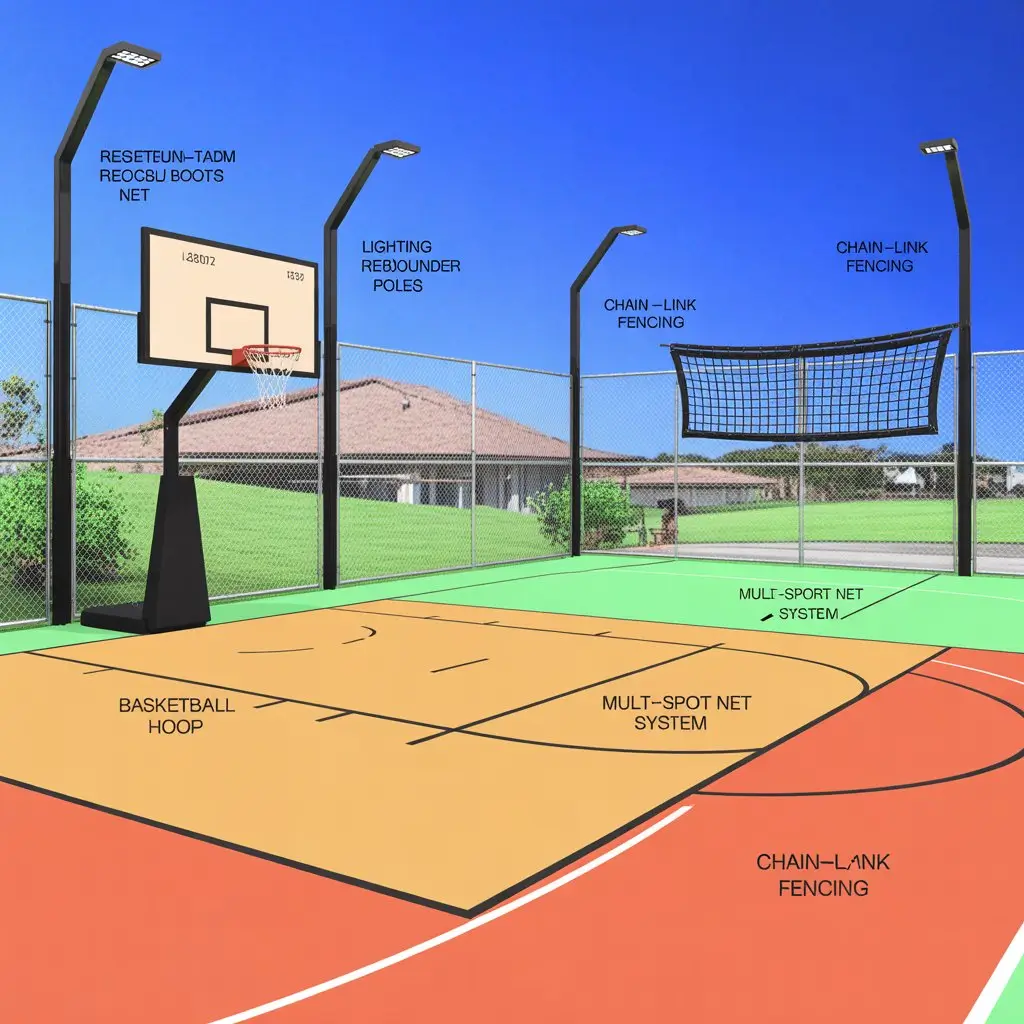
Add-Ons and Optional Equipment
| Feature | Average Cost | Purpose |
| Basketball Goals | 1,000 to 2,500 USD | Adjustable heights for all ages |
| Lighting | 2,000 to 8,000 USD | Night play and safety lighting |
| Rebounders | 500 to 2,000 USD | Solo practice and drills |
| Batting Cages | 3,000 to 7,000 USD | Baseball and softball training |
| Soccer/Futsal Goals | 500 to 1,500 USD | Portable or permanent goals |
| Multi-Sport Nets | 300 to 800 USD | Pickleball, volleyball, tennis |
| Chain-Link Fencing | 3,000 to 10,000 USD | Ball containment and perimeter |
Permitting, HOA Approvals, and Engineering Costs
What Are the Requirements?
- Permits are needed for concrete work, lighting poles, and fencing.
- HOA approvals may be necessary for backyard courts, especially in communities with design restrictions.
- Engineering documents may be required for drainage plans or large commercial builds.
| Item | Cost Range |
| Building Permit | 500 to 3,000 USD |
| Engineering Drawings | 1,000 to 5,000 USD |
| HOA Submissions | 0 to 500 USD |
To verify zoning rules, fence height restrictions, lighting allowances, or permit requirements in your area, consult your municipality’s legal code through the Municode Library of local ordinances.
Sport Court Total Cost Breakdown
| Cost Category | Estimated Range |
| Sitework and Grading | 2,000 to 10,000 USD |
| Base Installation | 3,000 to 20,000 USD |
| Surface Materials | 1,500 to 20,000 USD |
| Accessories and Equipment | 1,000 to 5,000 USD |
| Lighting | 2,000 to 8,000 USD |
| Fencing | 3,000 to 10,000 USD |
| Engineering and Permits | 1,000 to 8,000 USD |
| Labor | 5,000 to 25,000 USD |
Total Estimated Cost Range:
15,000 to 120,000 USD and higher, depending on complexity and features.
ROI: Does a Sport Court Increase Property Value?
Dropping $30,000 on a backyard court is not just a recreational expense; it is a permanent real estate upgrade. In the 2026 housing market, modern buyers are looking for “Lifestyle Performance Hubs.” A well-maintained multi-sport court is now considered a premium suburban amenity, often ranking alongside built-in outdoor kitchens or swimming pools.
Real estate data consistently shows that high-quality outdoor recreation spaces can increase a home’s resale value by 5% to 20% of the property’s total value. Homes with permanent sports fixtures also tend to sell significantly faster because they solve a lifestyle need for the buyer on day one.
The Catch: To maximize this ROI, the court must be professionally installed with proper drainage. A cracked, uneven concrete slab with pooling water creates “Negative Curb Appeal” and will be flagged by home inspectors. However, a pristine, professionally surfaced multi-sport plaza transforms your backyard into a major closing asset.
Summary of Sport Court Costs and Planning Considerations
Building a sports court involves a structured evaluation of space, surface type, base preparation, and long-term maintenance. Costs typically begin at 15,000 USD for compact residential courts and can reach beyond 120,000 USD for larger commercial installations with engineered features and regulatory compliance.
Planning begins with selecting the sports to be played, identifying the appropriate court size, and assessing the site conditions. Key decisions include the type of base material, such as concrete or asphalt, and the surface system, whether acrylic or modular tile. Accessories like fencing, net systems, lighting, and rebounders contribute to both function and cost.
It is recommended to work with licensed sport court builders who are familiar with local construction codes. Use official zoning databases to confirm what is permitted in your area. This preparation ensures the project is aligned with your goals, meets all legal requirements, and provides a durable surface for years of use.
Frequently Asked Questions
How much does a sport court cost? The total cost of a residential sport court typically ranges from $15,000 to $50,000. This price depends heavily on the court size, the surface material you choose (like premium tiles versus basic painted concrete), and how much site preparation your yard requires. Commercial courts generally range from $60,000 to $150,000.
What is the installation cost for a sport court? Professional installation labor generally costs between $5,000 and $15,000. This fee covers critical structural work, including land grading, pouring the concrete or asphalt base, and properly laying the top surface material and line markings.
What is the maintenance cost for a backyard court? Routine maintenance for a modular tile court is minimal, costing around $200 to $500 annually for basic power washing and minor repairs. If you have a painted asphalt or concrete court, you will need professional resurfacing every 4 to 5 years, which typically costs between $1,500 and $3,000.