
 By Ghulam Mustafa Khan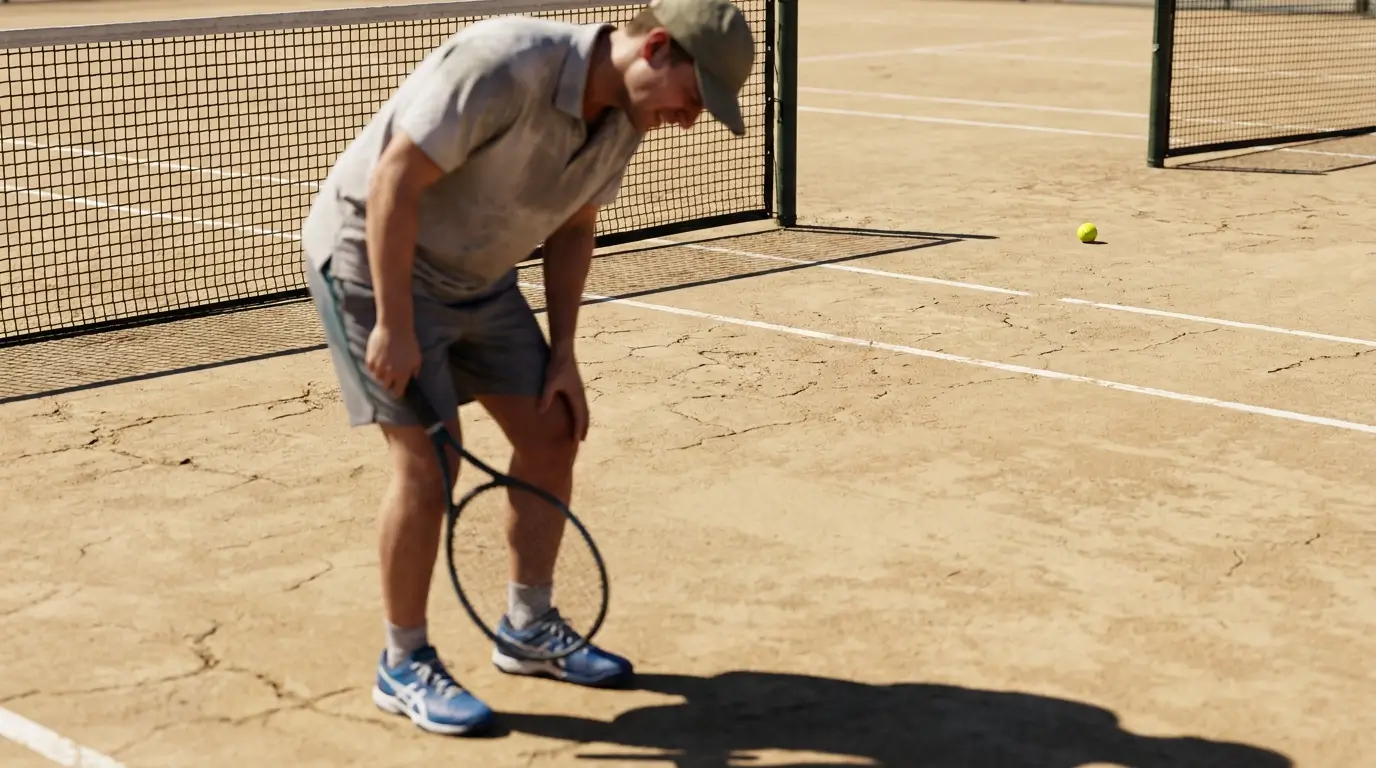
Look, stop staring at your shoes. You and I both know that last forehand was pure—your weight transfer was balanced, your shoulder rotation was on point, and you caught the ball right in the sweet spot. But look where it landed: three feet past the baseline. You’re already overthinking your hip timing and trying to guide the ball with a shorter swing, but you’re solving a problem that isn’t there. Your mechanics didn’t fail you; your equipment did. You aren’t losing your touch, you’re just hitting with a dead string bed that’s lost its “snap,” and no amount of technical adjustment is going to fix a racket that’s lost its ability to bite the ball.
You aren’t losing your technique; you’re losing the battle against physics.
When your mechanics are dialed in but the ball refuses to stay in the court, you are likely a victim of “dead” equipment. Players constantly ask, does restringing a tennis racket make a difference? The answer is the literal gap between hitting a clean, heavy winner and spraying unforced errors into the back fence. Figuring out exactly when to restring tennis racket setups is arguably the most misunderstood aspect of amateur tennis, and failing to diagnose it is the fastest way to derail your progress.
Dismantling the Biggest Myth in Tennis
For decades, pro shops have repeated a dangerously simple rule of thumb: Restring your racket as many times a year as you play in a week. If you play twice a week, you rest twice a year.
This is terrible advice. It completely ignores modern material science and the harsh reality of tennis racket string tension loss over time.
The fundamental flaw in amateur racket sports is believing that strings are perfectly fine until they snap. To protect your arm and your game, you must understand the critical difference between tennis strings dead vs broken. A broken string ends your practice session immediately; a dead string quietly ruins your arm health and corrupts your swing mechanics for months before it finally pops.
The Biomechanics of Elasticity and Tension
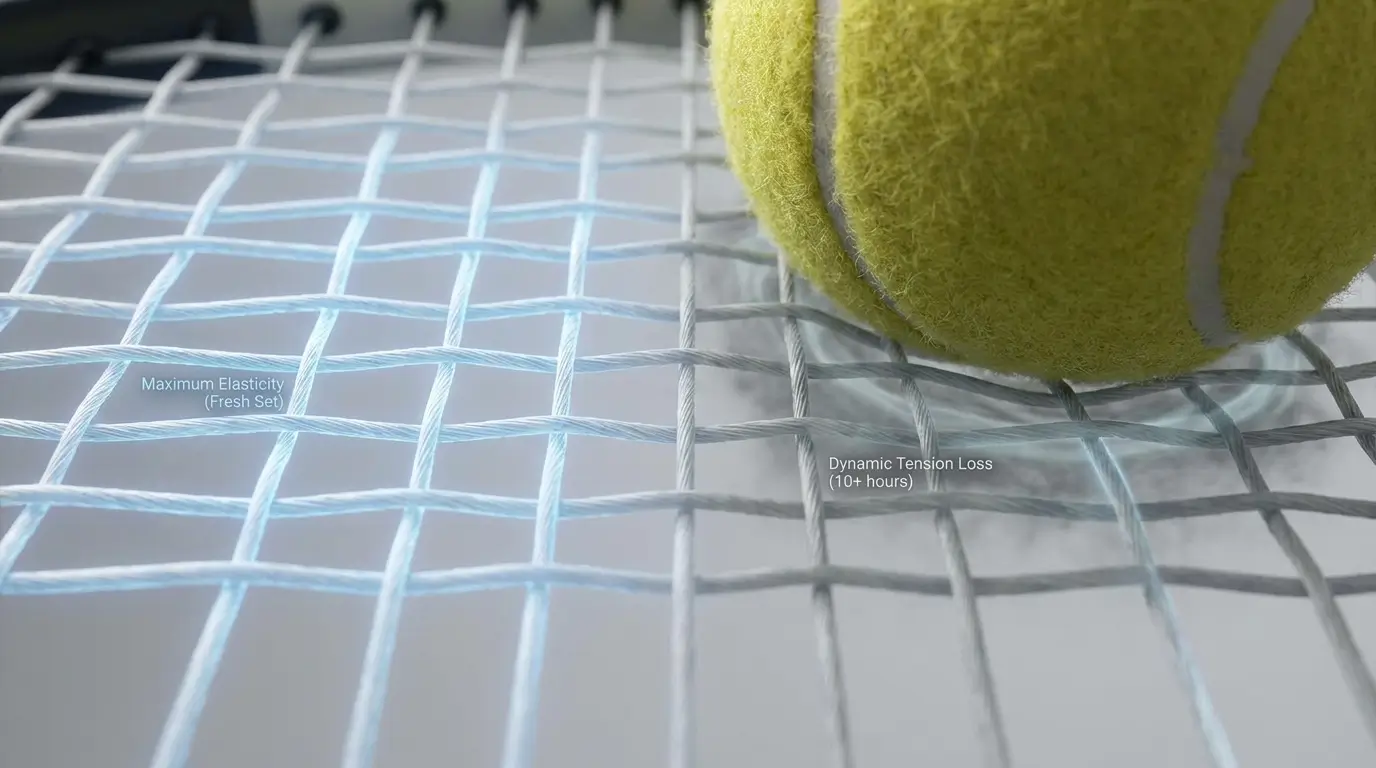
When a racket comes directly off the stringing machine, the material possesses maximum elasticity / snapback. This elasticity is the mechanical engine of your racket. It is what grabs the ball, generates heavy topspin, and allows you to dictate depth control.
However, from the exact second the machine clamps are released, the racket begins losing dynamic tension. Every time you strike a heavy 70 mph incoming ball, you stretch the chemical bonds of the string material. Once those bonds stretch past their physical limit, the string goes permanently “dead.” It loses its ability to snap back into its original position.
When this happens, you experience the dreaded trampolining effect. Because the strings have lost their structural integrity, the ball sinks deeply into a loose string bed and launches out completely unpredictably. You lose all directional control, forcing you to constantly second-guess your swing speed.
Expert Tip: According to master technicians at the United States Racquet Stringers Association (USRSA), a freshly strung racket can lose up to 10% of its tension within the first 24 hours, before you even hit a single ball. If you leave your racket sitting in a hot car trunk, that tension loss accelerates massively. Never judge a string job solely by the initial poundage (lbs/kg) you requested; judge it by the dynamic tension it actually holds two weeks later.
The Physical Toll: Kinetic Shock and Your Arm
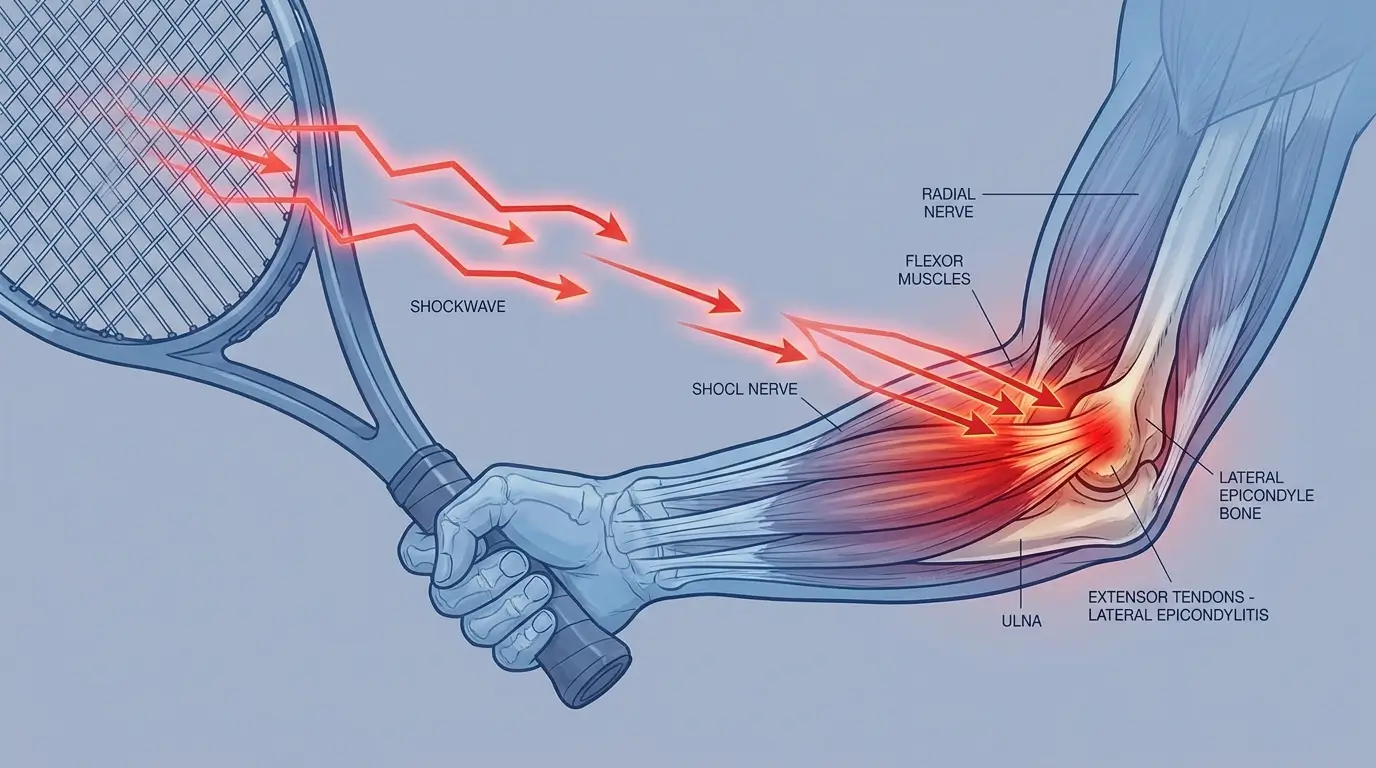
Playing with dead strings fundamentally alters your string bed stiffness. Instead of the strings absorbing the heavy impact of the ball, that violent kinetic shock transfers directly down the shaft of the racket, straight through your grip, and into your arm.
This harsh impact transfer is the primary disruptor of your body’s kinetic chain. If you are experiencing sudden, sharp pain on the outside of your elbow—clinically known as lateral epicondylitis (tennis elbow)—your dead strings are highly likely to blame. While ensuring your hardware is fitted correctly by checking your tennis elbow grip size is a mandatory first step, combining the wrong grip with dead, rigid strings is a guaranteed prescription for chronic tendon injury.

From the Coach’s Perspective
When I watch a student play with dead strings, I don’t just see balls flying long; I see their entire swing mechanics deteriorating in real-time. Because the strings no longer generate natural power or spin, the player starts artificially “arming” the ball, gripping the handle tighter and muscling through the swing. This desperate attempt to control the ball’s depth completely ruins their fluid stroke production and timing. By the time they finally decide to cut those dead strings out, their muscle memory is thoroughly corrupted. Knowing when to restring tennis racket frames isn’t just a maintenance chore; it is a mechanical reset that forces you to trust your natural swing rather than constantly fighting your equipment.
Diagnosing the Decay: Signs You Need to Restring Your Tennis Racket
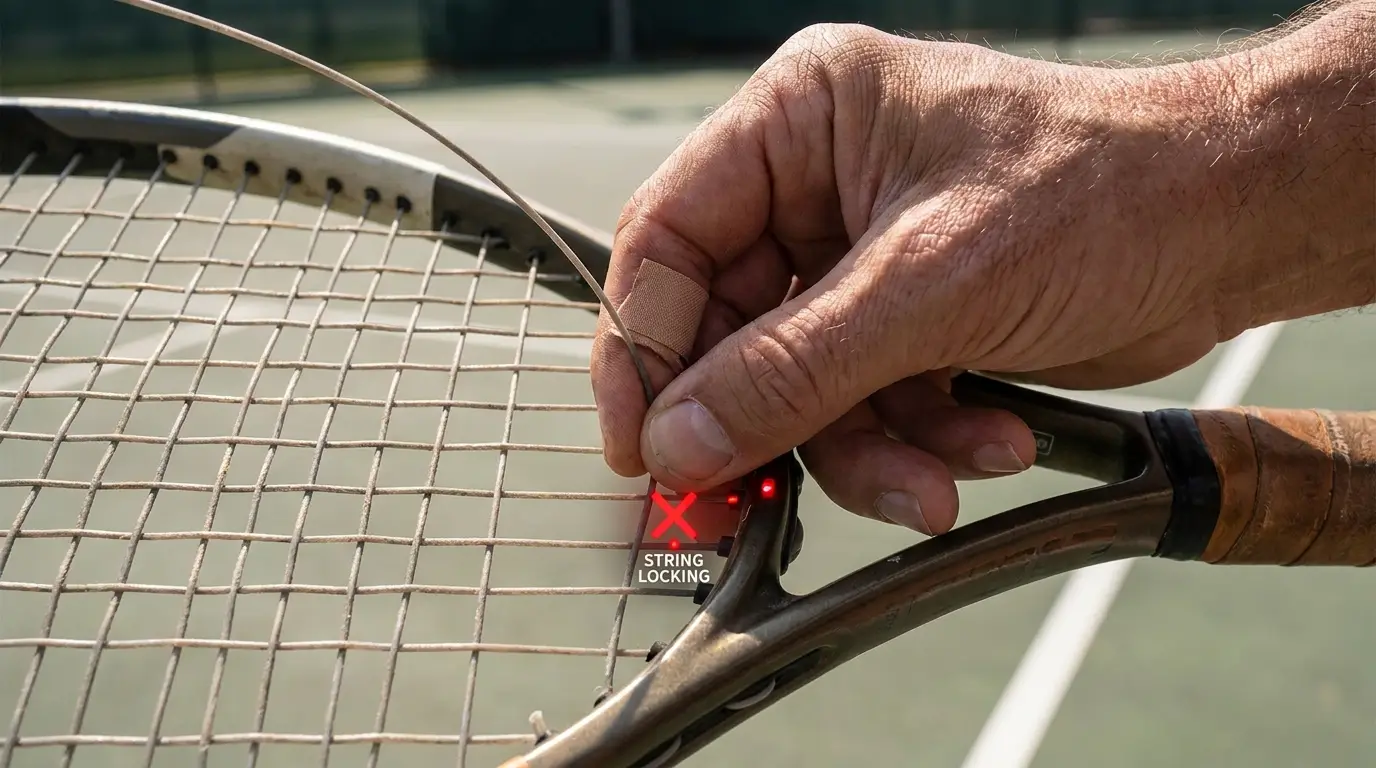
Identifying a dead string bed before it ruins your elbow or your scorecard requires a sharp eye for material fatigue. Most recreational players wait for a catastrophic failure, but as a coach, I look for the subtle signs you need to restring your tennis racket long before the snap.
The most obvious visual indicator is notching. If you look at the intersections where the “mains” (vertical strings) cross the “crosses” (horizontal strings), you’ll see small grooves worn into the material. As these notches deepen, the strings lose their ability to move. This results in string movement / locking, where the strings get stuck out of place. Once the strings stop sliding and snapping back, your topspin production vanishes, leaving you with a flat, uncontrollable ball that feels more like a board than a precision tool.
Another red flag is the acoustic shift. A fresh string bed has a crisp, high-pitched “ping.” As the dynamic tension drops, that sound transforms into a dull, hollow “thud.” This change in acoustics signals that the elasticity / snapback has been replaced by a “dead” response, indicating that the chemical bonds within the material have reached their fatigue limit.
The Gauge Dilemma: Balancing Bite and Durability
A common mistake players make is choosing a string based solely on a pro’s recommendation without considering their own restringing budget. To extend the life of your setup, you must select a gauge thickness that actually matches your high-impact playing style. While thinner strings (17g or 18g) offer incredible feel and an aggressive “bite” on the ball, they are structurally prone to notching and lose their dynamic tension significantly faster.
If you find yourself heading to the stringer every week due to premature breakage or a “mushy” feel, moving to a thicker 16g string is a mandatory adjustment to stabilize your tension for those extra sessions. This isn’t just about saving money; it’s about maintaining a consistent response so you don’t over-swing to compensate for a dying string bed. For a deeper look at how the wrong gear setup can lead to long-term physical setbacks, the Mayo Clinic’s guide on preventing tennis elbow provides a critical perspective on the intersection of equipment and anatomy.
Material Lifespans: How Often to Change Poly Tennis Strings
Not all strings are created equal. The material you choose dictates how frequently you need to visit the stringer.
Polyester Strings (Co-poly): The Performance Trap
Polyester is the choice for big hitters because it provides incredible control and spin. However, poly is a “stiff” material that loses tension faster than any other string type. If you are wondering how often to change poly tennis strings, the answer is usually between 10 and 15 hours of play. Beyond that point, the string hasn’t broken, but it has gone “stiff-dead.” It becomes a rigid board that no longer absorbs impact, making it the #1 culprit for lateral epicondylitis (tennis elbow) among club players.
Multifilament / Natural Gut: The Gradual Fade
These strings excel at vibration dampening and tension maintenance. You know it’s time to restring these when you see excessive fraying—the fibers will start to look like a fuzzy sweater. Unlike poly, which dies quietly, multifilament strings usually tell you they are finished by physically falling apart.
The Shelf Life: How Long Do Tennis Strings Last if Not Used?
A common question I get from players returning from a long break is: how long do tennis strings last if not used? Even if your racket has been sitting in a garage sports storage bin for six months, the strings are likely dead. Because strings are under constant high-tension stress (usually 50–60 lbs), they are perpetually “pulling” against themselves. Over time, the plastic polymers undergo “creep,” a permanent deformation that kills the string bed stiffness. If your racket has been sitting unplayed for more than three months, cut the strings out.
The Snapback Reality: Your Locked Strings are Playing for the Other Team
When a player tells me they haven’t restrung in a year because the strings “look fine,” I immediately have them perform a diagnostic “snap test” right there on the court. Try to move the center main strings with your fingers; if they stay stuck in that new position instead of snapping back instantly with a sharp “click,” your strings are officially locked. Playing with locked strings is mechanically identical to playing with a flat wooden board—you have completely neutralized the physics required to generate topspin. You might think you are saving $40 by skipping a restring, but you are actually paying for it with every short, weak ball that your opponent punishes. Do not let your equipment dictate a defensive, fearful game; keeping your tension high and your strings sliding is the only way to keep your offensive windows open.

The Final Verdict: Your Racket as a Precision Tool
After analyzing the material science and the mechanical decay of the string bed, the conclusion is undeniable: if you are waiting for your strings to break, you are playing at a significant competitive disadvantage. To maintain your dynamic tension and protect your arm from the trampolining effect, you must treat your racket with the same meticulous care you would use for pickleball paddle maintenance or any other high-performance equipment.
Consistency on the court starts with consistency in the hand. By establishing a proactive restringing schedule, you remove the variable of equipment failure and allow your natural talent to dictate the outcome of the match.
Definitive Restring Frequency Guide
| String Type | Player Profile | Recommended Restring Frequency |
| Polyester (Co-poly) | Aggressive baseliners / High spin users. | Every 10–15 hours of play (Max 3 weeks). |
| Multifilament / Gut | Club players / Arm-comfort seekers. | Every 20–30 hours of play (Max 3 months). |
| Synthetic Gut | Casual / Budget-conscious players. | Every 15–20 hours (Before it loses all feel). |
| Hybrid (Poly/Gut) | Competitive club players. | Every 15 hours (Poly goes dead first). |
The “Cost of Neglect” vs. Peak Performance
Many players hesitate to restring because of the $30–$80 price tag. However, consider the kinetic chain we discussed earlier. Playing with dead, rigid strings that have lost their vibration dampening properties puts you at high risk for lateral epicondylitis (tennis elbow). The cost of a single physical therapy session or an MRI far exceeds the cost of a decade of fresh strings.
Furthermore, does restringing a tennis racket make a difference in your win/loss record? Absolutely. A fresh string bed allows you to swing with 100% confidence, knowing the elasticity / snapback will bring the ball down inside the lines. When you aren’t constantly fighting your equipment to keep the ball in play, you can focus on strategy, placement, and winning the mental game.
Frequently Asked Questions (FAQs)
What are the most obvious signs you need to restring your tennis racket?
The most common signs are a loss of control (balls flying long), a “thud” sound instead of a “ping,” visible notching at the intersections, and sudden elbow or wrist soreness. If the strings stay moved out of place after a hit instead of snapping back, they have reached their fatigue limit.
How often to change poly tennis strings if I don’t play hard?
Even for light hitters, polyester strings (co-poly) should be changed every 3 weeks. Polyester is a plastic that undergoes “work hardening”; it becomes increasingly brittle and loses its tension maintenance very rapidly compared to softer materials.
Does string tension drop if the racket just sits in the bag?
Yes. Due to a physical phenomenon called “creep,” tennis strings lose dynamic tension every day they are under stress. Even if not used, a racket will lose significant poundage (lbs/kg) over a 3-month period, eventually making the string bed feel mushy and unresponsive.
Can dead strings cause tennis elbow?
Absolutely. When strings lose their elasticity, they stop absorbing the kinetic shock of the ball. That energy has to go somewhere, so it travels through the frame and into your tendons, leading to lateral epicondylitis (tennis elbow). Fresh strings are the best injury prevention tool in your bag.
How long do tennis strings las t if not used at all?
If a racket has been sitting for more than 4–6 months, the strings should be replaced regardless of how they look. The internal polymers will have lost their “memory,” and the string bed stiffness will be entirely inconsistent.