
 By Ghulam Mustafa Khan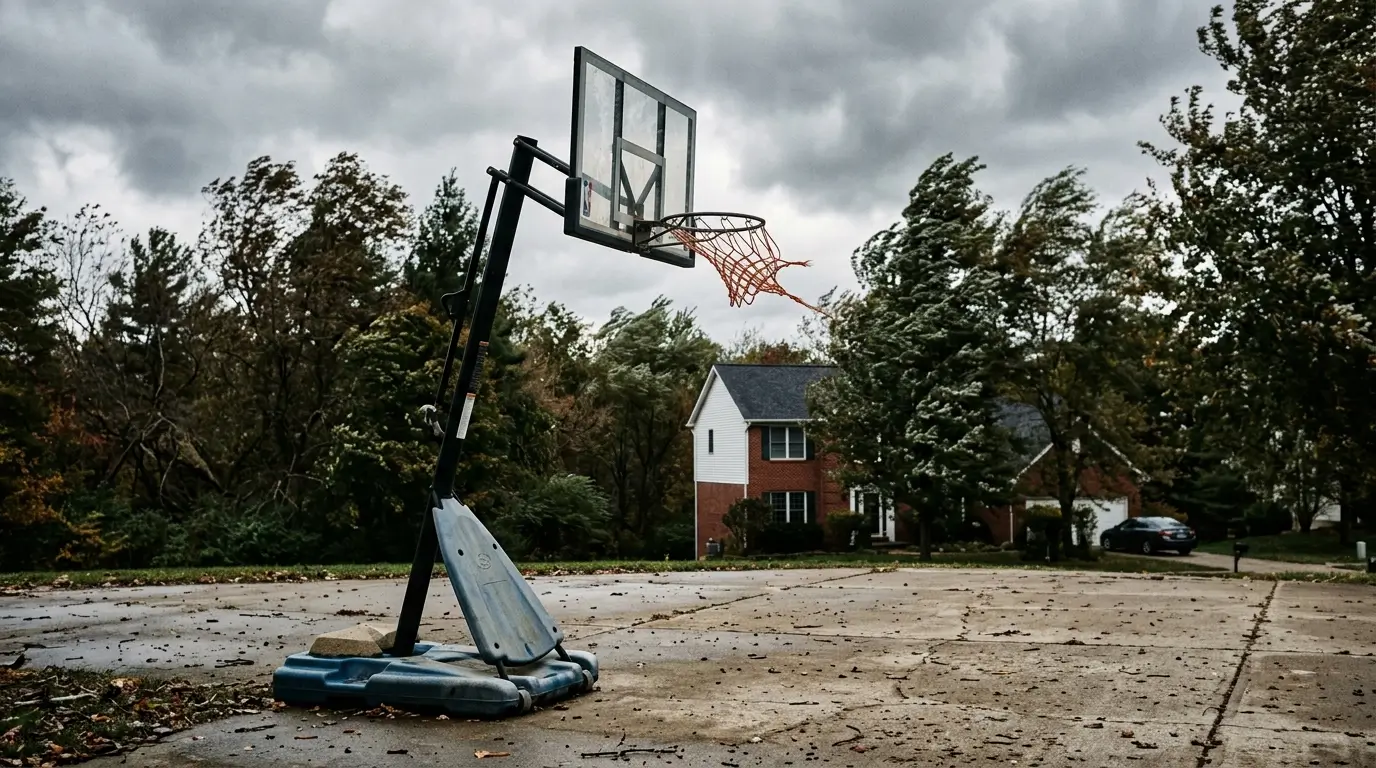
The Problem With Wind
Your basketball hoop just fell over in the wind. Now there is a dent in your car and your kids cannot play. This happens to thousands of homeowners every year. A 50mph wind gust can flip a portable hoop because the backboard acts like a huge sail. This article shows you six real methods to secure portable basketball hoop systems today. We tested them all and ranked them by cost and effectiveness. By the end, you will know exactly which method works best for your situation.
Learn what makes some hoops more stable than others in our most stable portable basketball hoop guide.
Why Your Portable Basketball Hoop Keeps Falling Over
You need to understand the physics of your hoop. A standard 54-inch backboard is absolutely huge. Wind hits the glass like a sail on a boat. This catches all the moving air and creates strong pulling forces. The center of gravity quickly moves away from the base. The base tips backward or forward instantly. Everything falls hard onto your concrete driveway.
I see this happen often in my coaching career. A fallen hoop can cause serious property damage very quickly. You might face 500 to 2000 dollars in vehicle repairs. You need to secure portable basketball hoop systems properly to avoid this mess.
If you are still deciding which hoop to buy for windy areas, read our guide to the best portable basketball hoops for windy areas. A good base makes it easier to secure portable basketball hoop equipment.
Method 1: Sandbags – The Cheapest Option
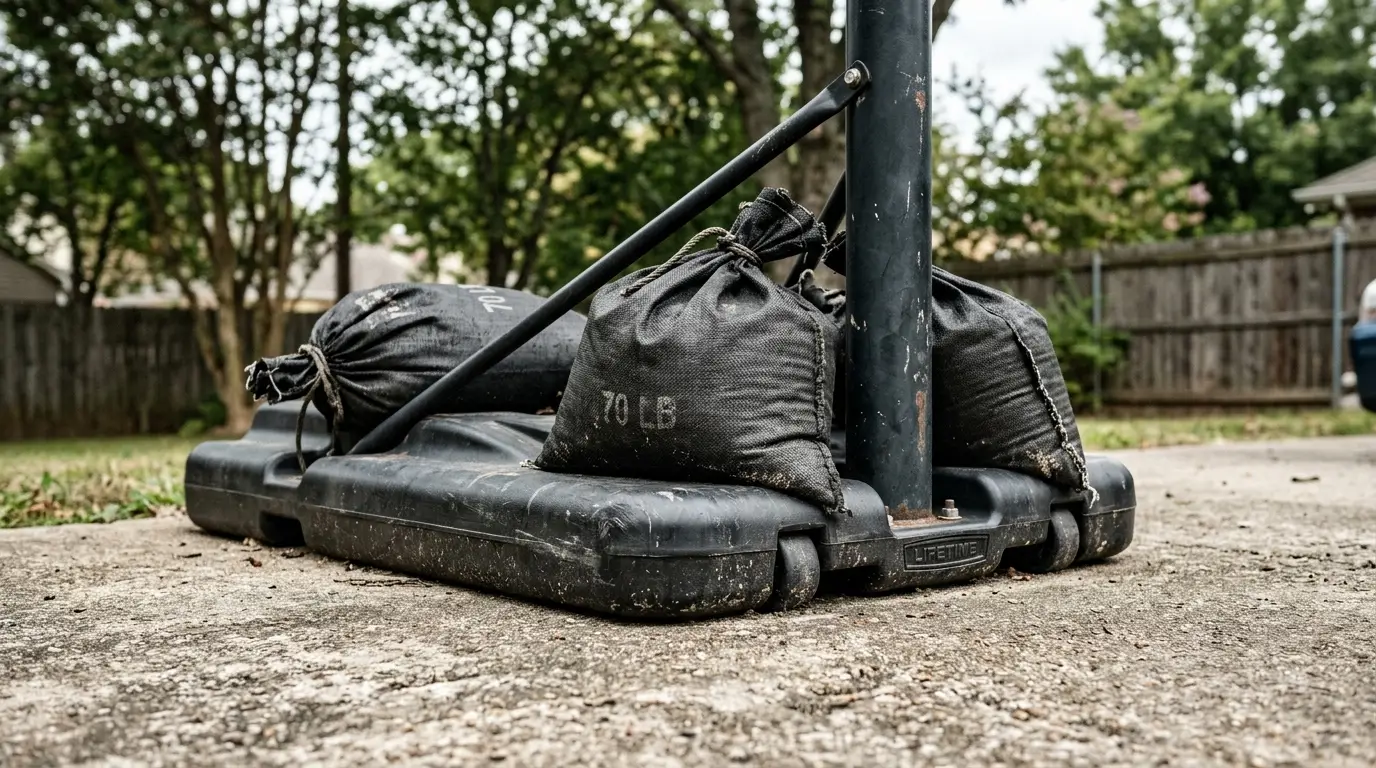
Sandbags offer a cheap way to add weight. Buy bags of play sand at a local hardware store. Stack them on top of the plastic base. The heavy sand provides solid downward force. This helps secure portable basketball hoop bases during storms.
You need a lot of weight to work well. I recommend 300 to 350 pounds minimum. Do not use less weight or the wind will win. Stack the bags evenly across the whole base.
Fill the base properly for the best results. Buy heavy duty weather bags first. Fill them with dry sand using a funnel. Close them tightly and place them on the base.
I filled my hoop with water for three years. During a cold snap in March, the water level dropped 6 inches without me noticing. A 40 mph wind knocked it over in April. I never checked the water level. Now I use sand. I fill it once a year in May. Takes two hours. I have not had a problem in five years.
Cost is 40 to 80 dollars. Effectiveness is 3 out of 5. It works well for 35 to 40 mph winds. It is not reliable above 45 mph. Pros include cheap cost and easy setup. Cons include messy bags and seasonal checks. It is an okay way to secure portable basketball hoop setups.
Method 2: Ground Anchors – Best Overall Value
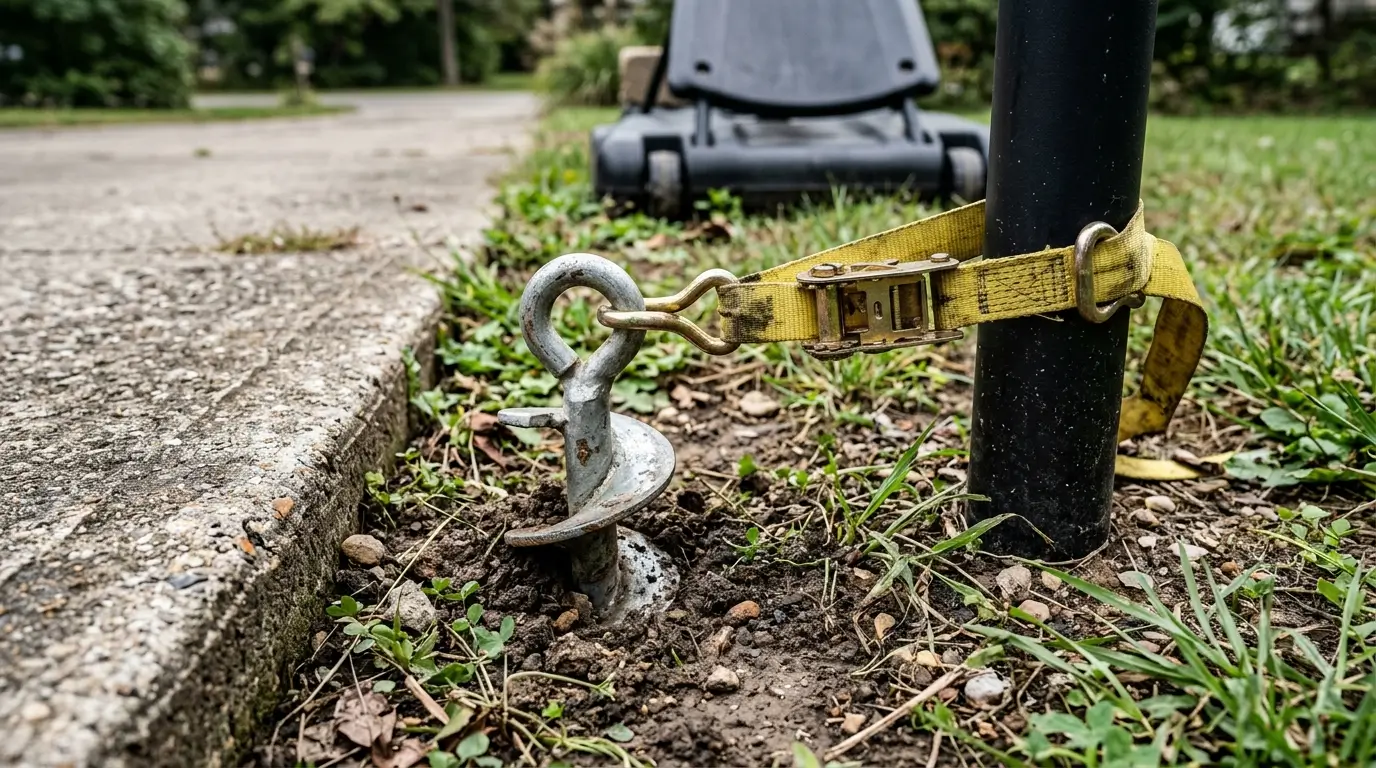
Ground anchors are heavy metal spirals. You screw them directly into the dirt near your hoop. They grab the soil tightly. This makes them a great way to secure portable basketball hoop frames.
They work better than sandbags because they pin the pole down. The spiral design matters a lot. It digs deeper and holds tighter than a straight metal stake. This anchors the hoop against strong pulling forces.
Installation is very simple. Use a power drill. Screw in each anchor 16 inches deep. Attach the straps to the main pole. Tighten down the straps firmly. Use four anchors total.
My neighbor bought ground anchors for 80 dollars. He installed them in 20 minutes on a Saturday morning. A 55 mph wind hit our neighborhood the next month. His hoop did not move. My sandbag hoop shifted. We both learned that day which method was better.
Cost is 60 to 120 dollars. Installation takes 15 to 20 minutes. Effectiveness is 5 out of 5. They reliably secure portable basketball hoop poles against 50 mph winds.
Pros include fast installation and durable materials. Heavy duty steel does not bend or snap. Ratchet straps tighten down and hold firm. Cons include needing a power drill and muscle. They work perfectly on concrete and soil.
Method 3: Dedicated Weight Anchor Container – Premium Look
Standalone containers hold sandbags in a clean box. They hold over 350 pounds of sand securely. The container sits neatly under the hoop base. This looks much cleaner than throwing loose sandbags around. The HoopSecure brand makes great options for this.
You can secure portable basketball hoop systems while keeping your driveway looking nice. The container holds the weight evenly across the entire base. This stops the base from lifting up on one side.
Cost is 80 to 150 dollars. Effectiveness is 4 out of 5 against 50 mph winds. Pros include a contained design and professional appearance. You get no spilled sand on your court.
Cons include a higher cost than plain sandbags. You still need regular sand checks. Maintenance requires checking the sand level each season. It is a solid way to secure portable basketball hoop bases without an ugly mess.
Method 4: Steel Cable Anchoring – For Patios and Decks
Steel cables connect your hoop to fixed structures nearby. This works perfectly if you have a strong post, fence, or deck. You use quarter inch aircraft cable to tie everything together. The cables stop the hoop from swaying in the wind.
This is an effective way to secure portable basketball hoop poles. It anchors the top heavy part of the system. You just wrap the cable around the pole and attach it to your deck.
Cost is 50 to 100 dollars. Installation takes about 45 minutes. Effectiveness is 4 out of 5. It is best for patios and decks with nearby anchoring points.
Pros include being adjustable and working in any weather. You can remove and reuse the cables anytime. Cons include needing a nearby fixed structure. It takes setup time and makes the hoop less portable. Use this to secure portable basketball hoop frames when you cannot dig holes.
Method 5: Underground Concrete Base – Permanent Setup
The concrete method changes how your hoop sits entirely. You dig a hole two to three feet deep. You set the hoop pole directly into the wet concrete. This turns your portable system into a semi-permanent setup.
It takes about 48 hours for the concrete to cure. After that, your hoop will not move. It is the strongest way to secure portable basketball hoop poles. The ground absorbs all the wind force.
Cost is 100 to 200 dollars. Effectiveness is 5 out of 5. This provides permanent strength against massive wind gusts. Pros include the strongest option available and no ongoing maintenance. It lasts for many years.
Cons include losing the portability of your system. It requires digging deep holes and mixing heavy concrete materials. This is best if you plan to keep the hoop in the same spot for five plus years. It is a very serious way to secure portable basketball hoop units.
Method 6: Combining Multiple Methods – Maximum Protection
You can use sandbags plus ground anchors together for total safety. This redundancy gives you total peace of mind during storms. If one system fails, the other system holds strong. This layered approach is the ultimate way to secure portable basketball hoop systems.
Start by stacking sandbags evenly on the base. Then install your ground anchors and attach the strong straps. The heavy base stops the initial shaking. The ground anchors stop the backward tipping.
After a hail storm destroyed my driveway, I stopped taking chances. I use sandbags plus ground anchors. Total cost was 180 dollars. Total install time was 90 minutes. My hoop has not moved in three years. I have zero worries now.
Cost is 140 to 250 dollars. Installation time is 60 minutes. Effectiveness is 5 out of 5 against winds over 60 mph. Pros include ultimate stability and weatherproofing against extreme conditions.
Cons include being the most expensive option. It takes longer to install and requires more maintenance. Use this method to secure portable basketball hoop systems if you live in extreme weather zones. It is perfect for people in Colorado, Texas, or hurricane zones.
Quick Comparison of All 6 Methods
Here is a simple table to compare all six methods. You can easily see how to secure portable basketball hoop setups based on your budget.
| Method Name | Cost Range | Install Time | Effectiveness Rating | Best For |
| Sandbags | 40 to 80 dollars | 30 minutes | 3 out of 5 | Budget conscious homeowners |
| Ground Anchors | 60 to 120 dollars | 15 minutes | 5 out of 5 | Most people |
| Weighted Container | 80 to 150 dollars | 20 minutes | 4 out of 5 | Those who want a cleaner look |
| Guy Wires | 50 to 100 dollars | 45 minutes | 4 out of 5 | Patios and decks |
| Concrete Base | 100 to 200 dollars | 2 days | 5 out of 5 | Permanent setup |
| Hybrid System | 140 to 250 dollars | 60 minutes | 5 out of 5 | Extreme weather zone |
Ground anchors are the best choice for most people. They cost less than some methods but work better than others. They install fast. They last for years. They effectively secure portable basketball hoop frames without spending a fortune.
Year Round Maintenance for Your Secured Hoop
SPRING (March to April): Check if your anchors are still tight. Look for rust on any metal parts. Make sure your ratchet straps are not frayed. Check the plastic base for cracks or holes.
SUMMER (June to July): Check your sand level if using sandbags. Look for minor leaks around the base seams. Tighten any loose bolts on the main pole. Wipe down the exterior to keep it clean.
FALL (September to October): Do a full inspection before storm season begins. Replace any damaged or worn out straps. Add more sand if the weight level is low. Check the concrete base if using that specific method.
WINTER (November to February): Lower the hoop height to reduce wind resistance. Remove any standing water inside the base. Check your equipment for harsh freeze damage. Keep the area around your hoop clear of snow.
For complete winterization tips, see our full winterizing sports court guide. Checking your gear helps secure portable basketball hoop setups all year long.
What Happens When Your Hoop Falls Over – The Real Cost
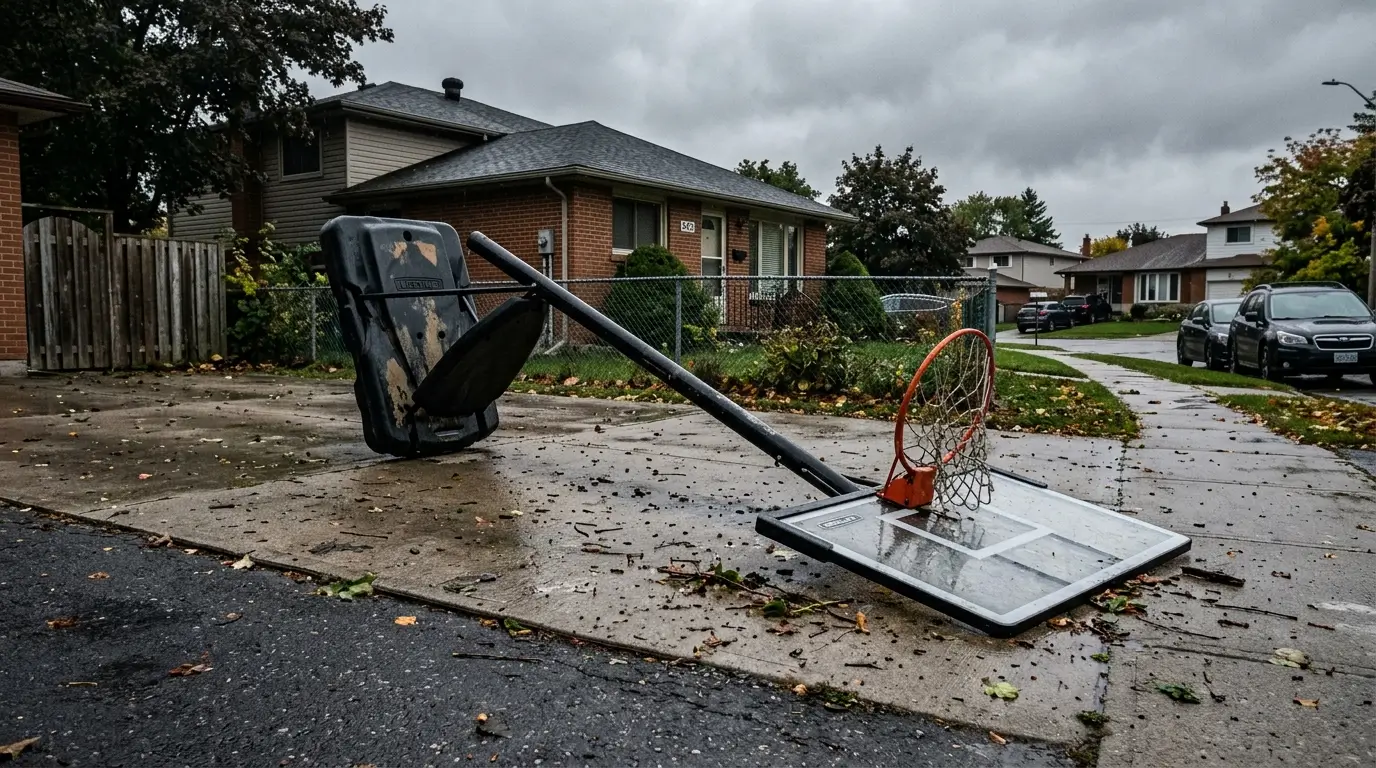
A fallen hoop causes expensive damage very quickly. Average car damage runs between 500 to 2000 dollars. Home damage like broken gutters or torn siding costs 500 to 3000 dollars. The hoop damage itself costs 200 to 1000 dollars.
You also face massive liability if someone gets hurt on your property. You might get rental agreement violations if you are renting your home. You will likely face homeowner insurance implications as well. A damaged hoop can hurt property value. Learn more in our basketball hoop property value ROI guide.
One parent in my neighborhood did not anchor his hoop. A 45 mph wind knocked it into his pickup truck. Damage estimate: 1400 dollars. His insurance did not cover it because he was negligent. He paid out of pocket. A 100 dollar anchor kit would have prevented all of this.
You need to follow basic official safety standards to avoid these terrible costs. This is why we must take action.
What We Recommend Most
I highly recommend ground anchors for almost every home. They cost 60 to 120 dollars. Installation takes 15 minutes. They work reliably against 50 mph winds. You do not need to check them monthly. They last for years.
You can buy them easily on Amazon or at a local hardware store. They provide total peace of mind during bad weather reported by the National Weather Service.
If you have the budget and want the most peace of mind, add sandbags too. This hybrid approach costs 140 dollars and takes one hour. Order your anchors today. Install this weekend. Sleep better knowing your hoop is secure.
Frequently Asked Questions
How much weight do I need for my hoop? You need at least 300 pounds of weight. I recommend 350 pounds if you live in a windy area. Sand is always better than water. It gives you the heavy mass you need. This is the baseline to secure portable basketball hoop bases.
Can I leave my hoop outside in winter? Yes, you can leave it outside. You must lower the backboard to its lowest height. This reduces the wind drag. Make sure you drain any water from the base. Freezing water will easily crack the plastic.
Will ground anchors damage my driveway? Ground anchors go into the dirt next to your driveway. You don’t need to drill into your concrete. If you only have concrete, use the weighted container method instead. It protects your concrete and keeps things safe.
What is the fastest way to tie down my hoop? Ground anchors are the fastest method. You can install them in 15 minutes using a power drill. Sandbags take much longer to fill and stack. Ground anchors secure portable basketball hoop frames quickly and safely.
Do I need to take the net off during a storm? I always tell my players to take the net off. A standard net acts like a small sail. It creates extra wind drag on the rim. Taking it off takes one minute and saves your hardware.