 By Ghulam Mustafa Khan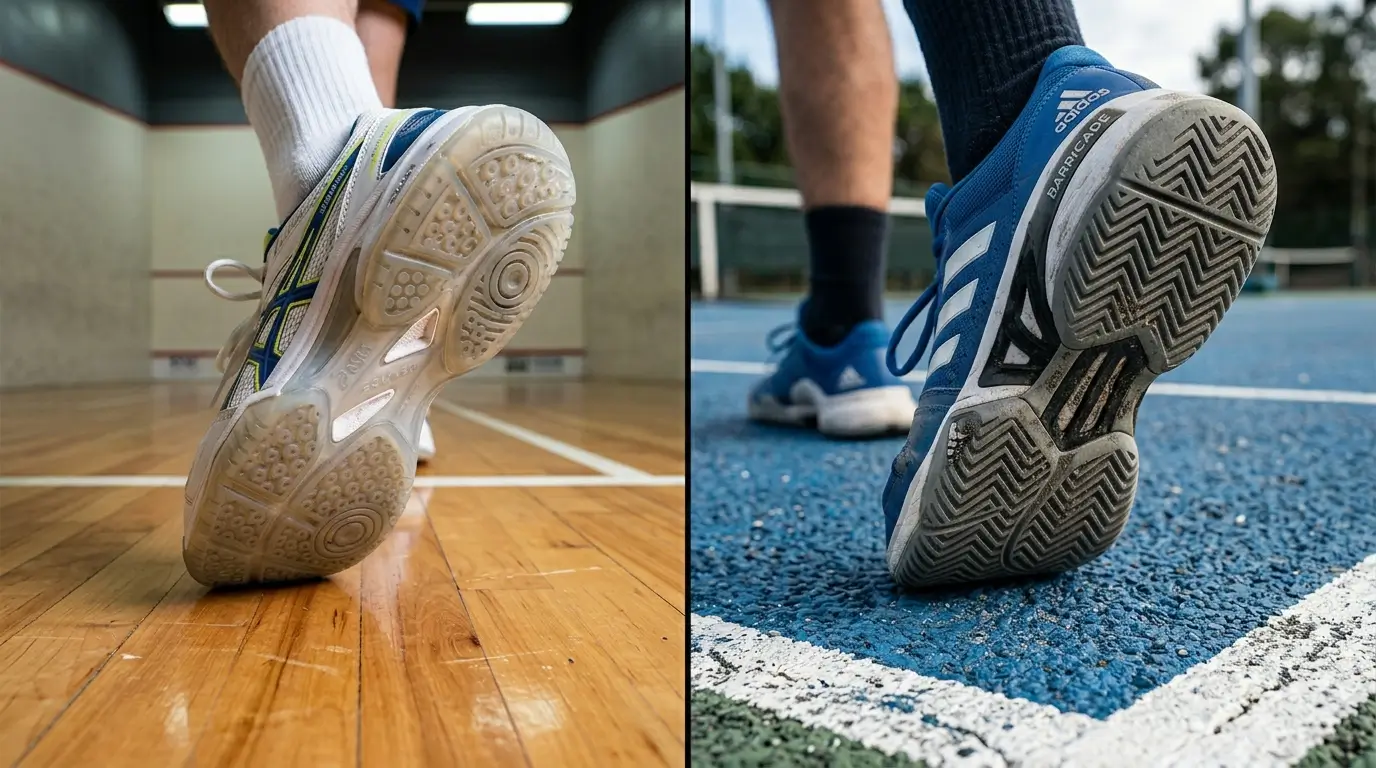
The moment you feel that first unexpected slide during a lateral cut, your entire game fundamentally shifts. You stop trusting your footwork, your reaction time slows, and your risk of a severe lower-body injury skyrockets. According to clinical evidence published by the NIH/PubMed, unexpected traction loss on hard surfaces is a primary catalyst for Grade II and III ankle sprains. Understanding exactly why maintaining court shoe grip matters for joint health is the first step in separating simple equipment maintenance from medical liability.
Diagnosing Outsole Wear vs. Surface Contamination
Rubber does not fail universally; it fails contextually. ASTM International standards for vulcanized rubber performance dictate that traction relies on the coefficient of friction between the outsole compound and the specific floor material.
“Players routinely confuse a contaminated outsole with a worn-out outsole. If the tread pattern is still visibly deep but the shoe feels like ice skates, you are dealing with chemical buildup or dust compaction, not mechanical failure.” — Dr. Aris Thorne, Sports Biomechanics Researcher
The type of court you play on dictates the type of contamination your shoes suffer. Understanding how different floor types interact with court shoe rubber reveals why a wood gymnasium floor leaves a microscopic wax residue, while an acrylic outdoor tennis court acts like 80-grit sandpaper. Furthermore, you’ll discover how court surface type affects shoe grip differently—explaining why a shoe that grips perfectly on a cushioned backyard tile system will fail miserably on a dusty community center floor.
Mechanical failure is different. If your shoes are physically balding, you must examine where the wear is occurring. For example, recognizing how toe drag patterns reveal accelerated outsole wear allows you to determine if your grip loss is a systemic shoe failure or simply a byproduct of aggressive, repetitive footwork mechanics.The 8-Point Diagnostic Checklist Before You Replace
From the Coach’s Perspective
Equipment maintenance requires a ruthless diagnostic mindset. Parallel maintenance concepts apply to shoes as much as other equipment—if you aren’t checking your treads weekly with a physical thumbnail test, you’re waiting for an injury to tell you your gear is failing.
The Traction Diagnostic Matrix
| Symptom | Physical Test | Likely Culprit | Solution Path |
|---|---|---|---|
| Squeak is gone, shoe slides | Tread looks full but feels smooth | Dust Compaction | Level 1 Deep Clean |
| Shoe feels stiff/plastic-like | Fingernail cannot indent the rubber | Rubber Oxidation | Level 2 Softening / Replace |
| Slipping only on push-off | Medial forefoot tread is completely flat | Balding / Mechanical | Level 3 Replacement |
| Sticky residue picking up dirt | Bottom of shoe feels tacky to the touch | Chemical Contamination | Level 1 Solvent Wash |
Consider the case of Marcus, an amateur squash player. Marcus spent $180 on premium indoor squash shoes but reported total traction failure after only three weeks. He assumed the brand used defective rubber. A quick diagnostic revealed his club recently switched to an oil-based floor cleaner. The “defective rubber” was actually a micro-layer of cleaning solvent. A targeted alcohol wash restored the shoes to factory grip in ten minutes.
How to Restore Traction: Levels of Fixes
Once you identify the cause, apply the appropriate intervention. These solutions range from zero-cost maintenance to strategic replacements.
Level 1: The Deep Chemical Clean ($0–$10)
Standard soap leaves a lipid residue that actually decreases friction. For dust and oil compaction, you need a volatile solvent. Different floor types deposit different chemical residues, which is why understanding court floor chemistry is critical to selecting the right cleaning method.
The process:
- Mix a 50/50 solution of water and 70% isopropyl alcohol.
- Use a stiff nylon brush (never wire) to scrub the outsole aggressively.
- Wipe completely dry with a microfiber towel.
The alcohol strips the floor wax and body oils without degrading the rubber’s structural integrity.
“Moisture management is the secret to rubber longevity. Rotating two pairs of shoes allows the EVA foam to decompress and the rubber to dry, keeping court shoes fresh while extending their lifespan.” — Sarah Jenkins, Professional Equipment Manager
Level 2: Traction Enhancers and Modifiers ($15–$25)
If the rubber has slightly hardened but still retains tread depth, traction sprays or sticky mats offer a viable bridge solution.
Take Diana, a competitive pickleball player competing in a weekend tournament on a poorly maintained gym floor. A $20 rosin-based traction spray temporarily softened the oxidized top layer of her outsoles, providing enough bite to survive the weekend. However, these sprays attract massive amounts of dirt post-match, requiring an immediate Level 1 clean afterward.
Expert Tip: Over-application of traction spray creates a sticky, dust-magnet effect that actually reduces grip within minutes of play—apply sparingly and test on a clean court surface first.
Level 3: Strategic Replacement
If your tread is bald, physics dictates you must replace the shoe. But replacing an indoor shoe with another indoor shoe for outdoor play guarantees failure. You must evaluate indoor vs. outdoor surfaces and their impact on shoe wear.
Outdoor concrete requires an XDR (Extra Durable Rubber) compound. Indoor wood requires a soft, pliable gum rubber. Ultimately, choosing the right shoe for each sport’s court surface prevents premature grip loss entirely.
Cost-Benefit Analysis of Fixes
| Intervention | Cost | Effective Duration | Best Use Case |
|---|---|---|---|
| Alcohol Solvent Wash | <$5 | 2–4 Matches | Dust & Chemical Buildup |
| Traction Spray/Rosin | $15–$25 | 1 Match | Hardened Rubber/Bad Floors |
| Sandpaper Resurfacing | <$5 | 3–5 Matches | Minor Oxidation Removal |
| Compound-Matched Replacement | $100+ | 6+ Months | Complete Tread Failure |
Pre-Match Prep and Long-Term Maintenance
Consistent maintenance overrides emergency fixes. Do not wait until game day to discover your shoes have hardened in the trunk of your car. Heat accelerates rubber oxidation.
From the Coach’s Perspective
Never leave your court shoes in a hot car between sessions; the extreme heat bakes the rubber compounds and permanently destroys the factory coefficient of friction. Keep a damp microfiber towel in your bag and wipe your soles immediately after your warmup.
Expert Tip: The courtside damp towel habit—wiping your soles with a barely damp (not wet) towel between games—removes fresh dust before your body weight compacts it into tread channels. This single habit extends the time between deep cleans from 2–3 sessions to 6–8 sessions.
USA Pickleball Training Guidelines emphasize that many players ignore their footwear during practice and only worry about grip during tournaments. This is a critical error in player preparation.
Remember, court shoes in solo practice take the same wear as matches. The repetitive, isolated drills often create localized bald spots faster than dynamic game play. Whether you are drilling against a wall or running ladder drills, solo training demands aggressive footwork—invest in grip first to ensure your practice translates directly to competitive stability.
Frequently Asked Questions (FAQ)
Can I use hairspray to restore shoe grip?
Hairspray provides a brief, sticky surface that lasts approximately five minutes. Afterward, it acts as an adhesive magnet for dust and dirt, leaving your shoes significantly more slippery than before you applied it. Avoid hairspray entirely.
Does sanding the bottom of court shoes work?
Yes, but only for mild rubber oxidation. Lightly running 120-grit sandpaper over the outsoles removes the hardened, oxidized outer layer of rubber, exposing the fresh, grippy compound underneath. Do not use this method more than twice, as it rapidly depletes tread depth.
Why do my shoes grip well on one court but slide on another?
Grip is a relationship between two surfaces. An indoor gym floor coated in a specific polyurethane requires soft gum rubber to stick. If you take that same shoe to an outdoor acrylic court, the abrasive surface will shred the soft rubber, while a poorly dusted wood floor will coat it in debris.
How often should I replace my court shoes to maintain optimal grip?
Competitive players playing 3–4 times a week typically need replacement every 4 to 6 months. Casual players can often stretch a pair to 8–12 months, provided they maintain the rubber and do not wear the shoes off the court.
Is it safe to put court shoes in the washing machine?
Never put court shoes in the washing machine or dryer. The total immersion in water destroys the internal adhesives holding the shoe together, and the high heat of a dryer permanently warps and hardens the rubber outsole, ruining the grip forever.